The story
About 2,500 years ago, after the Buddha reached enlightenment, he walked to a deer park at Sarnath. There he gave his first teaching to five companions. Buddhists call this moment setting the wheel of the teaching in motion.
Around 250 BCE, Emperor Ashoka, who had become a Buddhist, built monuments here. He raised a tall polished stone pillar topped with four lions standing back to back. That lion capital is now India's national emblem, and the wheel beneath them appears on India's flag.
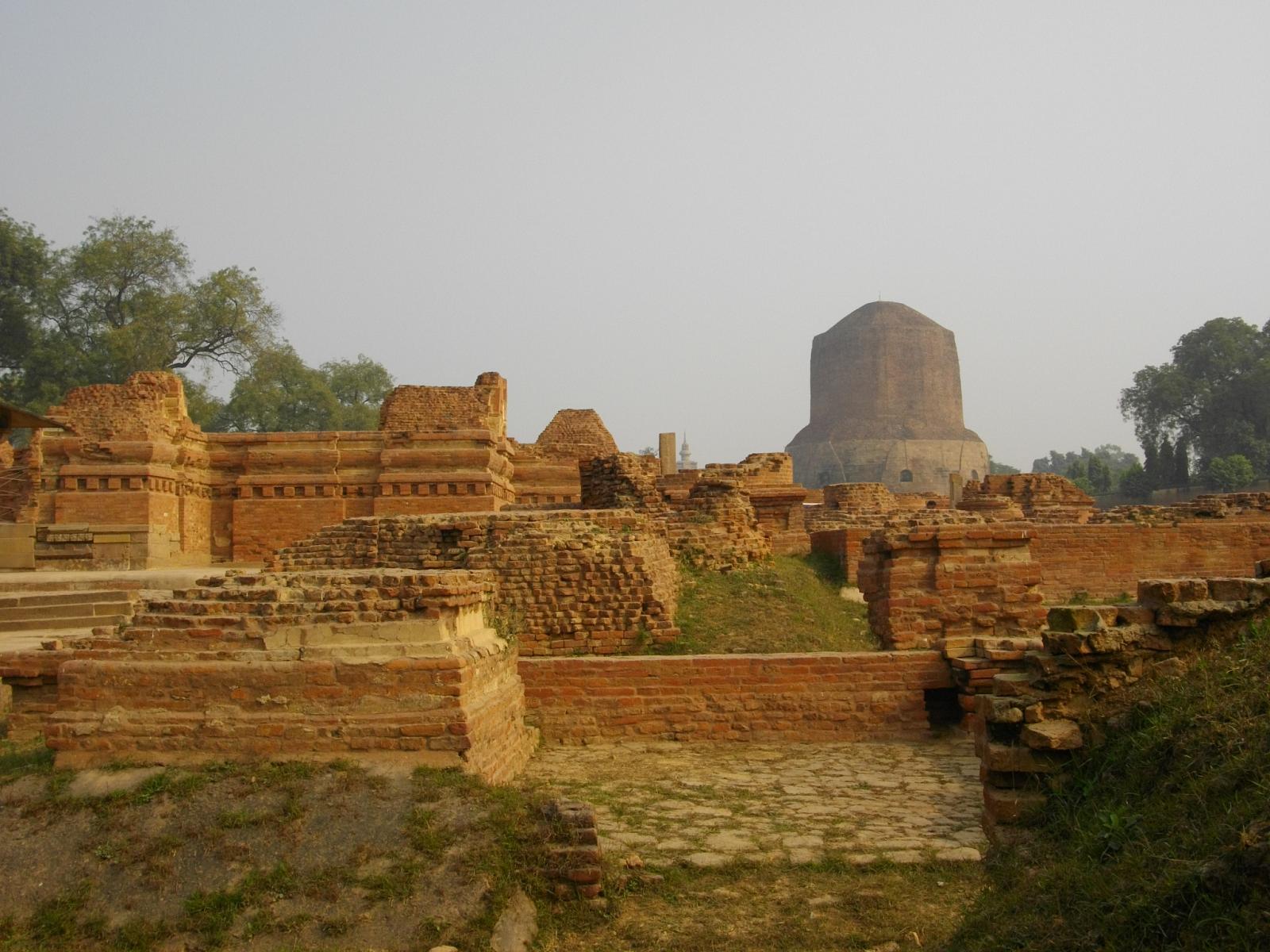
For centuries, Sarnath grew with monasteries and stupas. The great Dhamek Stupa was rebuilt around 500 CE. Pilgrims came from across Asia.
How it ended
Raids in the late 1100s damaged the monasteries, and Buddhism faded in northern India. Sarnath was abandoned and buried until archaeologists uncovered it in the 1800s and 1900s.
What life was like
Monks at Sarnath lived in monasteries, studied, meditated and taught. Artists here made famous sandstone statues of the Buddha, known for their calm faces. Pilgrims visited the deer park and the stupas, walking around them in a circle to show respect.
Wow facts
- Ashoka's lion capital is India's national emblem.
- The wheel on India's flag comes from the pillar at Sarnath.
- The Dhamek Stupa is about 43 meters tall.
Photos
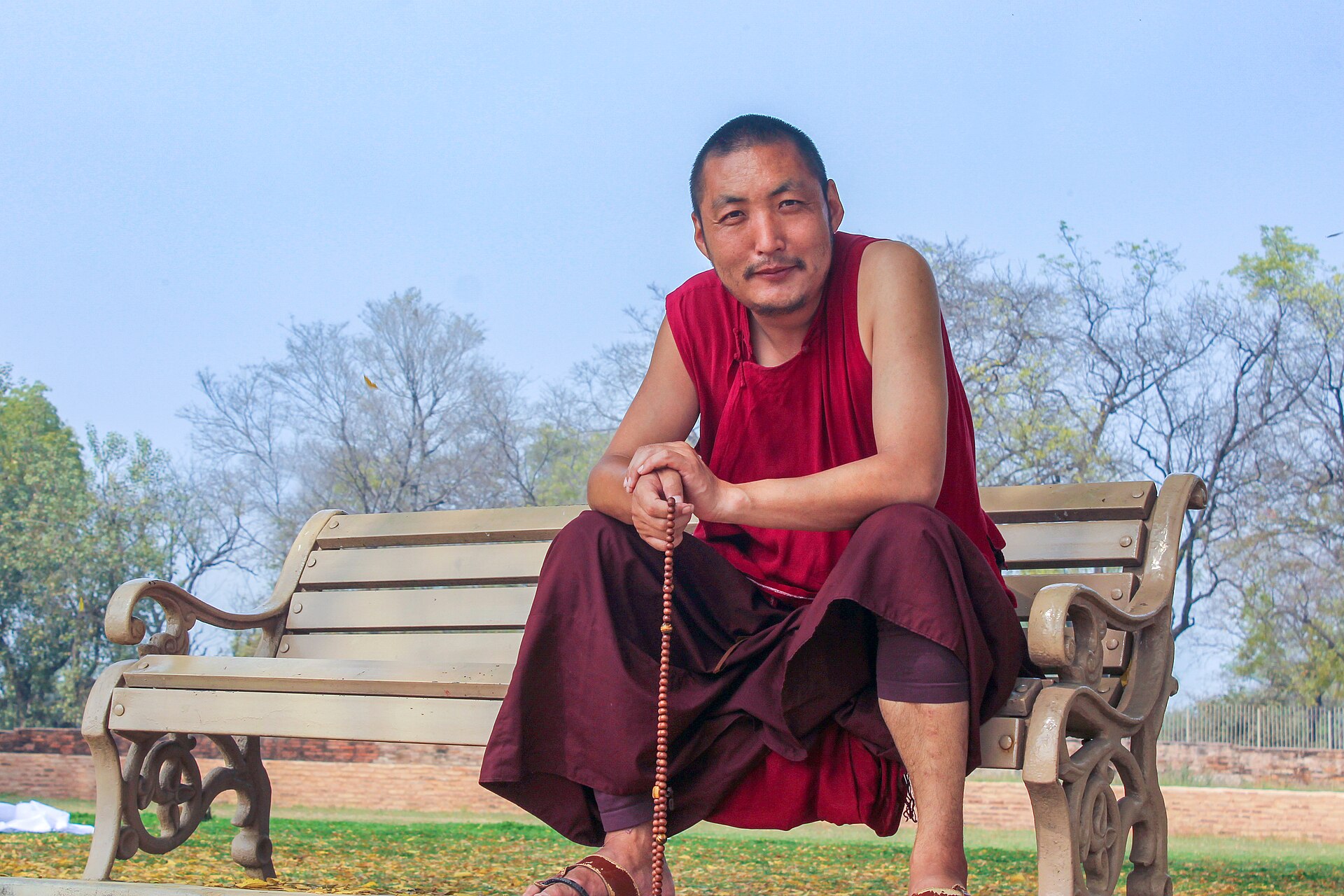 Buddhist monk in Sarnath Suyash Dwivedi, CC BY-SA 4.0
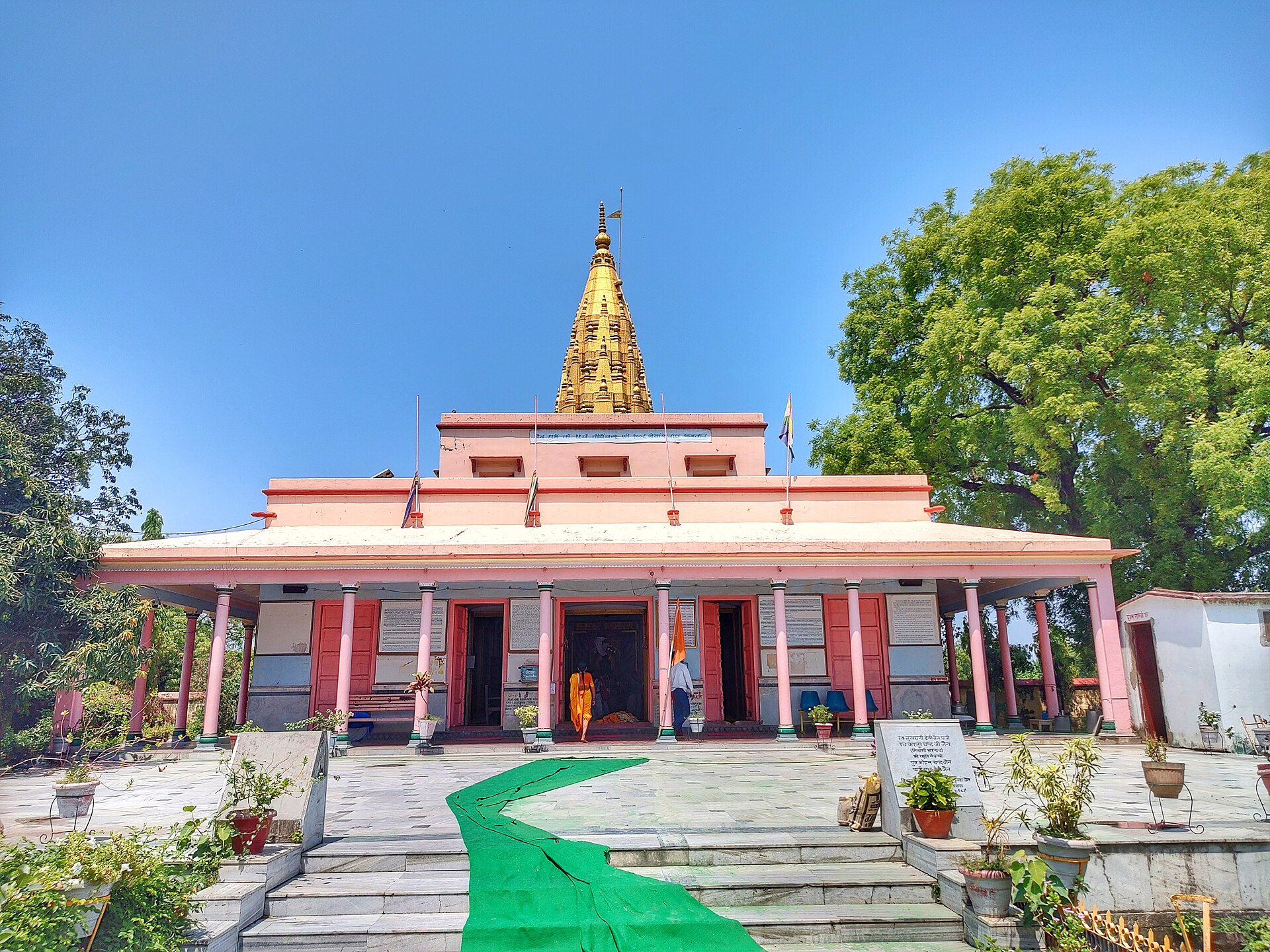 Sarnath Jain Temple Pratyk321, CC BY-SA 4.0
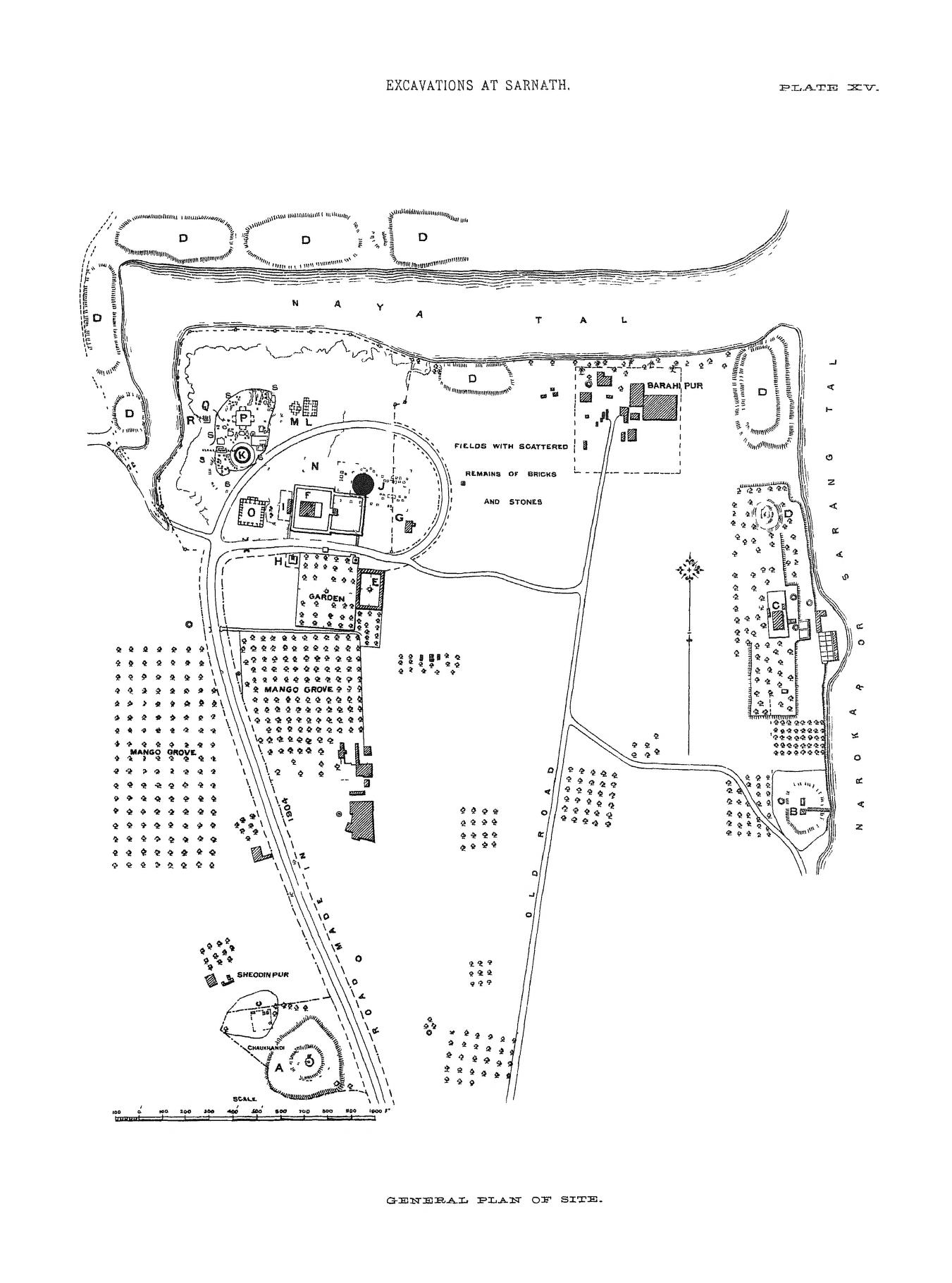 Alexander Cunningham's plan of excavations at Sarnath, 1835 Alexander Cunningham, Public domain
Relics and treasures
- Lion Capital of Ashokathe four-lion sculpture, in the Sarnath Museum
- Dhamek Stupathe great stupa, at the site
- Ashoka Pillarthe broken base of the pillar, at the site
- Preaching Buddha statuea sandstone statue from the Gupta era, in the Sarnath Museum
How we know
Alexander Cunningham and others excavated Sarnath in the 1800s, and the lion capital was found in 1905. Chinese pilgrims like Xuanzang described Sarnath. Inscriptions name Ashoka and later kings.
What you would see today
Visitors walk around the Dhamek Stupa, see the broken base of Ashoka's pillar, and view the lion capital in the Sarnath Museum. Buddhist temples from several countries stand nearby, and a deer park still recalls the Buddha's time.
For teachers and classrooms
Suggested level: grades 3-5. Print this page as a lesson sheet with the story, vocabulary, discussion questions and a quiz with an answer key.
Key words
- capital
- here, the carved top of a column or pillar
- emblem
- a symbol that stands for a country or group
- meditate
- to focus your mind quietly
Talk about it
- Why do you think India chose Ashoka's lions as its emblem?
- What makes a place feel special or peaceful to you?
Try this activity
- Draw a map of Sarnath as it looked at its busiest, and label three things people did there.
- Find Sarnath on the Ruinscape timeline, then pick another place from the same century and compare them.
- Use one link in Sources below to find a real object from this place. Describe what it is made of and what it tells us.
Quick quiz
What happened at Sarnath?
- The Buddha gave his first teaching
- A volcano erupted
- A ship sank
- A king was crowned in Rome
Show the answer
A. The Buddha first taught at the deer park in Sarnath.
Who built the lion pillar?
- Ashoka
- Cyrus
- Alexander
- Akbar
Show the answer
A. Emperor Ashoka raised the pillar around 250 BCE.
What appears on India's flag from Sarnath?
- A wheel
- A lion
- A tree
- A star
Show the answer
A. The wheel from Ashoka's pillar is on India's flag.
Sources and further reading
Ruinscape lessons are written for students and checked against encyclopedia and museum records. Go to the sources: these links search real museum collections, the UNESCO list and research by archaeologists.
- Wikipedia articleEncyclopedia overview with its own references
- UNESCO World HeritageOfficial listing, if the site is protected
- Google Arts & CultureMuseum exhibits, virtual tours and close-up photos
- British Museum collectionReal objects, photos and catalog notes
- The Met collectionObjects and essays from the Metropolitan Museum of Art
- Smithsonian collectionsU.S. national museum records
- 3D models on SketchfabScans of sites and artifacts (check each license)
- Scholarly articlesResearch papers by archaeologists and historians
Read the full background
Sarnath (also known as Deer Park, Sarangnath, Isipatana Deer Park, Rishipattana, Migadaya, or Mrigadava) is a town northeast of Varanasi, in Uttar Pradesh, India. It was here that the Buddha gave his first sermon after attaining enlightenment at Bodh Gaya. The Lion Capital of Ashoka, raised on a column in Sarnath in 250 BCE by the first Buddhist emperor Ashoka, commemorates this event. It is also the State Emblem of India.
Sarnath is one of the eight most important pilgrimage sites for Buddhists, and has been declared a UNESCO World Heritage Site, being added to the list in 2026.
Sarnath is where Gautama Buddha's sangha first convened, when he gave the first teaching to his original five disciples Kaundinya, Assaji, Bhaddiya, Vappa and Mahanama, known as The First Turning of the Wheel of Dharma. As the Lalitavistara sutra states, the Gautama Buddha chose "Deer Park by the Hill of the Fallen Sages, outside of Varanasi" for his first teaching after he attained enlightenment The teaching is entitled Dhammacakkappavattana sutra. This teaching occurred circa 528 BCE when the Buddha was approximately 35 years of age.
The hagiographic Buddhavamsa says that a previous Buddha called Kassapa Buddha was born in Sarnath. There, like his successor Gautama, he joined a sangha of men and women in order to give his first teaching.
Several sources state that the name Sarnath is derived from Saranganath, which translates to 'Lord of the Deer'. According to one history, during the local king's hunting trip, a male deer (buck) offered to sacrifice himself to save the life of a female deer (doe) that the king was aiming to kill. Impressed, the king then declared his park would thereafter be a deer sanctuary.
According to Sutra 16 of the Mahaparinibbana sutra within the Digha Nikaya, the Buddha named Sarnath as one of four Buddhist pilgrimage sites that devout followers should visit and look upon with samvega or feelings of reverence. The other three sites named by the Buddha are Lumbini, his birthplace; Bodh Gaya, where he achieved enlightenment; and, Kushinagar, where he attained parinirvana.
Sarnath is located eight kilometres (five miles) northeast of Varanasi near the confluence of the Ganges and the Varuna rivers.
Background text from Wikipedia, available under CC BY-SA 4.0.
Last updated: October 2026. How we make Ruinscape.