The story
Nalanda was founded in the 400s CE, during the Gupta Empire, as a great Buddhist monastery and center of learning. It grew for about 700 years with support from kings, especially the Pala dynasty.
Thousands of students and teachers lived here. They studied Buddhism, logic, grammar, medicine, mathematics and astronomy. Getting in was hard. Gatekeepers asked tough questions, and many applicants were turned away.
The Chinese monk Xuanzang studied here in the 600s and wrote about its tall buildings, ponds and lively debates. Nalanda had a huge library said to fill several buildings. Around 1200 CE, it was attacked and burned, and the great center of learning came to an end.
How it ended
Nalanda weakened as support for Buddhism in the region declined. Around 1200 CE, invading forces attacked and burned it. The monks fled, and the buildings fell into ruins covered by earth.
What life was like
Students lived in small brick rooms around courtyards, with stone beds and niches for lamps and books. Days were full of lessons, debates and meditation. Teachers were famous scholars. Food and supplies came from villages that kings gave to support the monastery. Students came from India, China, Korea, Tibet and beyond.
Wow facts
- Students had to pass a hard oral test at the gate just to get in.
- Xuanzang, a famous Chinese traveler, studied here for years.
- Nalanda's library was said to be so big it had buildings with names like Ocean of Jewels.
Photos
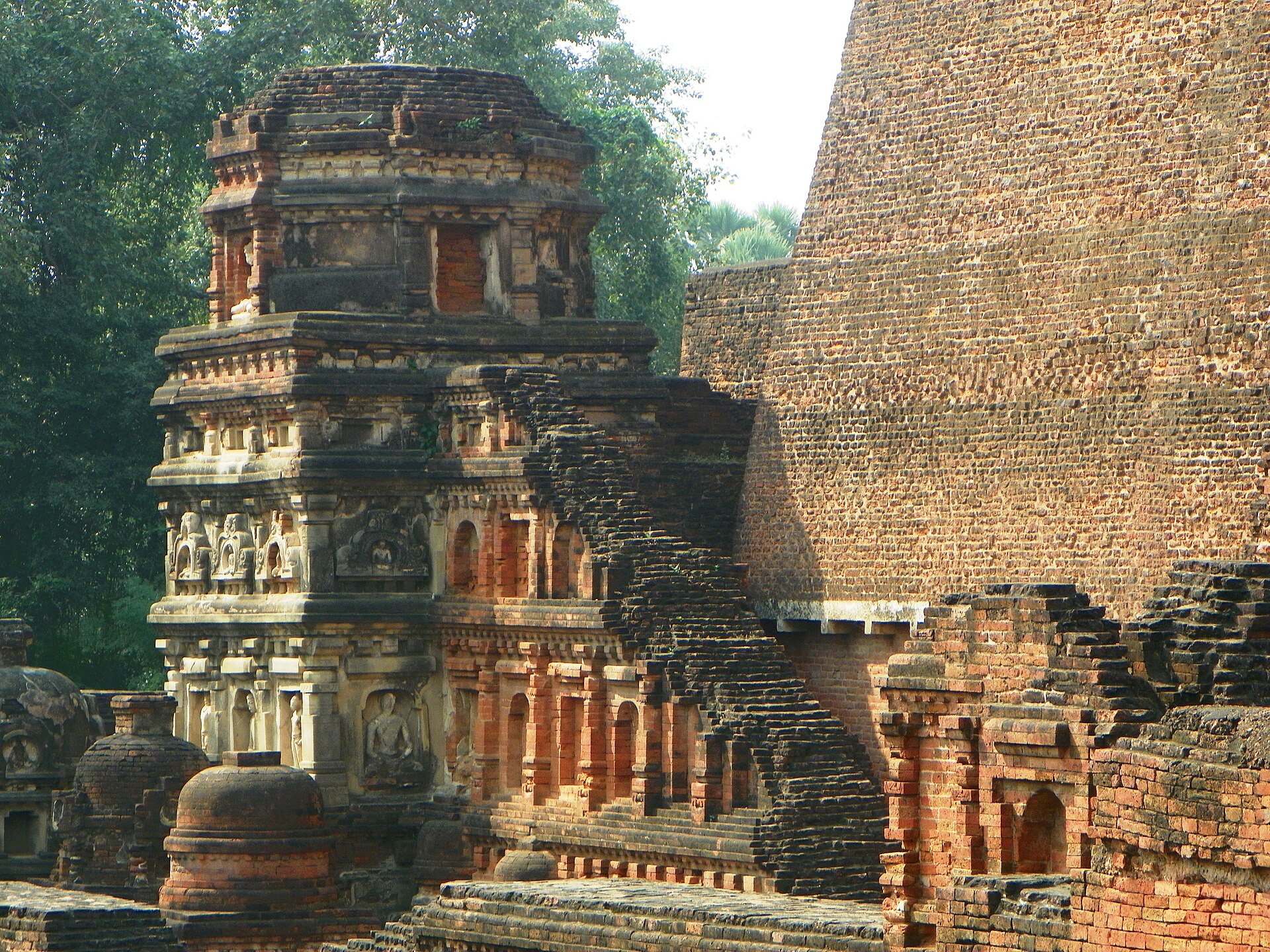 This is a photo of ASI monument number Oo91, CC BY-SA 4.0
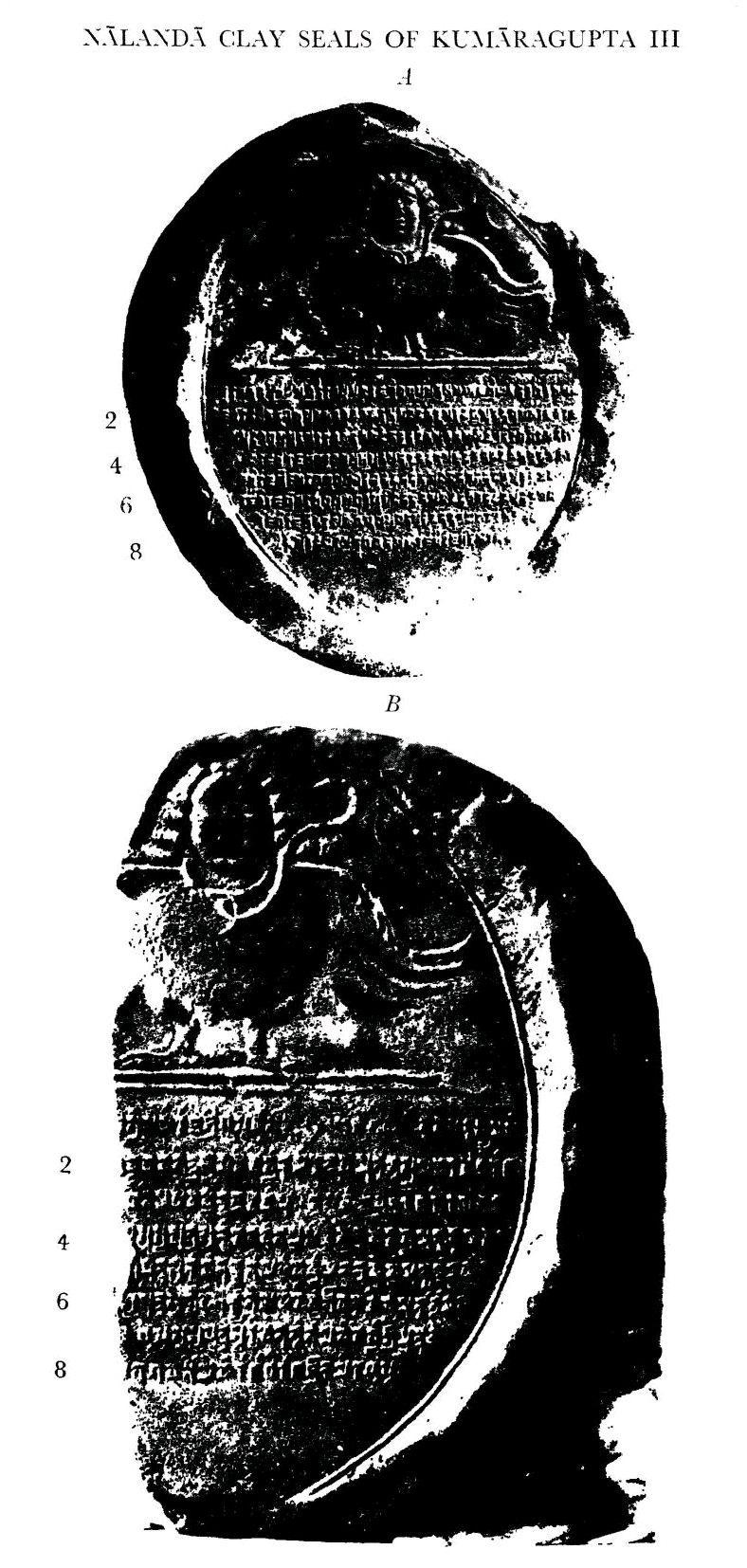 Nalanda clay seal of Kumaragupta III John Faithfull Fleet (1847 –1917), Public domain
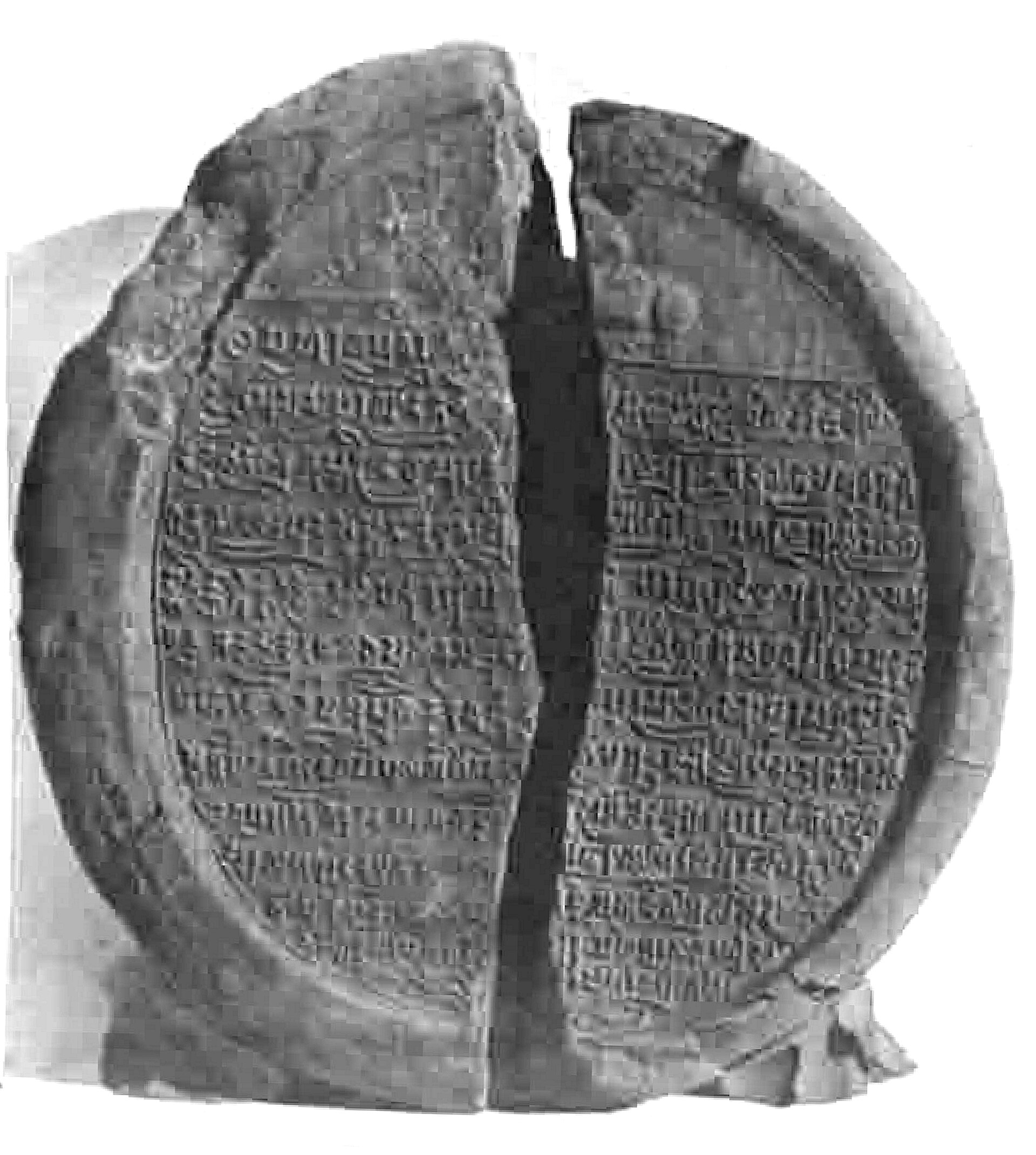 Seal of Harshavardhana found in Nalanda Hiranand Sastri (1878–1946), published in 1918, Public domain
Relics and treasures
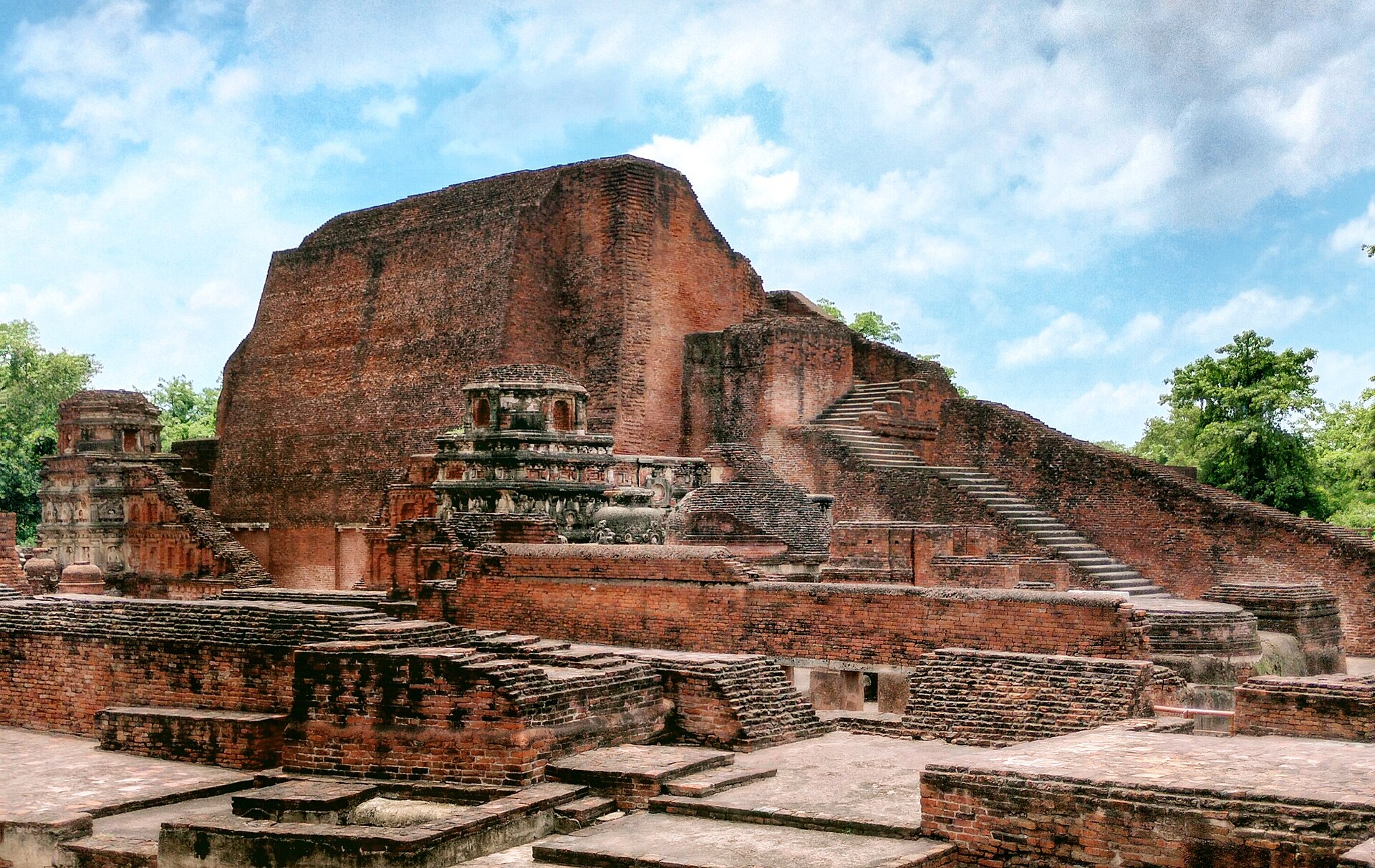
- Temple No. 3a tall brick stupa-temple, at the site
- Monastery student roomsrows of small brick cells, at the site
- Bronze Buddha statuesstatues made in Nalanda's workshops, in the Nalanda Archaeological Museum
- University sealsclay seals reading Nalanda, in the Nalanda Archaeological Museum
How we know
Alexander Cunningham identified the site in the 1800s using Xuanzang's travel writings, and digs continued in the 1900s. Seals with the name Nalanda confirmed it. Chinese and Tibetan writers recorded what it was like.
What you would see today
Visitors walk through brick monasteries and temples and see student rooms and lecture halls. A museum displays statues and seals. A new Nalanda University opened nearby in 2014, inspired by the ancient one.
For teachers and classrooms
Suggested level: grades 6-8. Print this page as a lesson sheet with the story, vocabulary, discussion questions and a quiz with an answer key.
Key words
- monastery
- a place where monks live, study and pray
- scholar
- a person who studies a subject deeply
- debate
- a formal discussion where people argue different sides
Talk about it
- What makes a school or university great?
- Why would students travel thousands of kilometers to study at Nalanda?
Try this activity
- Draw a map of Nalanda as it looked at its busiest, and label three things people did there.
- Find Nalanda on the Ruinscape timeline, then pick another place from the same century and compare them.
- Use one link in Sources below to find a real object from this place. Describe what it is made of and what it tells us.
Quick quiz
What was Nalanda?
- A great center of learning
- A fortress
- A shipyard
- A palace
Show the answer
A. It was a Buddhist monastery and university.
Which Chinese traveler studied at Nalanda?
- Xuanzang
- Kublai Khan
- Confucius
- Zheng He
Show the answer
A. Xuanzang studied there in the 600s.
What happened to Nalanda around 1200 CE?
- It was attacked and burned
- It sank
- It became a city
- It froze
Show the answer
A. It was attacked and burned, ending its long history.
Sources and further reading
Ruinscape lessons are written for students and checked against encyclopedia and museum records. Go to the sources: these links search real museum collections, the UNESCO list and research by archaeologists.
- Wikipedia articleEncyclopedia overview with its own references
- UNESCO World HeritageOfficial listing, if the site is protected
- Google Arts & CultureMuseum exhibits, virtual tours and close-up photos
- British Museum collectionReal objects, photos and catalog notes
- The Met collectionObjects and essays from the Metropolitan Museum of Art
- Smithsonian collectionsU.S. national museum records
- 3D models on SketchfabScans of sites and artifacts (check each license)
- Scholarly articlesResearch papers by archaeologists and historians
Read the full background
Nalanda (IAST: Nālandā, pronounced [naːlən̪d̪aː]) was a renowned Buddhist mahavihara (great monastery) in medieval Magadha (modern-day Bihar), eastern India. Widely considered to be among the greatest centres of learning in the ancient world and often referred to as "the world's first residential university", it was located near the city of Rajagriha (now Rajgir), roughly 90 kilometres (56 mi) southeast of Pataliputra (now Patna). Operating for almost a thousand years from 427 CE until around 1400 CE, Nalanda mahavihara played a vital role in promoting the patronage of arts, culture and academics during the 5th and 6th century CE, a period that has since been described as the "Golden Age of India" by scholars. The characterisation of Nalanda as a "university" in the modern sense has been challenged by scholars. They argue that while it was undoubtedly a major centre of learning, comparing it directly to a modern university is historically imprecise.
Nalanda was established by emperor Kumaragupta I of the Gupta Empire around 427 CE, and was supported by numerous Indian and Javanese patrons – both Buddhists and non-Buddhists. Nalanda continued to thrive with the support of the rulers of the Pushyabhuti dynasty (r. 500–647 CE) and the Pala Empire (r. 750–1161 CE). After the fall of the Palas, the monks of Nalanda were patronised by the Pithipatis of Magadha. Nalanda was attacked by Huns under Mihirakula in the 5th century and again sustained severe damage from an invasion by the Gauda king of Bengal in the 8th Century. During the final invasion it was burnt down by Muhammad Bakhtiyar Khalji (c. 1200), but it managed to remain operational for decades (or possibly even centuries) following his raids.
Over some 750 years, Nalanda's faculty included some of the most revered scholars of Mahayana Buddhism. The historian William Dalrymple said of Nalanda that "at its apex, it was the undisputed scholarly centre of the Mahayana Buddhist world". The faculty and students associated with the monastery included Dharmapala, Nagarjuna, Dharmakirti, Asanga, Vasubandhu, Chandrakirti, Xuanzang, Śīlabhadra, Vajrabodhi, and Dharmasvamin. The curriculum of Nalanda included major Buddhist philosophies like Madhyamaka, Yogachara and Sarvastivada, as well as subjects like the Vedas, grammar, medicine, logic, mathematics, astronomy and alchemy. The mahavihara had a renowned library th
Background text from Wikipedia, available under CC BY-SA 4.0.
Last updated: October 2026. How we make Ruinscape.