No. 76
Sanchi

- Where
- India
- Built by
- Emperor Ashoka and later rulers
- Era
- 200s BCE onward
- Known for
- The Great Stupa.
- How it ended
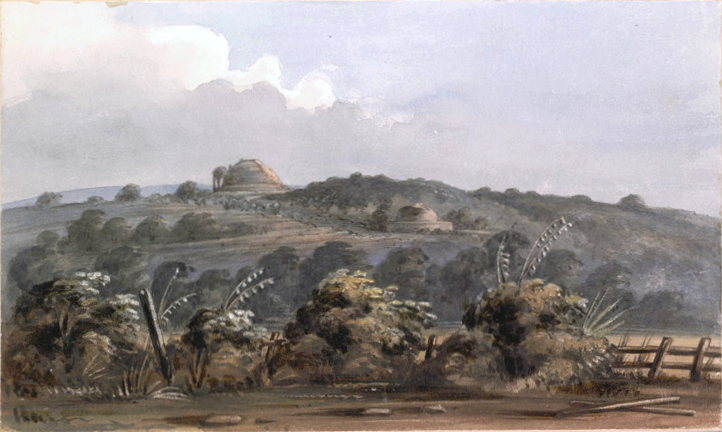
- Forgotten as Buddhism faded in India and rediscovered in 1818.

Lyra Kael can take you here on the globe, tell you the story out loud and answer your questions. Start the time jump.
Background
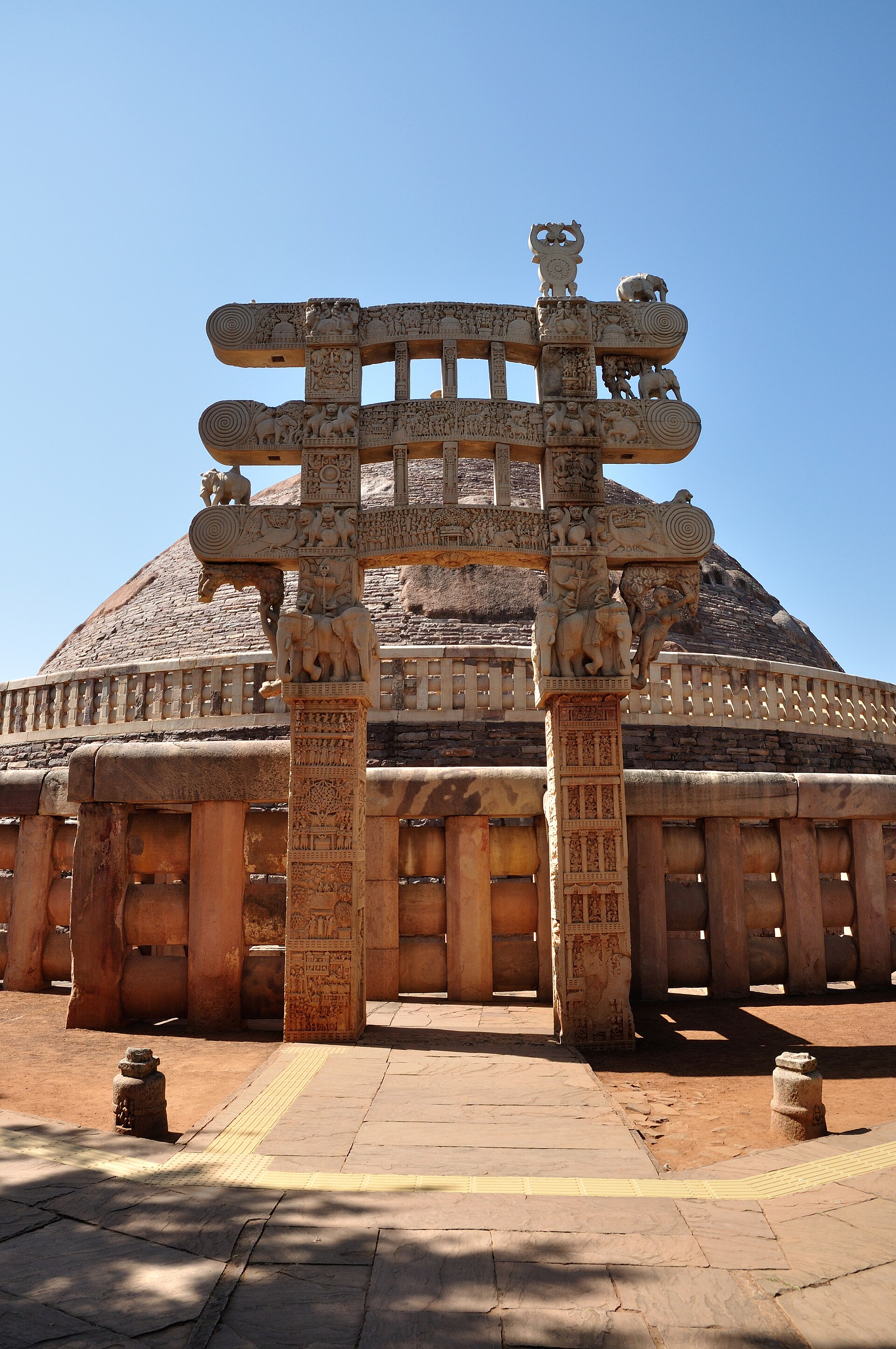
Sanchi Stupa is a Buddhist complex, famous for its Great Stupa, on a hilltop at Sanchi Town in Raisen District of the State of Madhya Pradesh, India. It is located about 23 kilometres from Raisen town, the district headquarters and 46 kilometres (29 mi) northeast of Bhopal, capital of Madhya Pradesh.
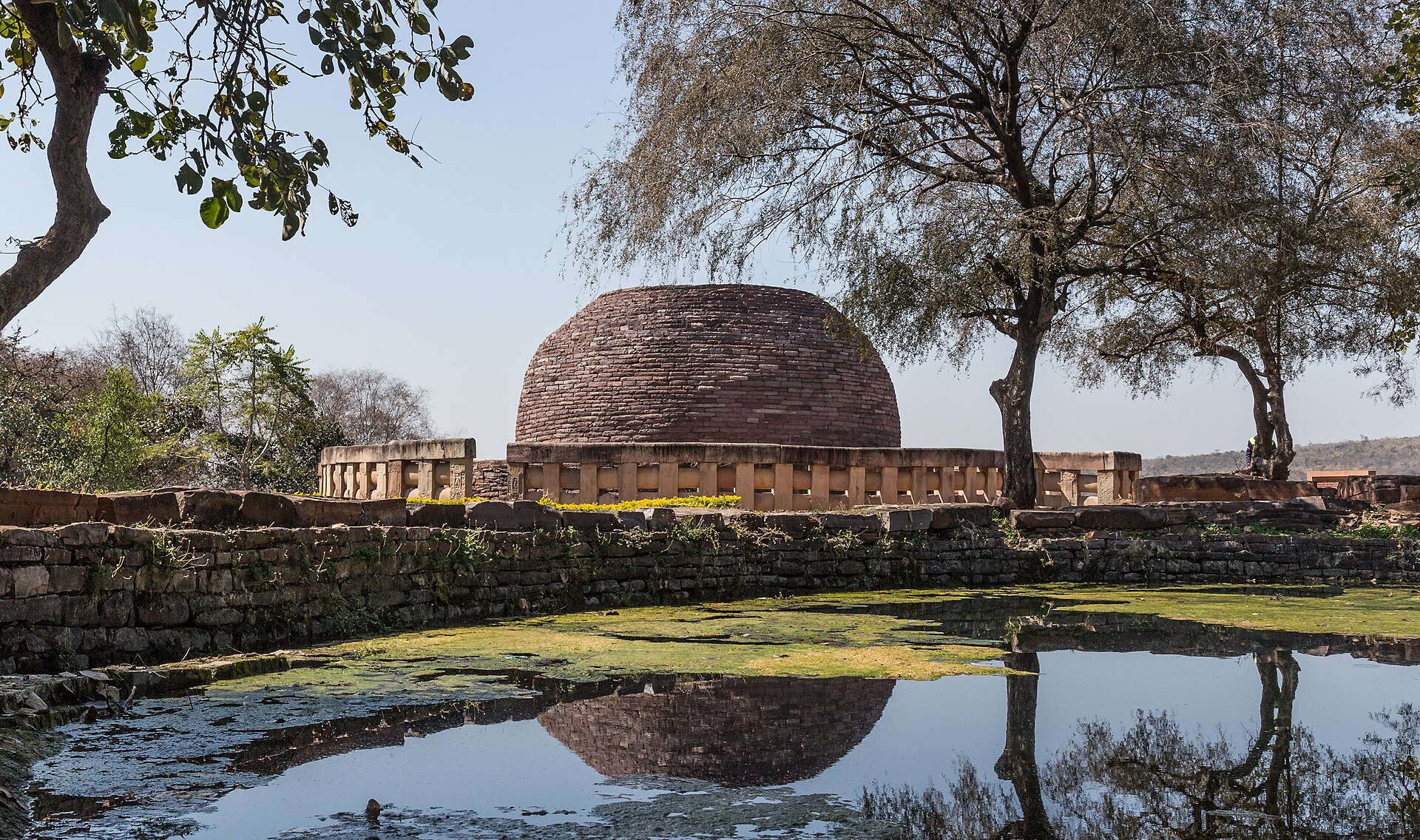
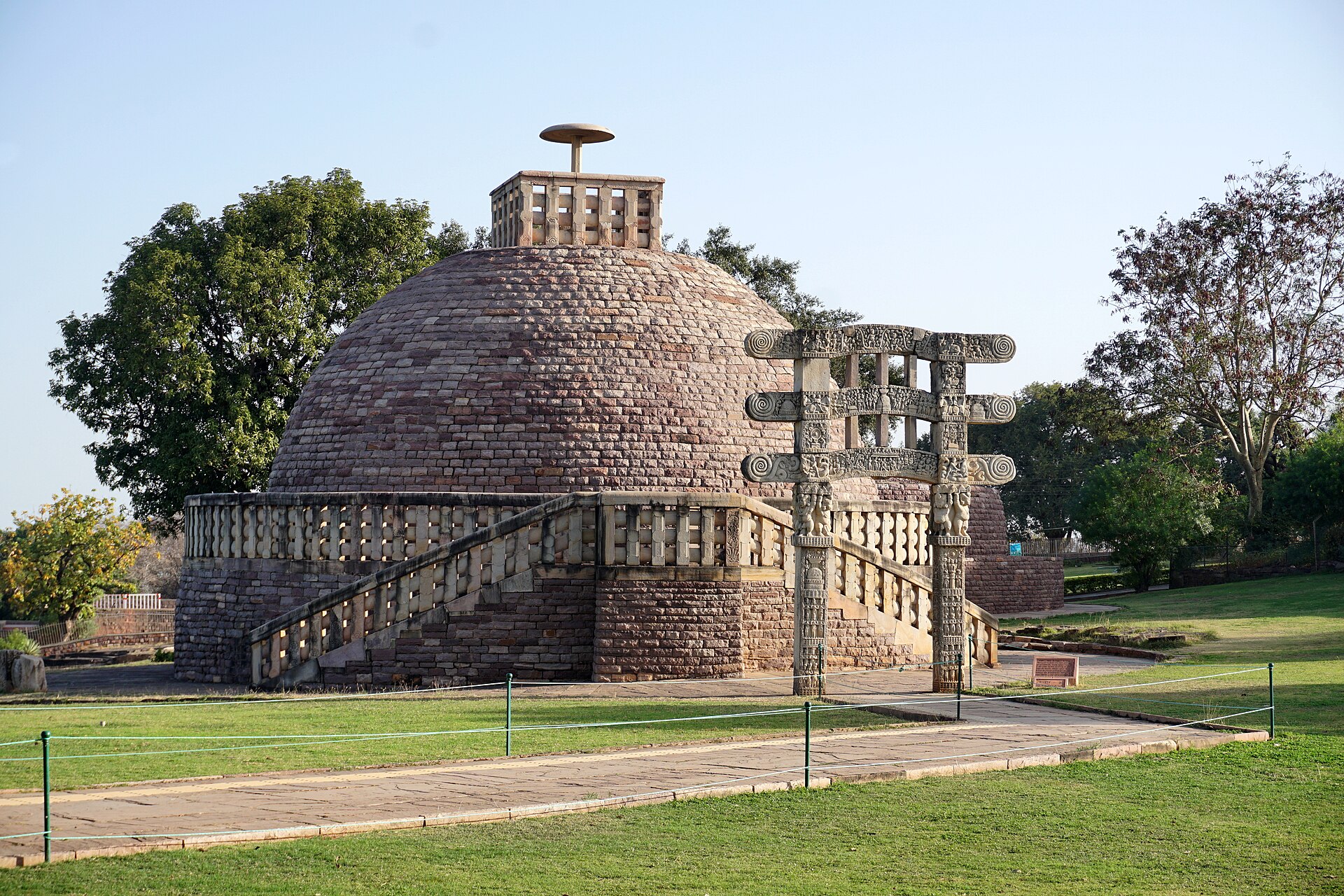
The Great Stupa at Sanchi is one of the oldest stone structures in India, and an important monument to the historical architecture of India. It was originally commissioned by the Mauryan emperor Ashoka in the 3rd century BCE. Its nucleus was a simple hemispherical brick structure built over the relics of the Buddha. It was crowned by the chatra, a parasol-like structure symbolising high rank, which was intended to honour and shelter the relics. The original construction work of this stupa was overseen by Ashoka, whose wife Devi was the daughter of a merchant of nearby Vidisha. Sanchi was also her birthplace as well as the venue of her and Ashoka's wedding. In the 1st century BCE, four elaborately carved toranas (ornamental gateways) and a balustrade encircling the entire structure were added. The stupa at Sanchi, built during the Mauryan period, was made of bricks. The complex likely was continuously inhabited into the 10th or 11th century, as evidenced by building 43 which seemed to be constructed around the 10th or 11th century.
Sanchi is the centre of a region with a number of stupas., all within a few miles of the site, including Satdhara (9 km to the W of Sanchi, 40 stupas, the Relics of Sariputra and Mahamoggallana, now enshrined in the new Vihara, were unearthed there), Bhojpur (also called Morel Khurd, a fortified hilltop with 60 stupas) and Andher (respectively 11 km and 17 km SE of Sanchi), as well as Sonari (10 km SW of Sanchi). Further south, about 100 km away, is Saru Maru. Bharhut is 300 km to the northeast.
Sanchi Stupa is depicted on the reverse side of the Indian currency note of ₹200 to signify its importance to Indian cultural heritage.
Text from Wikipedia, licensed CC BY-SA 4.0.