The story
Pasargadae was the first capital of the Persian Empire, built by Cyrus the Great around 546 to 530 BCE. Cyrus united the Persians, defeated powerful kingdoms, and created an empire stretching from Turkey to Central Asia.
Cyrus built palaces with tall columns and laid out gardens with water channels. These gardens, divided into four parts, became a model for the famous Persian garden style used for thousands of years, including at the Taj Mahal.
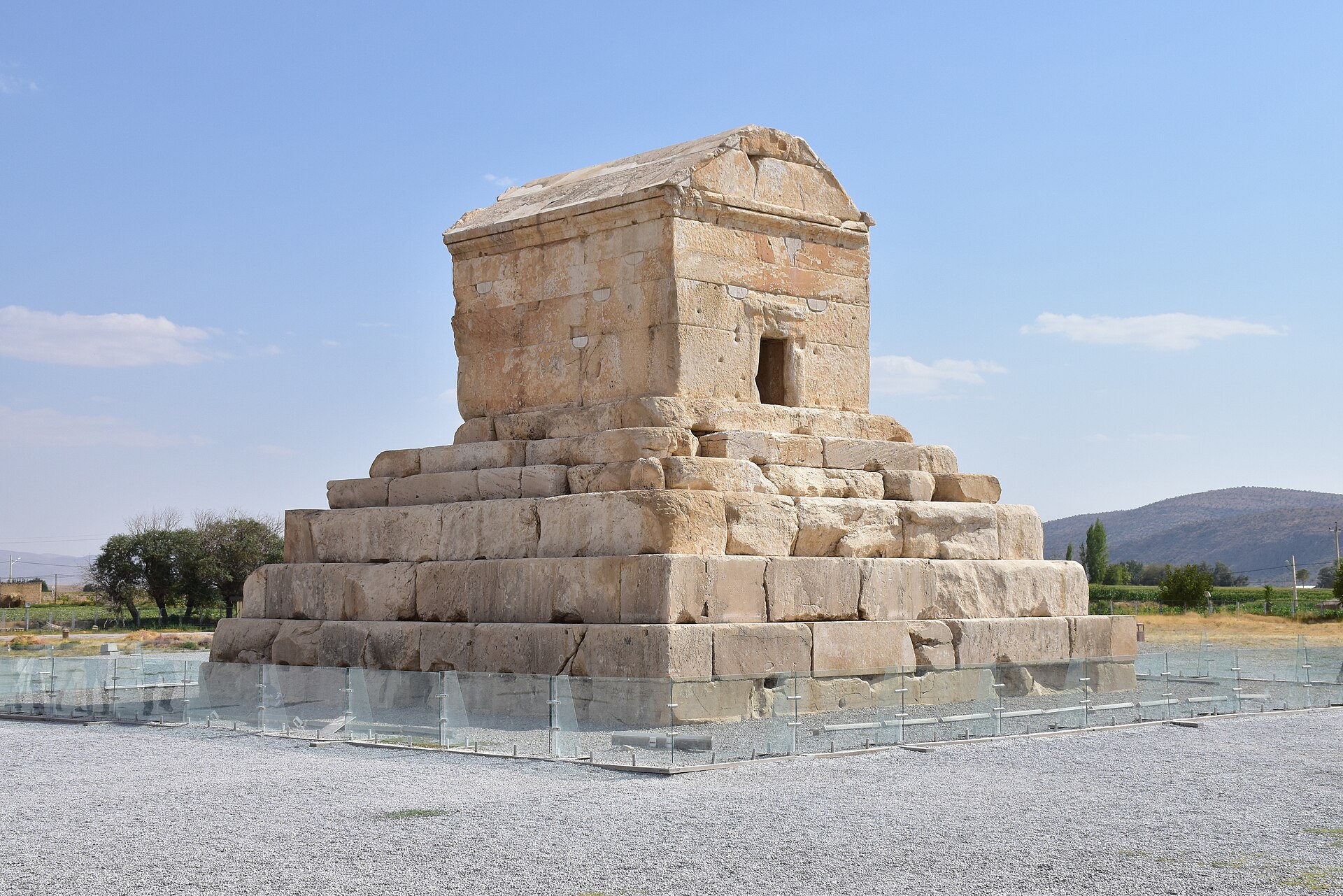
After Cyrus died, he was buried in a stone tomb here. Later, King Darius built a new capital at Persepolis, but Pasargadae stayed special. When Alexander the Great arrived in 330 BCE, he visited Cyrus's tomb and ordered it repaired.
How it ended
Pasargadae lost importance when Persepolis became the main capital. After Alexander's conquest ended the Persian Empire, the city faded. In later centuries, people thought the tomb belonged to King Solomon's mother, which helped protect it.
What life was like
Pasargadae was a royal city, so it was home to the king's court, guards, gardeners and builders. Workers came from all over the empire, and their skills mixed together in the buildings. Gardeners kept water running through stone channels to grow fruit trees and flowers in the dry land. Persian nobles rode horses and hunted on the plain.
Wow facts
- Cyrus's tomb has stood for about 2,500 years.
- The garden here is one of the oldest known Persian gardens.
- A stone carving at the site shows a figure with four wings, sometimes thought to be Cyrus himself.
Photos
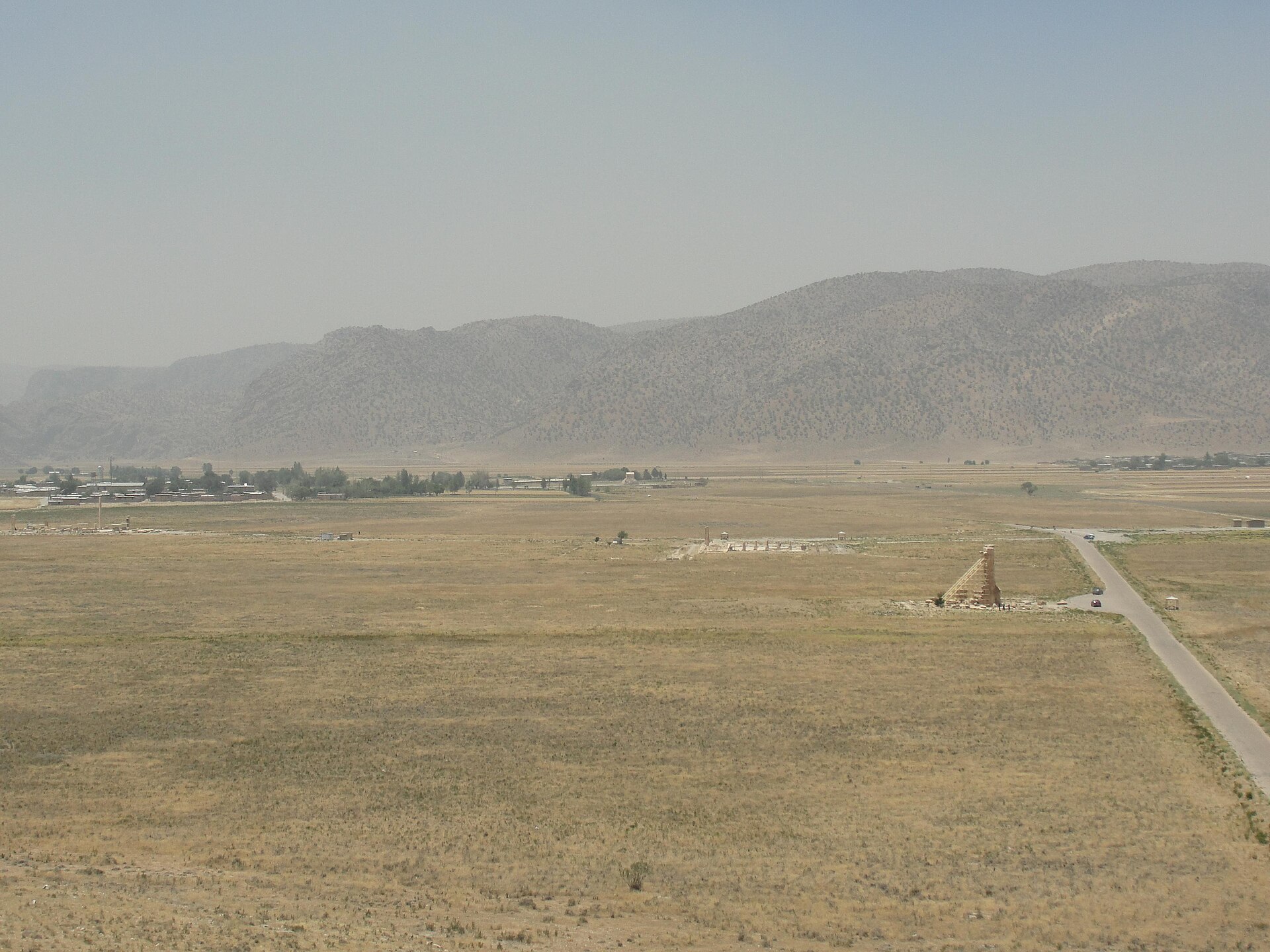 overall view of Pasargadae from the Tal Takht hill. The tomb of Cyrus the great is the... Truth Seeker, CC BY-SA 3.0
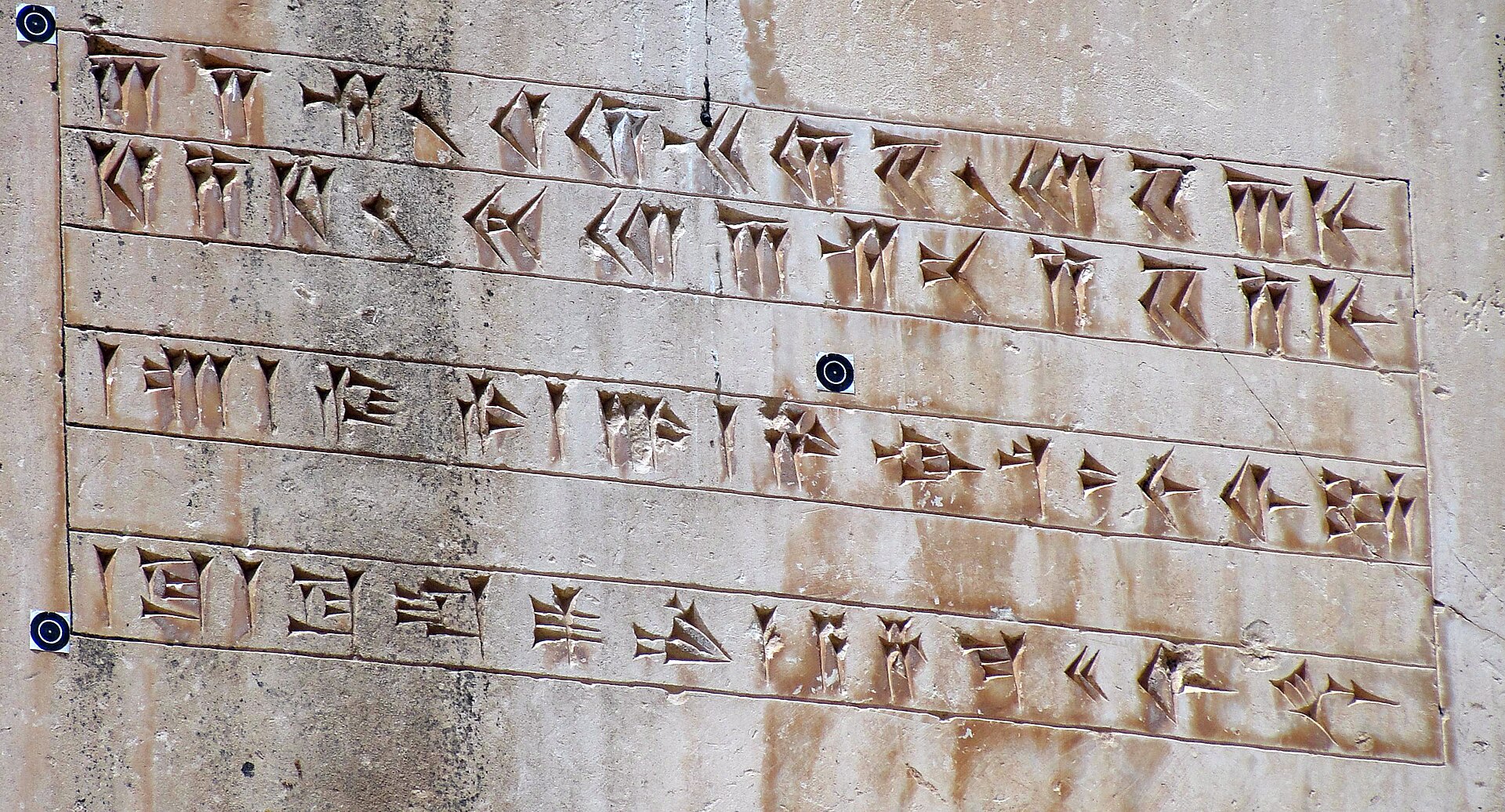 Inscription in Old Persian, Elamite and Akkadian languages. It is carved on a column in... Truth Seeker (fawiki), CC BY-SA 3.0
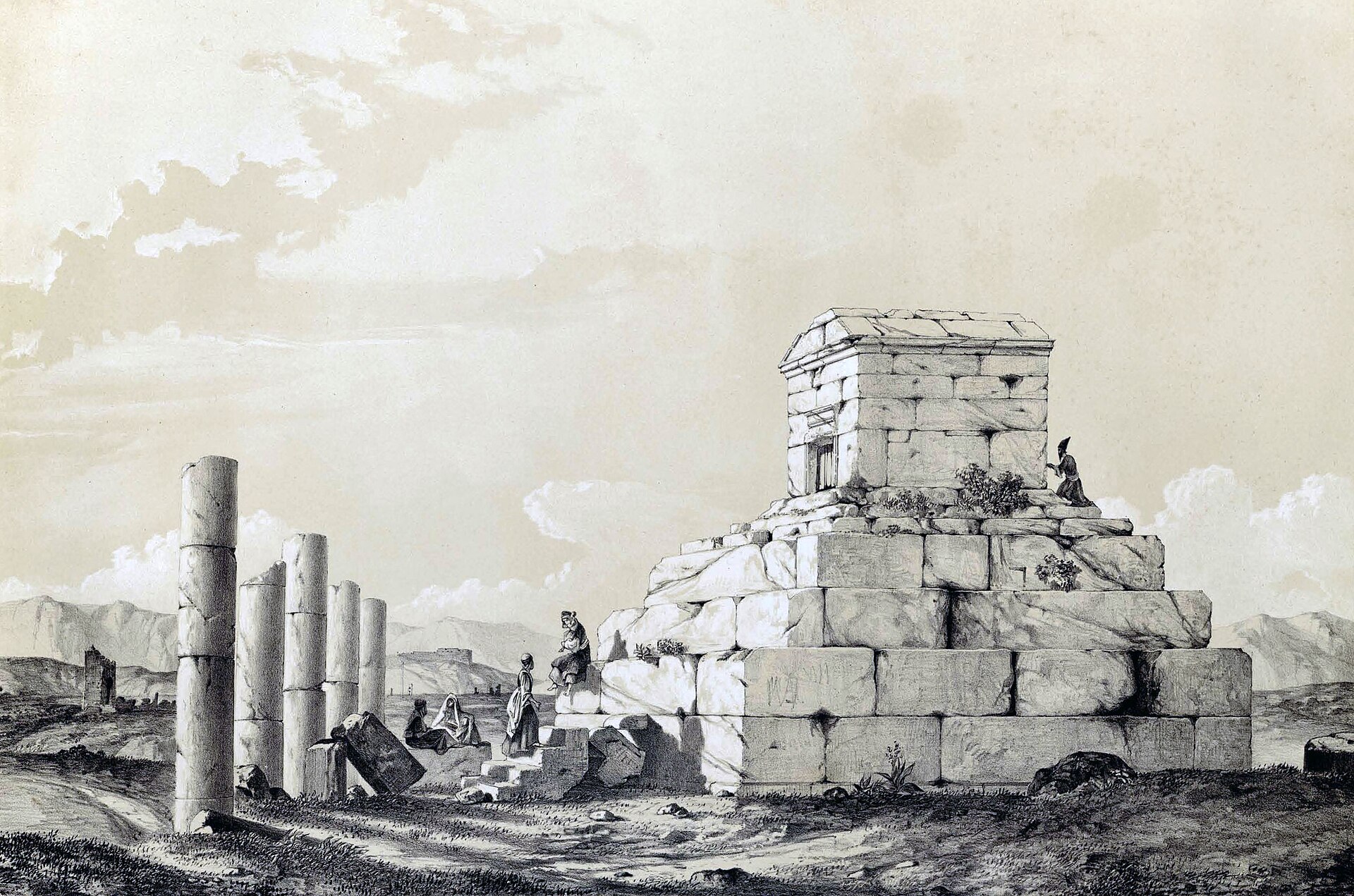 Ruins Passargade Tomb of Cyrus said Eugène Flandin, Public domain
Relics and treasures
- Tomb of Cyrus the Greatthe stone tomb on its stepped base, still at the site
- Winged figure reliefa carved guardian figure on a gatehouse doorway, still at the site
- Palace columnsstone bases and columns from the royal palaces, still at the site
- Garden water channelsstone channels from the royal garden, still at the site
How we know
Greek writers who traveled with Alexander described the tomb. Archaeologists, including Iranian and British teams, mapped the palaces and gardens in the 1900s. Inscriptions in Old Persian, Elamite and Babylonian name the king.
What you would see today
Visitors see the tomb of Cyrus, the ruins of palaces and a gate, and traces of the old garden channels. Pasargadae is a UNESCO World Heritage Site, and many Iranians visit to honor Cyrus.
For teachers and classrooms
Suggested level: grades 6-8. Print this page as a lesson sheet with the story, vocabulary, discussion questions and a quiz with an answer key.
Key words
- empire
- a group of lands and peoples ruled by one ruler or government
- capital
- the city where a government is based
- tolerance
- accepting people with different beliefs and ways of life
Talk about it
- Why might a powerful king choose a simple tomb?
- How do gardens show what people value?
Try this activity
- Draw a map of Pasargadae as it looked at its busiest, and label three things people did there.
- Find Pasargadae on the Ruinscape timeline, then pick another place from the same century and compare them.
- Use one link in Sources below to find a real object from this place. Describe what it is made of and what it tells us.
Quick quiz
Who built Pasargadae?
- Darius
- Cyrus the Great
- Xerxes
- Alexander
Show the answer
B. Cyrus the Great built it as his capital.
What famous style began here?
- Persian garden
- Gothic cathedral
- Roman arch
- Japanese temple
Show the answer
A. Its four-part garden became the model for Persian gardens.
Which later conqueror visited Cyrus's tomb?
- Julius Caesar
- Alexander the Great
- Genghis Khan
- Hannibal
Show the answer
B. Alexander visited the tomb and ordered it repaired.
Sources and further reading
Ruinscape lessons are written for students and checked against encyclopedia and museum records. Go to the sources: these links search real museum collections, the UNESCO list and research by archaeologists.
- Wikipedia articleEncyclopedia overview with its own references
- UNESCO World HeritageOfficial listing, if the site is protected
- Google Arts & CultureMuseum exhibits, virtual tours and close-up photos
- British Museum collectionReal objects, photos and catalog notes
- The Met collectionObjects and essays from the Metropolitan Museum of Art
- Smithsonian collectionsU.S. national museum records
- 3D models on SketchfabScans of sites and artifacts (check each license)
- Scholarly articlesResearch papers by archaeologists and historians
Read the full background
Pasargadae (; from Pāθra-gadā, lit. 'protective club' or 'strong club'; Persian: پاسارگاد, romanized: Pāsārgād) was the capital of the Achaemenid Empire under Cyrus the Great (559–530 BC), located just north of the town of Madar-e-Soleyman and about 90 kilometres (56 mi) to the northeast of the city of Shiraz. It is one of Iran's UNESCO World Heritage Sites. It is considered to be the location of the Tomb of Cyrus, a tomb previously attributed to Madar-e-Soleyman, the "Mother of Solomon".
Background text from Wikipedia, available under CC BY-SA 4.0.
Last updated: October 2026. How we make Ruinscape.