No. 36
Persepolis

- Where
- Iran
- Built by
- Achaemenid Persians
- Era
- 518 BCE onward
- Known for
- A ceremonial capital with stairways of carved tribute bearers.
- How it ended
- Burned by Alexander the Great in 330 BCE.

Lyra Kael can take you here on the globe, tell you the story out loud and answer your questions. Start the time jump.
Background
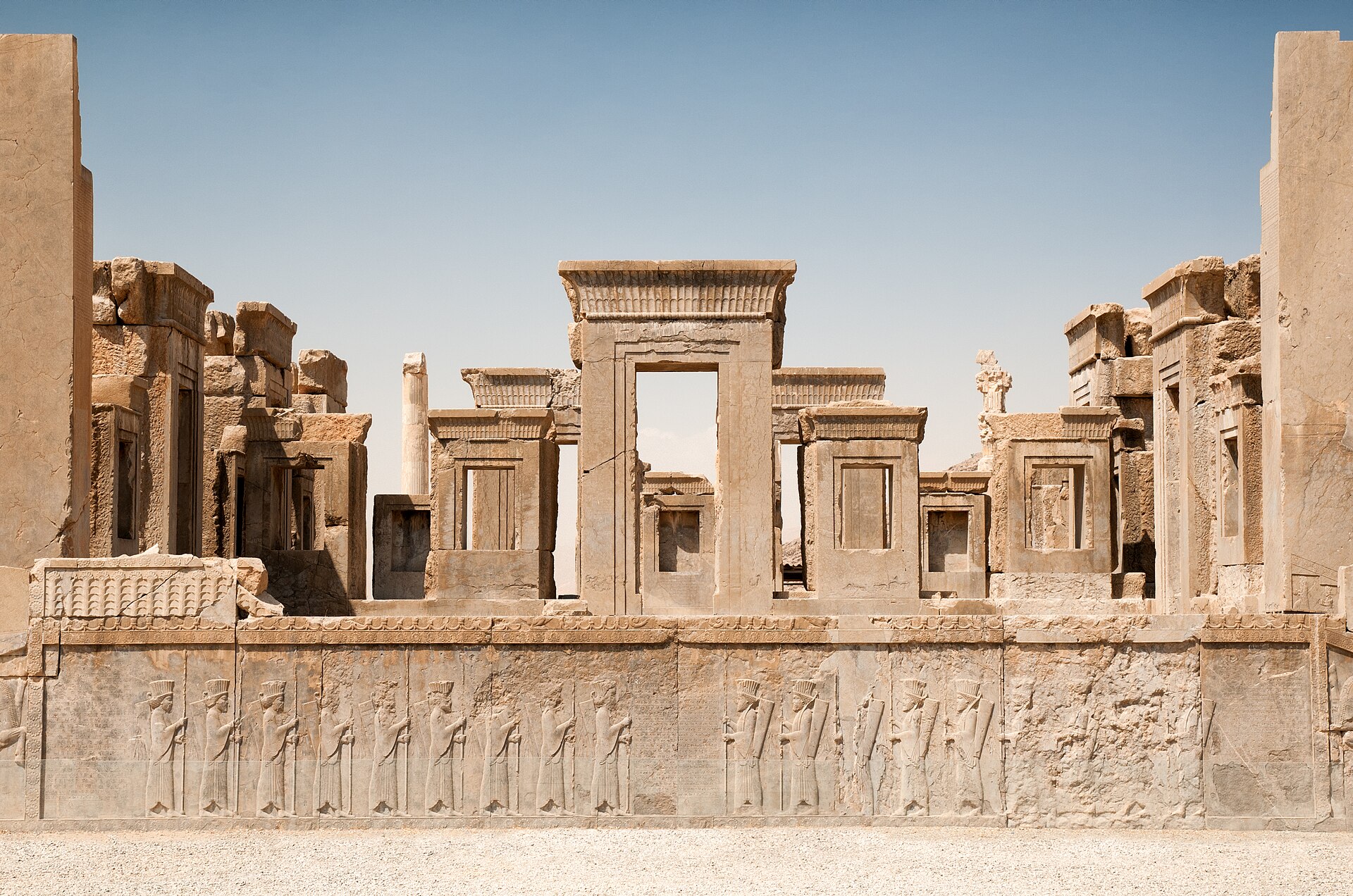
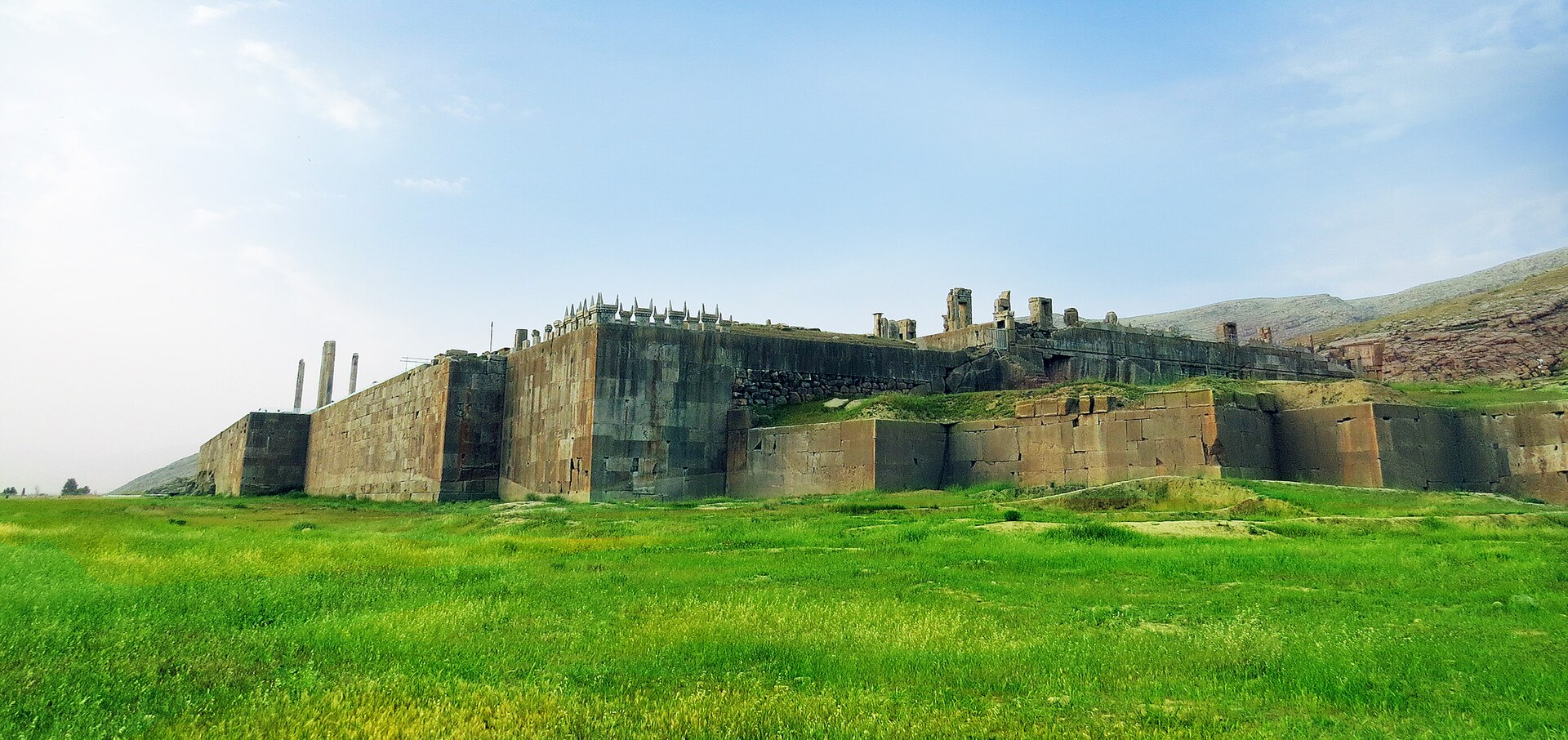
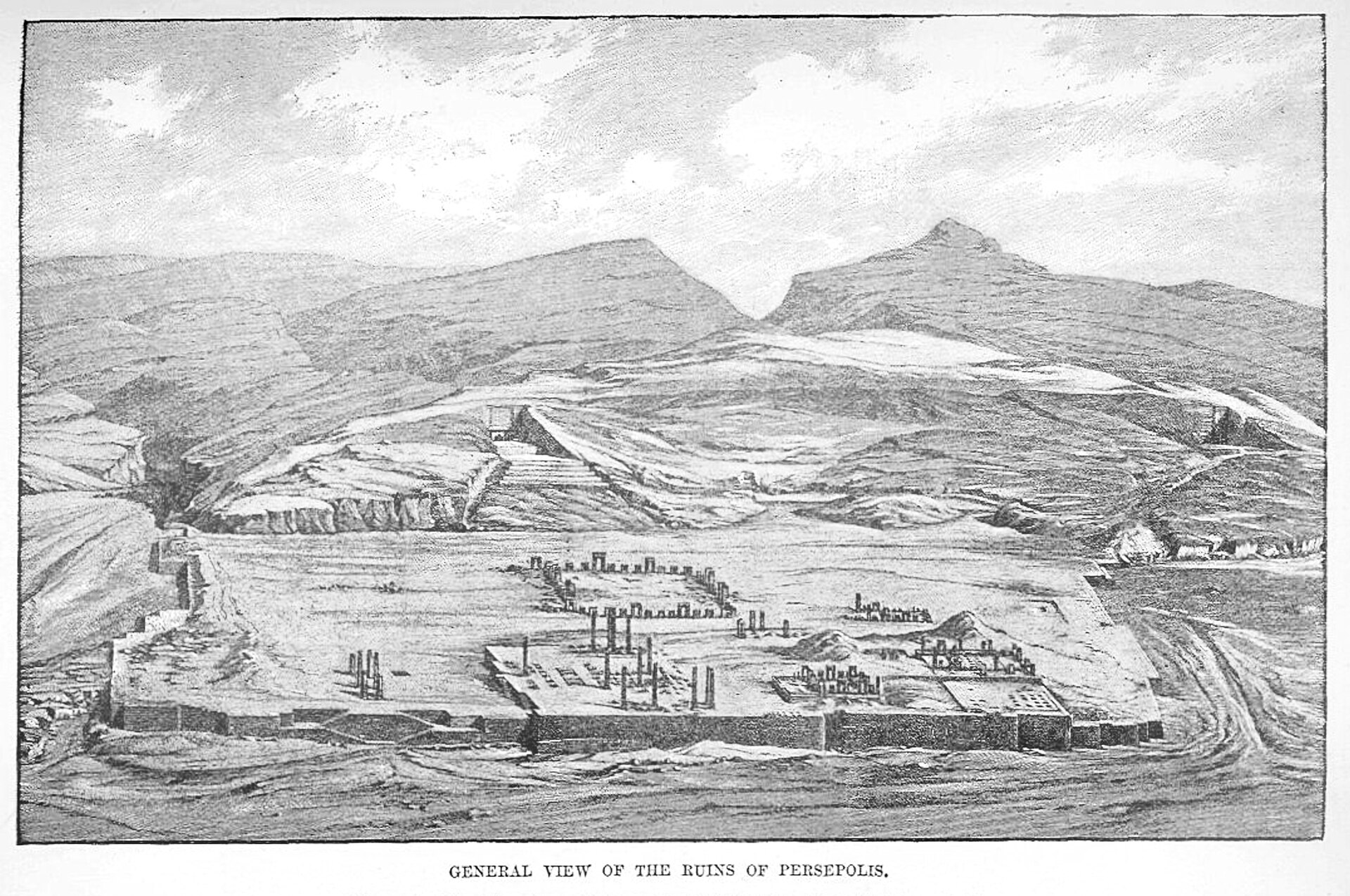
Persepolis was the ceremonial capital of the Achaemenid Empire (c. 550–330 BC). It is situated in the plains of Marvdasht, encircled by the southern Zagros Mountains, Fars province of Iran. It is one of the key Iranian cultural heritage sites and a UNESCO World Heritage Site.
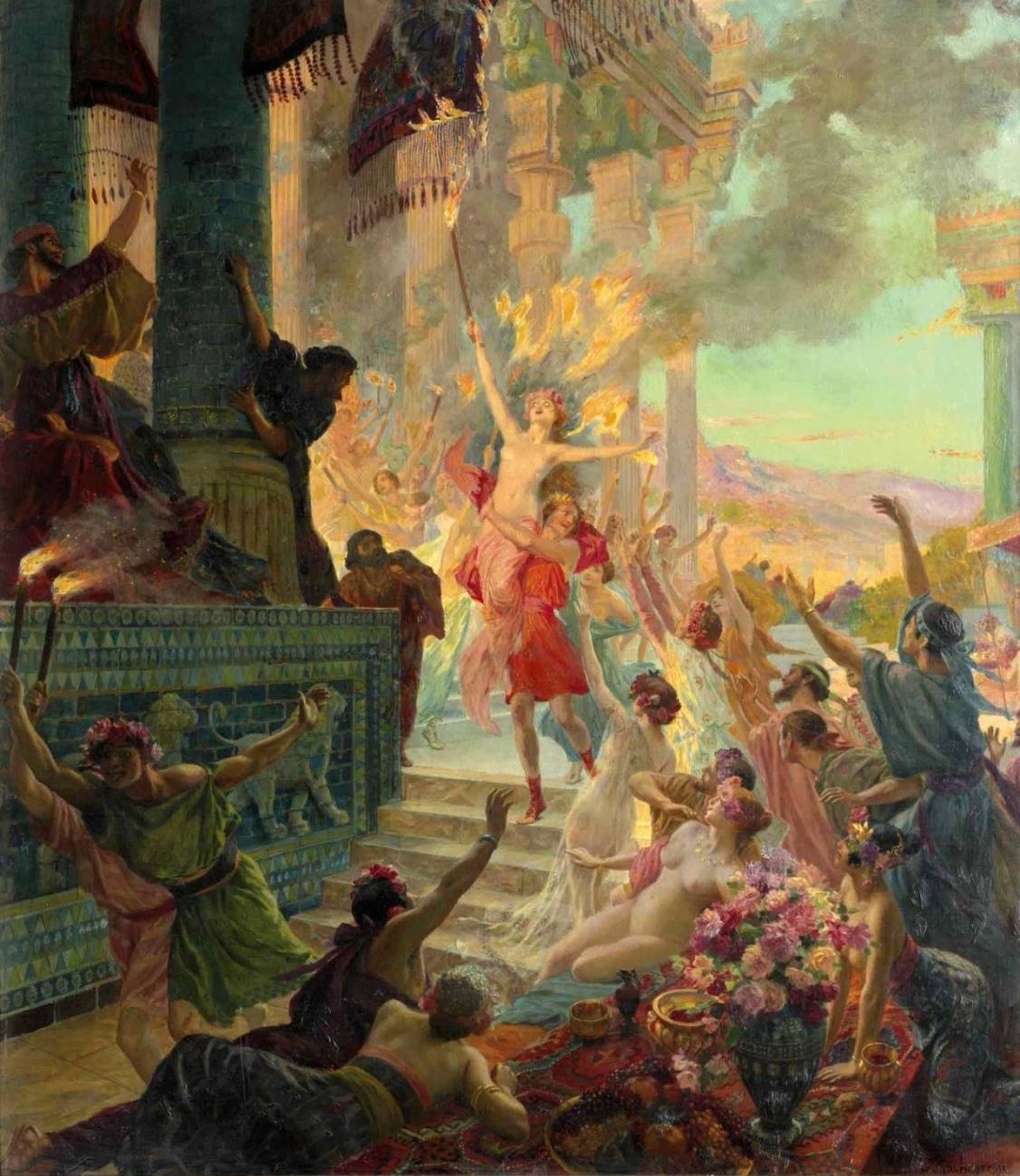
The earliest remains of Persepolis date back to 515 BC. The city, acting as a major center for the empire, housed a palace complex and citadel designed to serve as the focal point for governance and ceremonial activities. It exemplifies the Achaemenid style of architecture. The complex was taken by the army of Alexander the Great in 330 BC, and soon after, its wooden parts were completely destroyed by fire. According to one theory, Alexander deliberately set fire to Persepolis to avenge the destruction of Athens by the Persians; a second theory is that it was at the urging of Thaïs, a courtesan, during a feast when Alexander was intoxicated.
The exact function of Persepolis remains unclear. It was not one of the largest cities in ancient Iran, let alone the rest of the empire, but appears to have been a grand ceremonial complex that was only occupied seasonally; the complex was raised high on a walled platform, with five "palaces" or halls of varying size, and grand entrances. It is still not entirely clear where the king's private quarters actually were. Until recently, most archaeologists held that it was primarily used for celebrating Nowruz, the Persian New Year, held at the spring equinox, which is still an important annual festivity in Iran. The Iranian nobility and the tributary parts of the empire came to present gifts to the king, as represented in the stairway reliefs. It is also unclear what permanent structures there were outside the palace complex; due to these factors, Persepolis is more often referred to as a complex rather than a "city" in the usual sense.
The exploration of Persepolis from the early 17th century led to the modern rediscovery of cuneiform writing and, from detailed studies of the trilingual Achaemenid royal inscriptions found on the ruins, the initial decipherment of cuneiform in the early 19th century.
Text from Wikipedia, licensed CC BY-SA 4.0.