The story
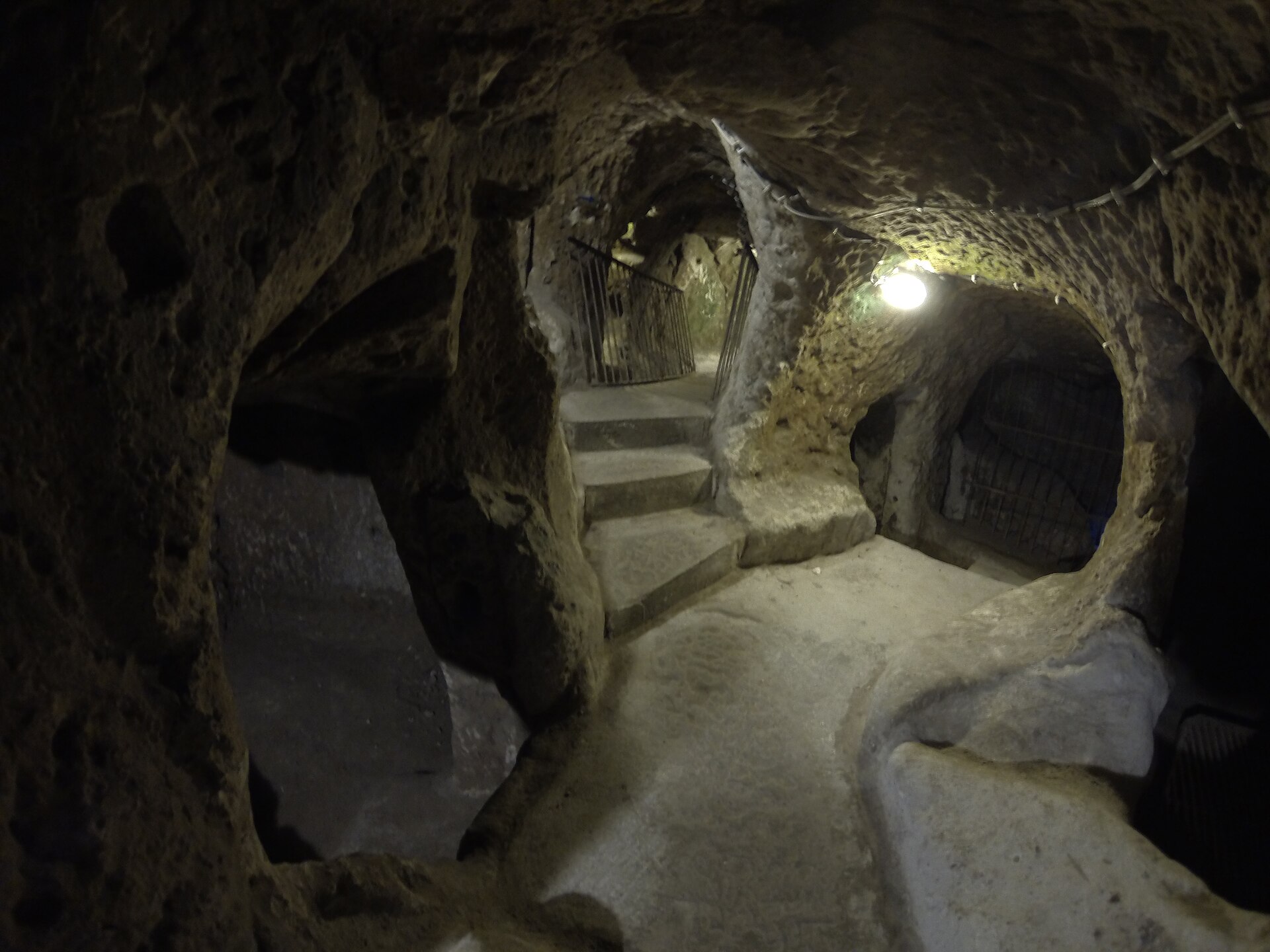
Cappadocia's soft volcanic rock is easy to carve. People here have been digging homes and shelters into it for thousands of years. Derinkuyu may have started as small cellars, possibly as early as the 700s BCE.
During the Byzantine era, from about 780 to 1180 CE, it was dug much deeper. When raiders came, families could hurry underground with their animals and food. Huge round stone doors, like giant wheels, could be rolled across tunnels to block enemies.
The city had air shafts, wells, kitchens, stables, wine presses, storage rooms and a chapel. It even connects by a tunnel several kilometers long to another underground city, Kaymakli. Christians used it as a refuge into the 1900s.
How it ended
Derinkuyu was never destroyed. People used it as a refuge for centuries, until the local Christian population left the region in 1923. Then it was forgotten until its rediscovery in 1963.
What life was like
Living underground was dark and crowded, but it was safe. People cooked over small fires, using air shafts to carry smoke away. Animals were kept near the top. Lamps burning oil gave light. Wells provided water that enemies could not poison from above. When danger passed, everyone climbed back up to their farms.
Wow facts
- Rolling stone doors weighed hundreds of kilograms and could only be opened from inside.
- A tunnel may connect Derinkuyu to another underground city about 8 kilometers away.
- Air shafts kept the city breathable, even many levels deep.
Photos
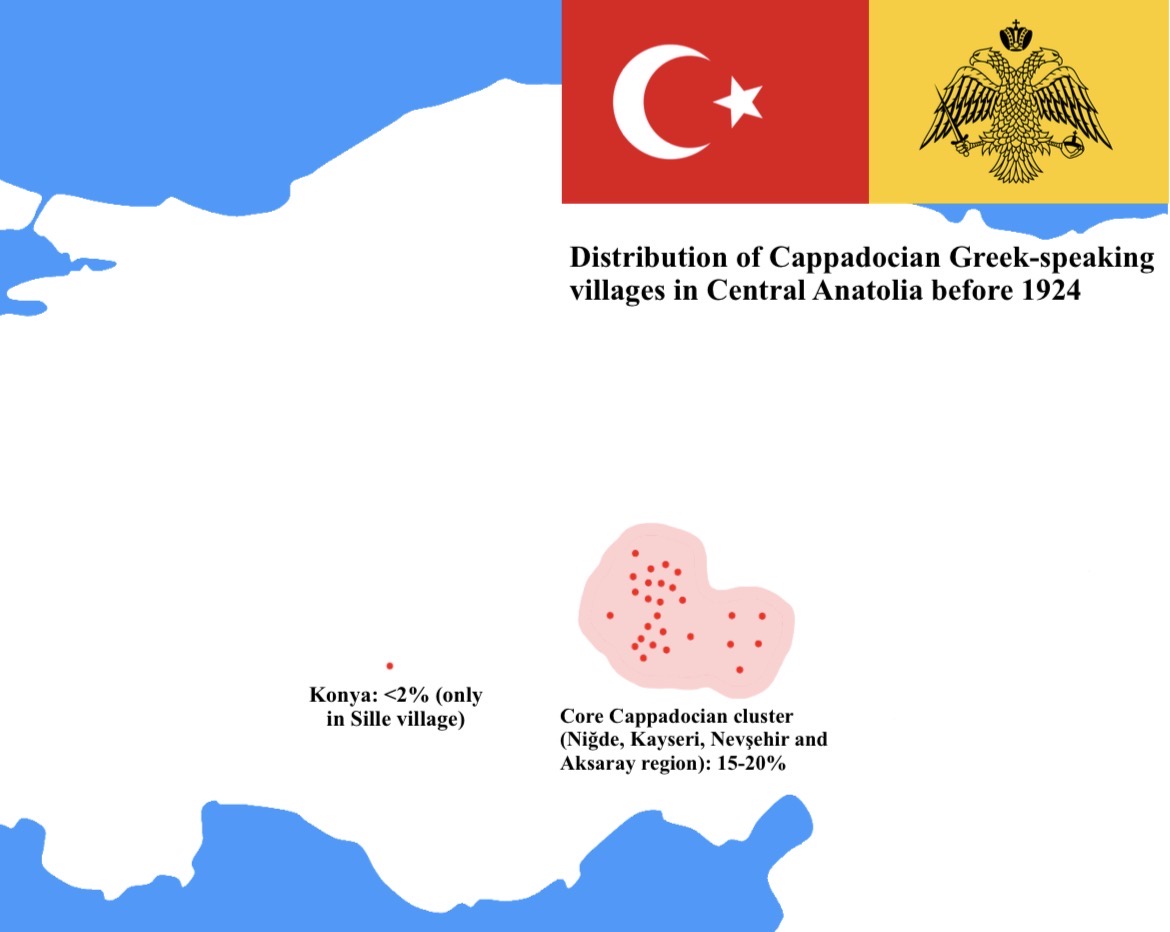 Estimated overall prevalence of Cappadocian Greek speakers by region (pre-1924): •... Squeaks 41, CC BY 4.0
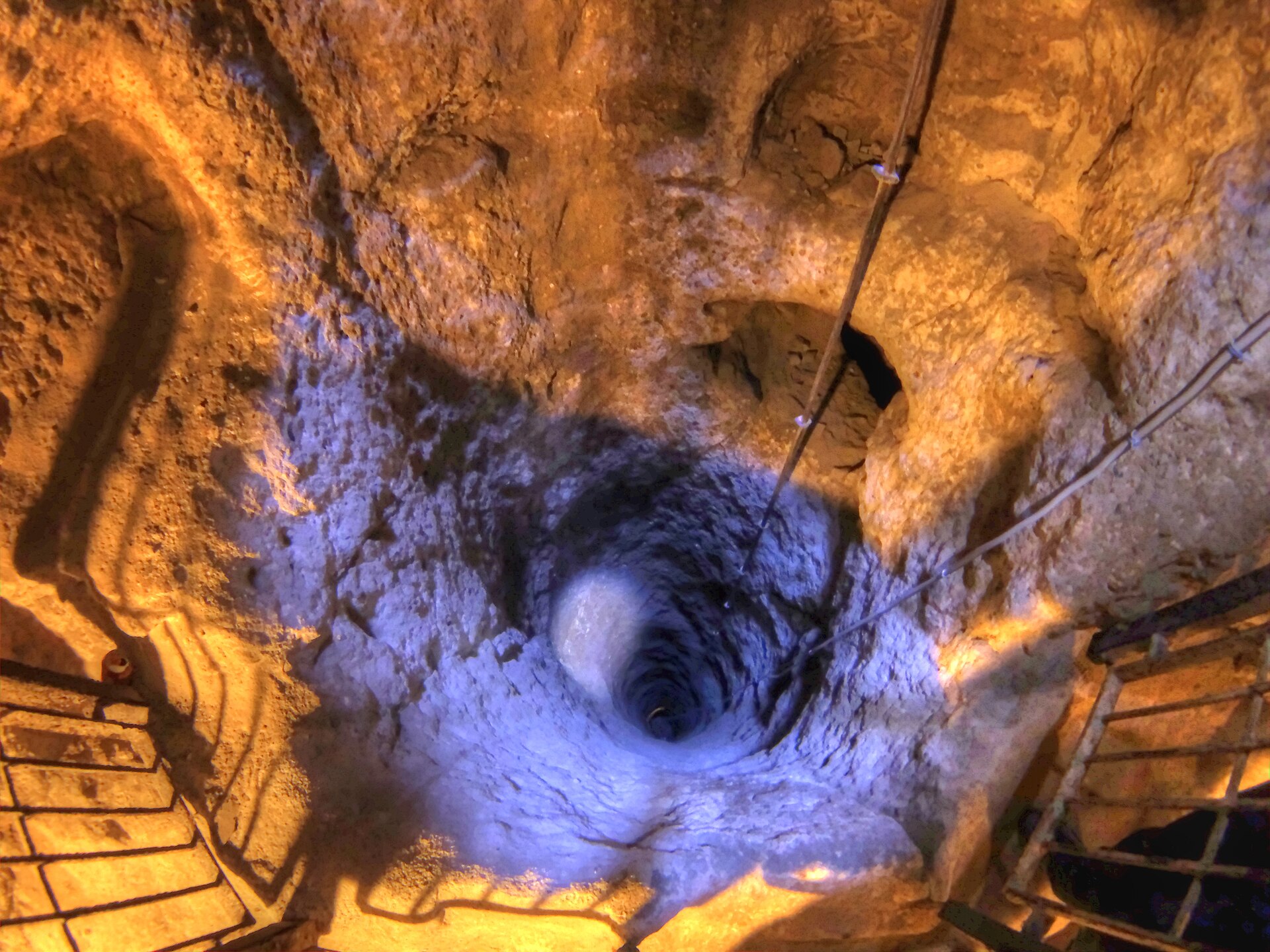 Ventilation well in Derinkuyu Underground City in Cappadocia, Turkey. Christians fled... Nevit Dilmen (talk), CC BY-SA 3.0
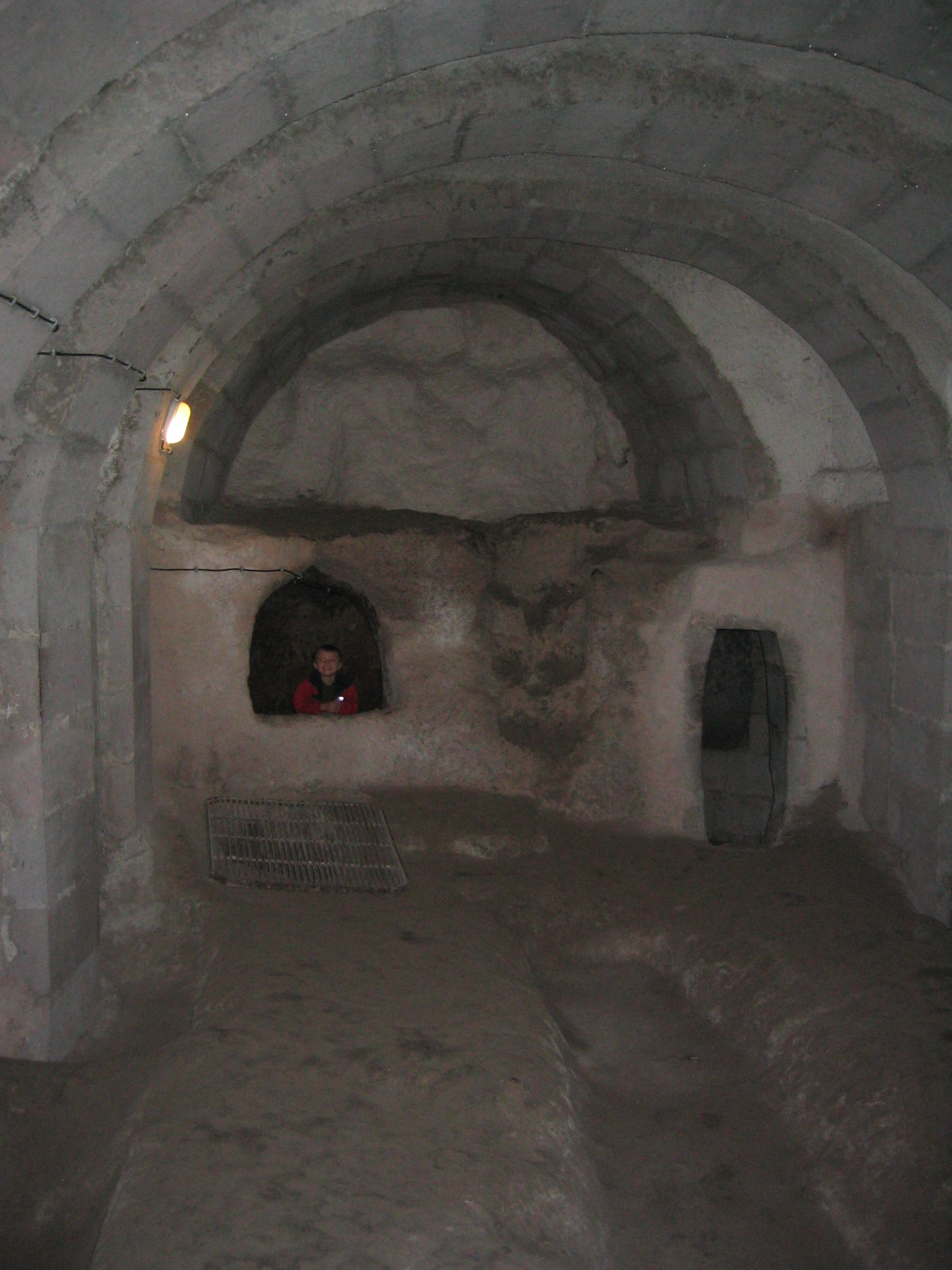 Large room near the final exit. Wmmorrow, CC BY-SA 4.0
Relics and treasures
- Rolling stone doorsround stone doors used to seal tunnels, still at the site
- Ventilation shaftsdeep air shafts that kept the city breathable, at the site
- Chapela cross-shaped room on a lower level, at the site
- Stables and wine press roomscarved spaces near the top, at the site
How we know
In 1963, a man renovating his house knocked down a wall and found a tunnel behind it. Archaeologists then explored and mapped the levels. Tool marks, pottery and church carvings help date different parts.
What you would see today
Visitors climb down narrow staircases and crouch through tunnels into stables, kitchens and the chapel. Only part of the city is open, and it stays cool all year.
For teachers and classrooms
Suggested level: grades 3-5. Print this page as a lesson sheet with the story, vocabulary, discussion questions and a quiz with an answer key.
Key words
- refuge
- a safe place to hide from danger
- ventilation
- a way of letting fresh air in and stale air out
- volcanic tuff
- soft rock made from volcanic ash
Talk about it
- What would you need to bring if you had to live underground for a few weeks?
- How did the people of Derinkuyu solve problems like air, water and safety?
Try this activity
- Draw a map of Derinkuyu Underground City as it looked at its busiest, and label three things people did there.
- Find Derinkuyu Underground City on the Ruinscape timeline, then pick another place from the same century and compare them.
- Use one link in Sources below to find a real object from this place. Describe what it is made of and what it tells us.
Quick quiz
How was Derinkuyu rediscovered in 1963?
- A man found it behind a wall in his house
- A satellite photo
- A dog fell in
- An earthquake opened it
Show the answer
A. A man renovating his home knocked down a wall and found a tunnel.
What blocked tunnels from enemies?
- Rolling stone doors
- Water
- Fire
- Glass
Show the answer
A. Huge round stone doors could be rolled across tunnels.
Why was the rock good for digging?
- It is soft volcanic rock
- It is ice
- It is sand
- It is wood
Show the answer
A. Cappadocia's volcanic tuff is soft and easy to carve.
Sources and further reading
Ruinscape lessons are written for students and checked against encyclopedia and museum records. Go to the sources: these links search real museum collections, the UNESCO list and research by archaeologists.
- Wikipedia articleEncyclopedia overview with its own references
- UNESCO World HeritageOfficial listing, if the site is protected
- Google Arts & CultureMuseum exhibits, virtual tours and close-up photos
- British Museum collectionReal objects, photos and catalog notes
- The Met collectionObjects and essays from the Metropolitan Museum of Art
- Smithsonian collectionsU.S. national museum records
- 3D models on SketchfabScans of sites and artifacts (check each license)
- Scholarly articlesResearch papers by archaeologists and historians
Read the full background
Derinkuyu (Turkish pronunciation: [deˈɾinkuju]), also known as Malakopi, is an ancient multi-level underground city near the modern town of Derinkuyu in Nevşehir Province, Turkey, extending to a depth of approximately 85 metres (280 ft). It is large enough to have sheltered as many as 20,000 people together with their livestock and food stores. It is the largest excavated underground city in Turkey and is one of several underground complexes found throughout Cappadocia.
Background text from Wikipedia, available under CC BY-SA 4.0.
Last updated: October 2026. How we make Ruinscape.