No. 29
Ebla

- Where
- Syria
- Built by
- Eblaites
- Era
- 3000-1600 BCE
- Known for
- An archive of about 17,000 clay tablets.
- How it ended
- Destroyed around 1600 BCE, probably by the Hittites.

Lyra Kael can take you here on the globe, tell you the story out loud and answer your questions. Start the time jump.
Background
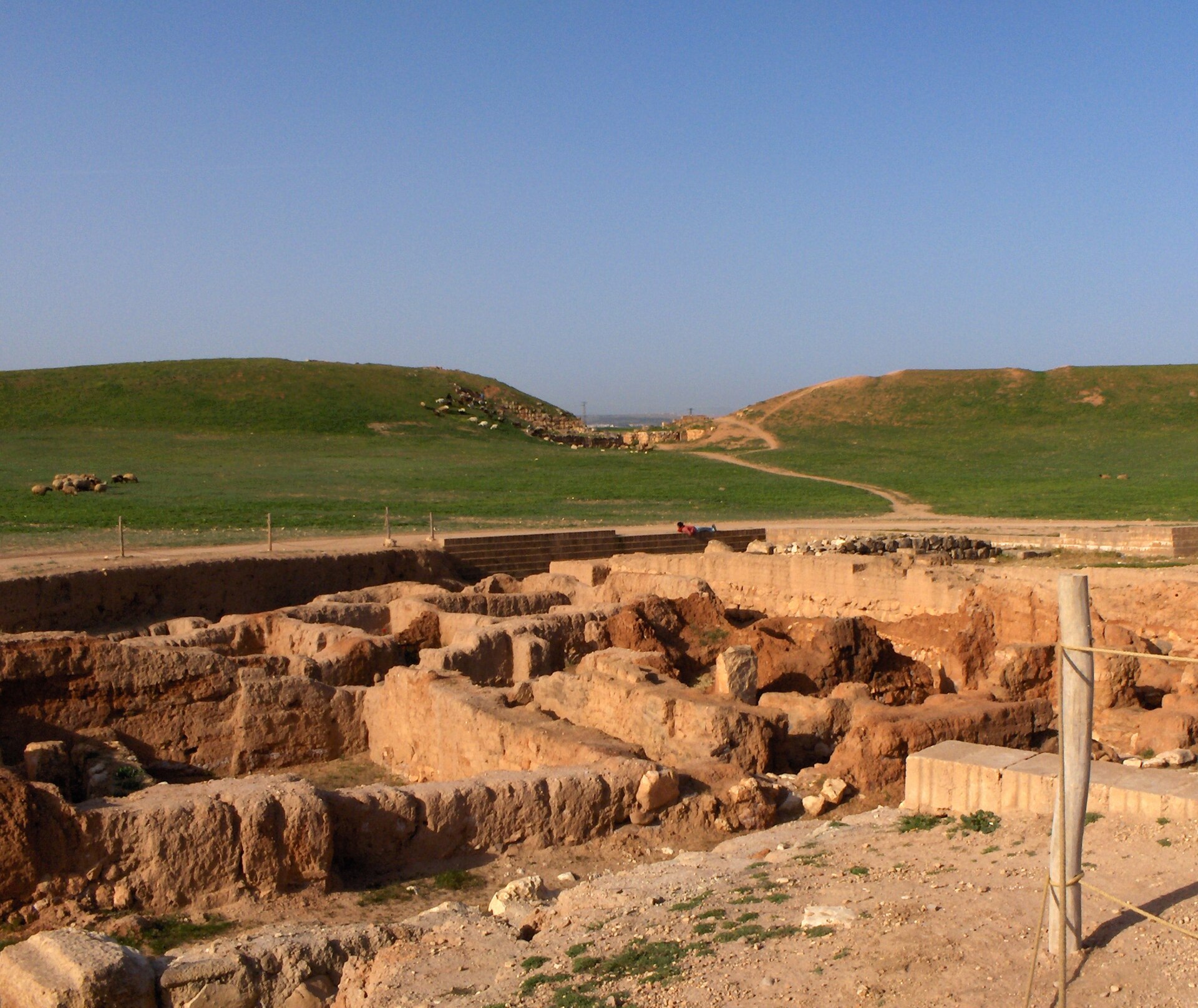
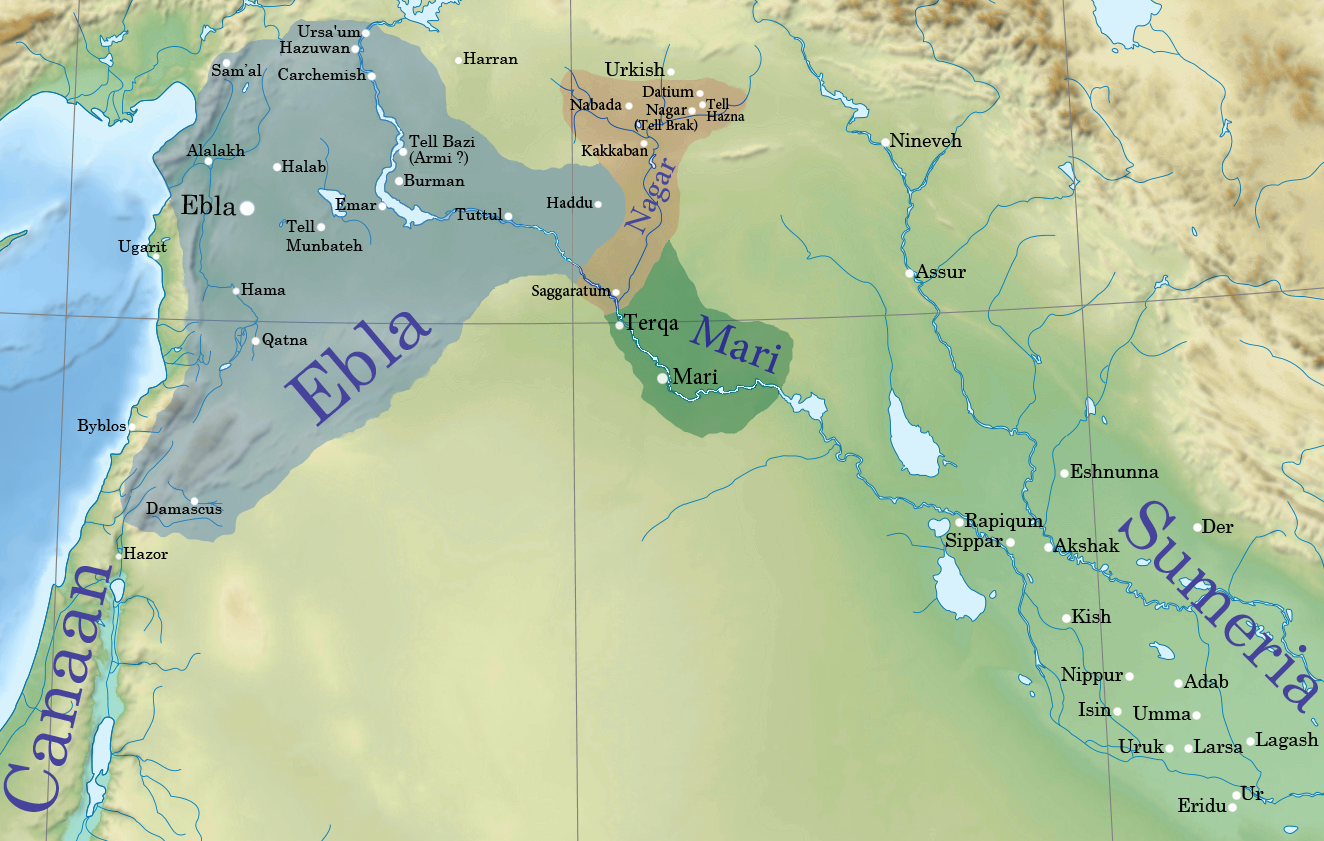
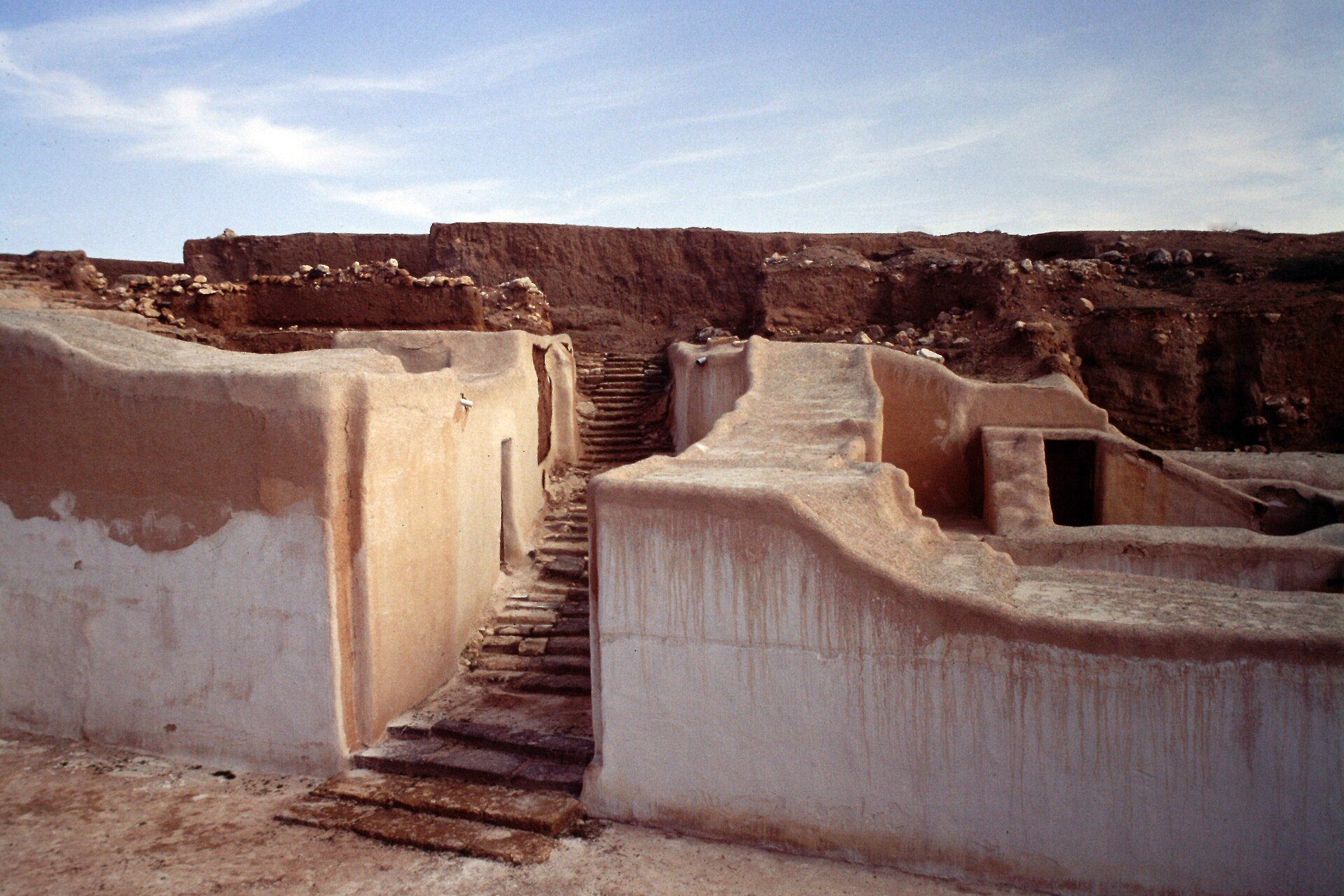
Ebla (Sumerian: 𒌈𒆷 eb₂-la, Arabic: إبلا, modern: تل مرديخ, Tell Mardikh) was one of the earliest kingdoms in Syria. Its remains constitute a tell located about 55 km (34 mi) southwest of Aleppo near the village of Mardikh. Ebla was an important center throughout the 3rd millennium BC and in the first half of the 2nd millennium BC. Its discovery proved the Levant was a center of ancient, centralized civilization equal to Egypt and Mesopotamia and ruled out the view that the latter two were the only important centers in the Near East during the Early Bronze Age.
Starting as a small settlement in the Early Bronze Age (c. 3500 BC), Ebla developed into a trading empire and later into an expansionist power that imposed its hegemony over much of northern and eastern Syria. Ebla was destroyed during the 23rd century BC. It was then rebuilt and was mentioned in the records of the Third Dynasty of Ur. The second Ebla was a continuation of the first, ruled by a new royal dynasty. It was destroyed at the end of the 3rd millennium BC, which paved the way for the Amorite tribes to settle in the city, forming the third Ebla. The third kingdom also flourished as a trade center; it became a subject and an ally of Yamhad (modern-day Aleppo) until its final destruction by the Hittite king Mursili I in c. 1600 BC.
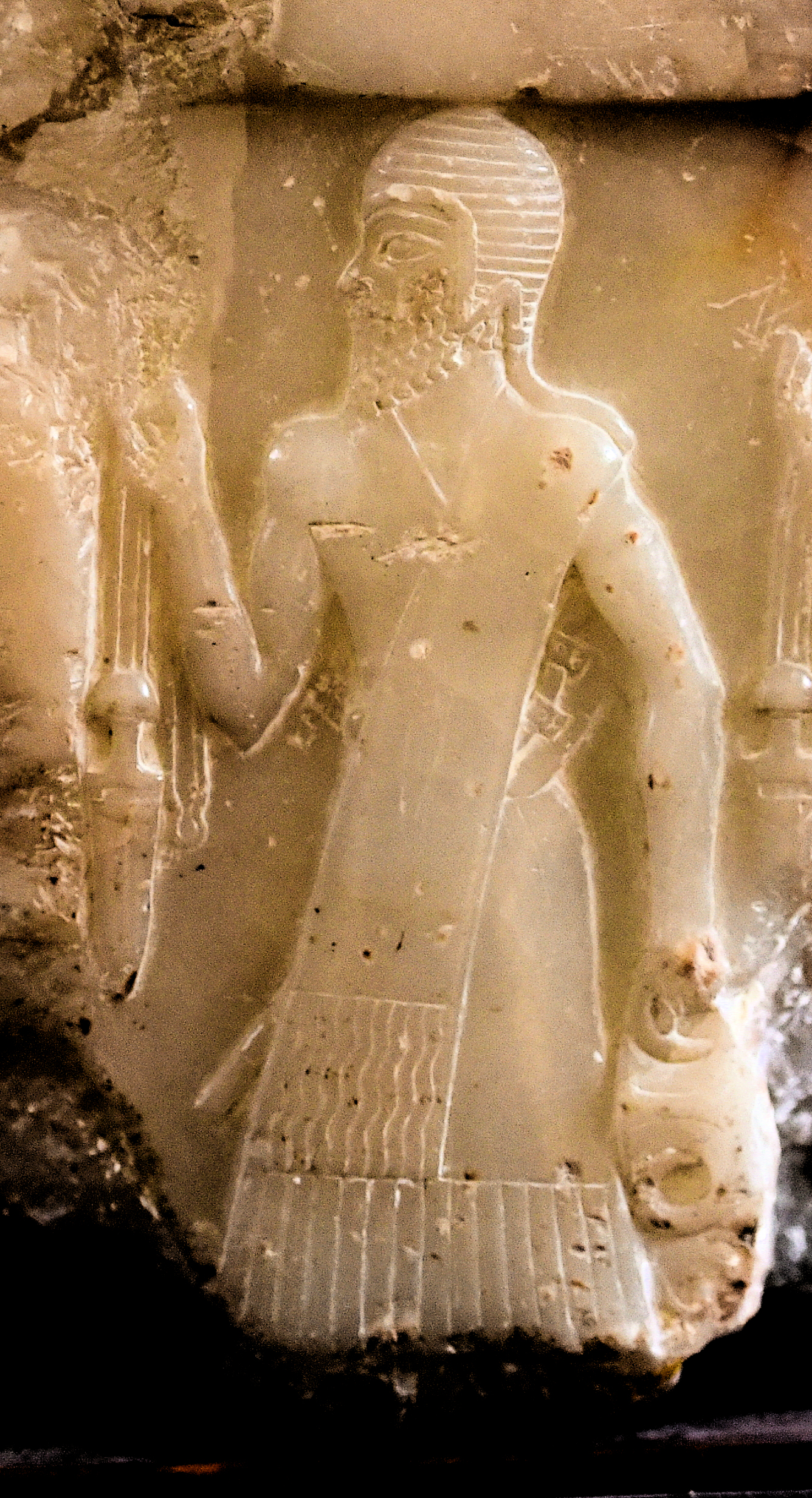
Ebla maintained its prosperity through a vast trading network. Artifacts from Sumer, Cyprus, Egypt and as far as Afghanistan were recovered from the city's palaces. The kingdom had its own language, Eblaite, and the political organization of Ebla had features different from the Sumerian model. Women enjoyed a special status, and the queen had major influence in the state and religious affairs. The pantheon of gods was mainly north Semitic and included deities exclusive to Ebla. The city was excavated from 1964 and became famous for the Ebla tablets, an archive of about 20,000 cuneiform tablets found there, dated to 2500 BC–2350 BC. Written in both Sumerian and Eblaite with cuneiform script, the archive has allowed a better understanding of the Sumerian language as well as Levantine political organization and social customs of the mid-3rd millennium BC.
Based on remote sensing as of 2022, the site has been and continued to be heavily damaged by military activity and associated looting. Especially important, "The central high mound was badly damaged in February 2017 by
Text from Wikipedia, licensed CC BY-SA 4.0.