The story
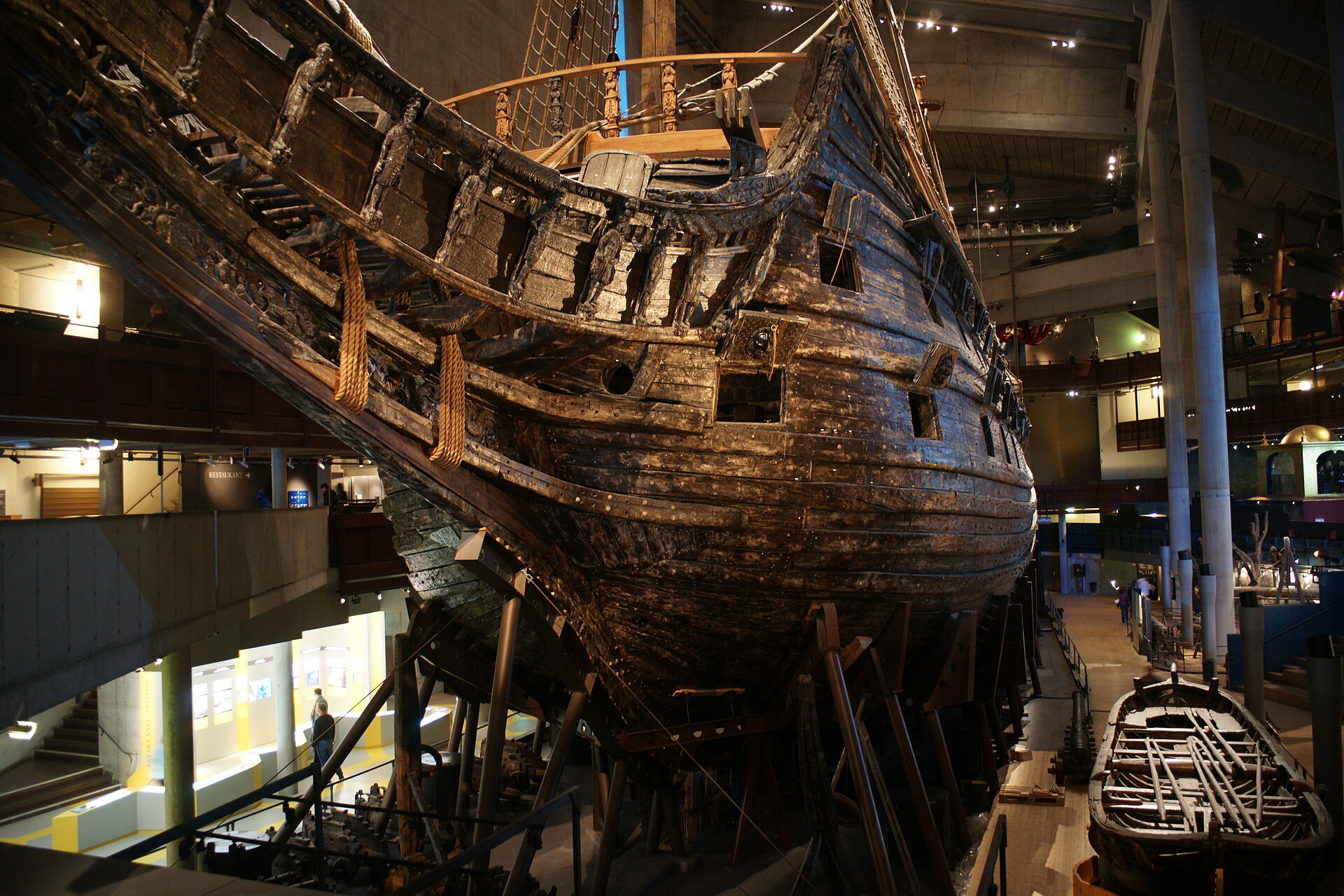
King Gustav II Adolf of Sweden wanted a mighty warship to show off his power. The Vasa had 64 bronze cannons and was covered with hundreds of carved and painted sculptures of lions, kings, mermaids and Roman soldiers.
On August 10, 1628, crowds watched the Vasa set sail. After only about 1,300 meters, a gust of wind tipped it over. Water poured into its open gunports, and it sank. About 30 people died.
The ship was top-heavy, with too much weight high up and not enough ballast below. For 333 years it lay on the harbor floor. Because the Baltic water is cold and low in salt, shipworms did not eat the wood. In 1961, it was raised almost whole.
How it went under
The Vasa sank because it was badly balanced. Officials held an inquiry, but no one was punished. Some of its cannons were salvaged in the 1660s, and then it was forgotten until 1956.
What life was like
About 150 sailors and 300 soldiers were meant to sail on the Vasa. Sailors slept on deck or in hammocks, ate salted fish, dried peas and hard bread, and drank beer. The ship's carvings were painted in bright colors, with gold, red and blue, to frighten enemies and impress allies.
Wow facts
- About 98 percent of the Vasa is original.
- The Vasa sank about 1,300 meters into its first trip.
- Its sculptures were once painted in bright colors and gold.
Photos
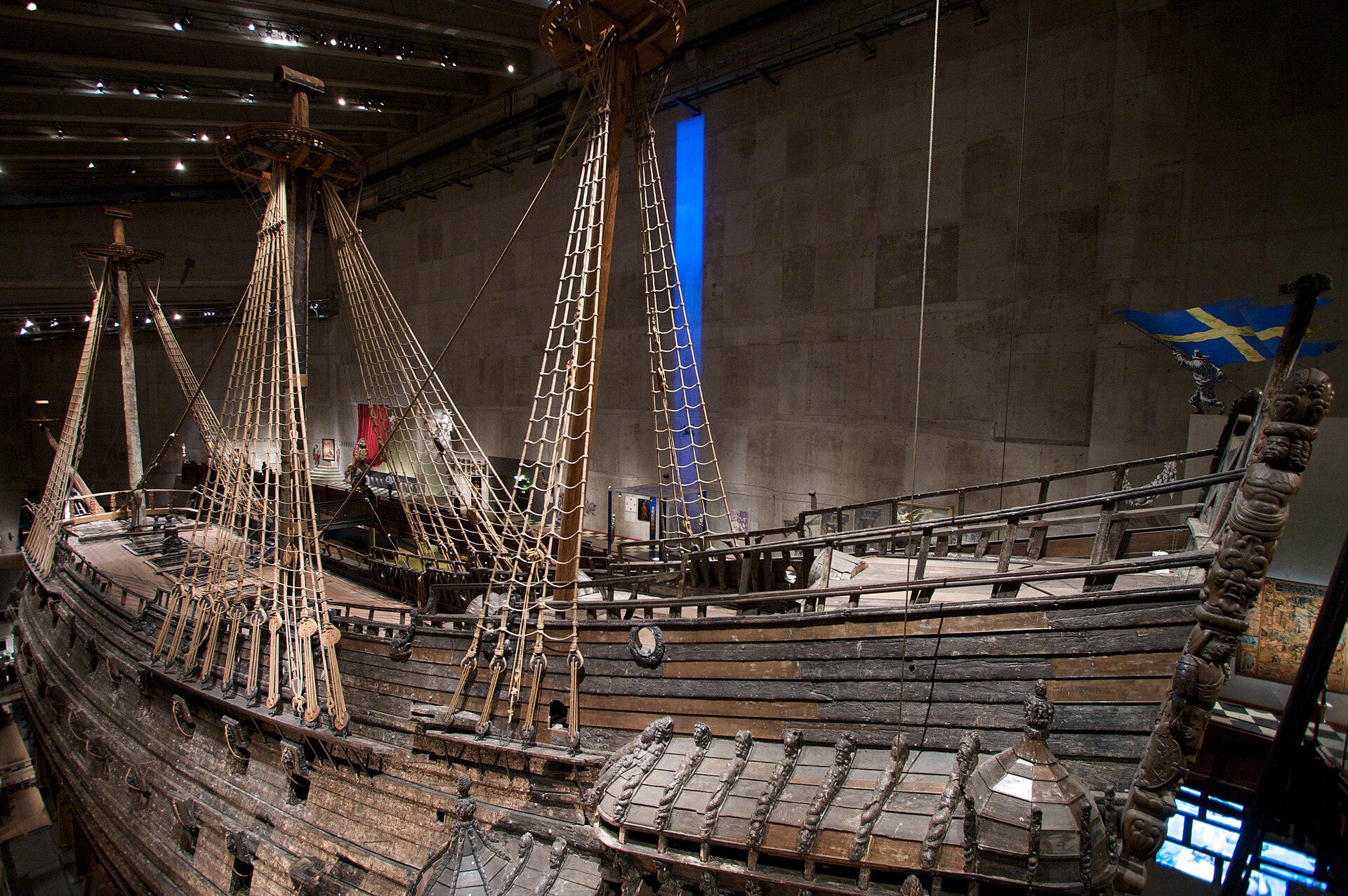 A view of the top deck of the Vasa - a 17th century Swedish warship that sank on her... OneHungLow, CC BY-SA 3.0
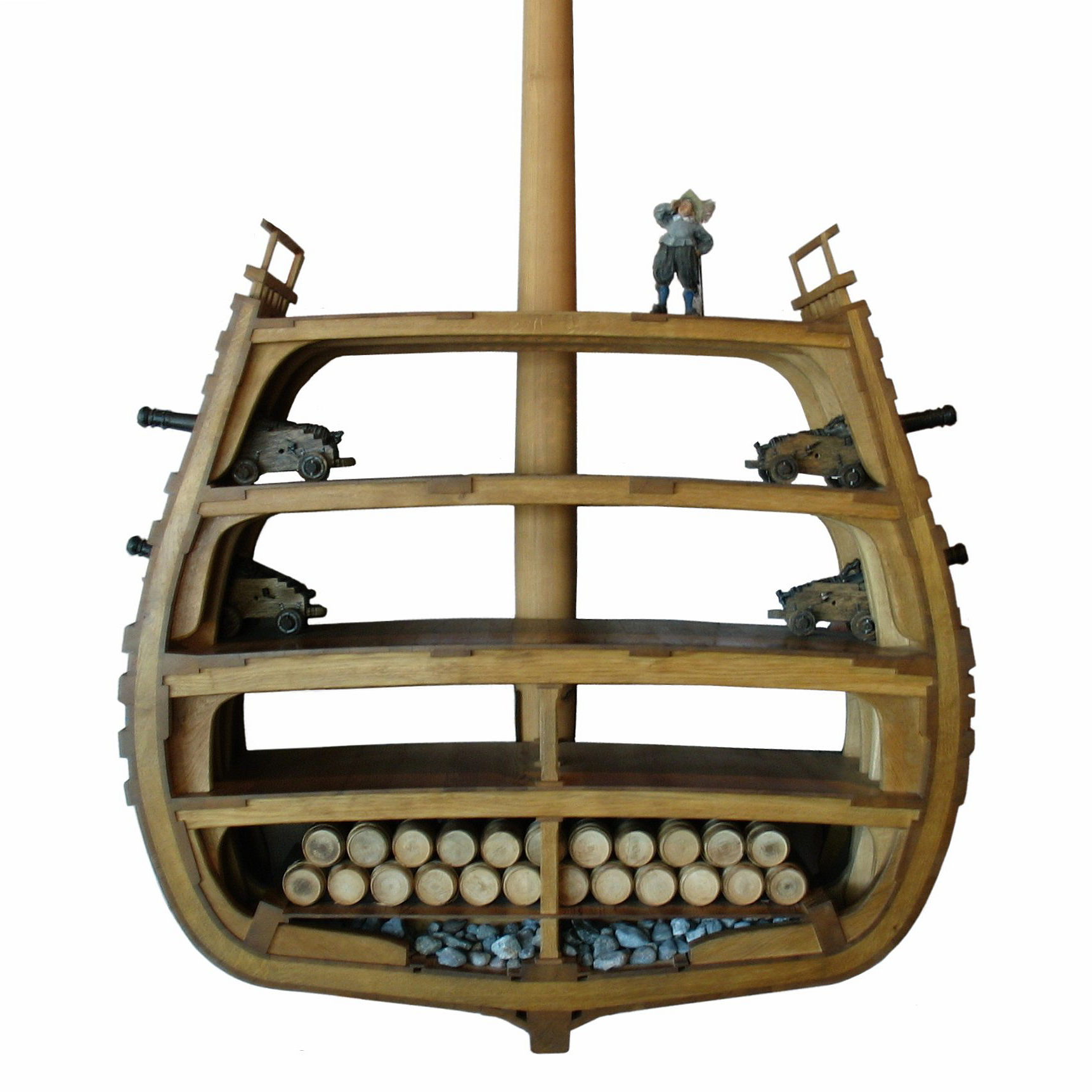 A model of Vasa's hull profile, taken at the Vasa Museum Peter Isotalo, Public domain
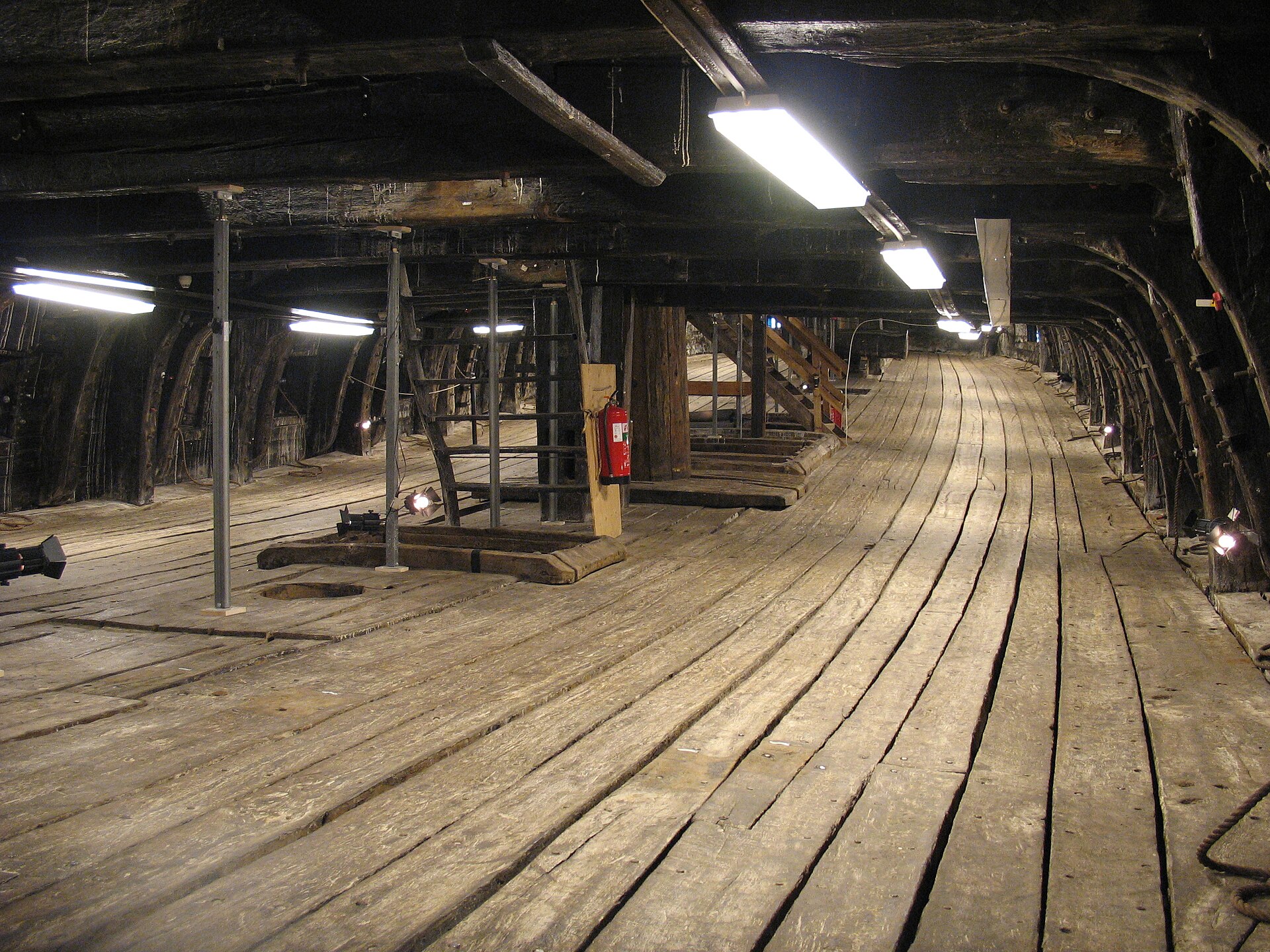 The lower gun deck of the warship Vasa, displayed in the Vasa Museum in Stockholm,... Peter Isotalo, CC BY-SA 3.0
Relics and treasures
- The Vasathe nearly complete warship, in the Vasa Museum in Stockholm
- Carved sculptureslions, kings and mermaids, on the ship in the Vasa Museum
- Sailors' belongingsshoes, coins and games, in the Vasa Museum
- Sailsthe oldest surviving sails from a ship, in the Vasa Museum
How we know
Amateur researcher Anders Franzen found the wreck in 1956. It was raised in 1961 and carefully preserved for decades. Records of the 1628 investigation explain why it sank.
What you would see today
The Vasa Museum in Stockholm holds the whole ship. Visitors walk around it on several levels and see the sailors' belongings, skeletons studied by scientists, and models showing its original colors. It is one of Scandinavia's most visited museums.
For teachers and classrooms
Suggested level: grades 3-5. Print this page as a lesson sheet with the story, vocabulary, discussion questions and a quiz with an answer key.
Key words
- ballast
- heavy material placed low in a ship to keep it steady
- gunport
- an opening in a ship's side for a cannon
- maiden voyage
- a ship's very first trip
Talk about it
- What lessons could builders today learn from the Vasa?
- Why did cold, low-salt water help preserve the ship?
Try this activity
- Draw a map of Vasa Warship as it looked at its busiest, and label three things people did there.
- Find Vasa Warship on the Ruinscape timeline, then pick another place from the same century and compare them.
- Use one link in Sources below to find a real object from this place. Describe what it is made of and what it tells us.
Quick quiz
Why did the Vasa sink?
- It was top-heavy
- It hit an iceberg
- It was attacked by pirates
- A whale hit it
Show the answer
A. It had too much weight up high and too little ballast.
When was the Vasa raised?
- 1961
- 1628
- 1800
- 2001
Show the answer
A. It was raised in 1961.
Where can you see the Vasa today?
- Stockholm, Sweden
- Paris, France
- Cairo, Egypt
- Tokyo, Japan
Show the answer
A. It is in the Vasa Museum in Stockholm.
Sources and further reading
Ruinscape lessons are written for students and checked against encyclopedia and museum records. Go to the sources: these links search real museum collections, the UNESCO list and research by archaeologists.
- Wikipedia articleEncyclopedia overview with its own references
- UNESCO World HeritageOfficial listing, if the site is protected
- Google Arts & CultureMuseum exhibits, virtual tours and close-up photos
- British Museum collectionReal objects, photos and catalog notes
- The Met collectionObjects and essays from the Metropolitan Museum of Art
- Smithsonian collectionsU.S. national museum records
- 3D models on SketchfabScans of sites and artifacts (check each license)
- Scholarly articlesResearch papers by archaeologists and historians
Read the full background
Vasa (previously Wasa) (Swedish pronunciation: [²vɑːsa] ) is a Swedish warship built between 1626 and 1628. The ship sank after sailing roughly 1,300 m (1,400 yd) into her maiden voyage on 10 August 1628. She fell into obscurity after most of her valuable bronze cannons were salvaged in the 17th century, until she was located again in the late 1950s in a busy shipping area in Stockholm harbor. The ship was salvaged with a largely intact hull in 1961 after spending 333 years on the seabed. She was housed in a temporary museum called Wasavarvet ("The Vasa Shipyard") until 1988 and then moved permanently to the Vasa Museum in the Royal National City Park in Stockholm. Between her recovery in 1961 and the beginning of 2025, Vasa has been seen by over 45 million visitors.
The ship was built on the orders of the King of Sweden Gustavus Adolphus as part of the military expansion conducted when he initiated a war with Poland-Lithuania (1626–1629). She was constructed at the navy yard in Stockholm under a contract with private entrepreneurs in 1626–1627 and armed primarily with bronze cannons cast in Stockholm specifically for the ship. Richly decorated as a symbol of the king's ambitions for Sweden and himself, upon completion she was one of the most powerfully armed vessels in the world. However, Vasa was dangerously unstable, with too much weight in the upper structure of the hull. Despite this lack of stability, she was ordered to sea and sank only a few minutes after encountering a wind stronger than a breeze.
The order to sail was the result of a combination of factors. The king, who was leading the army in Poland at the time of her maiden voyage, was impatient to see her take up her station as flagship of the reserve squadron at Älvsnabben in the Stockholm Archipelago. At the same time the king's subordinates lacked the political courage to openly discuss the ship's problems or to have the maiden voyage postponed. An inquiry was organized by the Swedish Privy Council to find those responsible for the disaster, but in the end no one was punished.
During the 1961 recovery, thousands of artifacts and the remains of at least 15 people were found in and around Vasa's hull by marine archaeologists. Among the many items found were clothing, weapons, cannons, tools, coins, cutlery, food, drink and six of the ten sails. The artifacts and the ship herself have provided
Background text from Wikipedia, available under CC BY-SA 4.0.
Last updated: October 2026. How we make Ruinscape.