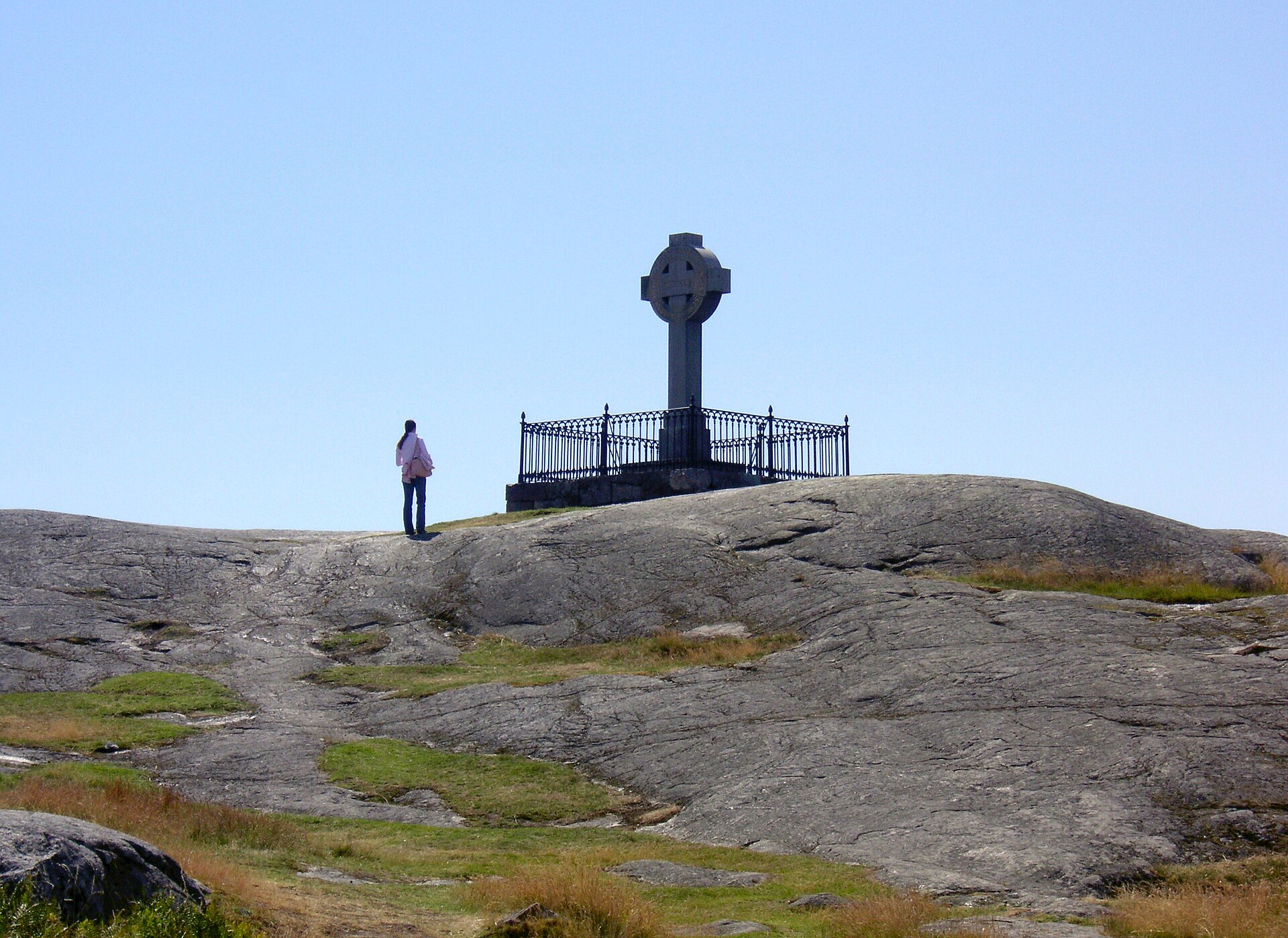
The story
Birka was founded around 750 CE on the island of Bjorko. It became one of the most important trading towns of the Viking world. Boats came along the rivers and lakes from the Baltic Sea, bringing goods from far away.
Merchants traded furs, iron and amber for silver coins from the Islamic world, glass, wine and fine cloth. Around 830 CE, a Christian missionary named Ansgar came here to preach, and his visit was written down.
Archaeologists have found about 3,000 graves around Birka. One famous grave held a warrior with weapons and a game board, and DNA testing in 2017 showed the warrior was a woman.
How it ended
Birka was abandoned around 975 CE. One idea is that the land slowly rose after the Ice Age, making the harbor too shallow. Trade also moved to other towns, like Sigtuna.
What life was like
Birka's people lived in wooden houses near the harbor. Craftworkers made combs from antler, beads from glass, and jewelry from bronze. In winter, when the lake froze, people traveled on ice skates made from animal bones. A small hill fort and wooden walls protected the town.
Wow facts
- A silver ring found in a grave has an Arabic inscription.
- People skated on the frozen lake using skates made of bone.
- A famous warrior's grave turned out to belong to a woman.
Photos
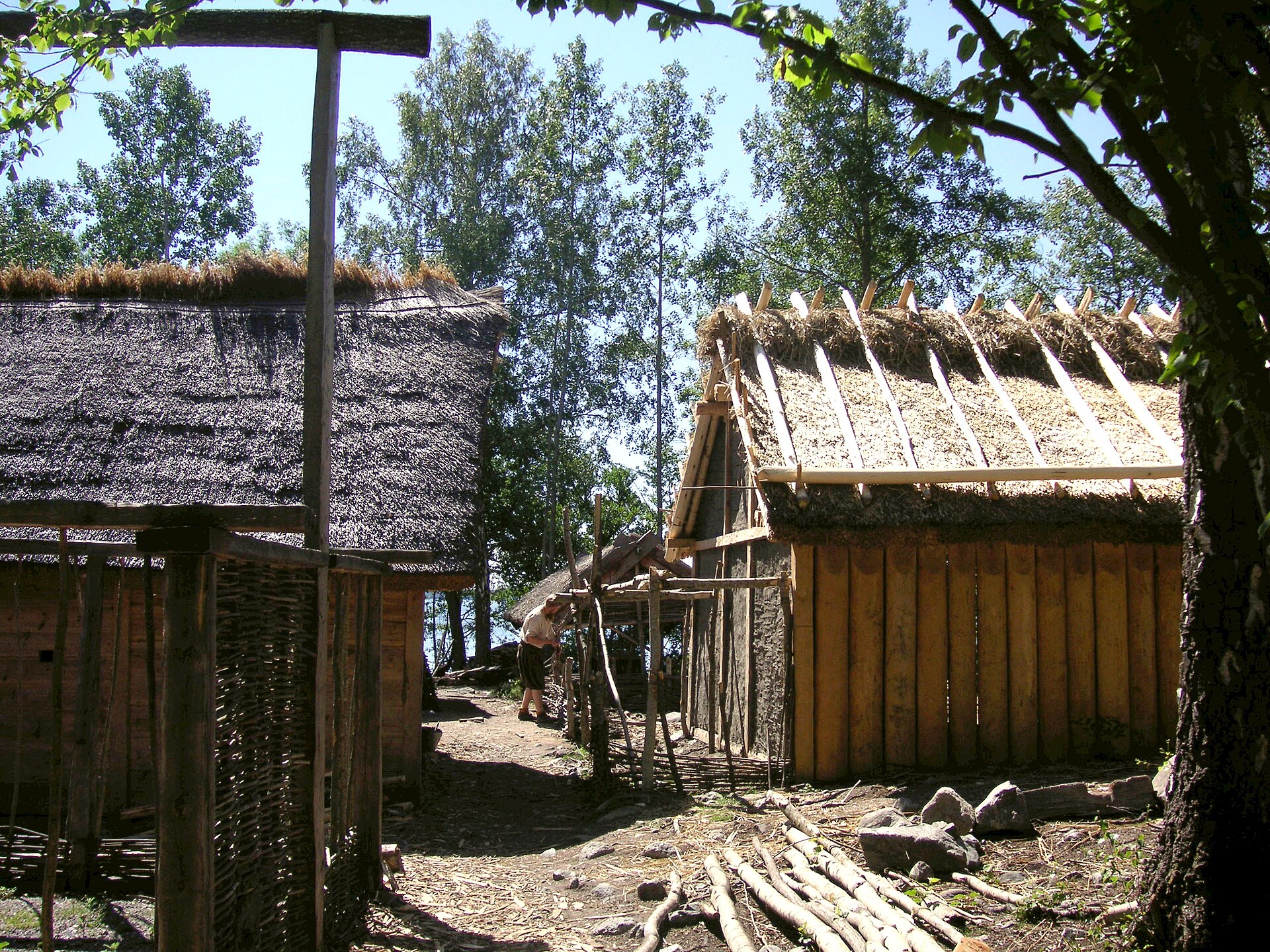 Birka, reconstruction of Viking houses Holger.Ellgaard, CC BY-SA 3.0
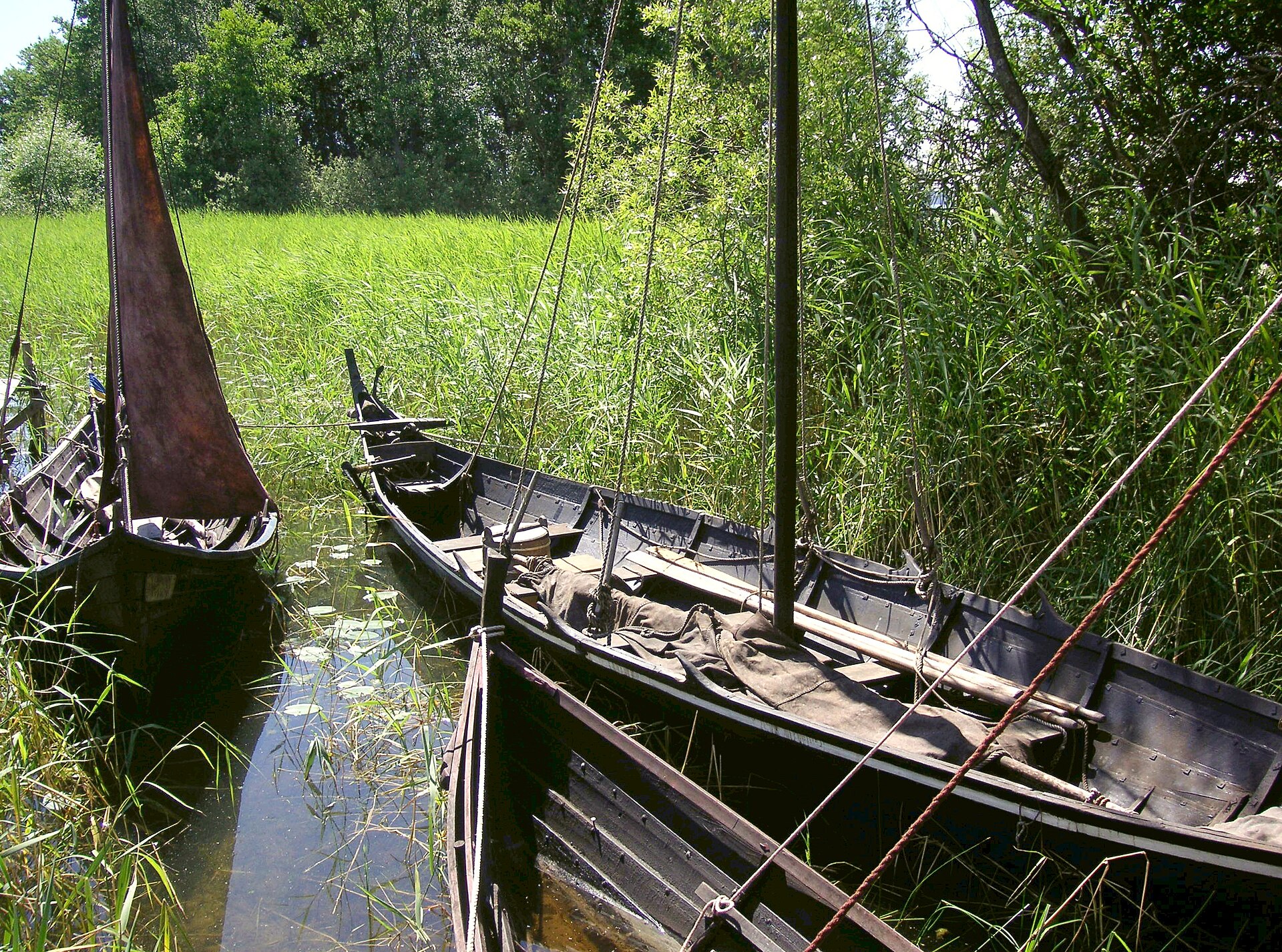 Birka, reconstructed Viking boats Holger.Ellgaard, CC BY-SA 3.0
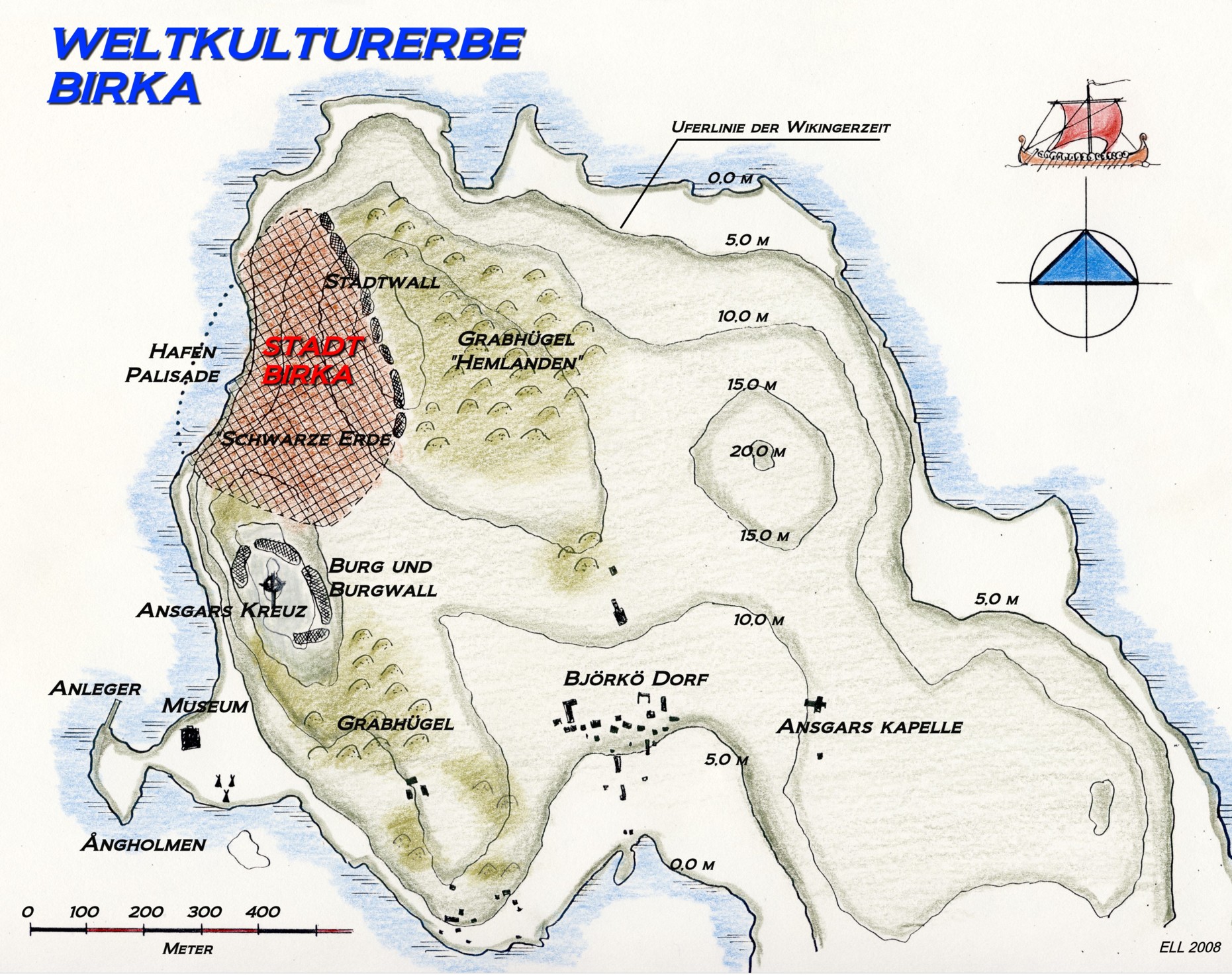 Map of Birka Holger.Ellgaard, CC BY-SA 3.0
Relics and treasures
- Birka ringa silver ring engraved in Arabic, in the Swedish History Museum
- Warrior grave Bj 581weapons and a game set from a woman's grave, in the Swedish History Museum
- Grave moundsabout 3,000 graves around the town, at the site
- Bone ice skatesskates made from animal bones, in the Swedish History Museum
How we know
Hjalmar Stolpe excavated over 1,000 graves in the 1870s and 1880s. Later digs uncovered the harbor and town. The book about Saint Ansgar's life describes Birka. DNA, coins and chemical tests tell where people and goods came from.
What you would see today
Visitors take a boat from Stockholm to Birka, walk among the grave mounds, and visit a museum and a reconstructed Viking village. Birka and nearby Hovgarden are a UNESCO World Heritage Site.
For teachers and classrooms
Suggested level: grades 3-5. Print this page as a lesson sheet with the story, vocabulary, discussion questions and a quiz with an answer key.
Key words
- merchant
- a person who buys and sells goods
- amber
- fossilized tree resin, often golden and used for jewelry
- missionary
- a person sent to spread a religion
Talk about it
- What do objects from faraway lands tell us about the Vikings?
- Why is it important that DNA tests changed what we thought about the warrior grave?
Try this activity
- Draw a map of Birka as it looked at its busiest, and label three things people did there.
- Find Birka on the Ruinscape timeline, then pick another place from the same century and compare them.
- Use one link in Sources below to find a real object from this place. Describe what it is made of and what it tells us.
Quick quiz
What kind of town was Birka?
- A Viking trading town
- A Roman fort
- A Maya city
- A Greek temple
Show the answer
A. Birka was a major Viking trading center.
What did DNA show about the famous warrior grave?
- The warrior was a woman
- It was a horse
- It was empty
- It was a king from Rome
Show the answer
A. In 2017, DNA showed the warrior was a woman.
What were Birka's ice skates made from?
- Animal bones
- Steel
- Plastic
- Glass
Show the answer
A. People made skates from animal bones.
Sources and further reading
Ruinscape lessons are written for students and checked against encyclopedia and museum records. Go to the sources: these links search real museum collections, the UNESCO list and research by archaeologists.
- Wikipedia articleEncyclopedia overview with its own references
- UNESCO World HeritageOfficial listing, if the site is protected
- Google Arts & CultureMuseum exhibits, virtual tours and close-up photos
- British Museum collectionReal objects, photos and catalog notes
- The Met collectionObjects and essays from the Metropolitan Museum of Art
- Smithsonian collectionsU.S. national museum records
- 3D models on SketchfabScans of sites and artifacts (check each license)
- Scholarly articlesResearch papers by archaeologists and historians
Read the full background
Birka (Birca in medieval sources), on the island of Björkö (lit. "Birch Island") in present-day Sweden, was an important Viking Age trading center which handled goods from Scandinavia as well as many parts of Continental Europe and the Orient. Björkö is located in Lake Mälaren, 30 kilometers west of contemporary Stockholm, in the municipality of Ekerö.
Birka was founded around AD 750 and it flourished for more than 200 years. It was abandoned c. AD 975, around the same time Sigtuna was founded as a Christian town some 35 km to the northeast. It has been estimated that the population in Viking Age Birka was between 500 and 1000 people.
The archaeological sites of Birka and Hovgården, on the neighbouring island of Adelsö, make up an archaeological complex which illustrates the elaborate trading networks of Viking Scandinavia and their influence on the subsequent history of Europe. Generally regarded as Sweden's oldest town, Birka (along with Hovgården) has been a UNESCO World Heritage Site since 1993. Many burial sites have been uncovered at Birka, leading to the finding of many objects including jewelry and many textile fragments. In recent years, objects from Birka have been in the public eye due to ongoing academic research connecting Birka to evidence of trade with the Middle East.
Background text from Wikipedia, available under CC BY-SA 4.0.
Last updated: October 2026. How we make Ruinscape.