No. 67
Biskupin

- Where
- Poland
- Built by
- Lusatian culture
- Era
- 730 BCE
- Known for
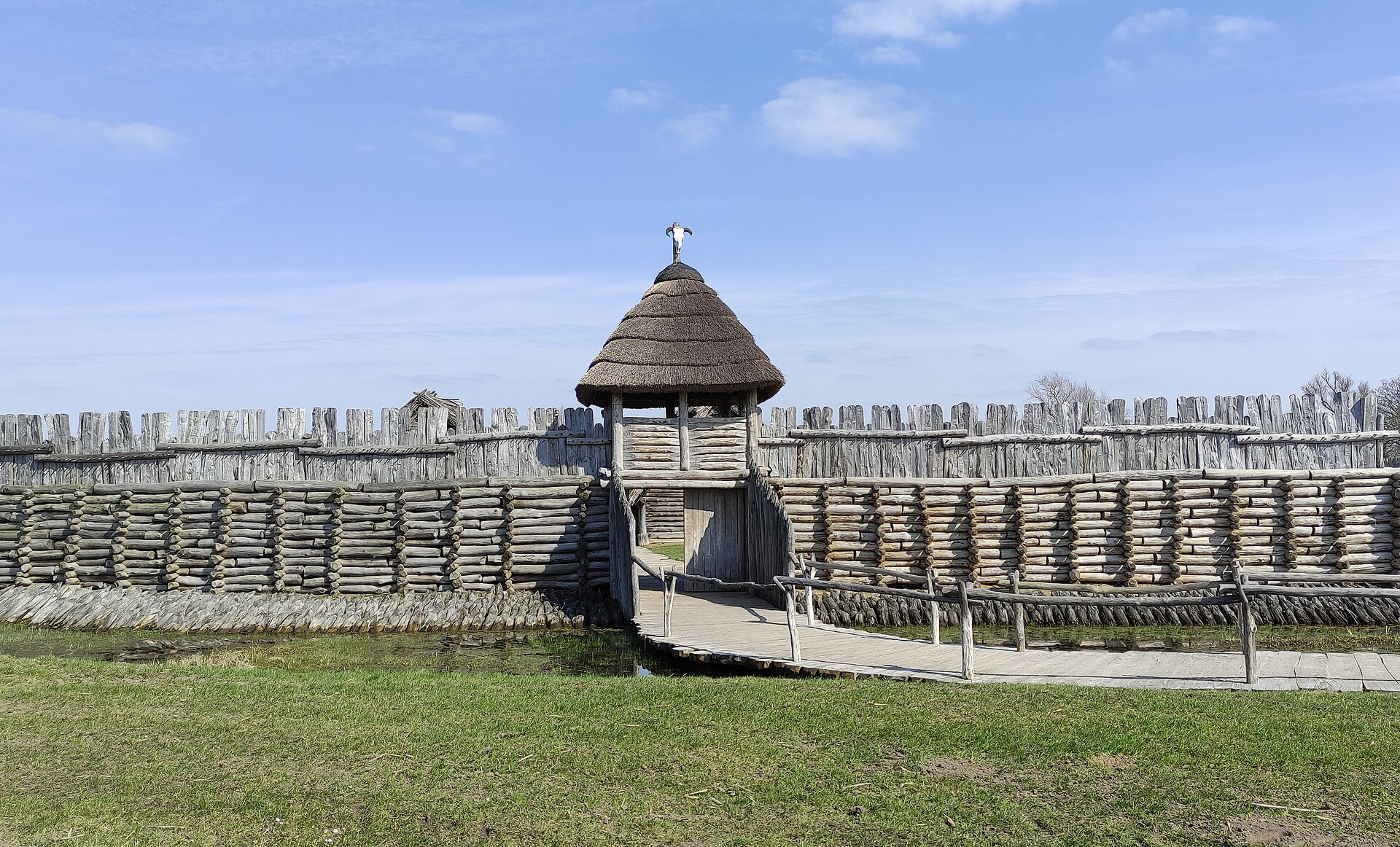
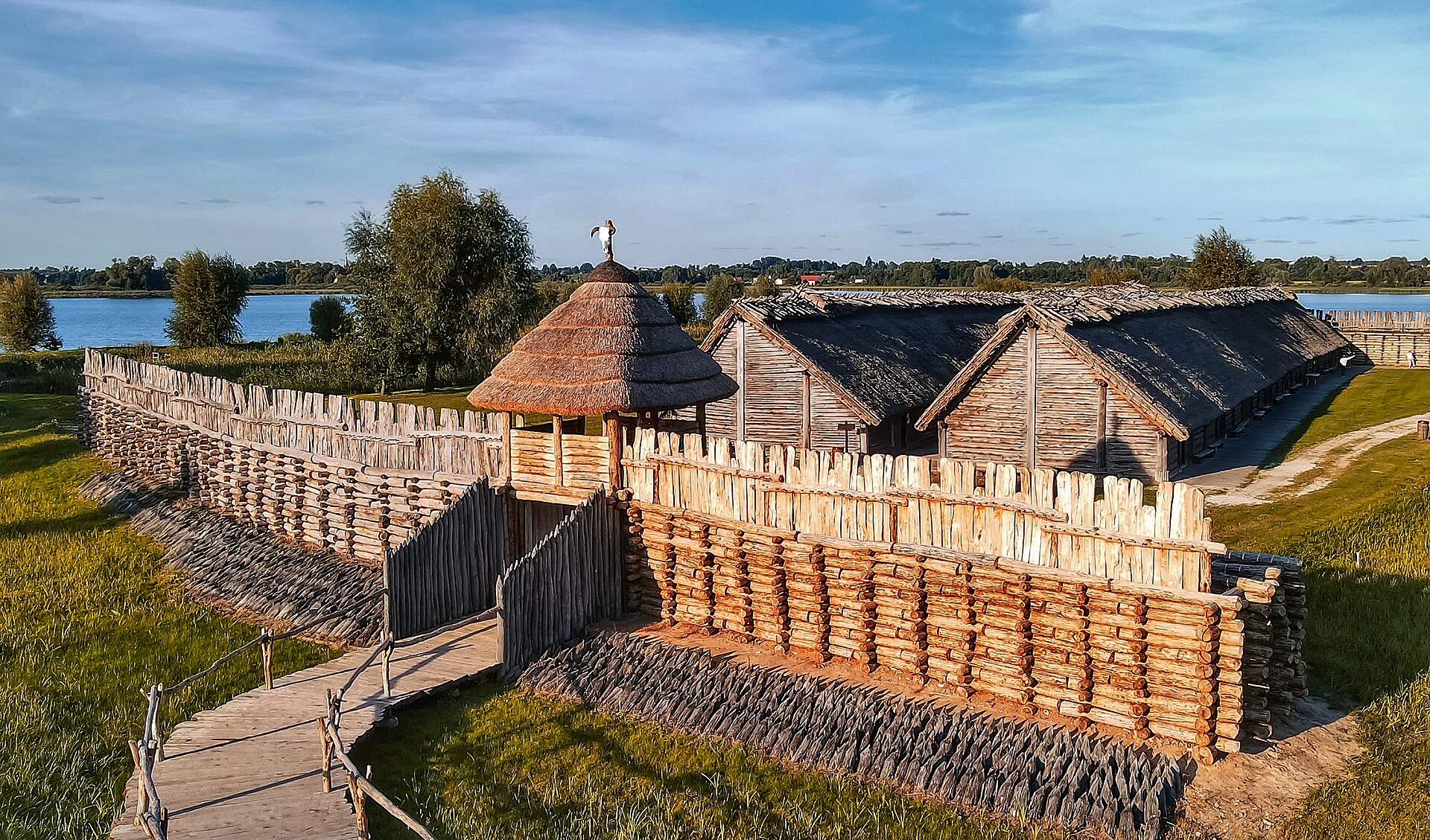
- A wooden fortified town on a lake island.
- How it ended
- Abandoned, possibly as the lake rose.

Lyra Kael can take you here on the globe, tell you the story out loud and answer your questions. Start the time jump.
Background
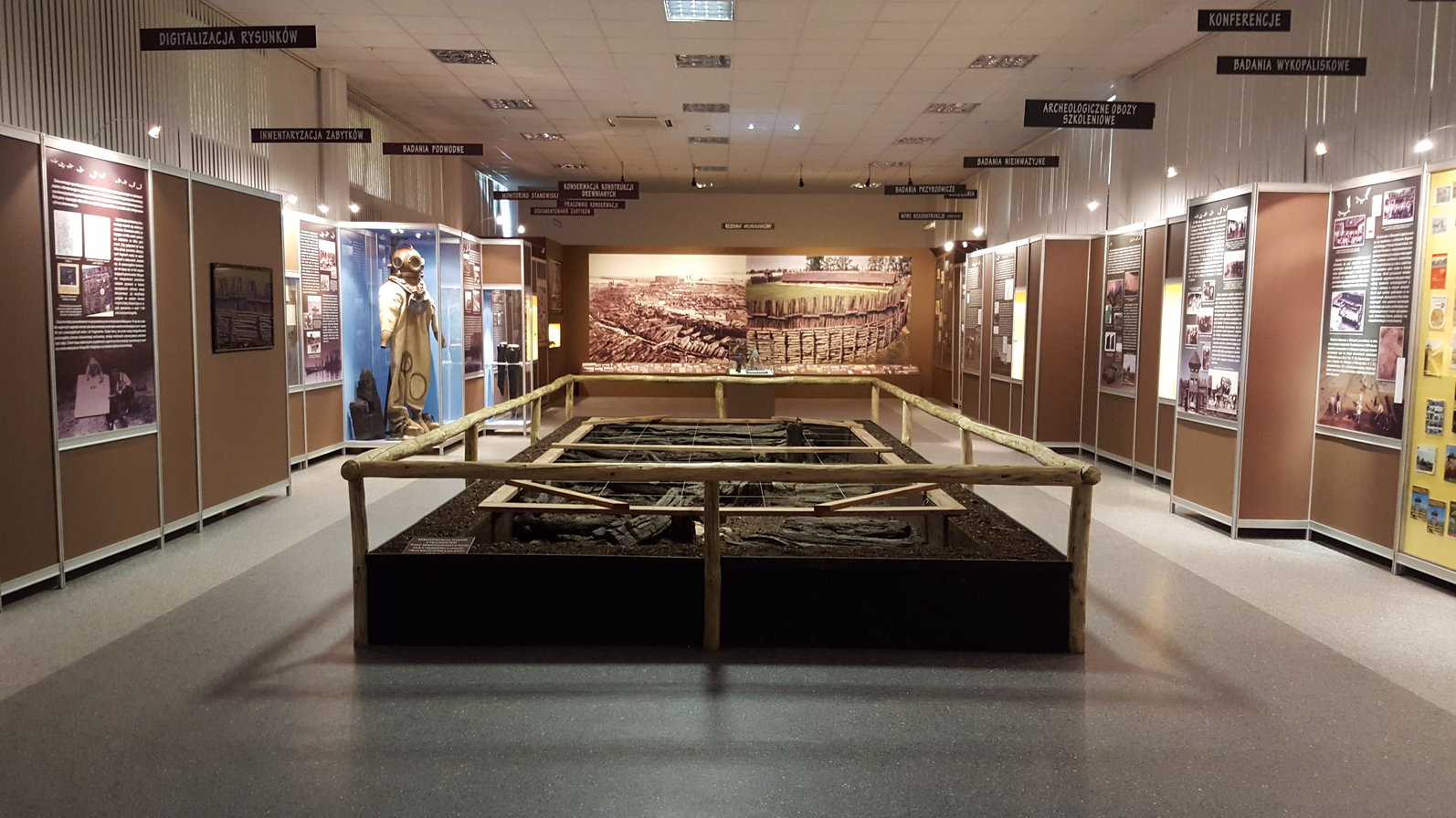
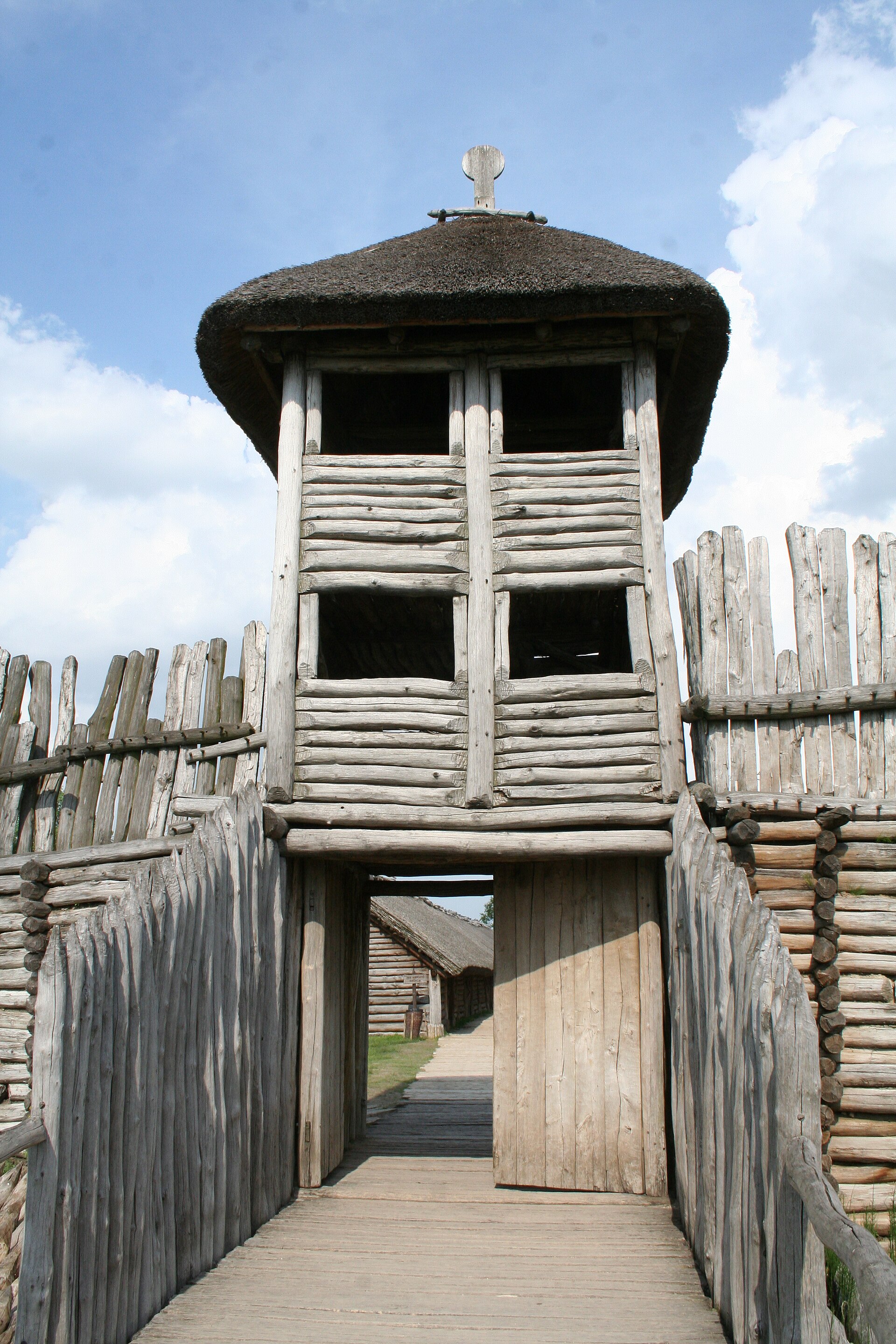
Biskupin (Polish pronunciation: [bisˈkupin]) is an archaeological site and a life-size model of a late Bronze Age fortified settlement in north-central Poland that also serves as an archaeological open-air museum. When first discovered it was thought to be early evidence of a West Slavic settlement, but archaeologists later confirmed it belonged to the Biskupin group of the Lusatian culture from the 8th century BC.
The Museum is situated on a marshy peninsula in Lake Biskupin, ca. 90 kilometres (56 miles) northeast of Poznań and 8 km (5 mi) south of the small town of Żnin. In the years 1956–2000, it was a division of the National Museum of Archaeology in Warsaw. After the Polish local government reforms of 1998, Biskupin was granted the status of an independent institution known as the Archeological Museum in Biskupin.
The site is one of Poland's official national Historic Monuments (Pomnik historii), as designated September 16, 1994, and tracked by the National Heritage Board of Poland. In 2006, Biskupin received a European Heritage Award.
Text from Wikipedia, licensed CC BY-SA 4.0.