The story
Tula, once called Tollan, was the capital of the Toltecs, at its height from about 900 to 1150 CE. It was a large city, home to perhaps tens of thousands of people.
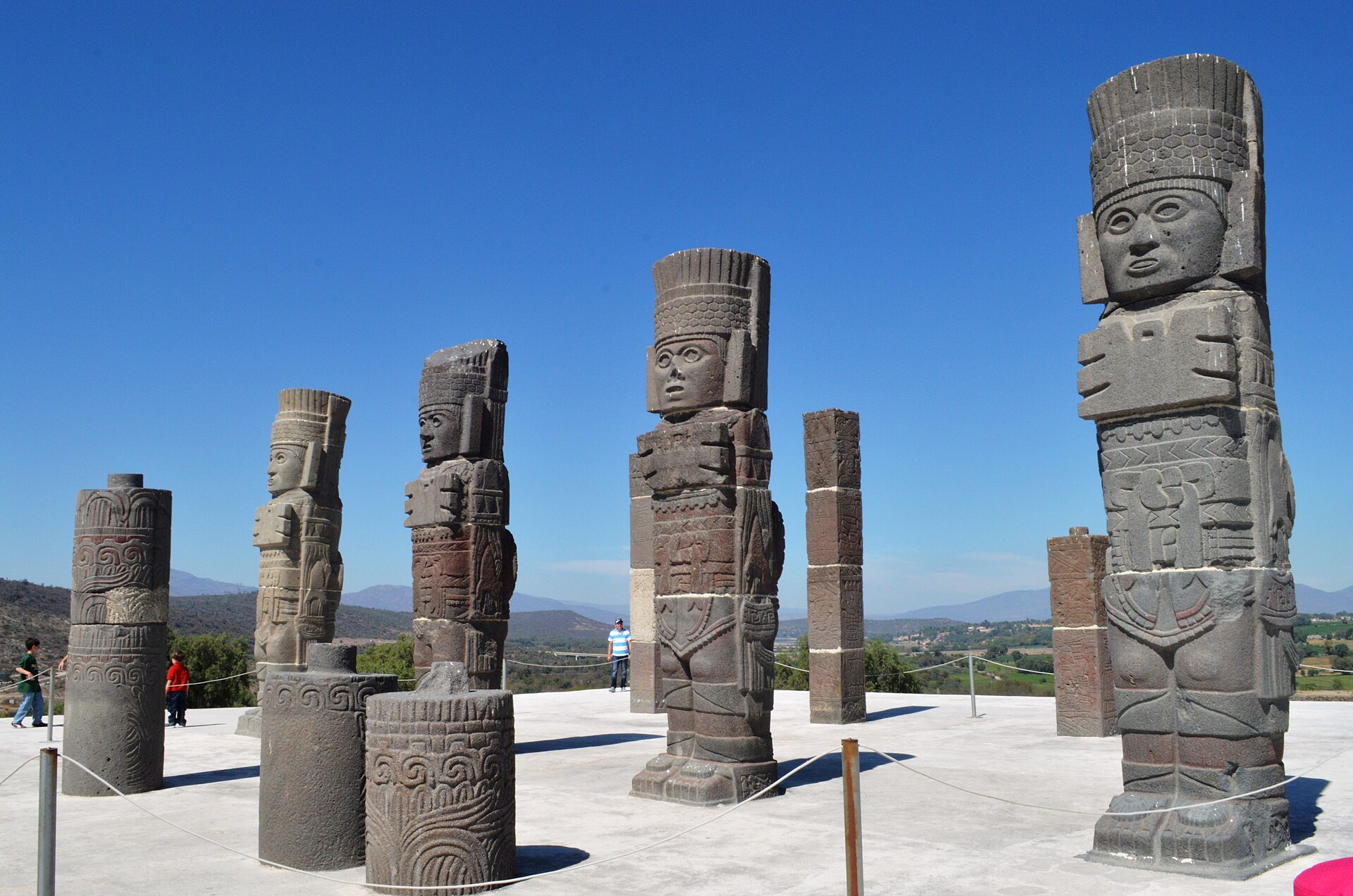
On top of Pyramid B stand the famous Atlantes, four columns carved as warriors, about 4.6 meters tall. They wear feathered headdresses and butterfly-shaped chest plates, and carry dart throwers called atlatls. They once held up the roof of a temple.
Later, the Aztecs looked up to the Toltecs as great artists and builders. They called skilled craftspeople toltecah, and some Aztec rulers claimed to be descended from Toltec kings. Tula also has carvings of jaguars, eagles eating hearts, and a wall of snakes eating skeletons.
How it ended
Around 1150 CE, Tula was burned and abandoned. Historians think droughts, conflict and power struggles may have caused its fall. The Aztecs later visited the ruins and took some sculptures.
What life was like
Tula's people farmed corn, beans and squash with irrigation in the dry valley. Craftsmen worked obsidian, a sharp volcanic glass, into blades and tools for trade. Warriors were organized into orders named after jaguars and eagles. A ball court was used for the famous Mesoamerican ball game.
Wow facts
- Each Atlantean warrior is made of four stacked stone blocks.
- A reclining stone figure called a chacmool holds a bowl on its belly.
- The Aztecs thought of the Toltecs as master artists.
Photos
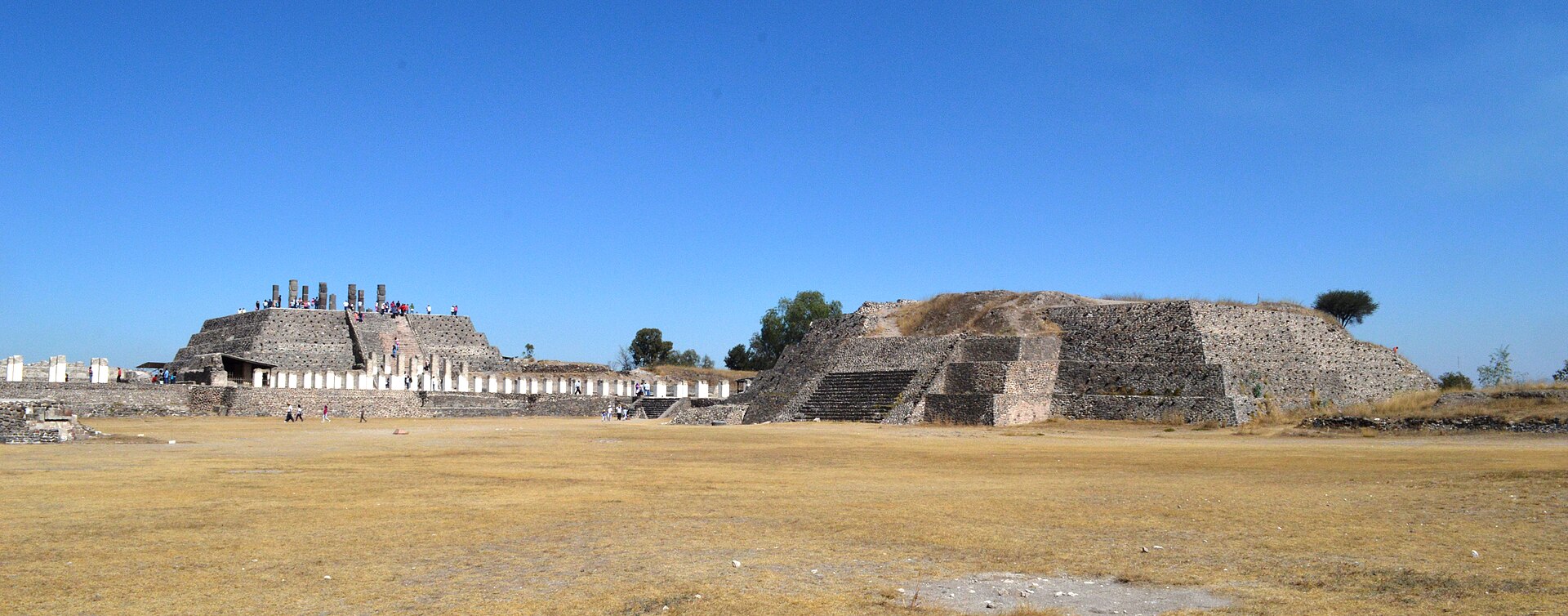 Pyramids B and C at the Tula archeological site in Hidalgo, Mexico AlejandroLinaresGarcia, CC BY-SA 3.0
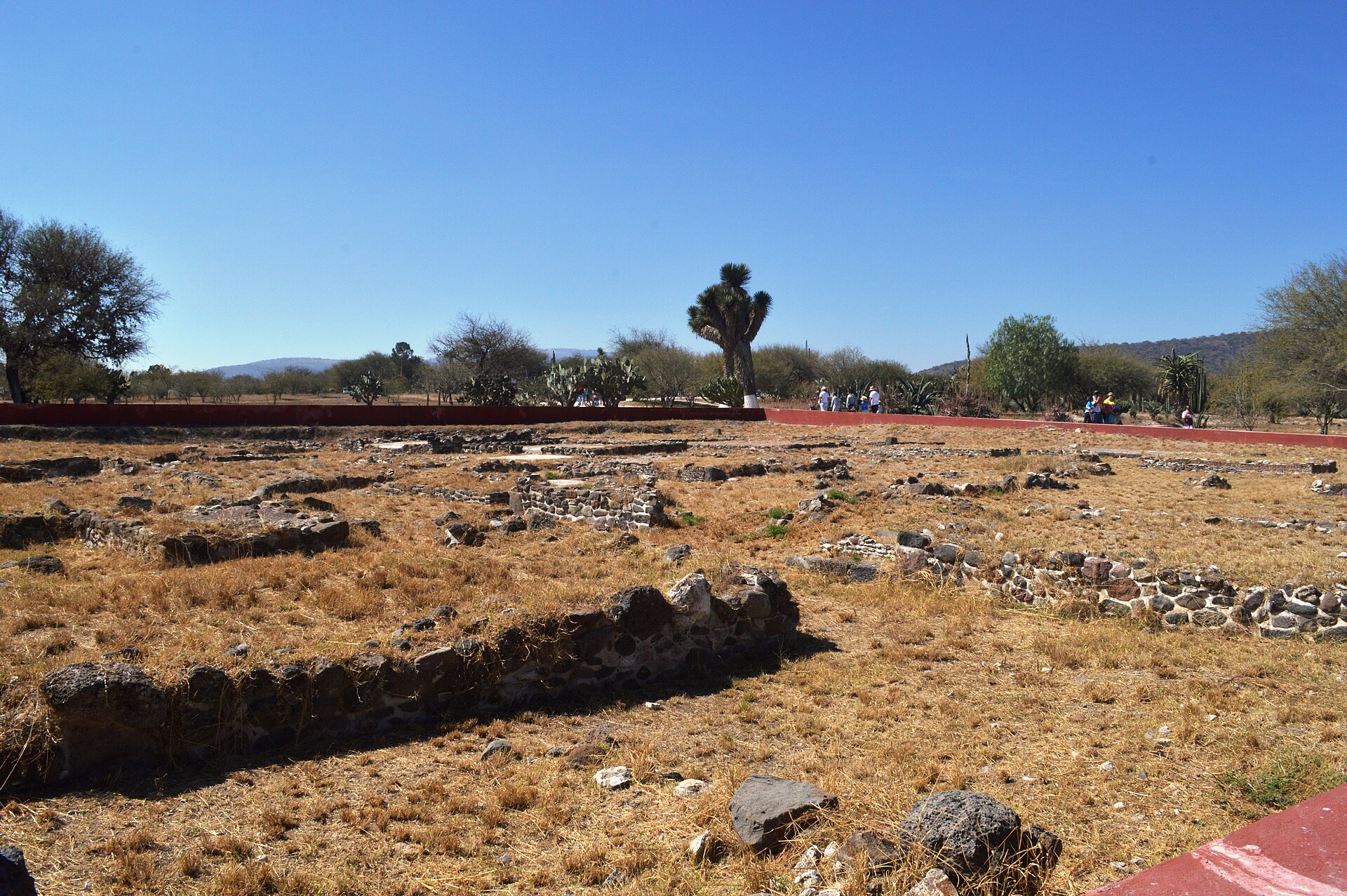 Tula Chico near museum at the Tula archeological site in Mexico AlejandroLinaresGarcia, CC BY-SA 3.0
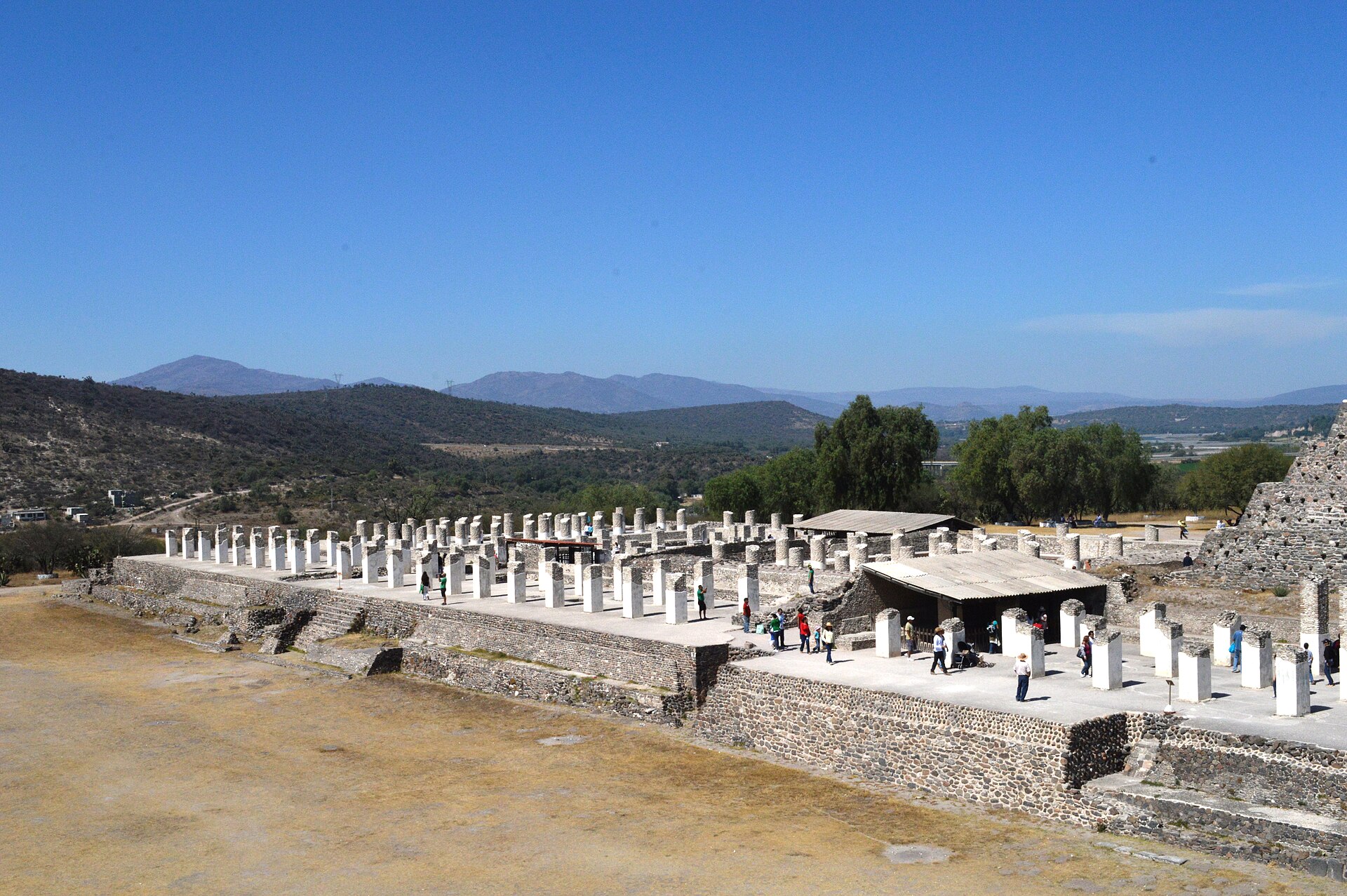 View of Building C (Burnt Palace) from Pyramid C at the Tula archeological site in... AlejandroLinaresGarcia, CC BY-SA 3.0
Relics and treasures
- The Atlantesfour giant warrior columns, on top of Pyramid B at the site
- Chacmoola reclining stone figure, at the site museum
- Coatepantlithe Wall of Serpents, beside Pyramid B
- Burned Palacea large hall with columns, at the site
How we know
Archaeologist Jorge Acosta excavated and rebuilt Pyramid B in the 1940s. Aztec stories about Tollan, written down after the Spanish arrived, describe the Toltecs. Carvings and trade goods show Tula's power.
What you would see today
Visitors climb Pyramid B to stand beside the Atlantes, walk past the Burned Palace and the ball courts, and see carvings in the site museum. Modern Tula de Allende is right next to the ruins.
For teachers and classrooms
Suggested level: grades 3-5. Print this page as a lesson sheet with the story, vocabulary, discussion questions and a quiz with an answer key.
Key words
- Atlantes
- columns carved in the shape of people that hold up a roof
- atlatl
- a spear-thrower used to throw darts farther
- obsidian
- a black, glass-like volcanic rock that makes sharp blades
Talk about it
- Why might a later empire, like the Aztecs, admire an earlier one?
- Why would builders make pillars look like warriors?
Try this activity
- Draw a map of Tula and the Atlantes as it looked at its busiest, and label three things people did there.
- Find Tula and the Atlantes on the Ruinscape timeline, then pick another place from the same century and compare them.
- Use one link in Sources below to find a real object from this place. Describe what it is made of and what it tells us.
Quick quiz
Who built Tula?
- The Toltecs
- The Inca
- The Vikings
- The Romans
Show the answer
A. Tula was the Toltec capital.
What are the Atlantes?
- Giant warrior columns
- Fishing boats
- Gold coins
- Clay pots
Show the answer
A. They are stone warrior columns that held up a temple roof.
Which later people admired the Toltecs?
- The Aztecs
- The Greeks
- The Egyptians
- The Chinese
Show the answer
A. The Aztecs saw the Toltecs as master artists.
Sources and further reading
Ruinscape lessons are written for students and checked against encyclopedia and museum records. Go to the sources: these links search real museum collections, the UNESCO list and research by archaeologists.
- Wikipedia articleEncyclopedia overview with its own references
- UNESCO World HeritageOfficial listing, if the site is protected
- Google Arts & CultureMuseum exhibits, virtual tours and close-up photos
- British Museum collectionReal objects, photos and catalog notes
- The Met collectionObjects and essays from the Metropolitan Museum of Art
- Smithsonian collectionsU.S. national museum records
- 3D models on SketchfabScans of sites and artifacts (check each license)
- Scholarly articlesResearch papers by archaeologists and historians
Read the full background
Tula (Nahuatl: Tollan Xicocotitlan Otomi: Mämeni) is a Mesoamerican archaeological site, which was an important regional center that reached its height as the capital of the Toltec Empire between the fall of Teotihuacan and the rise of Tenochtitlan. It has not been well studied in comparison to these other two sites, and disputes remain as to its political system, area of influence and its relations with contemporary Mesoamerican cities, especially with Chichen Itza. The site is located in the city of Tula de Allende in the Tula Valley, in what is now the southwest of the Mexican state of Hidalgo, northwest of Mexico City. The archeological site consists of a museum, remains of an earlier settlement called Tula Chico as well as the main ceremonial site called Tula Grande. The main attraction is the Pyramid of Quetzalcoatl, which is topped by four 4-metre-high (13 ft) basalt columns carved in the shape of Toltec warriors. Tula fell around 1150, but it had significant influence in the following Aztec Empire, with its history written about heavily in myth. The feathered serpent god Quetzalcoatl is linked to this city, whose worship was widespread from central Mexico to Central America at the time the Spanish arrived.
Background text from Wikipedia, available under CC BY-SA 4.0.
Last updated: October 2026. How we make Ruinscape.