No. 107
Tenochtitlan and the Templo Mayor

- Where
- Mexico
- Built by
- Aztecs (Mexica)
- Era
- 1325-1521
- Known for
- An island city with causeways and floating gardens.
- How it ended
- Fell to Cortes and his allies in 1521 amid smallpox.

Lyra Kael can take you here on the globe, tell you the story out loud and answer your questions. Start the time jump.
Background
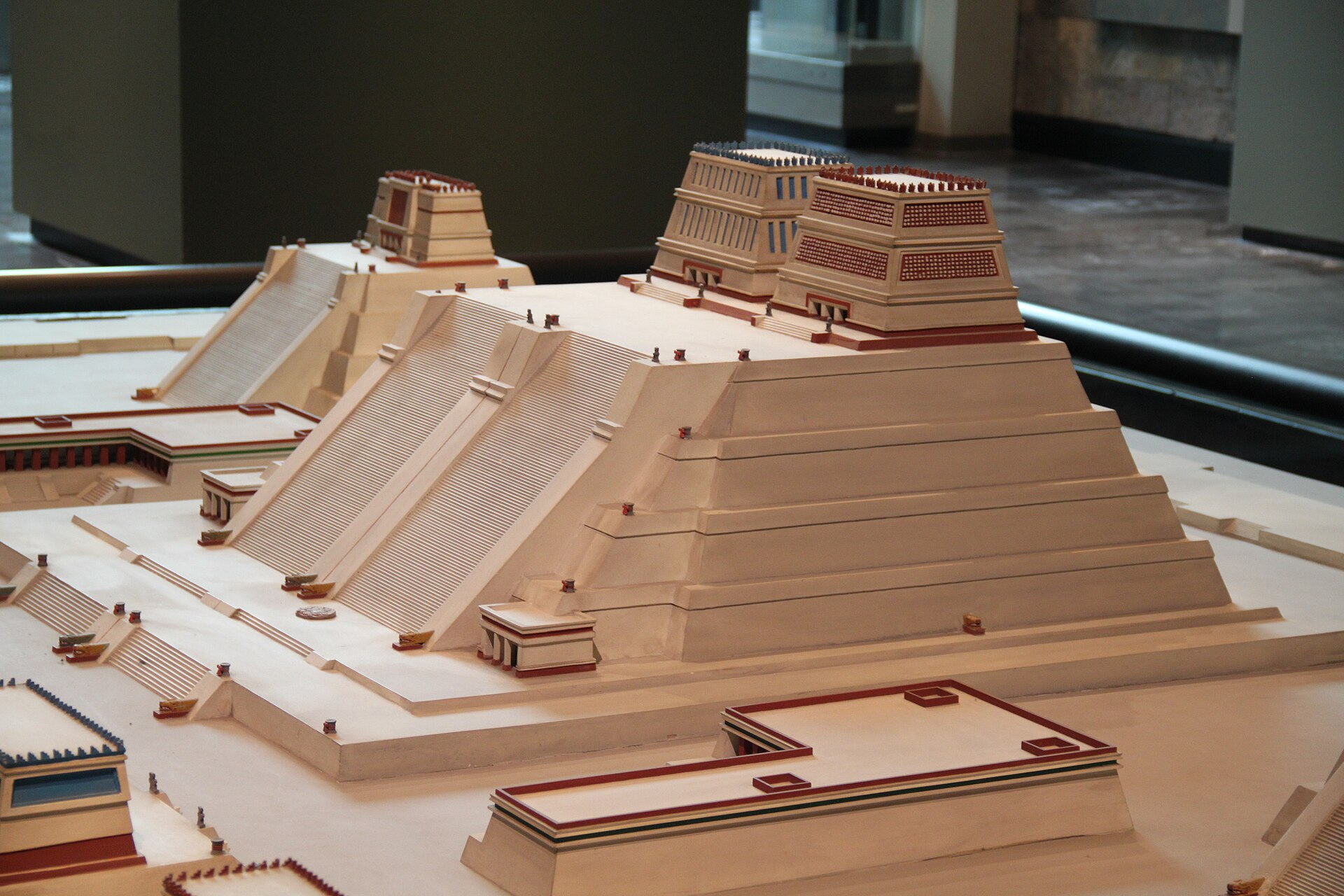
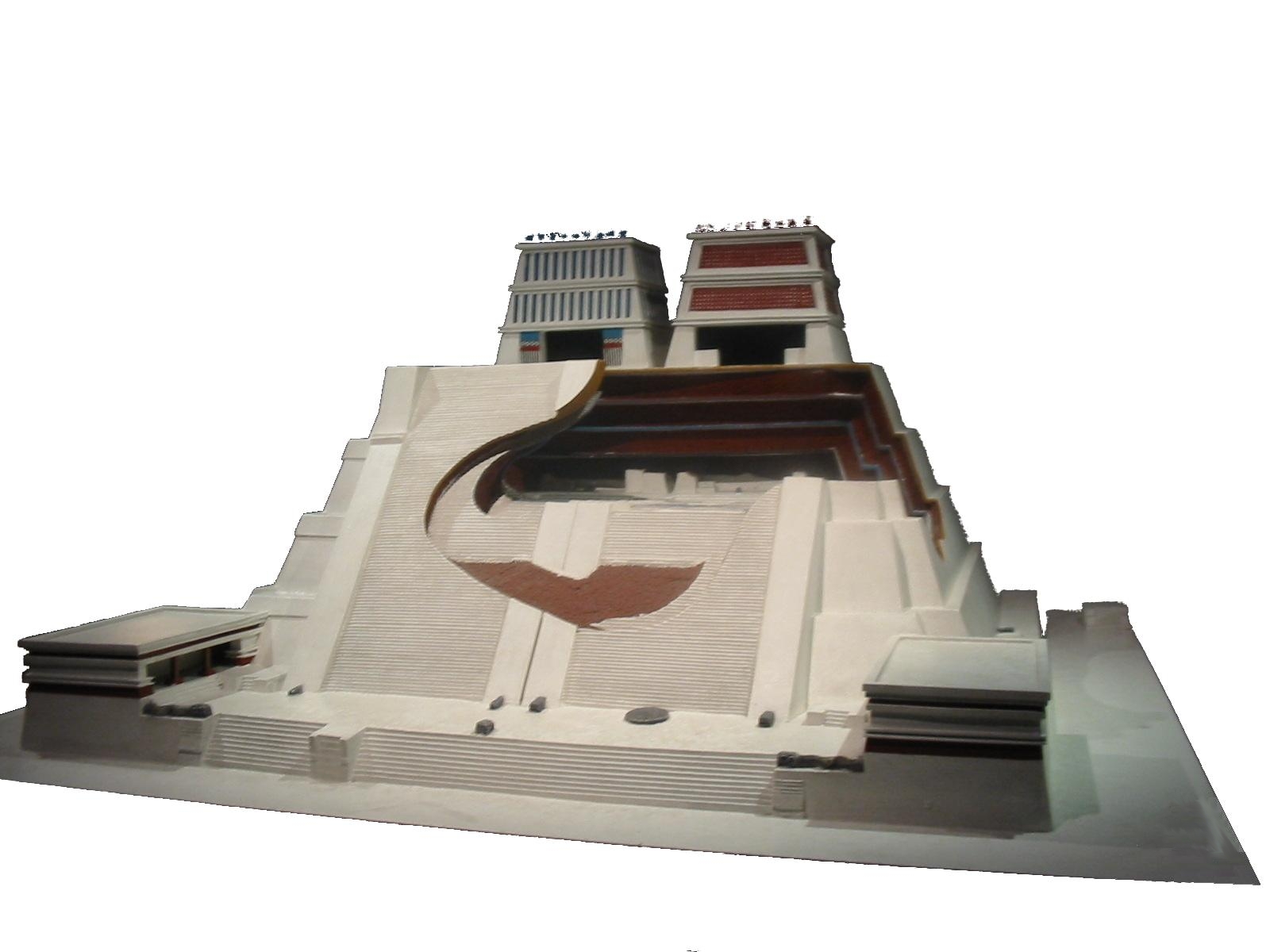
The Templo Mayor (from Spanish: 'Main Temple') was the main temple of the Mexica people in their capital city of Tenōchtitlan, which is now Mexico City. Erected in its final form in the late Postclassic period, the temple was called Huēyi Teōcalli [we:ˈi teoːˈkalːi] in the Nahuatl language, meaning 'great church' or 'great house of god', and understood to be the center of the universe. It was dedicated simultaneously to Huītzilōpōchtli, god of war, and Tlāloc, god of rain and agriculture, each of which had a shrine at the top of the pyramid with separate staircases. The central spire was devoted to Quetzalcōātl in his form as the wind god, Ehēcatl. The temple devoted to Huītzilōpōchtli and Tlāloc, measuring approximately 100 by 80 m (328 by 262 ft) at its base, dominated the Sacred Precinct. Construction of the first temple began sometime after 1325, and it was rebuilt six times. The temple was almost totally destroyed by the Spanish in 1521, and Mexico City Metropolitan Cathedral was built nearby.
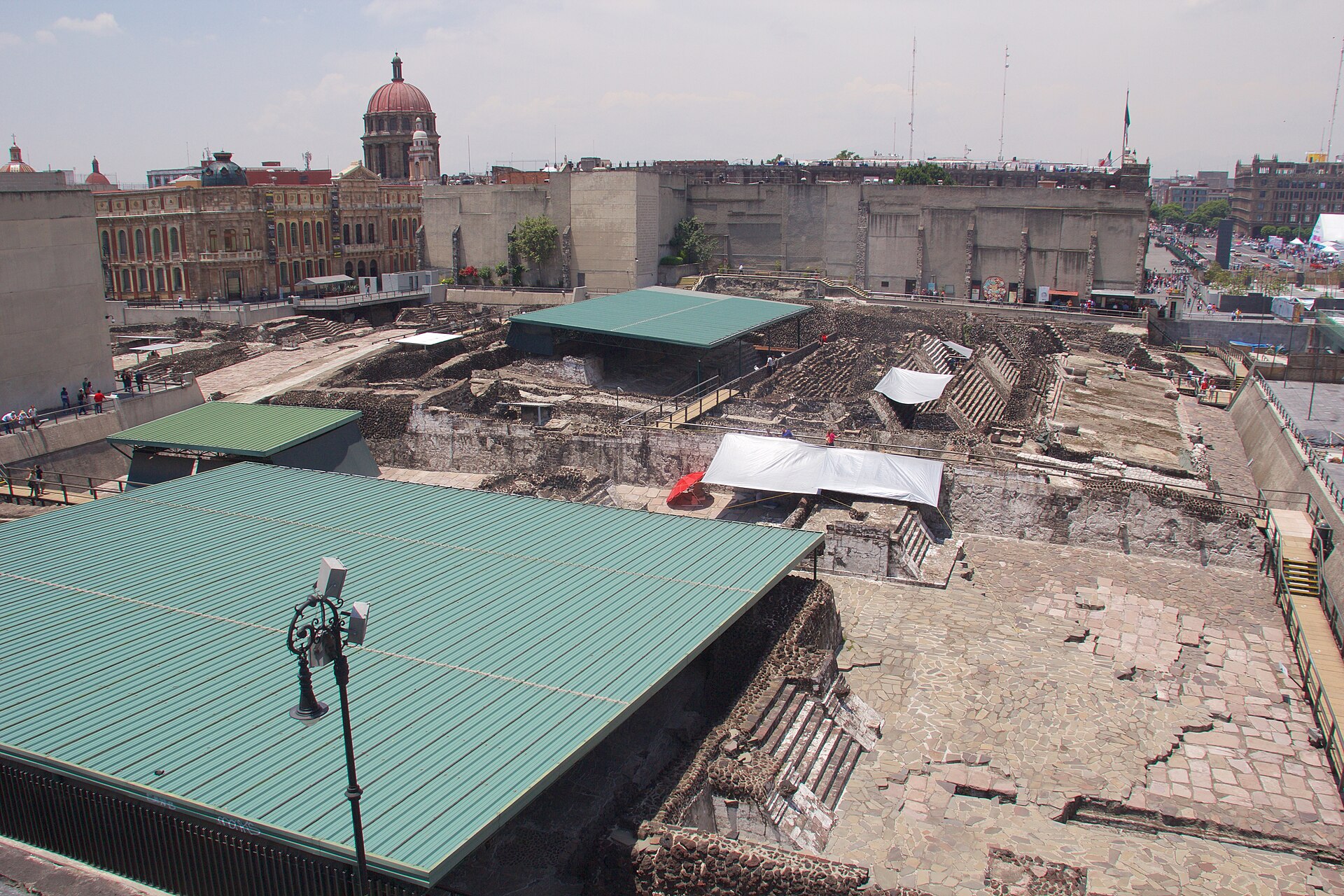
The Zócalo, or main plaza of Mexico City today, was developed to the southwest of Templo Mayor, which is located in the block between Seminario and Justo Sierra streets. The site is part of the Historic Center of Mexico City, which was added to the UNESCO World Heritage List in 1987. It received 801,942 visitors in 2017.
Text from Wikipedia, licensed CC BY-SA 4.0.