No. 106
Teotihuacan

- Where
- Mexico
- Built by
- Unknown builders
- Era
- 100 BCE-550 CE
- Known for
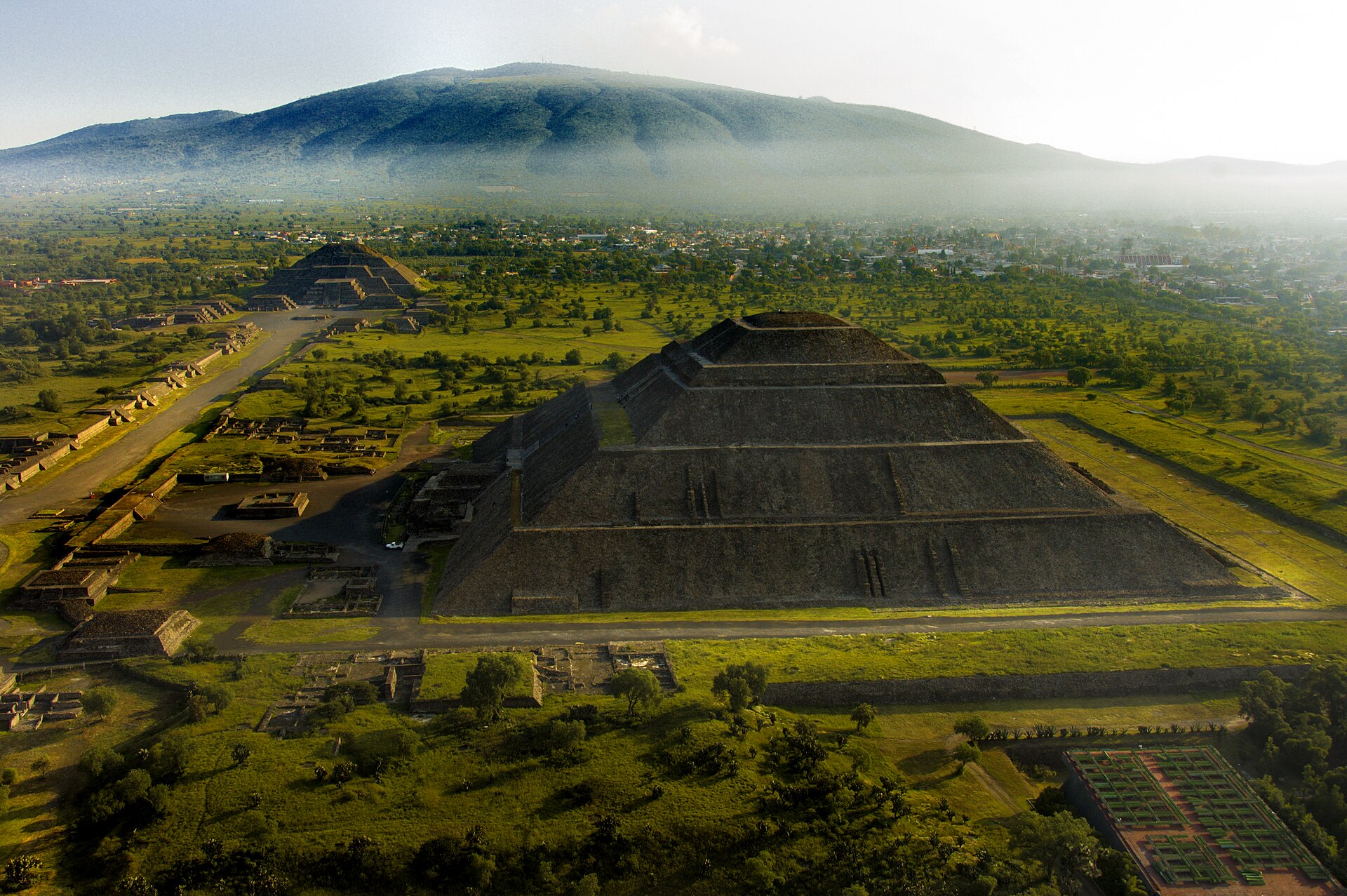
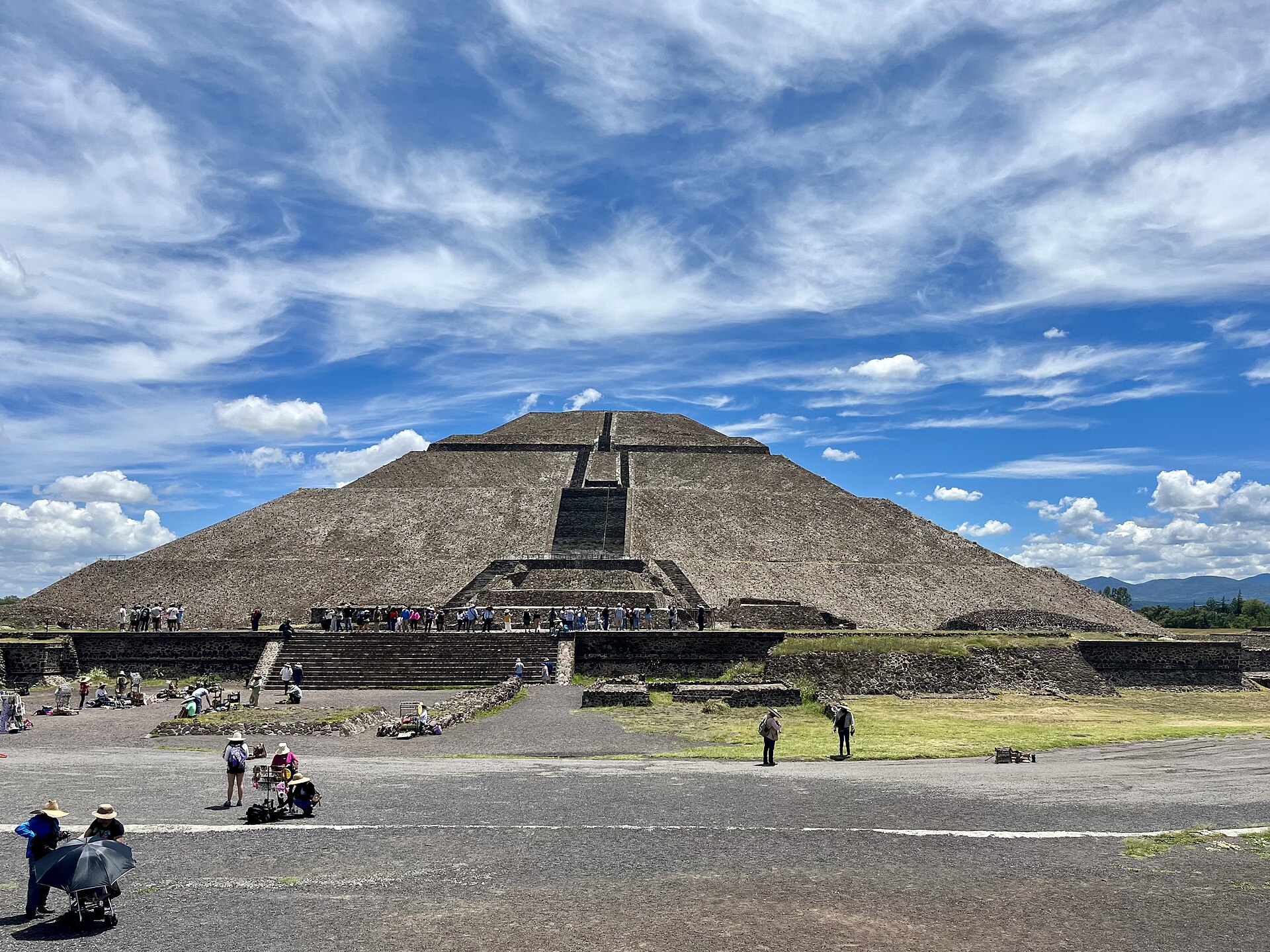
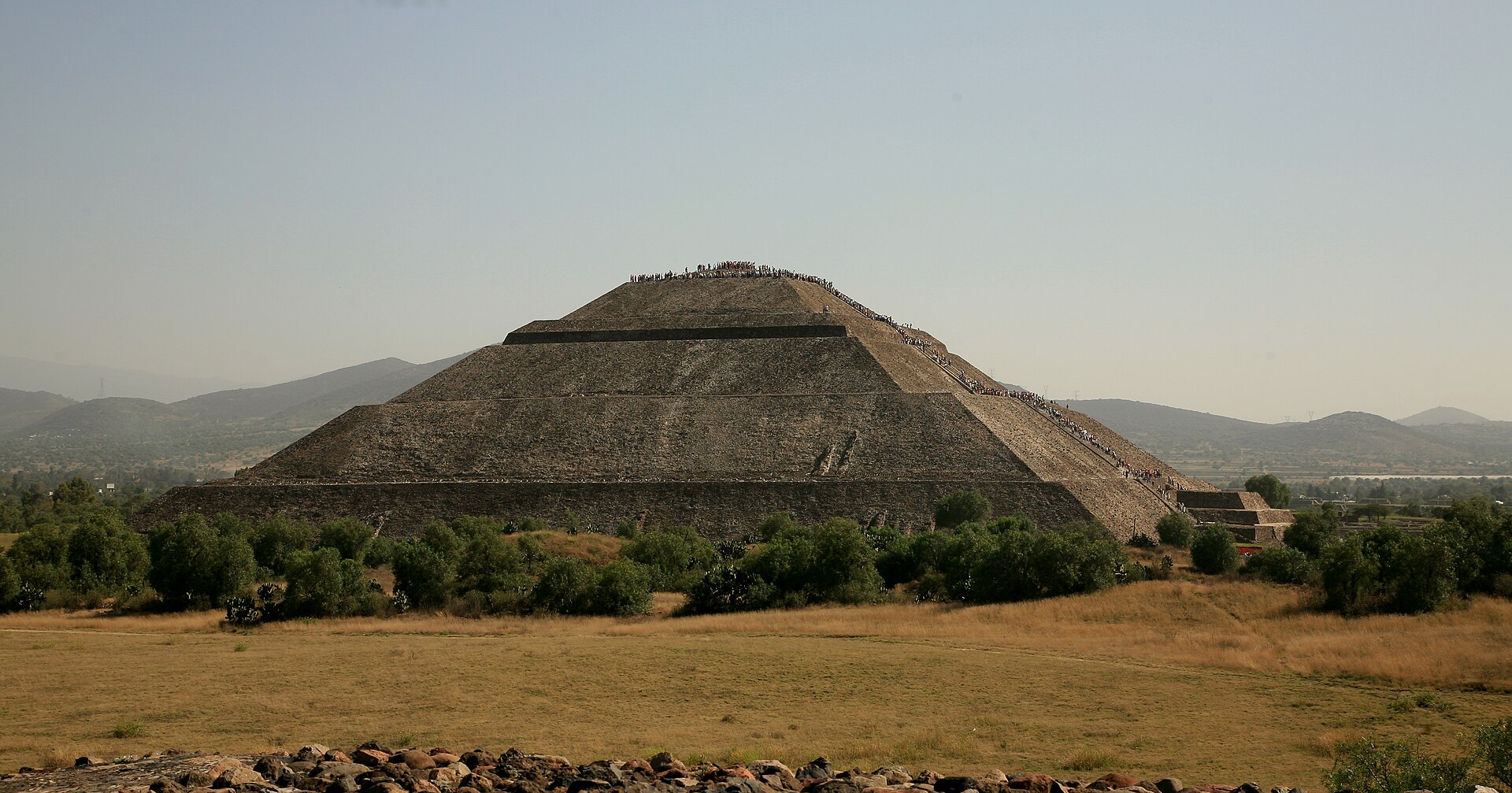
- The Pyramid of the Sun, in a city of about 100,000.
- How it ended
- Its center was burned around 550 CE, likely in an uprising.

Lyra Kael can take you here on the globe, tell you the story out loud and answer your questions. Start the time jump.
Background
Teotihuacan (; Spanish: Teotihuacán, Spanish pronunciation: [teotiwaˈkan] ; Classical Nahuatl: Teōtīhuacān, Classical Nahuatl pronunciation: [te.oːtiːˈwakaːn] ) is an ancient Mesoamerican city located in a sub-valley of the Valley of Mexico, which is located in the State of Mexico, 40 kilometers (25 mi) northeast of modern-day Mexico City.
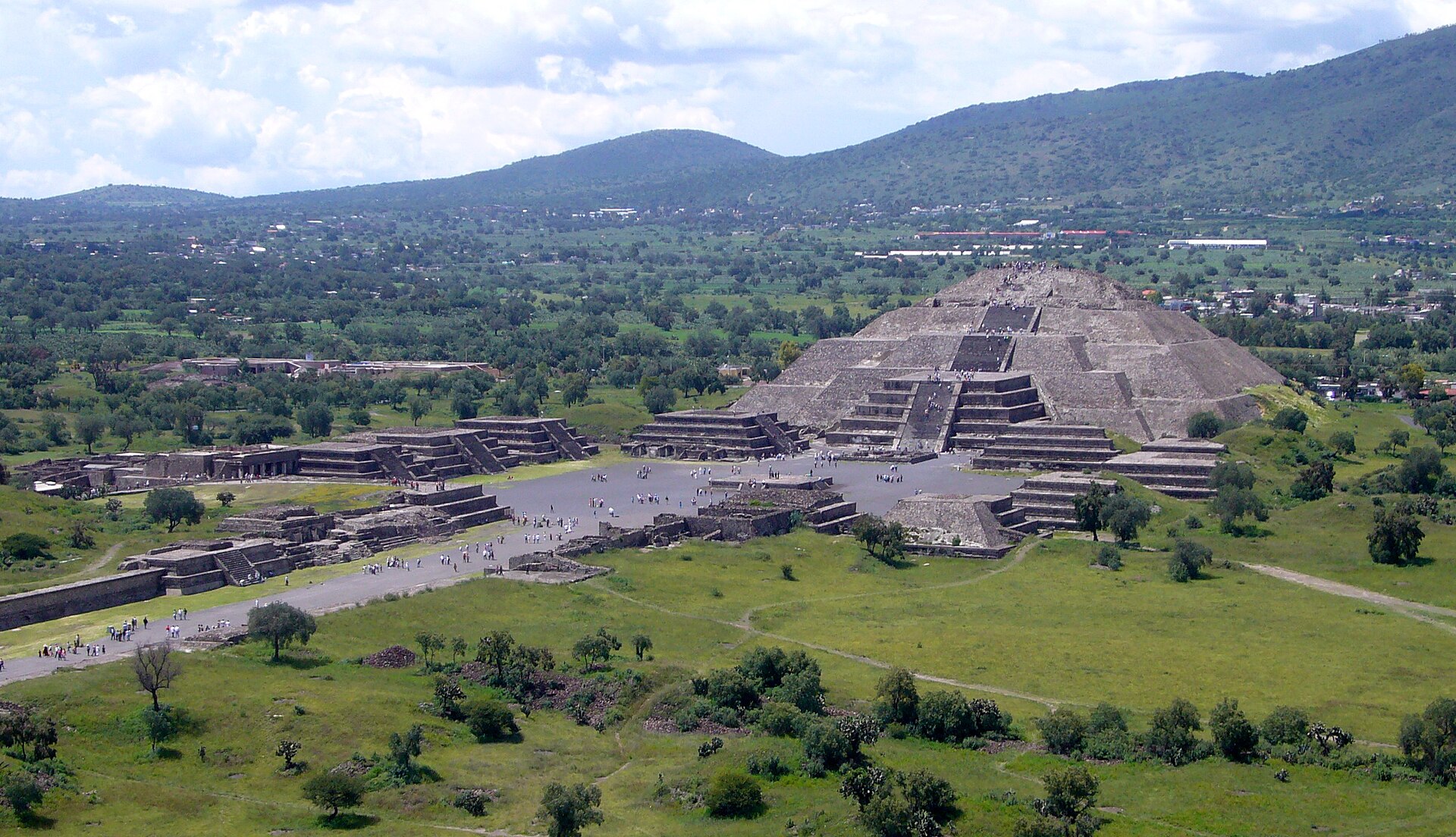
Teotihuacan is known today as the site of many of the most architecturally significant Mesoamerican pyramids built in the pre-Columbian Americas, namely the Pyramid of the Sun and the Pyramid of the Moon. Although close to Mexico City, Teotihuacan was not a Mexica (i.e. Aztec) city, and it predates the Aztec Empire by many centuries. At its zenith, perhaps in the first half of the first millennium (1 CE to 500 CE), Teotihuacan was the largest city in the Americas. Its population has been estimated to be at least 25,000, but likely sat around 100,000 during its height, potentially making it the sixth-largest city in the world during its epoch.
The city covered twenty-one square kilometres (8 sq mi) and 80 to 90 percent of the total population of the valley resided in Teotihuacan. Apart from the pyramids, Teotihuacan is also anthropologically significant for its complex, multi-family residential compounds, the Avenue of the Dead, and its vibrant, well-preserved murals. Additionally, Teotihuacan exported fine obsidian tools found throughout Mesoamerica. The city is thought to have been established around 100 BCE, with major monuments continuously under construction until about 250 CE. The city may have lasted until sometime between the 7th and 8th centuries CE, but its major monuments were sacked and systematically burned around 550 CE. Its collapse might be related to the extreme weather events of 535–536.
Teotihuacan began as a religious center in the Mexican Plateau around the first century CE. It became the largest and most populated center in the pre-Columbian Americas. Teotihuacan was home to multi-floor apartment compounds built to accommodate the large population. The term Teotihuacan (or Teotihuacano) is also used to refer to the whole civilization and cultural complex associated with the site. Although it is a subject of debate whether Teotihuacan was the center of a state empire, its influence throughout Mesoamerica is well documented. Evidence of Teotihuacano presence is found at numerous sites in Veracruz and t
Text from Wikipedia, licensed CC BY-SA 4.0.