No. 105
Monte Alban

- Where
- Mexico
- Built by
- Zapotecs
- Era
- 500 BCE-800 CE
- Known for
- A city built on a leveled mountaintop.
- How it ended
- Slowly abandoned as power split among smaller towns.

Lyra Kael can take you here on the globe, tell you the story out loud and answer your questions. Start the time jump.
Background
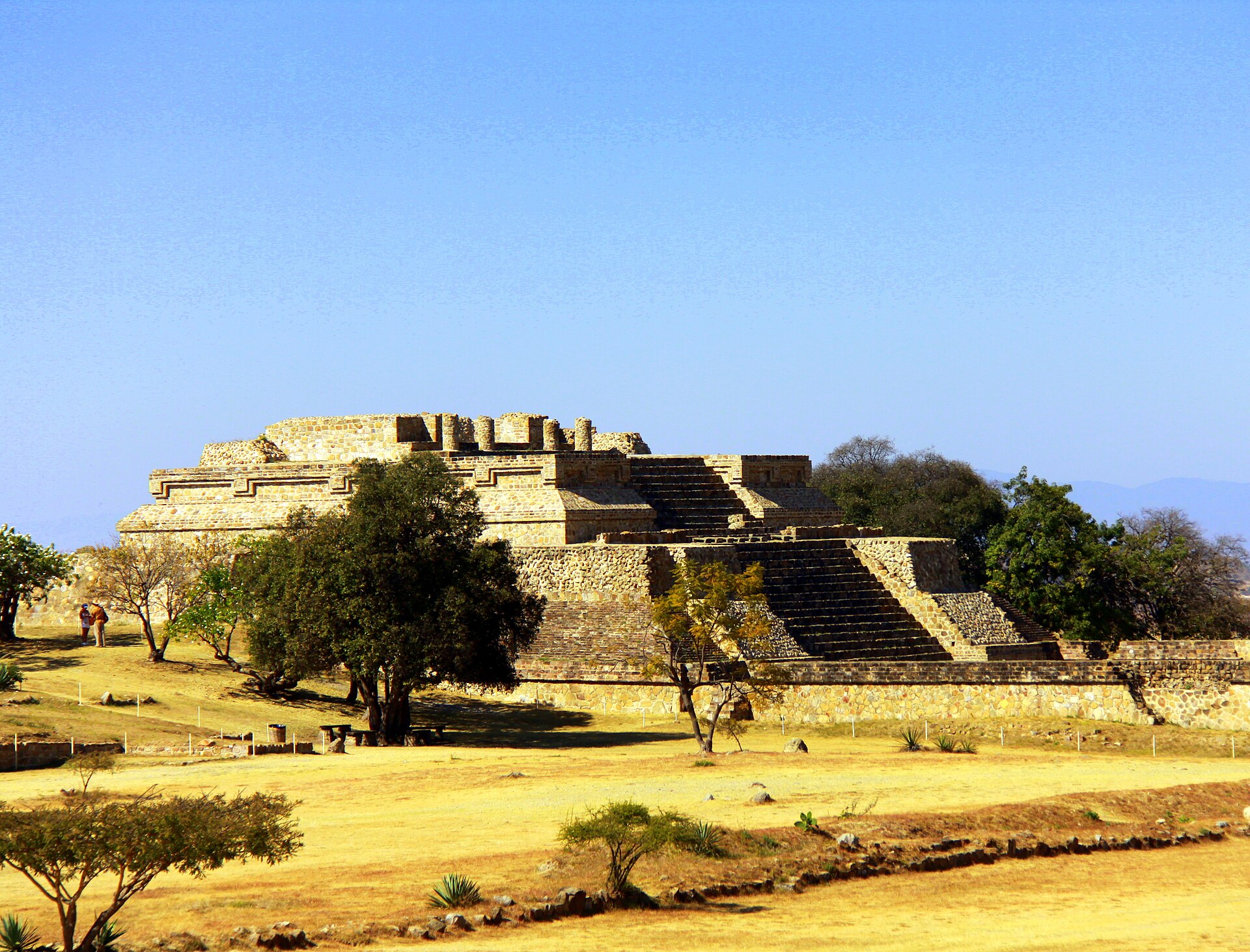
Monte Albán is a large pre-Columbian archaeological site in the Santa Cruz Xoxocotlán Municipality in the southern Mexican state of Oaxaca (17.043° N, 96.767°W). The site is located on a low mountainous range rising above the plain in the central section of the Valley of Oaxaca, where the latter's northern Etla, eastern Tlacolula, and southern Zimatlán and Ocotlán (or Valle Grande) branches meet. The present-day state capital Oaxaca City is located approximately 9 km (6 mi) east of Monte Albán.
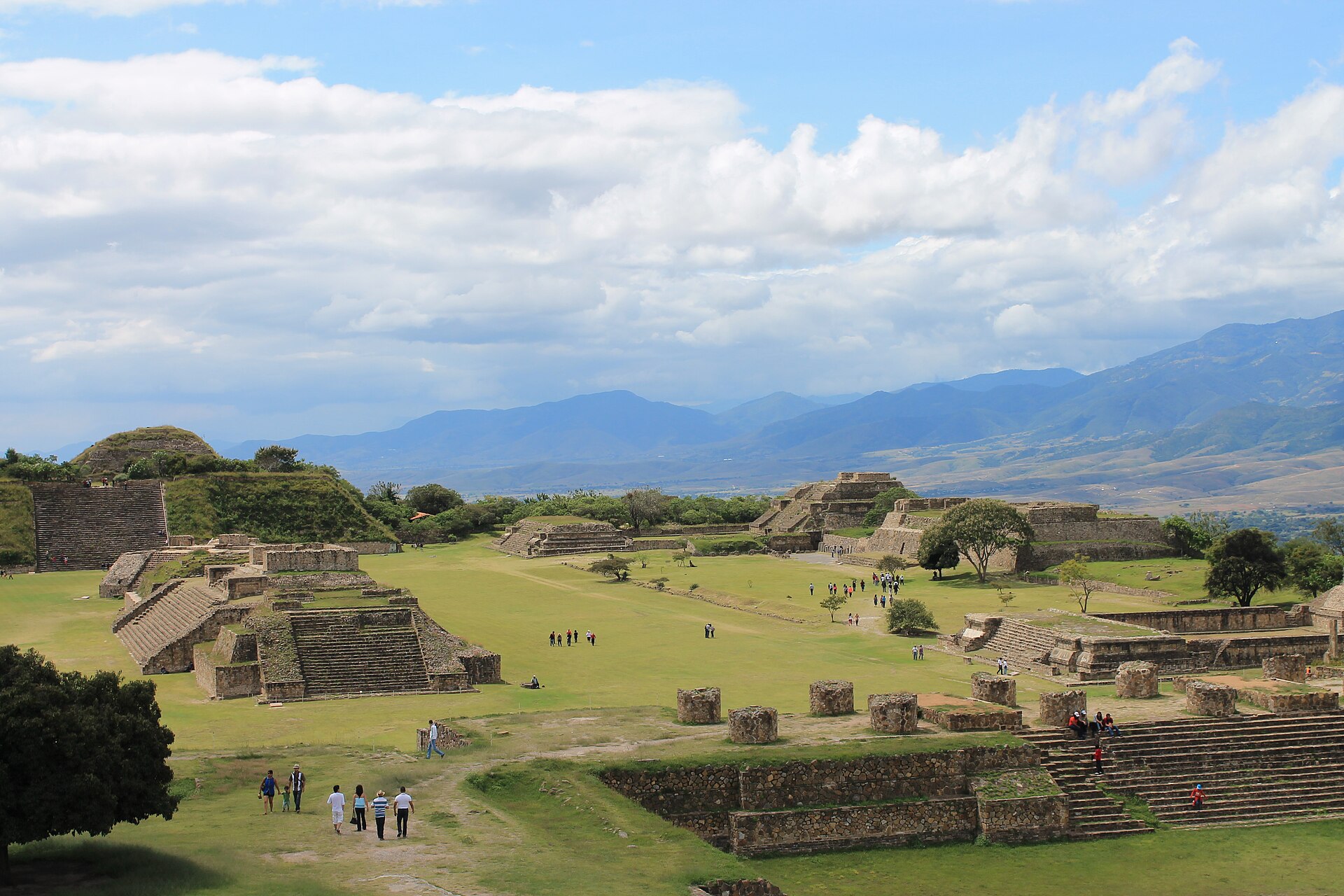
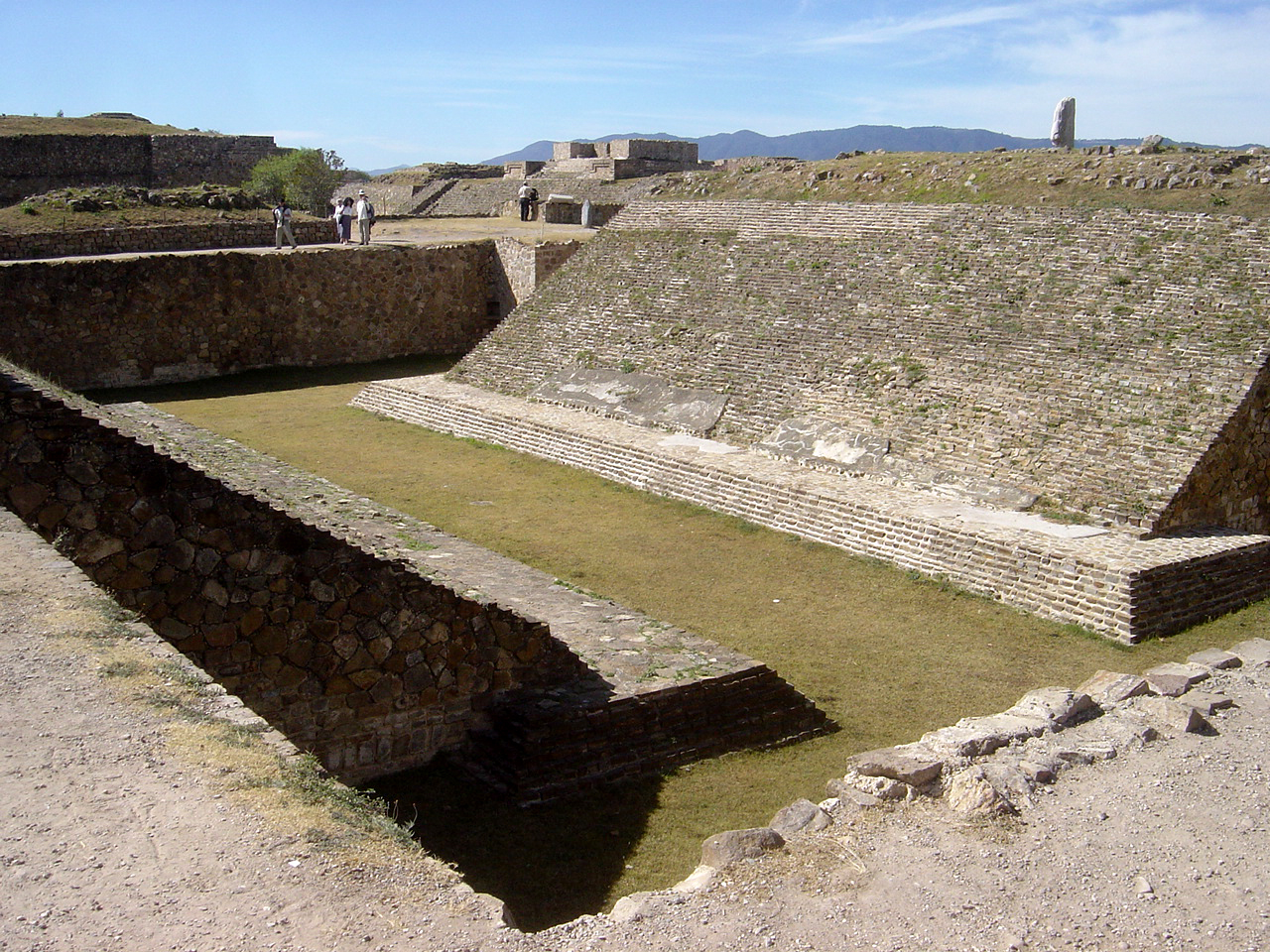
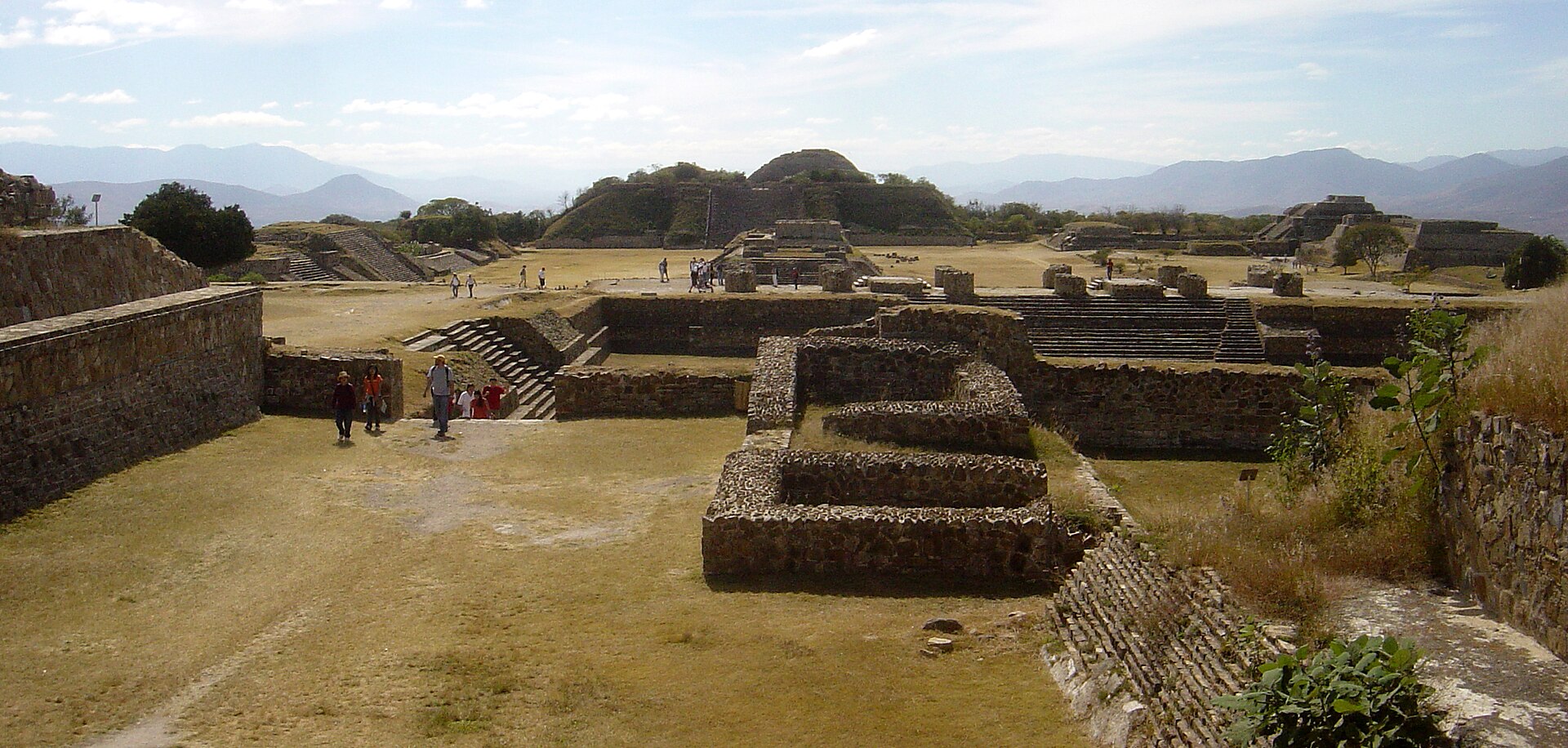
The partially excavated civic ceremonial center of the Monte Albán site is situated atop an artificially leveled ridge. It has an elevation of about 1,940 m (6,400 ft) above mean sea level and rises some 400 m (1,300 ft) from the valley floor, in an easily defensible location. In addition to the monumental core, the site is characterized by several hundred artificial terraces, and a dozen clusters of mounded architecture covering the entire ridgeline and surrounding flanks. The archaeological ruins on the nearby Atzompa and El Gallo hills to the north are traditionally considered to be an integral part of the ancient city as well.
Besides being one of the earliest cities of Mesoamerica, Monte Albán was important for nearly one thousand years as the pre-eminent Zapotec socio-political and economic center. Founded toward the end of the Middle Formative period at around 500 BC, by the Terminal Formative (c. 100 BC – AD 200) Monte Albán had become the capital of a large-scale expansionist polity that dominated much of the Oaxacan highlands and interacted with other Mesoamerican regional states, such as Teotihuacan to the north (Paddock 1983; Marcus 1983). The city lost its political pre-eminence by the end of the Late Classic (c. AD 500–750), and soon thereafter was largely abandoned. Small-scale reoccupation, opportunistic reuse of earlier structures and tombs, and ritual visitations marked the archaeological history of the site into the Colonial period.
The etymology of the site's present-day name is unclear. Tentative suggestions regarding its origin range from a presumed corruption of a native Zapotec name to a colonial-era reference to a Spanish soldier by the name Montalbán or to the Alban Hills of Italy. The ancient Zapotec name of the city is not known, as abandonment occurred centuries before the writing of the earliest available ethnohistorical sources.
Text from Wikipedia, licensed CC BY-SA 4.0.