The story
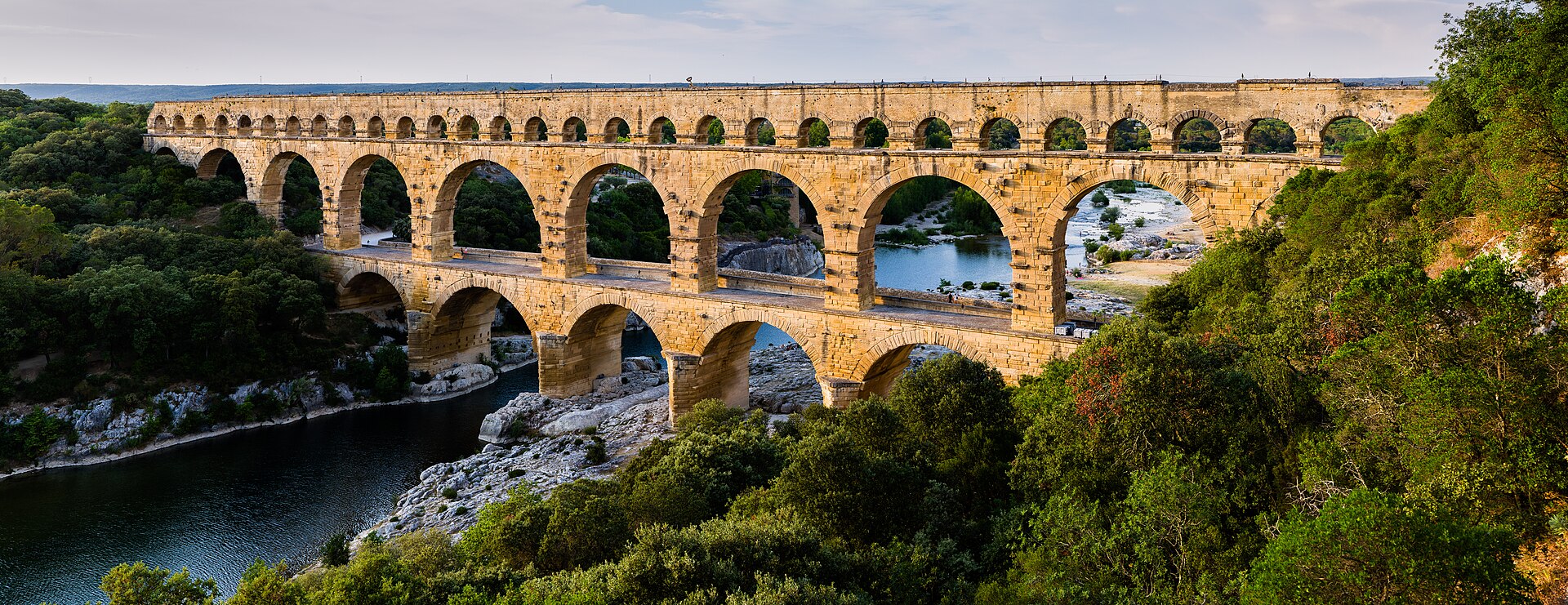
Around 40 to 60 CE, the Romans built an aqueduct about 50 kilometers long to carry spring water to the city of Nemausus, today's Nimes. Most of it ran underground or along the ground, but to cross the Gardon River valley, engineers built the Pont du Gard.
It has three levels of arches. The water flowed in a channel on top. The whole aqueduct dropped only about 12 meters over its entire length, so the water flowed gently downhill the whole way. That took amazing measuring skills.
The big stones of the lower levels fit together without mortar. Some weigh about 6 tonnes. Workers lifted them with wooden cranes powered by people walking inside big treadwheels.
How it ended
Over hundreds of years, minerals in the water built up a stony crust inside the channel. Without care, the aqueduct clogged, and by about the 500s CE it stopped carrying water. People later used the bridge to cross the river.
What life was like
The water brought by the aqueduct filled public fountains, baths and some rich people's homes in Nimes. Ordinary families collected water at fountains. Building the bridge took hundreds of workers, including stonecutters, crane operators and engineers. They left marks and numbers on the stones to show where each one went.
Wow facts
- The water dropped only about 2.5 centimeters over the length of the bridge itself.
- The biggest blocks weigh about 6 tonnes and fit without mortar.
- Workers' marks, like numbers, are still carved on some stones.
Photos
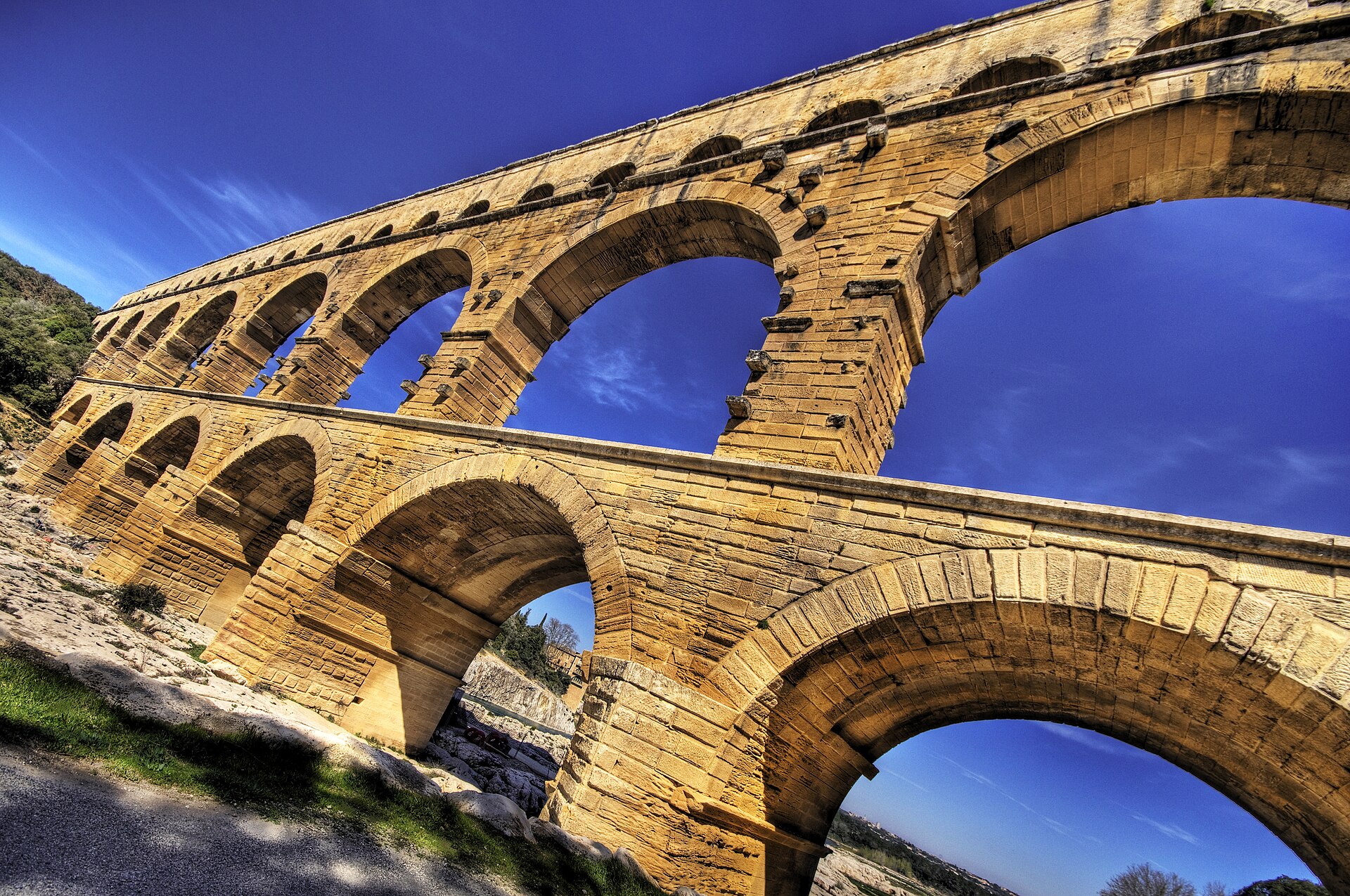 Pont du Gard Wolfgang Staudt, CC BY 2.0
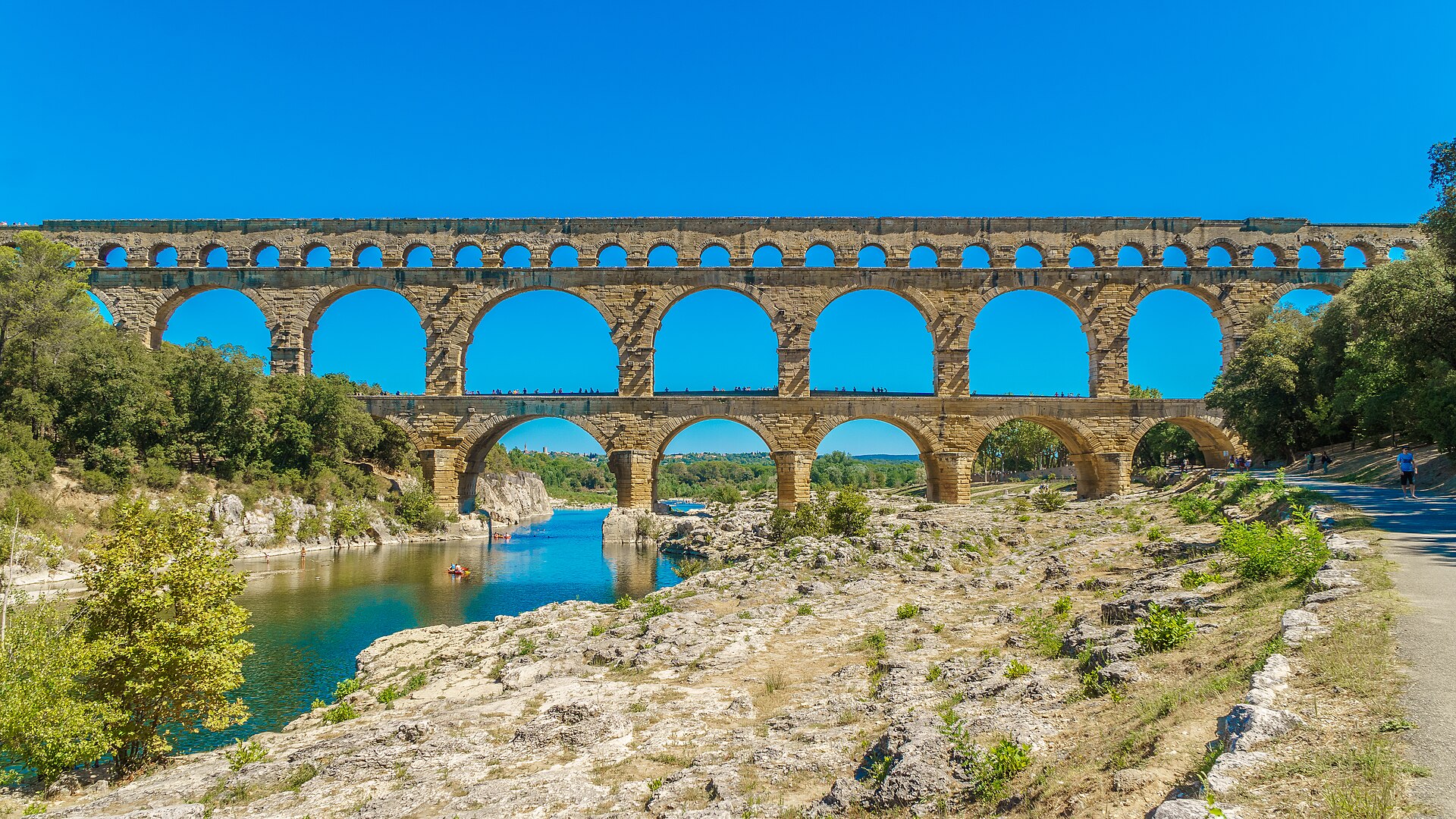 arrière Jan Hager, CC BY-SA 4.0
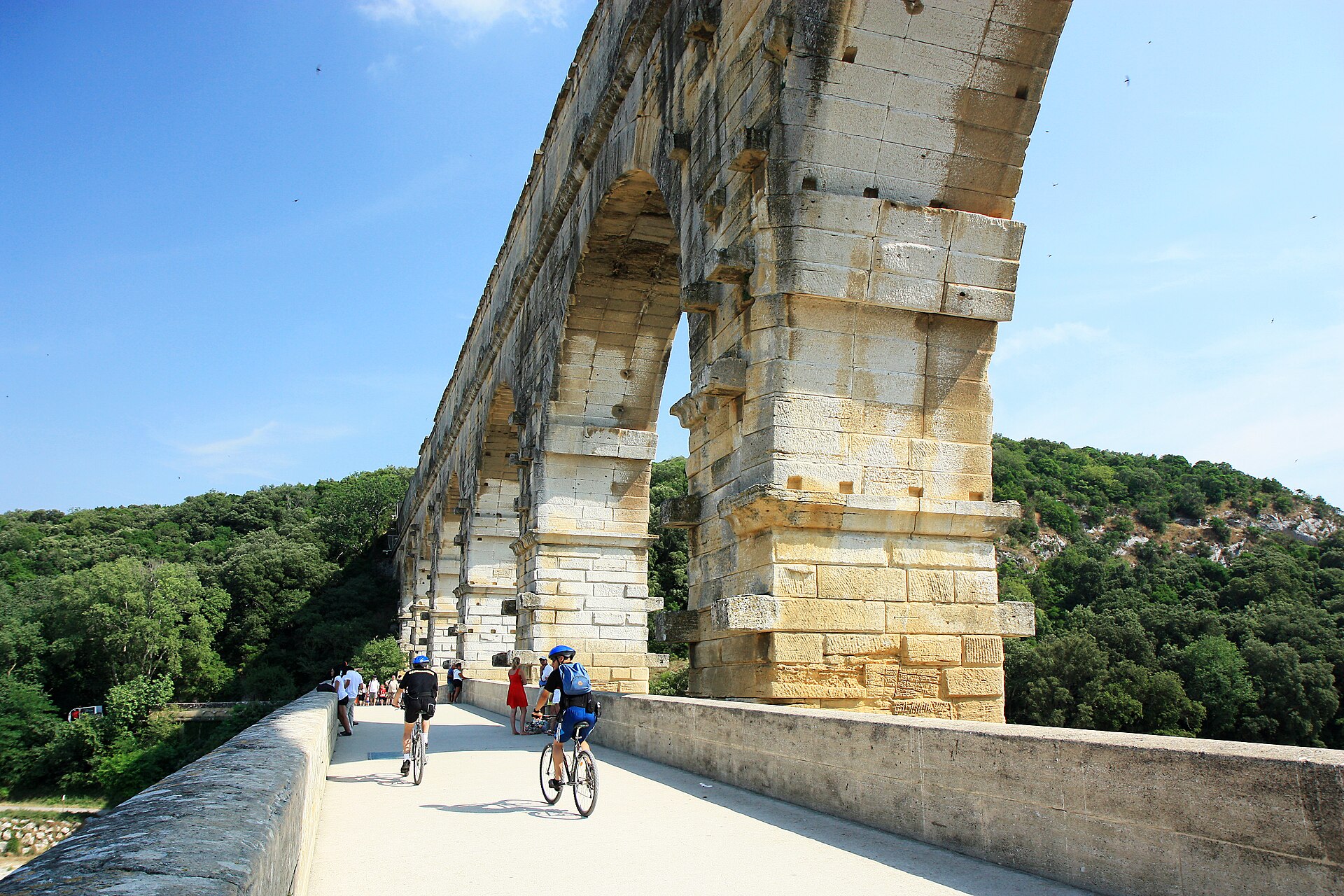 18th century road bridge (now closed to motor traffic) alongside the Pont du Gard Andrea Schaffer, CC BY 2.0
Relics and treasures
- Pont du Gardthe three-level aqueduct bridge, still standing over the Gardon River
- Builders' markscarved numbers and letters on the stones, at the site
- Water channelthe covered channel on top, with mineral crust inside, at the site
- Remains of the aqueductother sections along its route near Nimes
How we know
Engineers and historians have measured the bridge for centuries. Pottery and coins found in the aqueduct's channels helped date it. Thick mineral deposits inside the channel show how long the water flowed.
What you would see today
Visitors walk across the lower level, swim or kayak in the river below, and visit a museum explaining Roman engineering. It is a UNESCO World Heritage Site and one of France's most visited monuments.
For teachers and classrooms
Suggested level: grades 3-5. Print this page as a lesson sheet with the story, vocabulary, discussion questions and a quiz with an answer key.
Key words
- aqueduct
- a channel or bridge built to carry water over long distances
- mortar
- a paste that sticks stones or bricks together
- engineer
- a person who designs and builds machines, structures or systems
Talk about it
- How could Romans make water flow 50 kilometers using only gravity?
- What happens when people stop taking care of important structures?
Try this activity
- Draw a map of Pont du Gard as it looked at its busiest, and label three things people did there.
- Find Pont du Gard on the Ruinscape timeline, then pick another place from the same century and compare them.
- Use one link in Sources below to find a real object from this place. Describe what it is made of and what it tells us.
Quick quiz
What did the Pont du Gard carry?
- Water
- Cars
- Trains
- Ships
Show the answer
A. It is part of an aqueduct that carried water to Nimes.
How did Romans lift huge stones?
- Treadwheel cranes
- Helicopters
- Elephants only
- Magic
Show the answer
A. Workers walked inside big wheels to power wooden cranes.
Why did the aqueduct stop working?
- Mineral crust clogged it
- It was hit by lightning
- It froze
- A dragon
Show the answer
A. Minerals built up inside and it was no longer cleaned.
Sources and further reading
Ruinscape lessons are written for students and checked against encyclopedia and museum records. Go to the sources: these links search real museum collections, the UNESCO list and research by archaeologists.
- Wikipedia articleEncyclopedia overview with its own references
- UNESCO World HeritageOfficial listing, if the site is protected
- Google Arts & CultureMuseum exhibits, virtual tours and close-up photos
- British Museum collectionReal objects, photos and catalog notes
- The Met collectionObjects and essays from the Metropolitan Museum of Art
- Smithsonian collectionsU.S. national museum records
- 3D models on SketchfabScans of sites and artifacts (check each license)
- Scholarly articlesResearch papers by archaeologists and historians
Read the full background
The Pont du Gard is an ancient Roman aqueduct bridge built in the first century AD to carry water over 50 km (31 mi) to the Roman colony of Nemausus (Nîmes). It crosses the river Gardon near the town of Vers-Pont-du-Gard in southern France. The Pont du Gard is one of the best preserved Roman aqueduct bridges. It was added to UNESCO's list of World Heritage sites in 1985 because of its exceptional preservation, historical importance, and architectural ingenuity.
Background text from Wikipedia, available under CC BY-SA 4.0.
Last updated: October 2026. How we make Ruinscape.