No. 52
Etruscan tombs of Cerveteri and Tarquinia

- Where
- Italy
- Built by
- Etruscans
- Era
- 900-100 BCE
- Known for
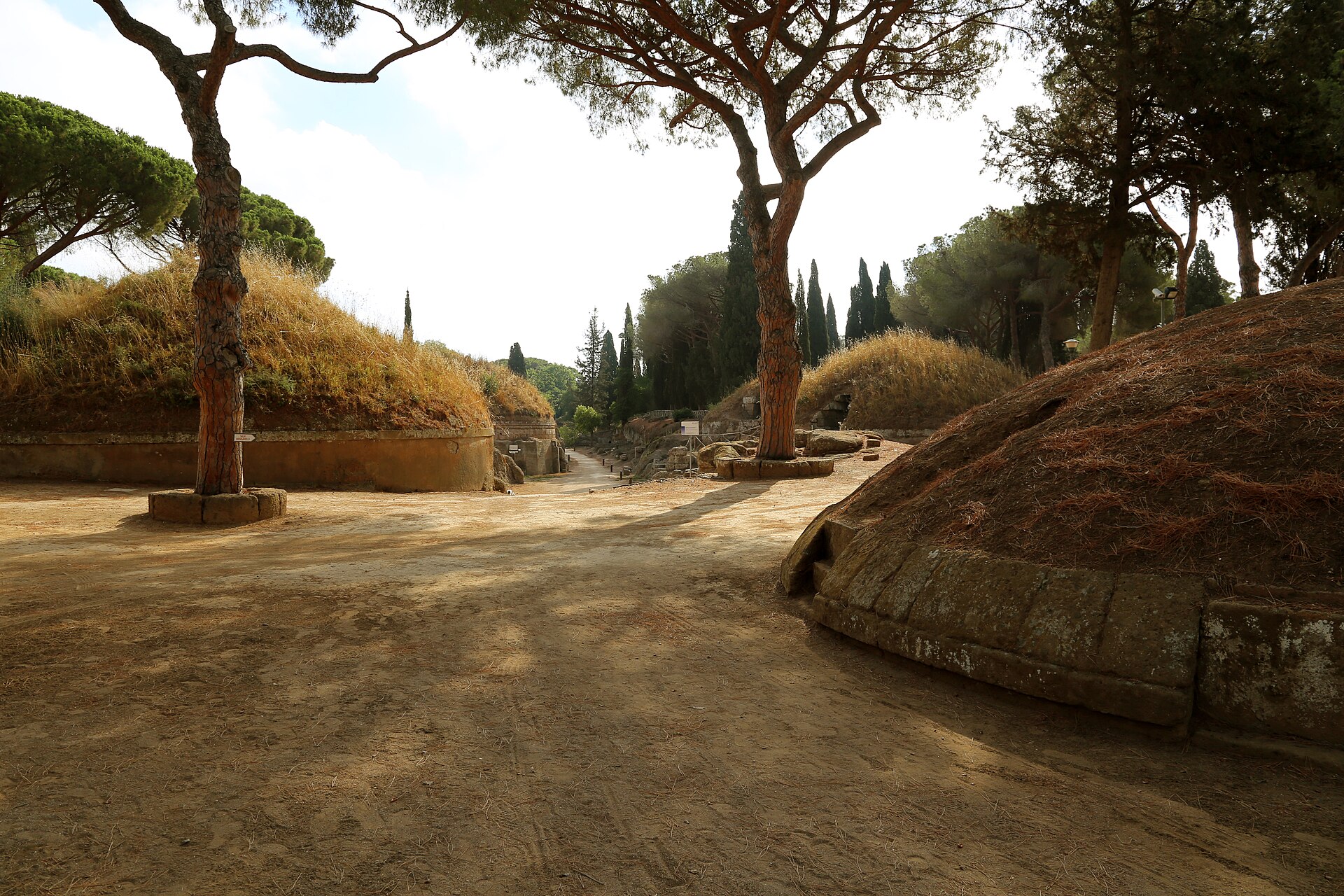
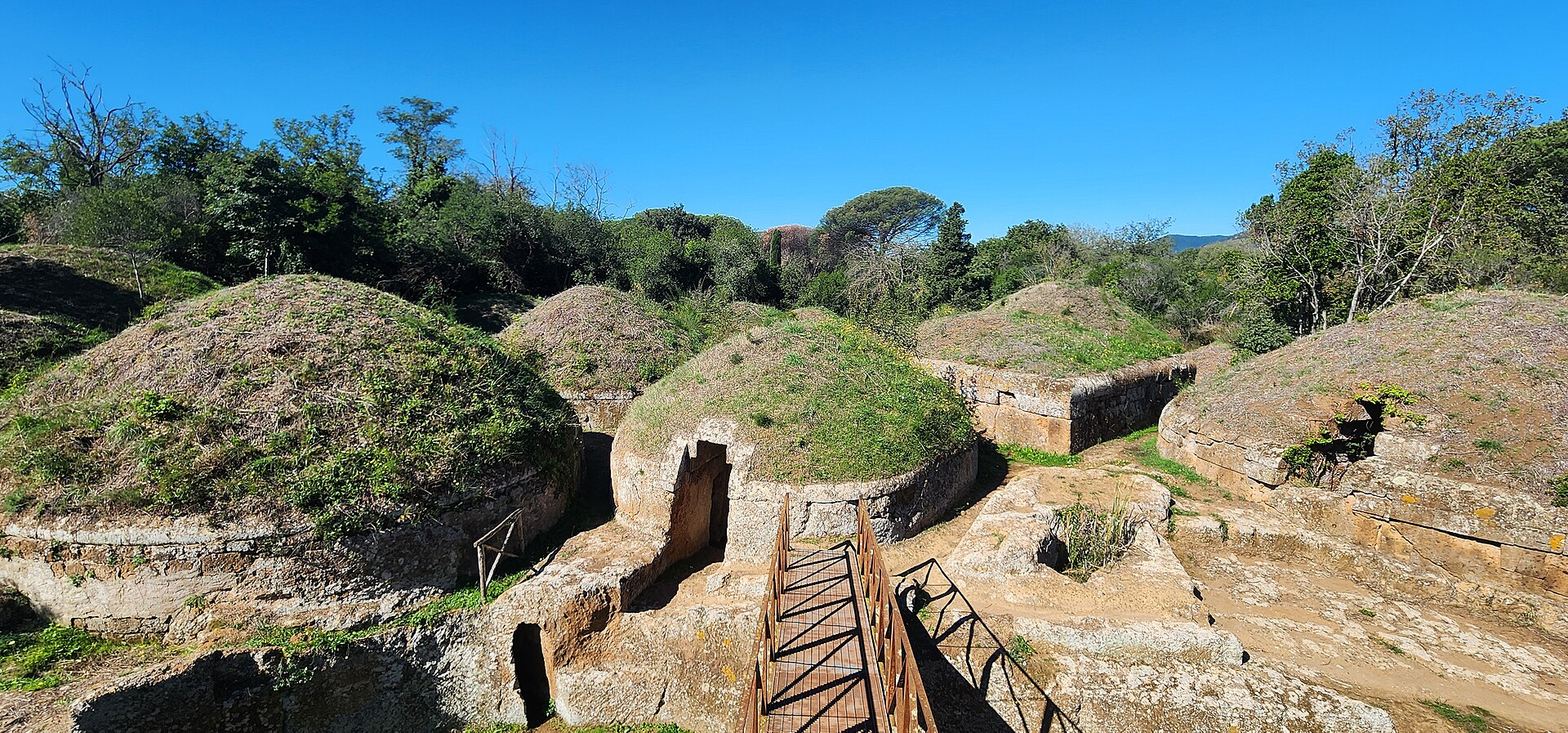
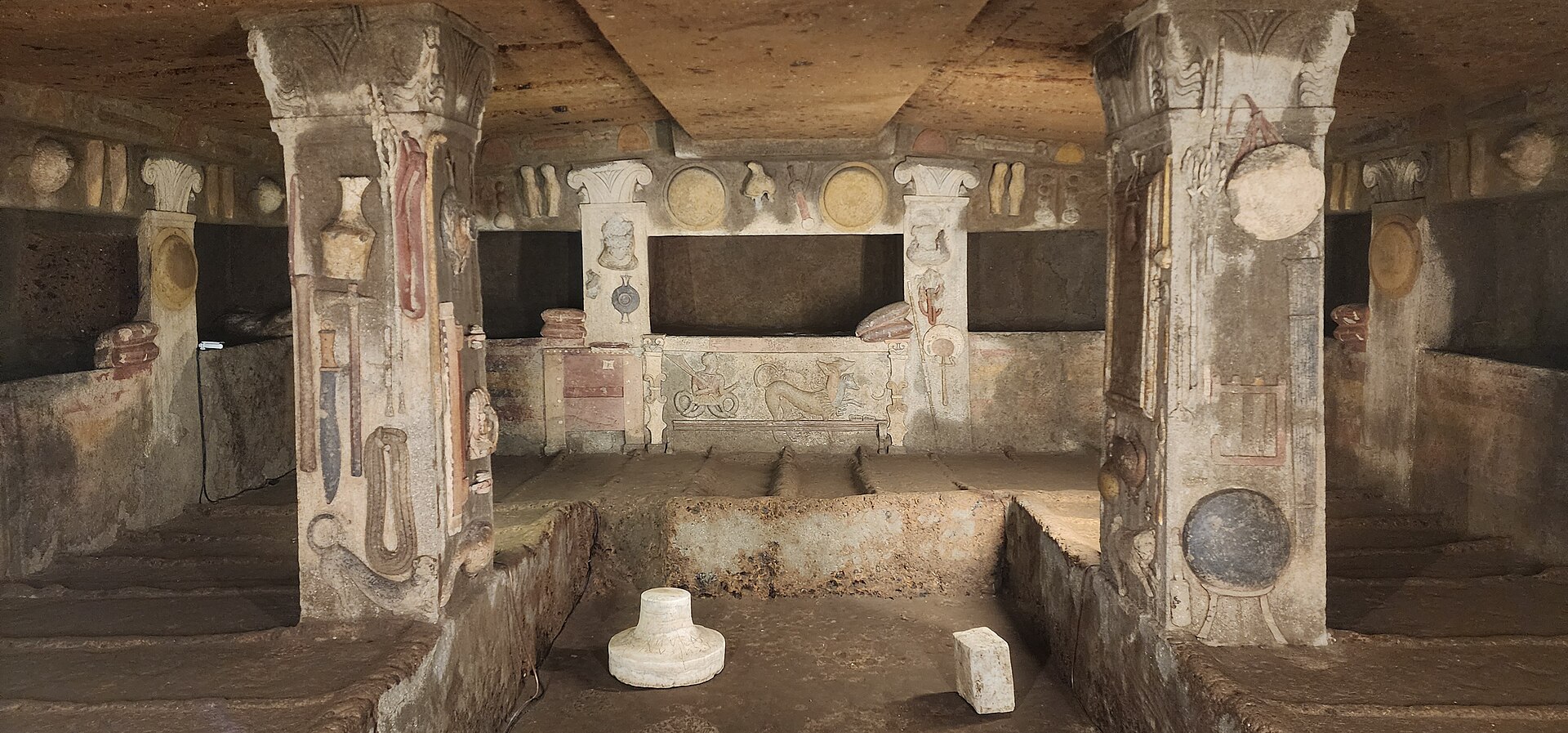
- Painted tombs laid out like houses for the dead.
- How it ended
- The Etruscans were absorbed into Rome and their language was lost.

Lyra Kael can take you here on the globe, tell you the story out loud and answer your questions. Start the time jump.
Background
Cerveteri (Italian: [tʃerˈvɛːteri]) is a comune (municipality) in the Metropolitan City of Rome Capital, in the Italian region of Lazio. Known by the ancient Romans as Caere, and previously by the Etruscans as Caisra or Cisra, and as Agylla (or Άγυλλα) by the Greeks, its modern name derives from Caere Vetus (more precisely its locative Caere Veterī) used in the 13th century to distinguish it from Caere Novum (the current town).
It is the site of an ancient Etruscan city, one of the most important Etruscan cities, with an area more than 15 times larger than today's town. The best-known structures on the site form the Banditaccia Necropolis, and comprises all of the most important tumulus tombs and chambers known. Cut out of tufa, most of the tombs echo Greek architecture.
Caere was one of the city-states of the Etruscan League and at its height, around 600 BC, its population was perhaps around 25,000 – 40,000 people.
Text from Wikipedia, licensed CC BY-SA 4.0.