The story
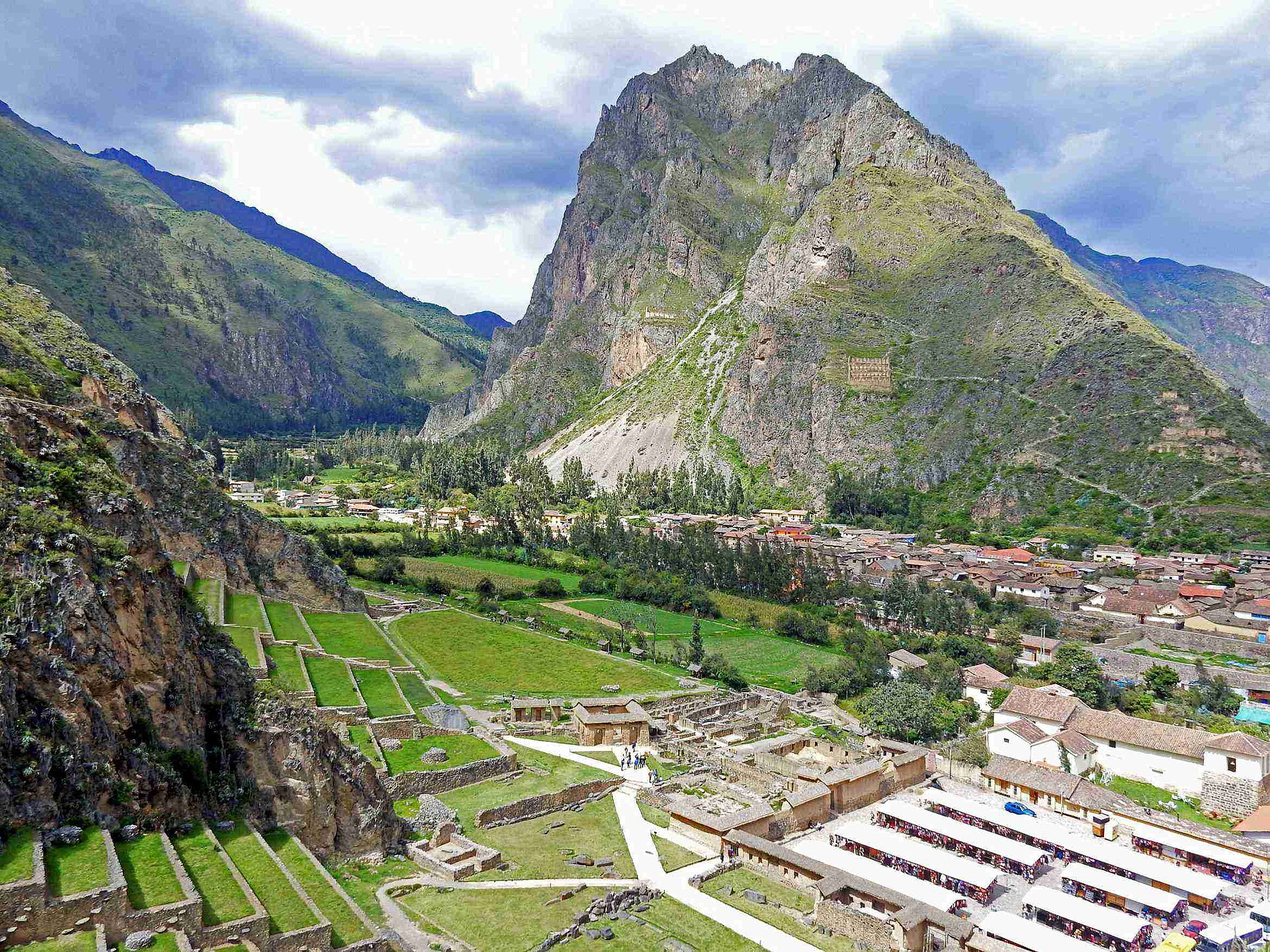
In the mid-1400s, the Inca emperor Pachacuti conquered this part of the Sacred Valley and built Ollantaytambo as a royal estate. Workers carved huge stone terraces into the steep mountain for farming and defense.
At the top is the Temple of the Sun, with six giant pink granite blocks fitted together perfectly. The stones were cut at a quarry across the river, then dragged several kilometers and up the slope, a huge feat without wheels or iron tools.
In 1537, the Inca leader Manco Inca fought the Spanish here and won. He flooded the fields and his warriors rained down arrows and stones from the terraces. But the Spanish returned with more soldiers, and Manco retreated deeper into the jungle.
How it ended
Ollantaytambo was never fully abandoned. After the Inca Empire fell to the Spanish, the town kept going, and today people still live in its old Inca streets.
What life was like
Farmers grew corn and potatoes on the terraces, which kept soil from washing away and caught the sun. Water ran through stone channels into houses and fountains. The town was laid out in neat blocks, called canchas, each with houses around a courtyard. Storehouses called qollqas held food on the hillsides, where cool wind kept it fresh.
Wow facts
- The six pink granite blocks of the Sun Temple were dragged from a quarry across the river.
- Inca water channels still run through the town today.
- Storehouses were built high on the hills where cool air kept food from spoiling.
Photos
 District of Ollantaytambo - Urubamba Province - Cusco Region MiguelAngel2015, CC BY-SA 4.0
 District of Ollantaytambo - Urubamba Province - Cusco Region MiguelAngel2015, CC BY-SA 4.0
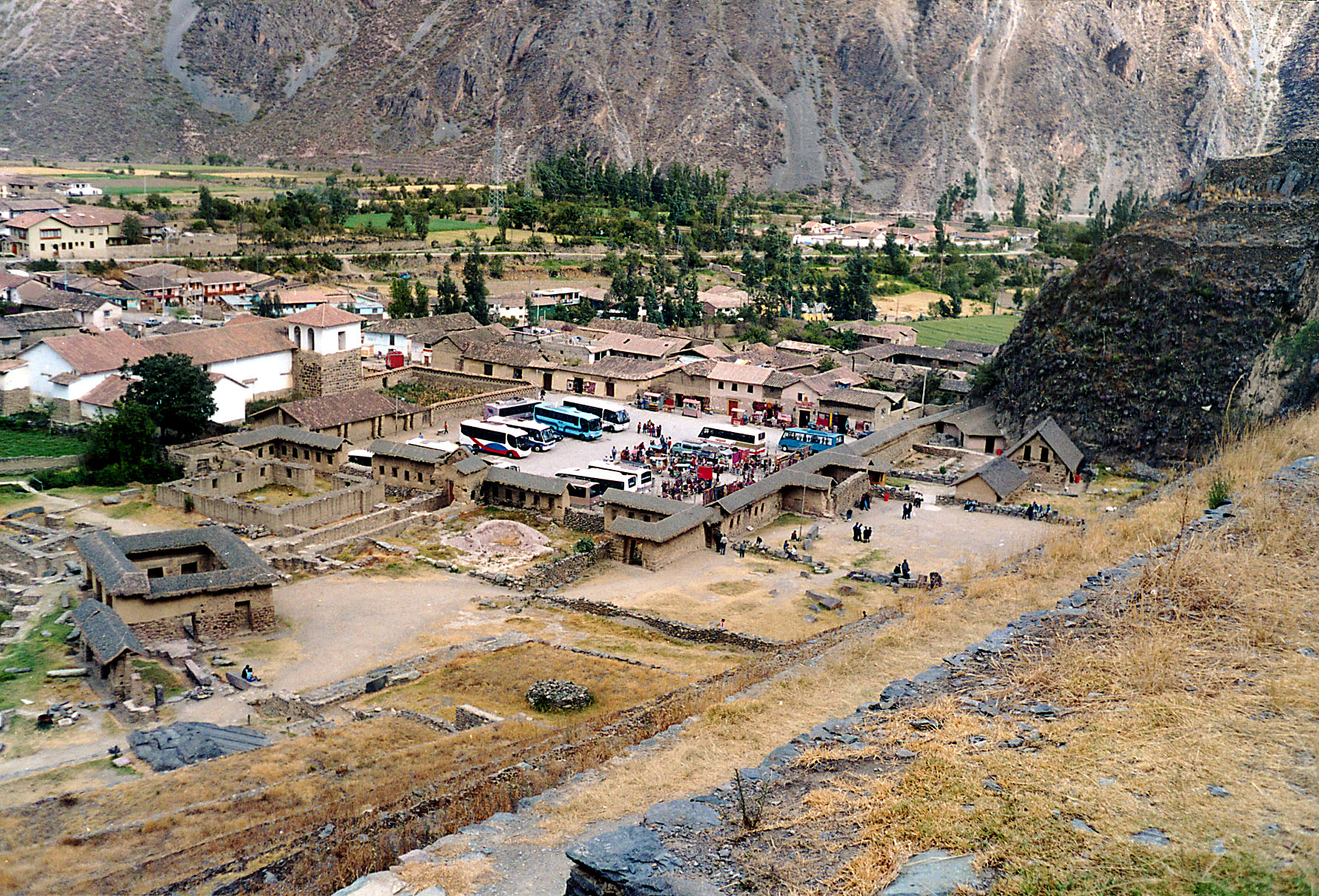 Ollantaytambo, Peru. The photo was taken in 2002 by Håkan Svensson (Xauxa). Note: As of... No machine-readable author provided. Xauxa assumed (based on copyright claims)., CC BY 2.5
Relics and treasures
- Temple of the Sunsix giant fitted granite blocks, at the site
- Agricultural terracessteep stone terraces, at the site
- Qollqashillside storehouses, at the site
- Inca water channelsstone channels still flowing through town
How we know
Spanish chroniclers wrote about Manco Inca's battle in 1537. Archaeologists have studied the quarries, ramps and stones to learn how they were moved. The town's layout has survived almost unchanged.
What you would see today
Visitors climb the terraces to the Temple of the Sun and explore the old town, where families still live in Inca-built houses. Many people start the train journey to Machu Picchu from here.
For teachers and classrooms
Suggested level: grades 3-5. Print this page as a lesson sheet with the story, vocabulary, discussion questions and a quiz with an answer key.
Key words
- terrace
- a flat step cut into a hillside for farming
- granite
- a very hard type of rock
- estate
- a large area of land owned by one person or family
Talk about it
- Why are terraces useful on steep mountains?
- What would it be like to live in a town that is over 500 years old?
Try this activity
- Draw a map of Ollantaytambo as it looked at its busiest, and label three things people did there.
- Find Ollantaytambo on the Ruinscape timeline, then pick another place from the same century and compare them.
- Use one link in Sources below to find a real object from this place. Describe what it is made of and what it tells us.
Quick quiz
Which Inca emperor built Ollantaytambo?
- Pachacuti
- Atahualpa
- Moctezuma
- Pakal
Show the answer
A. Pachacuti built it as a royal estate.
Who won the battle here in 1537?
- Manco Inca
- The Spanish
- The Romans
- No one
Show the answer
A. Manco Inca defeated the Spanish at Ollantaytambo.
What still runs through the town today?
- Inca water channels
- A subway
- A canal for ships
- Lava
Show the answer
A. Stone water channels built by the Inca still flow.
Sources and further reading
Ruinscape lessons are written for students and checked against encyclopedia and museum records. Go to the sources: these links search real museum collections, the UNESCO list and research by archaeologists.
- Wikipedia articleEncyclopedia overview with its own references
- UNESCO World HeritageOfficial listing, if the site is protected
- Google Arts & CultureMuseum exhibits, virtual tours and close-up photos
- British Museum collectionReal objects, photos and catalog notes
- The Met collectionObjects and essays from the Metropolitan Museum of Art
- Smithsonian collectionsU.S. national museum records
- 3D models on SketchfabScans of sites and artifacts (check each license)
- Scholarly articlesResearch papers by archaeologists and historians
Read the full background
Ollantaytambo (Quechua: Ullantaytampu) is a town and an Inca archaeological site in southern Peru some 72 km (45 mi) by road northwest of the city of Cusco. It is located at an altitude of 2,792 m (9,160 ft) above sea level in the district of Ollantaytambo, province of Urubamba, Cusco region. During the Inca Empire, Ollantaytambo in the Sacred Valley of the Incas was the royal estate of Emperor Pachacuti, after the mid-15th century. He built a town and a ceremonial center there. At the time of the Spanish conquest of Peru, it served as a stronghold for Manco Inca Yupanqui, leader of the Inca resistance. It is now an important tourist attraction on account of its Inca ruins and its location en route to a starting point for the four-day, three-night hike of the Inca Trail.
Background text from Wikipedia, available under CC BY-SA 4.0.
Last updated: October 2026. How we make Ruinscape.