No. 140
Lake Titicaca offerings
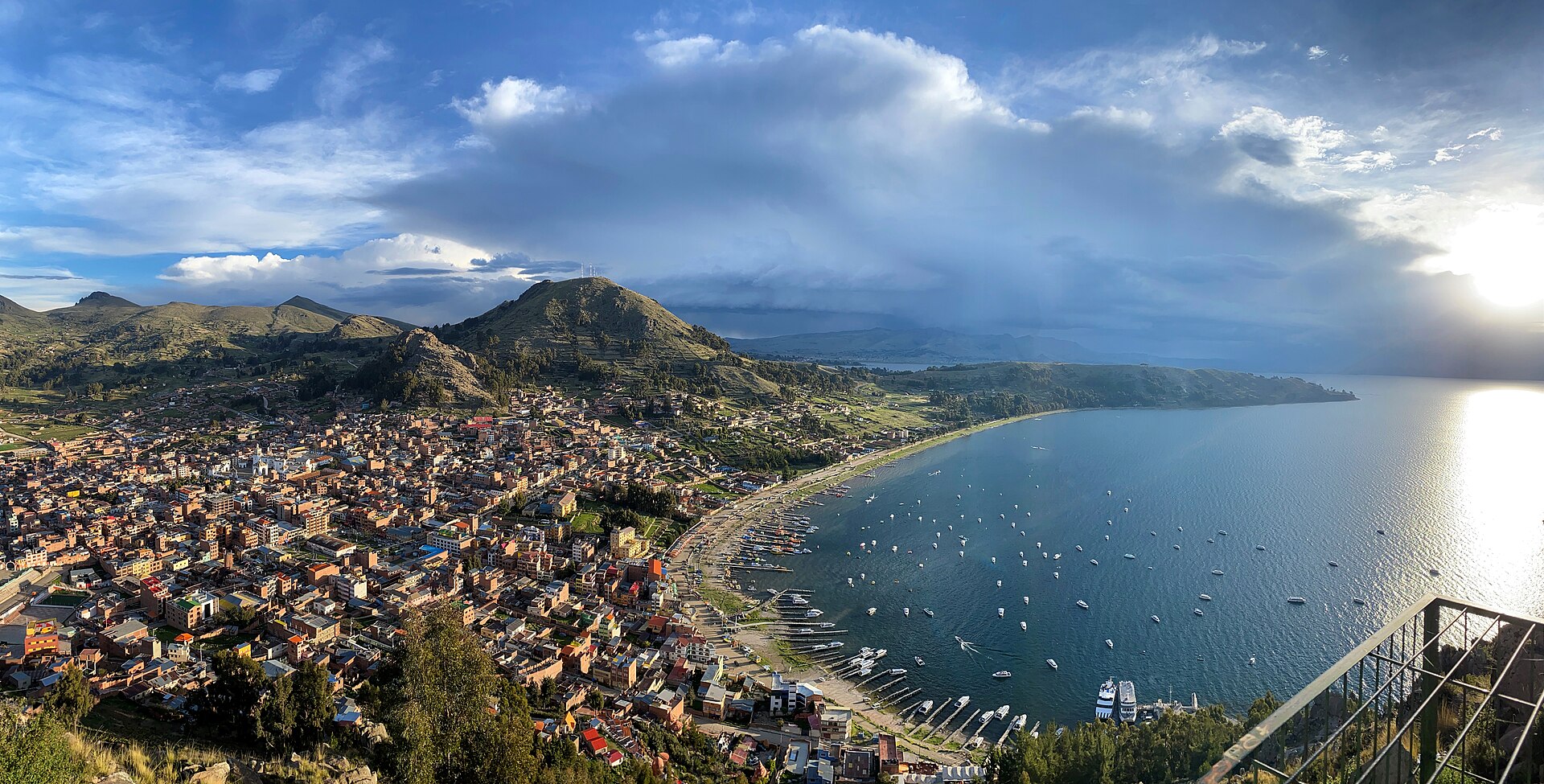

- Where
- Bolivia
- Built by
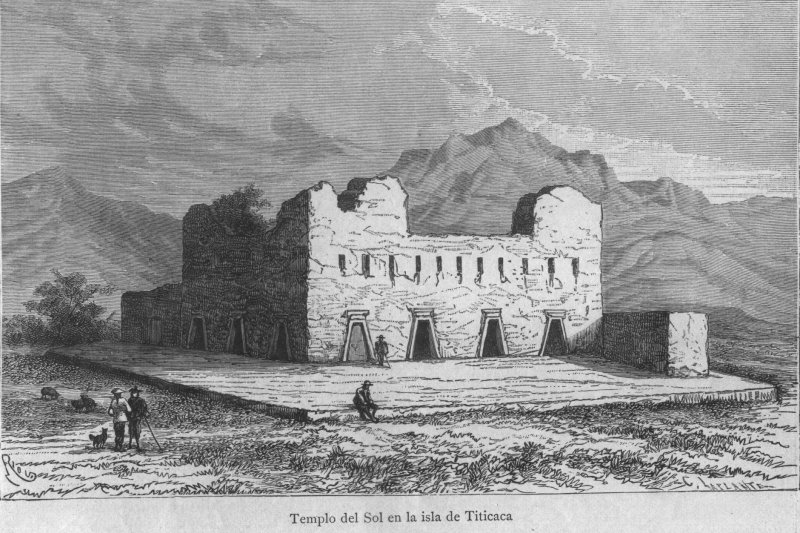
- Tiwanaku and Inca
- Era
- 500-1500s CE
- Known for
- Gold, shells and incense burners at Khoa Reef.
- How it went under
- Placed underwater as offerings and found in 2013.

Lyra Kael can take you here on the globe, tell you the story out loud and answer your questions. Start the time jump.
Background
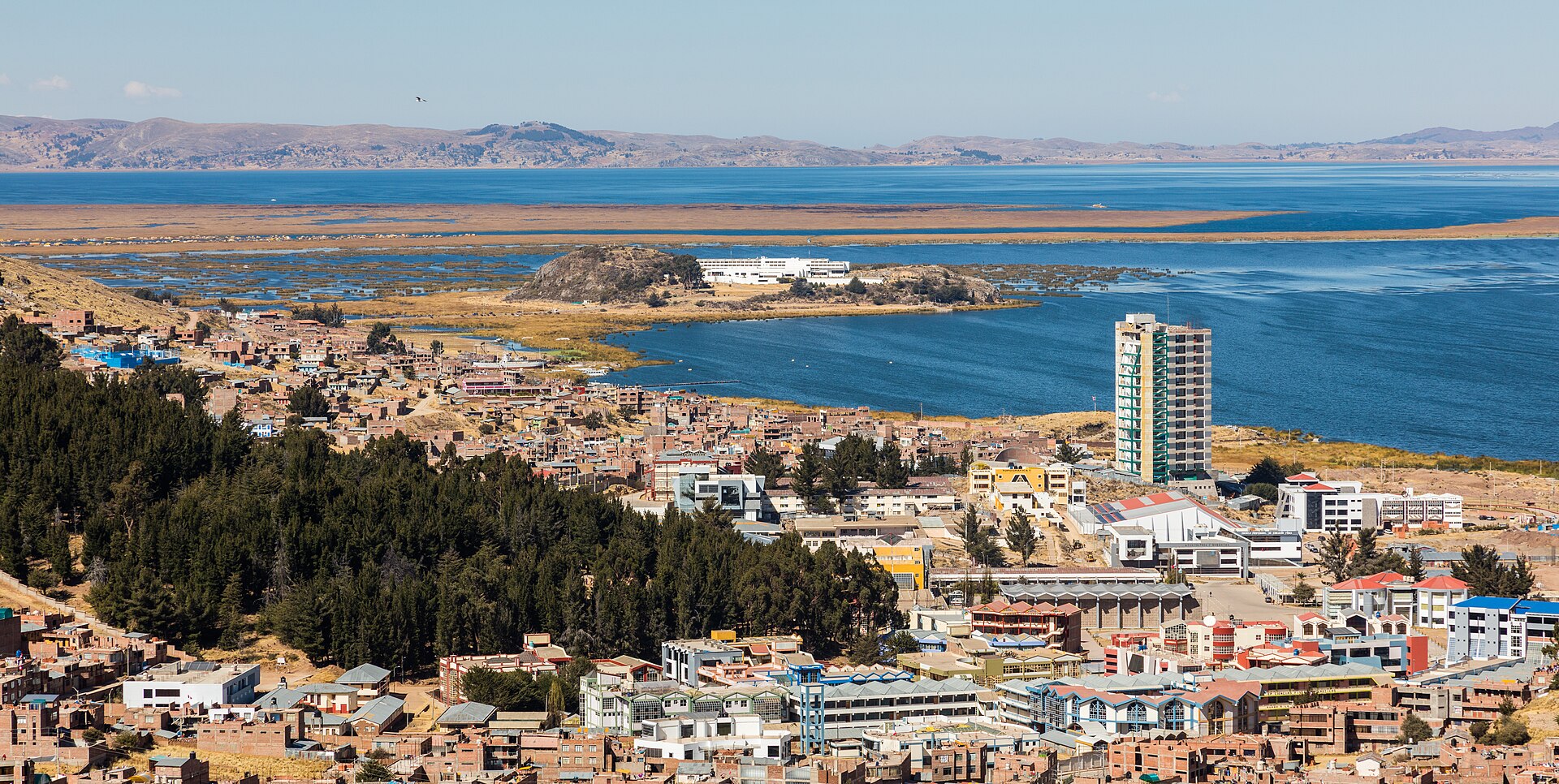
Lake Titicaca (; Spanish: Lago Titicaca [ˈlaɣo titiˈkaka]; Quechua: Titiqaqa and Aymara: Titiqaqa) is a large lake in the Andes mountains on the border of Bolivia and Peru. It is often called the highest navigable lake in the world. It is often listed as a freshwater lake, though its waters are slightly brackish. Titicaca is the largest lake in South America, both in terms of the volume of water and surface area. It is the 18th largest lake in the world. It has a surface elevation of 3,812 m (12,507 ft).
Text from Wikipedia, licensed CC BY-SA 4.0.