The story
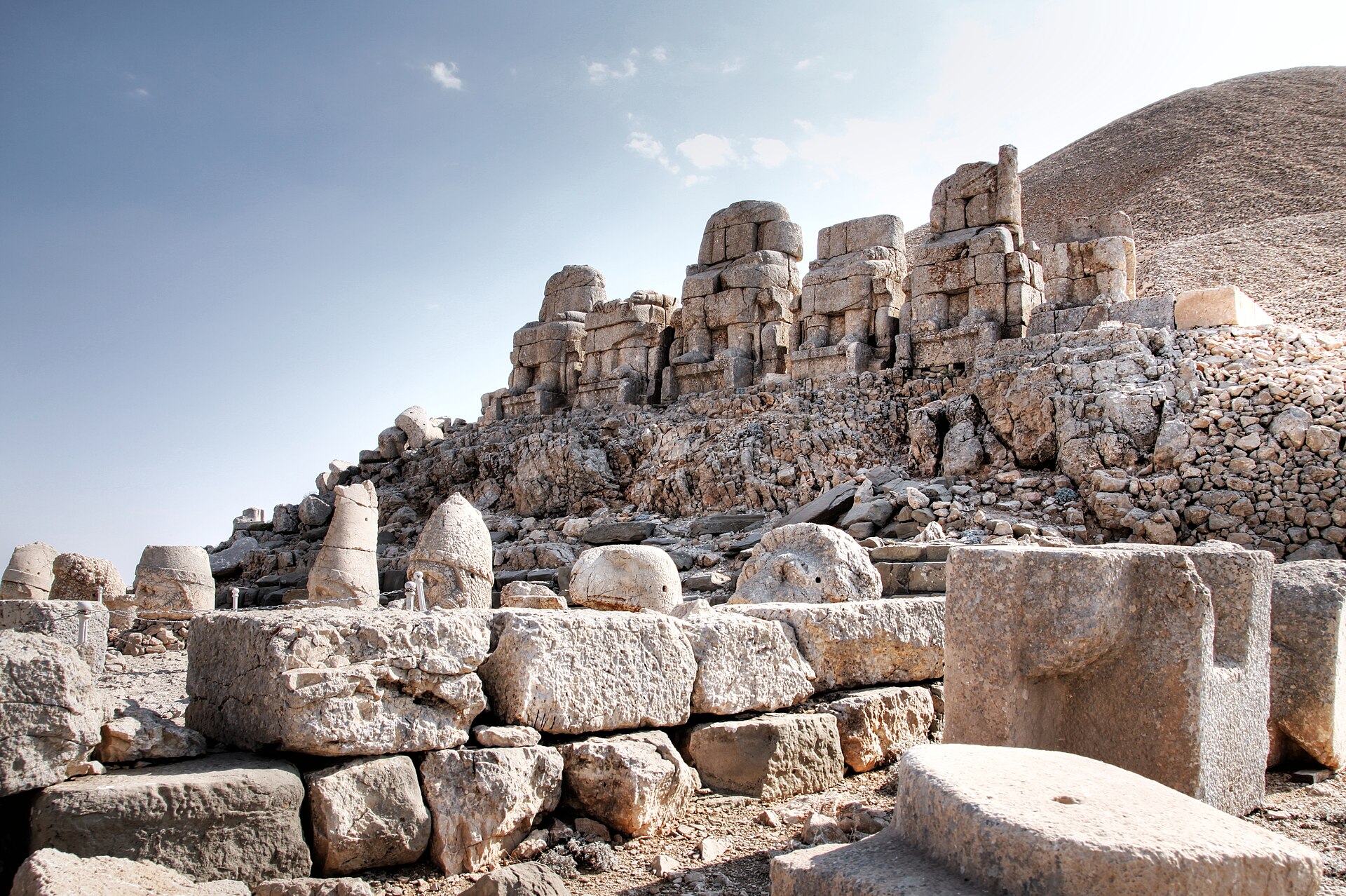
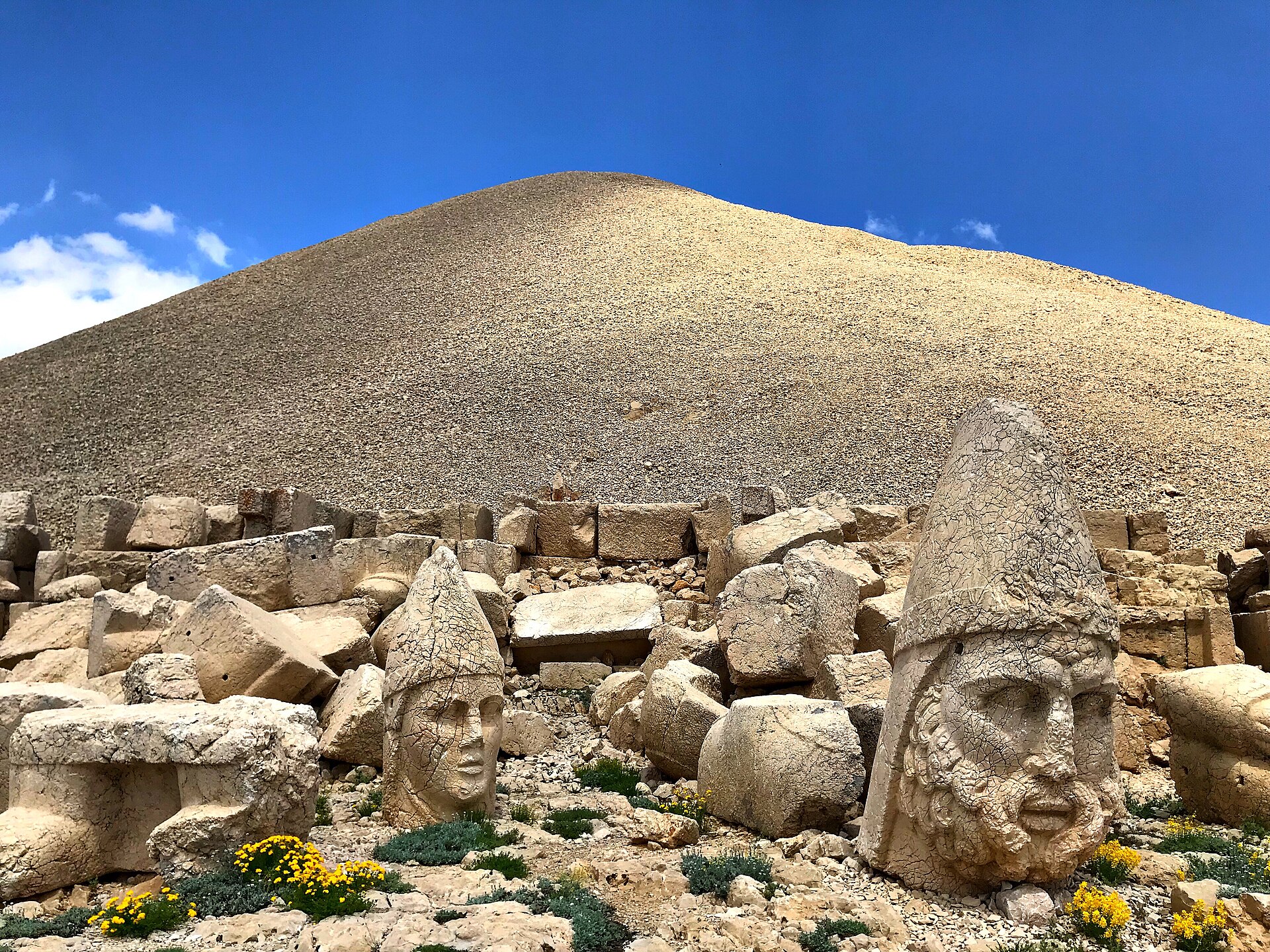
Mount Nemrut is in the land once called Commagene, a small kingdom between Rome and Persia. Around 62 BCE, King Antiochus I built a royal tomb-sanctuary on the peak. Workers piled up a huge cone of loose rocks, about 50 meters tall, which may cover his burial.
On terraces to the east and west, Antiochus placed giant seated statues of gods and himself, guarded by lions and eagles. The gods mix Greek and Persian ideas. Zeus is also Oromasdes, and Apollo is also Mithras, showing how the king saw himself as part of both worlds.
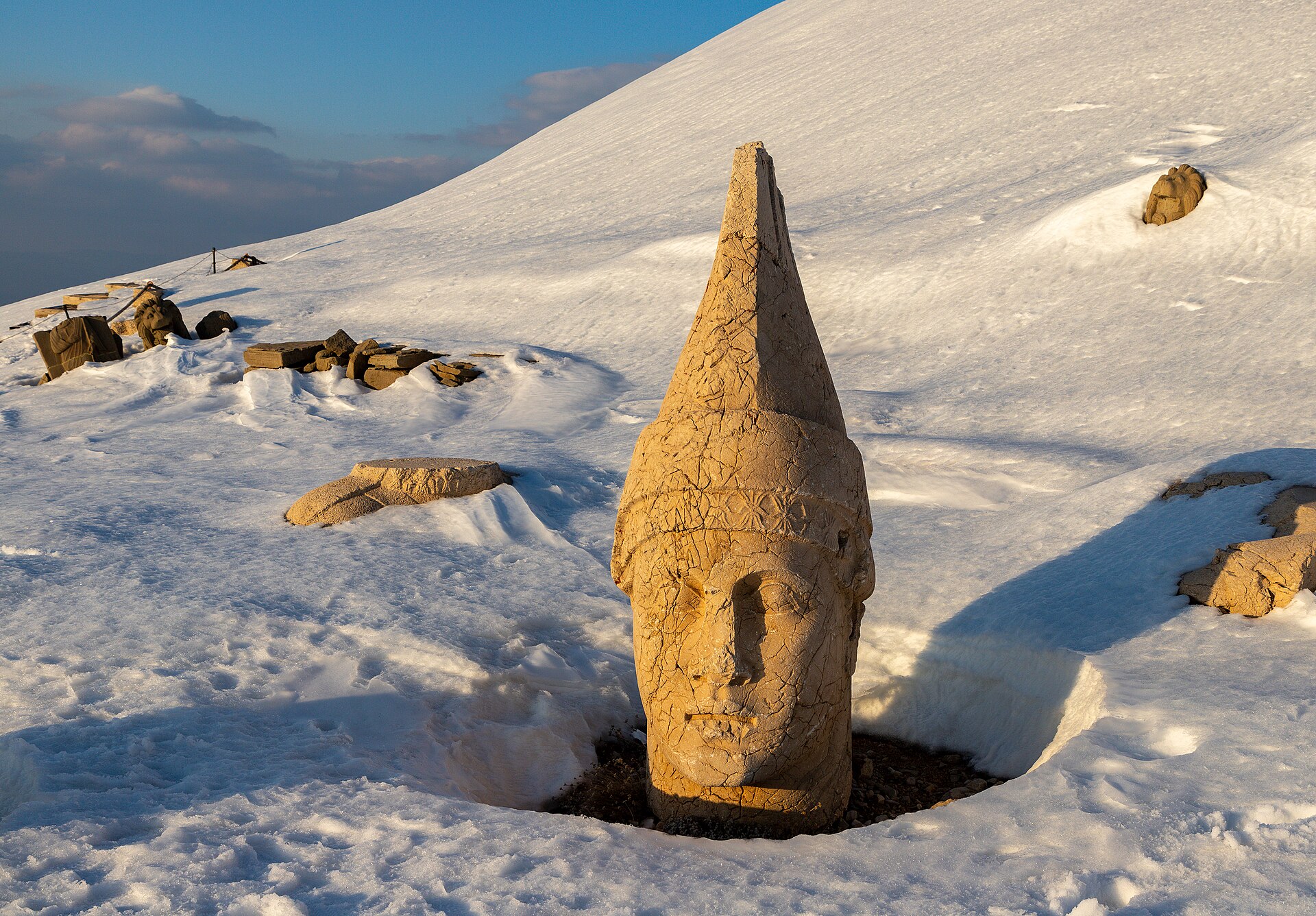
Over time, earthquakes knocked the heads off the statues. They now sit on the ground in front of the bodies, which is how most people know them today.
How it ended
Rome took over Commagene in 72 CE, and the festivals stopped. Earthquakes toppled the heads, and snow and wind wore away the stone. The mountain stayed lonely and remote for almost 2,000 years.
What life was like
Commagene's people farmed valleys around the mountains and traded along routes between east and west. Antiochus ordered priests to hold festivals at Mount Nemrut each month, with feasts and music. Workers had to haul huge stone blocks up the steep slopes, which was hard work in thin, cold air.
Wow facts
- The heads are about 2 meters tall.
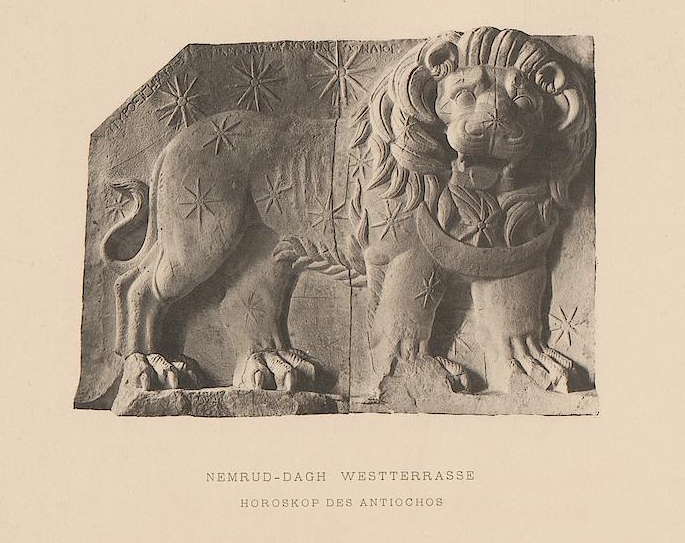
- A carved lion relief has stars on it that some think show the night sky in 62 BCE.
- No one has found the king's actual burial chamber under the rock pile.
Photos
 Processed with RNI Films Efekan06, CC BY-SA 4.0
 Abguss des Löwenhoroskops vom Nemrut Dağı, Türkei, durch Carl Humann, Berliner Museen Unknown photographer, Public domain
 Some of the statues near the peak of Mount Nemrut (Turkey). West Terrace: head of Apollo... Mkrc85, CC BY-SA 4.0
Relics and treasures
- Colossal headsgiant stone heads of gods and the king, still on the summit terraces
- The Lion Horoscopea relief of a lion with stars and planets, at the site
- The tumulusthe giant pile of stones on the peak, still at the site
- Handshake reliefscarvings of the king shaking hands with gods, at the site
How we know
A German engineer, Karl Sester, reported the statues in 1881. Archaeologist Theresa Goell studied the site for decades in the 1950s to 1970s. Long Greek inscriptions carved by the king explain what he wanted the sanctuary to be.
What you would see today
Visitors climb to the summit before dawn to watch the sunrise light up the stone heads on the east terrace. The site is part of a national park and a UNESCO World Heritage Site.
For teachers and classrooms
Suggested level: grades 3-5. Print this page as a lesson sheet with the story, vocabulary, discussion questions and a quiz with an answer key.
Key words
- tumulus
- a large mound of earth or stones built over a grave
- terrace
- a flat area cut into a hillside
- colossal
- extremely large
Talk about it
- Why do you think the king put statues of himself next to the gods?
- How does mixing Greek and Persian gods show the kingdom's place in the world?
Try this activity
- Draw a map of Mount Nemrut as it looked at its busiest, and label three things people did there.
- Find Mount Nemrut on the Ruinscape timeline, then pick another place from the same century and compare them.
- Use one link in Sources below to find a real object from this place. Describe what it is made of and what it tells us.
Quick quiz
Who built the monuments on Mount Nemrut?
- Antiochus I
- Cyrus
- Ramesses II
- Augustus
Show the answer
A. King Antiochus I of Commagene built them around 62 BCE.
Why are the heads on the ground?
- Earthquakes knocked them off
- They were made that way
- Vikings moved them
- They were buried
Show the answer
A. Earthquakes toppled the heads off the statues.
What may be under the giant rock pile?
- A lake
- The king's tomb
- A volcano
- A palace
Show the answer
B. The tumulus may cover the king's burial, which has not been found.
Sources and further reading
Ruinscape lessons are written for students and checked against encyclopedia and museum records. Go to the sources: these links search real museum collections, the UNESCO list and research by archaeologists.
- Wikipedia articleEncyclopedia overview with its own references
- UNESCO World HeritageOfficial listing, if the site is protected
- Google Arts & CultureMuseum exhibits, virtual tours and close-up photos
- British Museum collectionReal objects, photos and catalog notes
- The Met collectionObjects and essays from the Metropolitan Museum of Art
- Smithsonian collectionsU.S. national museum records
- 3D models on SketchfabScans of sites and artifacts (check each license)
- Scholarly articlesResearch papers by archaeologists and historians
Read the full background
Mount Nemrut or Nemrud (Turkish: Nemrut Dağı; Kurdish: Çiyayê Nemrûdê; Armenian: Նեմրութ լեռ; Greek: Όρος Νεμρούτ) is a 2,150-metre-high (7,054 ft) mountain in southeastern Turkey, notable for the summit where a number of large statues are erected around what is assumed to be a royal tomb from the 1st century BC. It is one of the highest peaks in the east of the Taurus Mountains.
It was designated a UNESCO World Heritage Site in 1987.
Background text from Wikipedia, available under CC BY-SA 4.0.
Last updated: October 2026. How we make Ruinscape.