The story
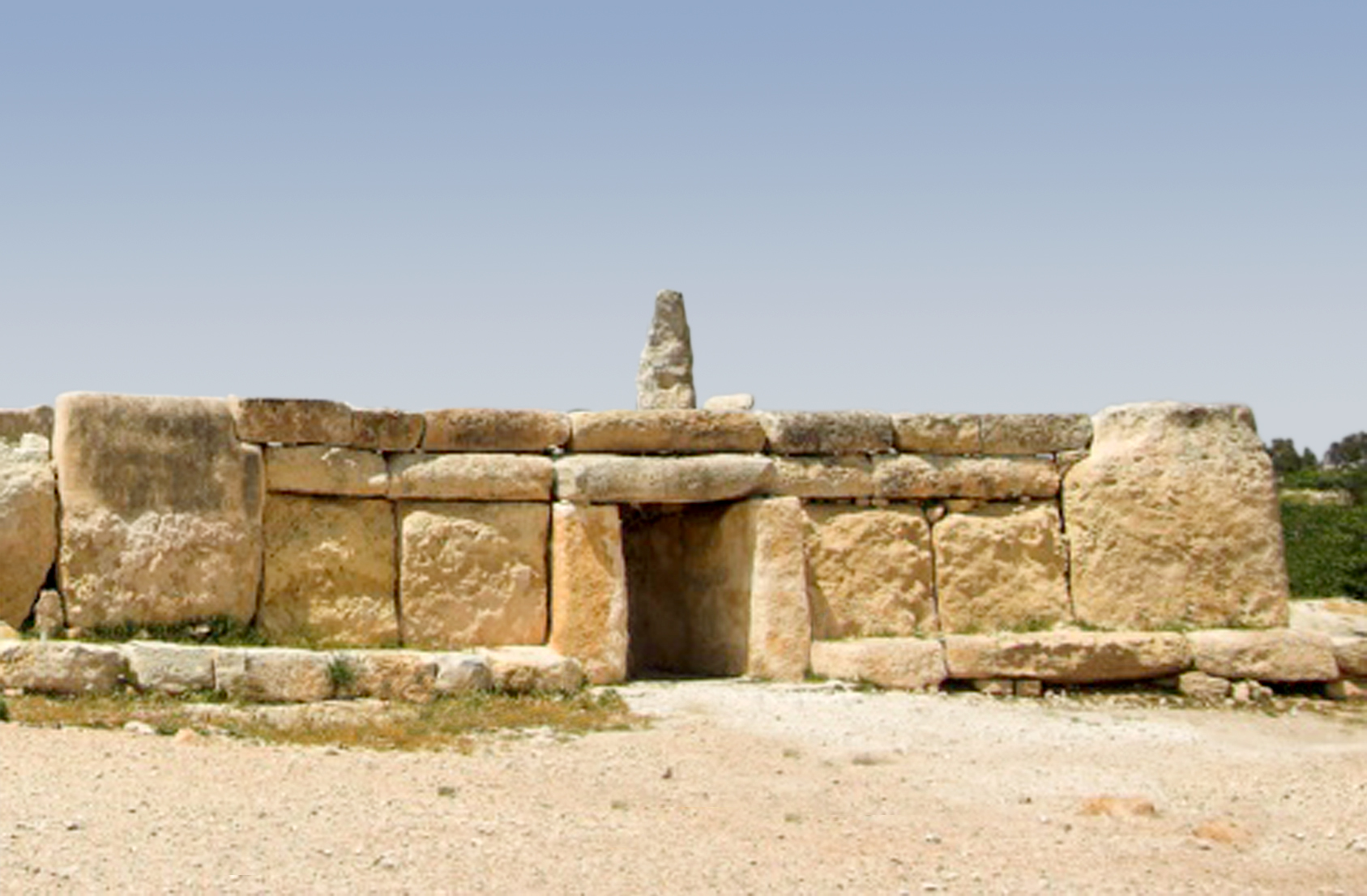
Between about 3600 and 3200 BCE, farmers on Malta built temples from huge blocks of limestone. Hagar Qim is one of the most impressive. Its outer wall includes one of the largest stones used in any Maltese temple, about 7 meters long.
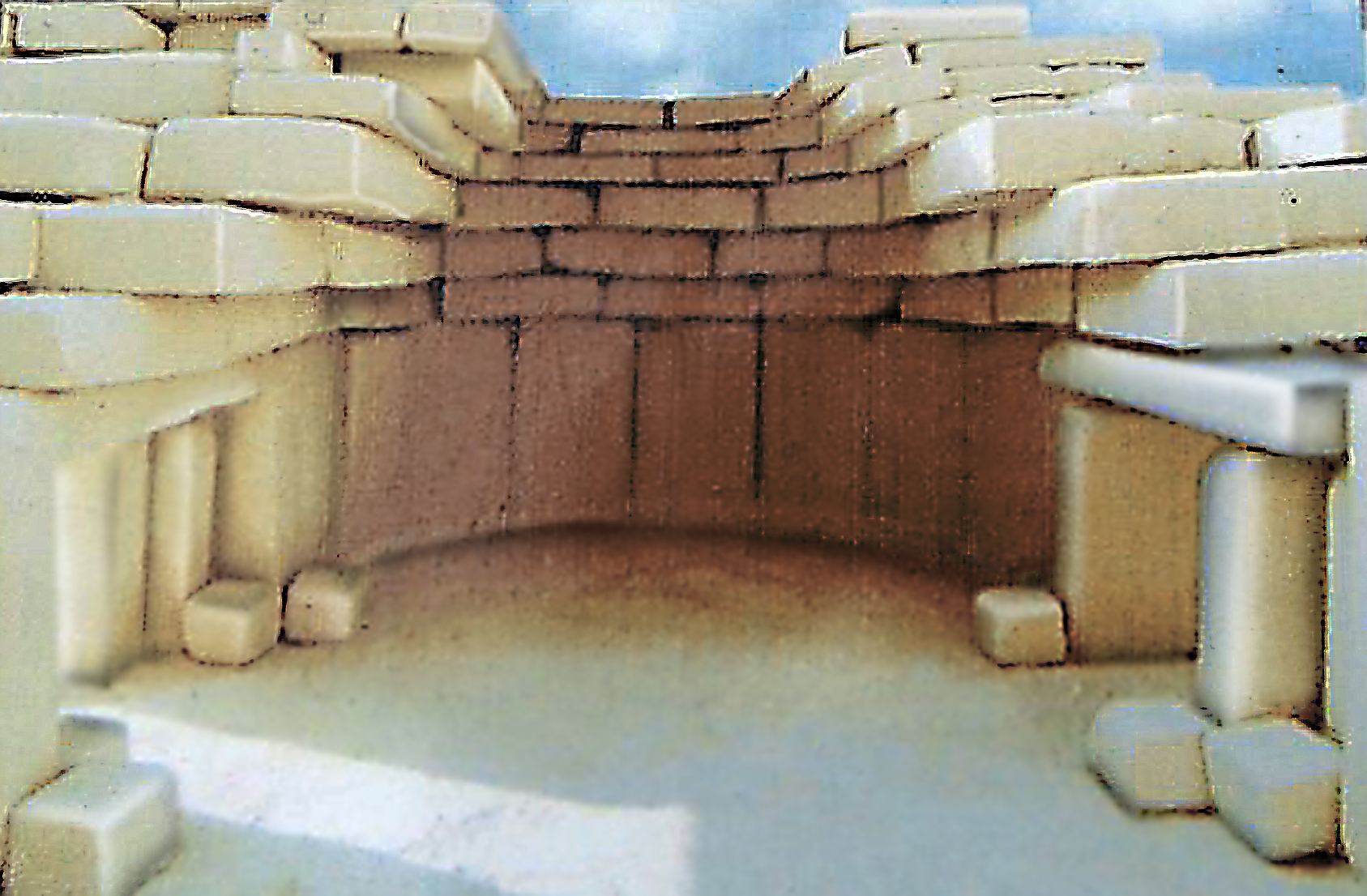
Inside, rooms shaped like rounded lobes connect through stone doorways. Builders carved holes, ledges and altars into the stone. Some walls were decorated with tiny drilled dots.
The temple seems to be lined up with the sun. On the summer solstice, morning sunlight shines through a hole in one doorway and lights up a stone slab inside.
How it ended
Around 2500 BCE, the temple-building culture of Malta disappeared. Scientists think drought, overused land or disease may have played a part. The temples were left alone and slowly filled with soil.
What life was like
Malta's temple builders were farmers who grew wheat and barley and raised sheep, goats and cattle. They had no metal tools, so they shaped stone with harder stones and moved giant blocks using stone balls as rollers and wooden levers. They made pottery and small statues, including rounded figures sometimes called the fat ladies.
Wow facts
- Some of Malta's temples are older than Stonehenge and the Great Pyramid.
- On the summer solstice, sunlight beams through a hole and lights up a stone inside.
- Small rounded human figures found here may represent ideas of plenty and life.
Photos
 This media is about Maltese cultural property with inventory number 00025. FritzPhotography, CC BY-SA 4.0
 This media is about Maltese cultural property with inventory number 25. Jean-Pierre Houël, Public domain
 This media is about Maltese cultural property with inventory number 25. Hamelin de Guettelet, CC BY-SA 3.0
Relics and treasures
- The great megalitha giant stone in the outer wall, still at the site
- Mushroom altara carved stone table, still at the site
- Venus of Malta figurea small clay figure found at Hagar Qim, in the National Museum of Archaeology in Valletta
- Seated figurescarved stone figures from the temple, in the National Museum of Archaeology
How we know
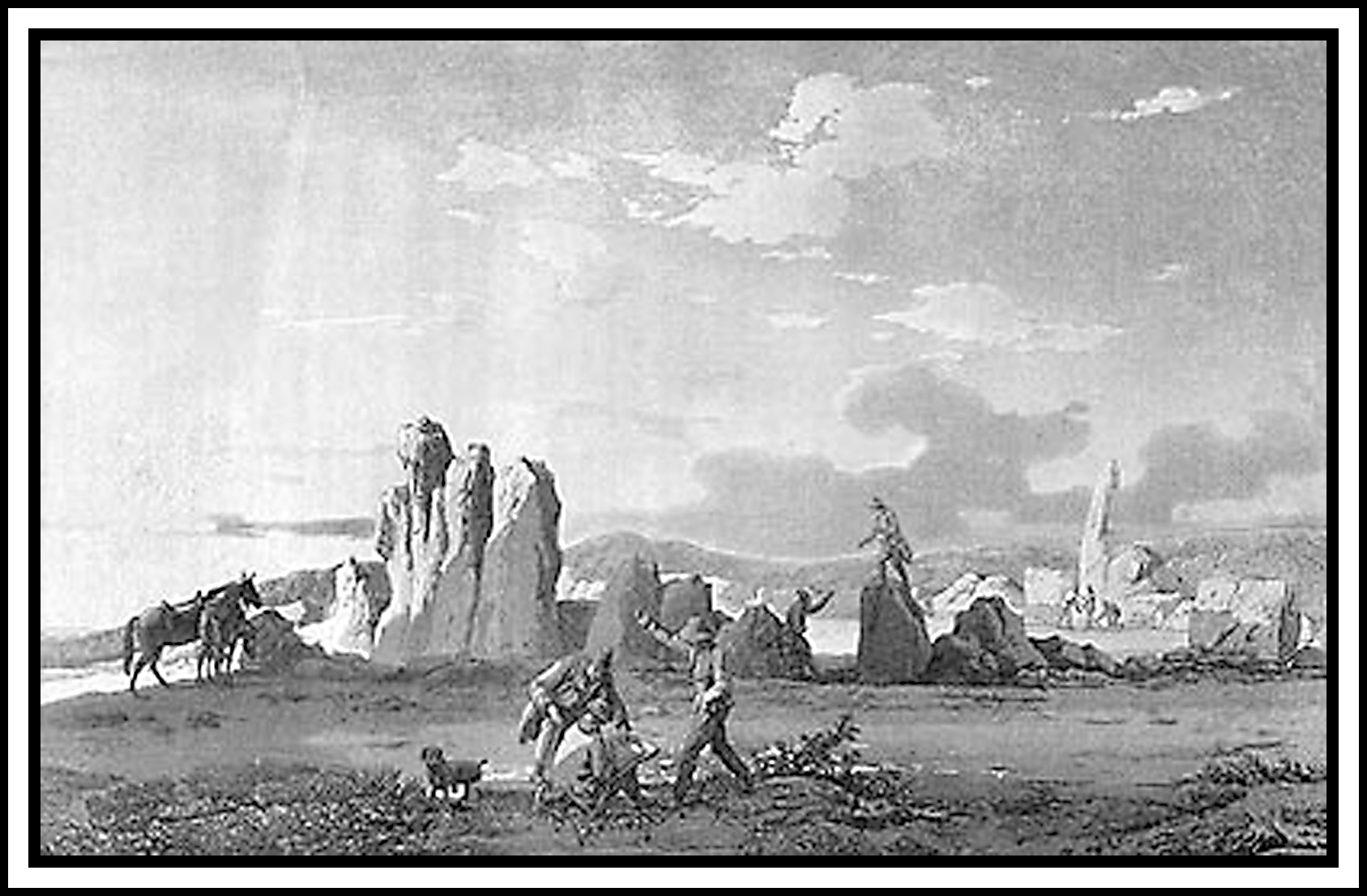
The temple was excavated in 1839, and later digs in the 1900s added more finds. Radiocarbon dating of material from the temples shows their great age. Astronomers studied how the doorways line up with sunrise.
What you would see today
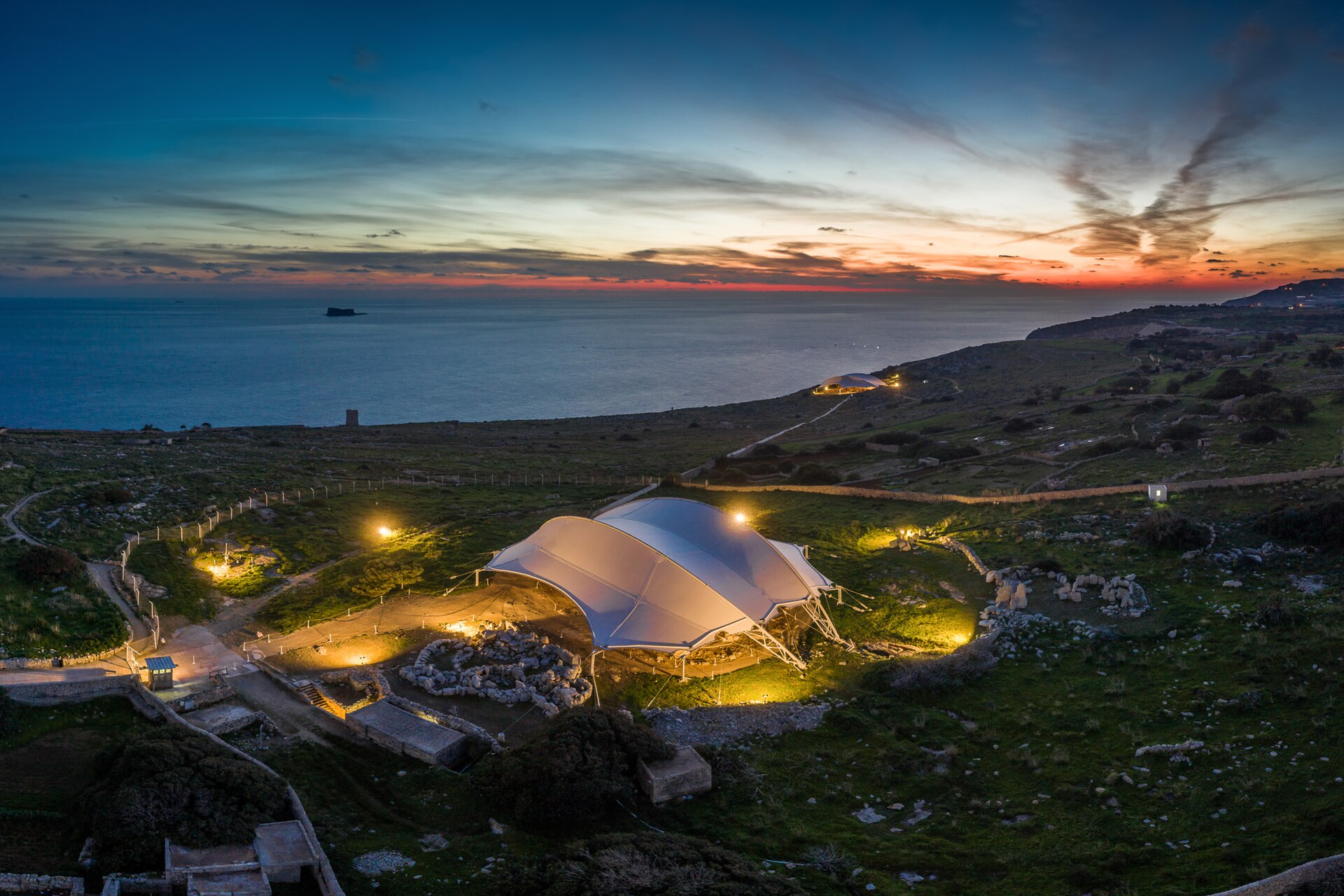
Hagar Qim is covered by a big protective tent to shield it from weather. Visitors walk around and through it, then follow a path to the nearby temple of Mnajdra overlooking the sea. A visitor center explains how it was built.
For teachers and classrooms
Suggested level: grades 3-5. Print this page as a lesson sheet with the story, vocabulary, discussion questions and a quiz with an answer key.
Key words
- megalith
- a very large stone used to build a monument
- solstice
- the day with the longest or shortest daylight of the year
- Neolithic
- the late Stone Age, when people started farming
Talk about it
- How do you think people moved giant stones without machines?
- Why might early farmers care about the position of the sun?
Try this activity
- Draw a map of Hagar Qim as it looked at its busiest, and label three things people did there.
- Find Hagar Qim on the Ruinscape timeline, then pick another place from the same century and compare them.
- Use one link in Sources below to find a real object from this place. Describe what it is made of and what it tells us.
Quick quiz
How old is Hagar Qim?
- About 500 years
- About 2,000 years
- More than 5,000 years
- About 100 years
Show the answer
C. It was built around 3600 to 3200 BCE.
What happens on the summer solstice?
- Sunlight lights a stone inside
- The temple floods
- Snow falls
- The doors close
Show the answer
A. Morning sun shines through a hole onto a stone slab.
Why is the temple covered by a tent today?
- To protect it from weather
- For a party
- To hide it
- To keep birds in
Show the answer
A. The tent shields the soft limestone from rain and sun.
Sources and further reading
Ruinscape lessons are written for students and checked against encyclopedia and museum records. Go to the sources: these links search real museum collections, the UNESCO list and research by archaeologists.
- Wikipedia articleEncyclopedia overview with its own references
- UNESCO World HeritageOfficial listing, if the site is protected
- Google Arts & CultureMuseum exhibits, virtual tours and close-up photos
- British Museum collectionReal objects, photos and catalog notes
- The Met collectionObjects and essays from the Metropolitan Museum of Art
- Smithsonian collectionsU.S. national museum records
- 3D models on SketchfabScans of sites and artifacts (check each license)
- Scholarly articlesResearch papers by archaeologists and historians
Read the full background
Ħaġar Qim (Maltese pronunciation: [ˈħɐd͡ʒɐr ˈʔiːm]; lit. 'Worshipping Stones') is a megalithic temple complex found on the Mediterranean island of Malta, dating from the Ġgantija phase (3600–3200 BC). The Megalithic Temples of Malta are among the most ancient religious sites on Earth, described by the World Heritage Sites committee as "unique architectural masterpieces." In 1992 UNESCO recognized Ħaġar Qim and four other Maltese megalithic structures as World Heritage Sites. V. Gordon Childe, Professor of Prehistoric European Archeology and director of the Institute of Archaeology in the University of London from 1946 to 1957 visited Ħaġar Qim. He wrote, "I have been visiting the prehistoric ruins all round the Mediterranean, from Mesopotamia to Egypt, Greece and Switzerland, but I have nowhere seen a place as old as this one."
Ħaġar Qim's builders used globigerina limestone in the temple's construction. As a result of this, the temple has suffered from severe weathering and surface flaking over the millennia. In 2009, work was completed on a protective tent.
Background text from Wikipedia, available under CC BY-SA 4.0.
Last updated: October 2026. How we make Ruinscape.