The story
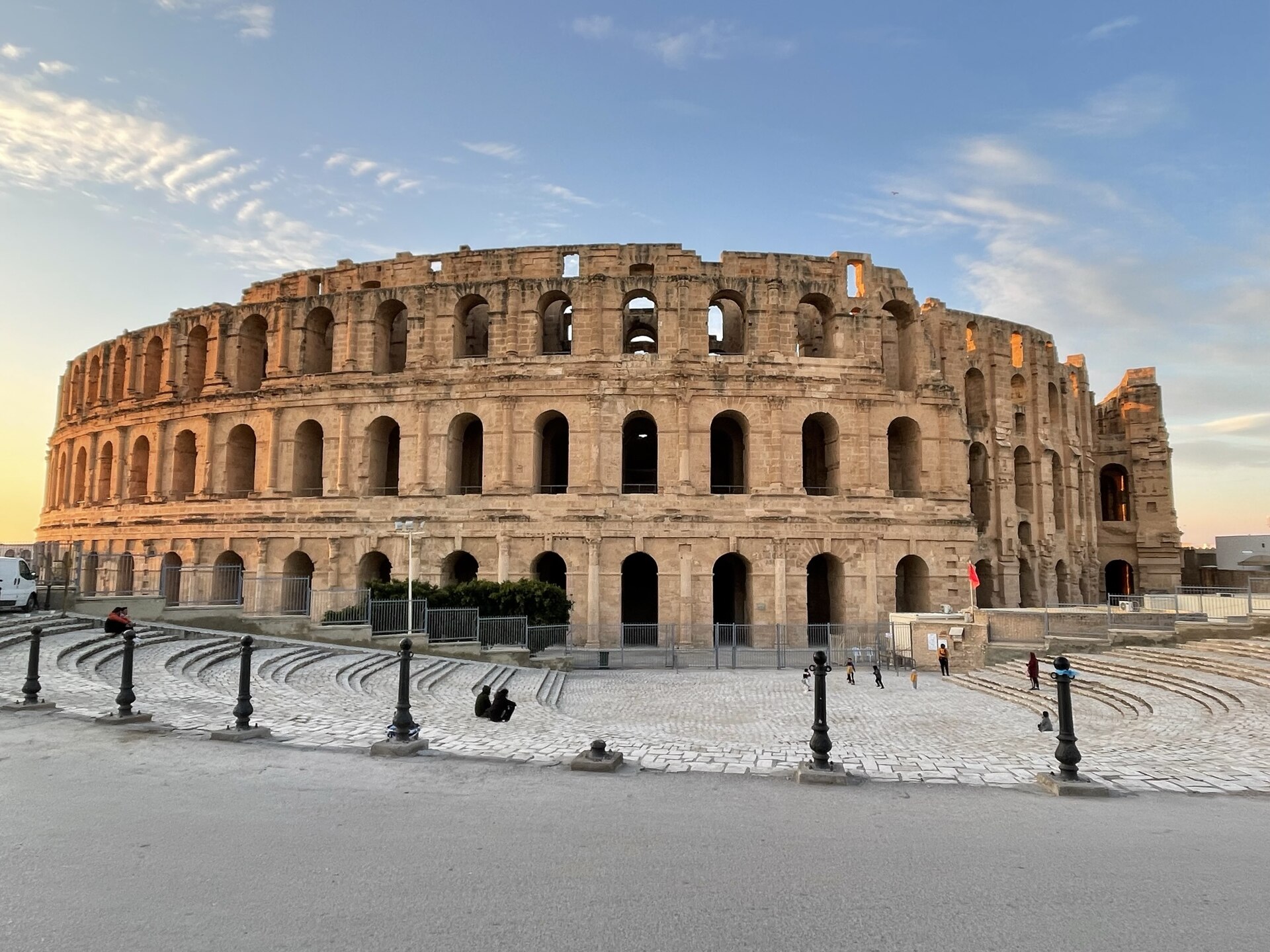
Around 238 CE, the Roman city of Thysdrus, today's El Jem, was rich from selling olive oil. Its people built a huge amphitheater, one of the largest in the Roman world. It was made of stone blocks, with arches stacked three levels high.
Crowds came to watch shows with trained animals, wild beast hunts and gladiator fights. Under the arena floor were tunnels where animals and performers waited before being lifted up into the light.
The amphitheater may never have been fully finished, because the city was caught up in a revolt and a war between would-be emperors in 238 CE. Later, people used the strong walls as a fortress.
How it ended
After Roman times, the arena became a fortress. In the late 1600s, soldiers blasted a hole in one side with cannons to stop rebels hiding inside. People also took stones for building, but most of the giant ring survived.
What life was like
Thysdrus was surrounded by olive groves, and its oil was shipped across the Mediterranean. Rich families lived in villas with mosaic floors. On show days, people climbed the stairs to their seats by social rank, with important people at the bottom. Vendors sold snacks, and a giant cloth awning may have shaded the crowd from the hot sun.
Wow facts
- You can walk through the underground tunnels where animals waited before shows.
- The amphitheater appeared in movies, including the film Gladiator.
- Its arches are so well built that three levels are still standing after nearly 1,800 years.
Photos
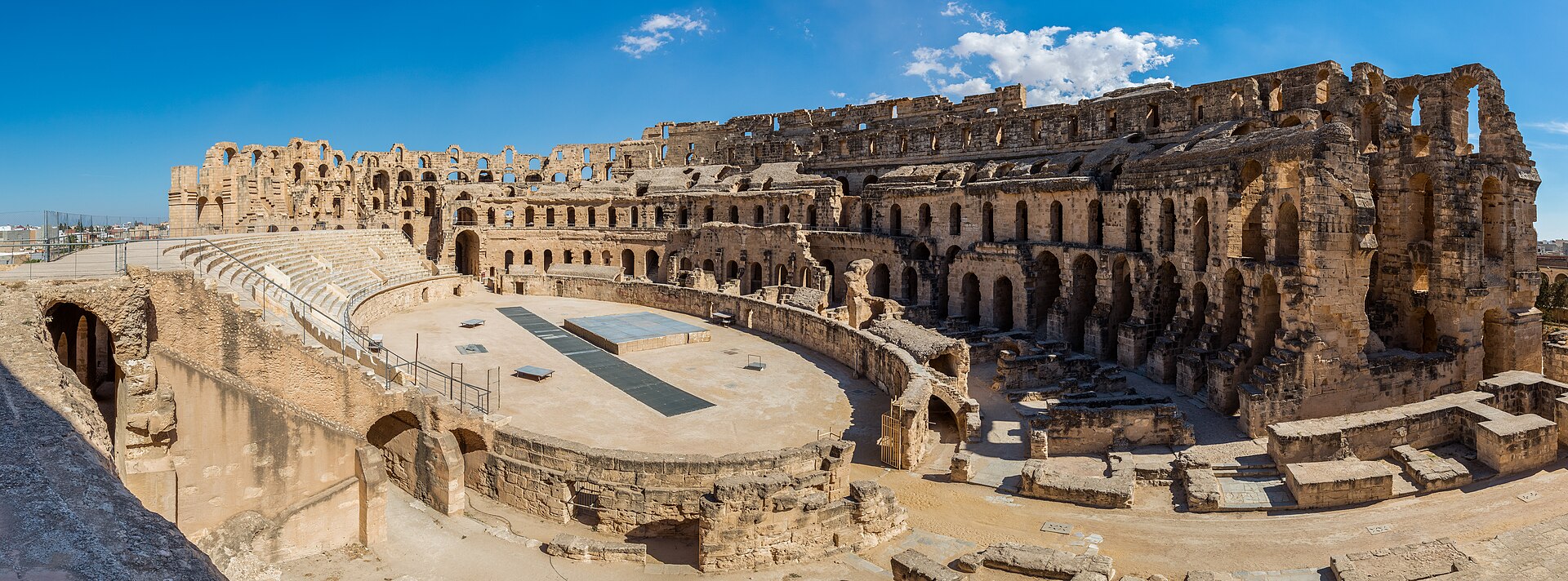 Panoramic view of the Amphitheatre of El Jem, an archeological site in the city of El... Diego Delso, CC BY-SA 4.0
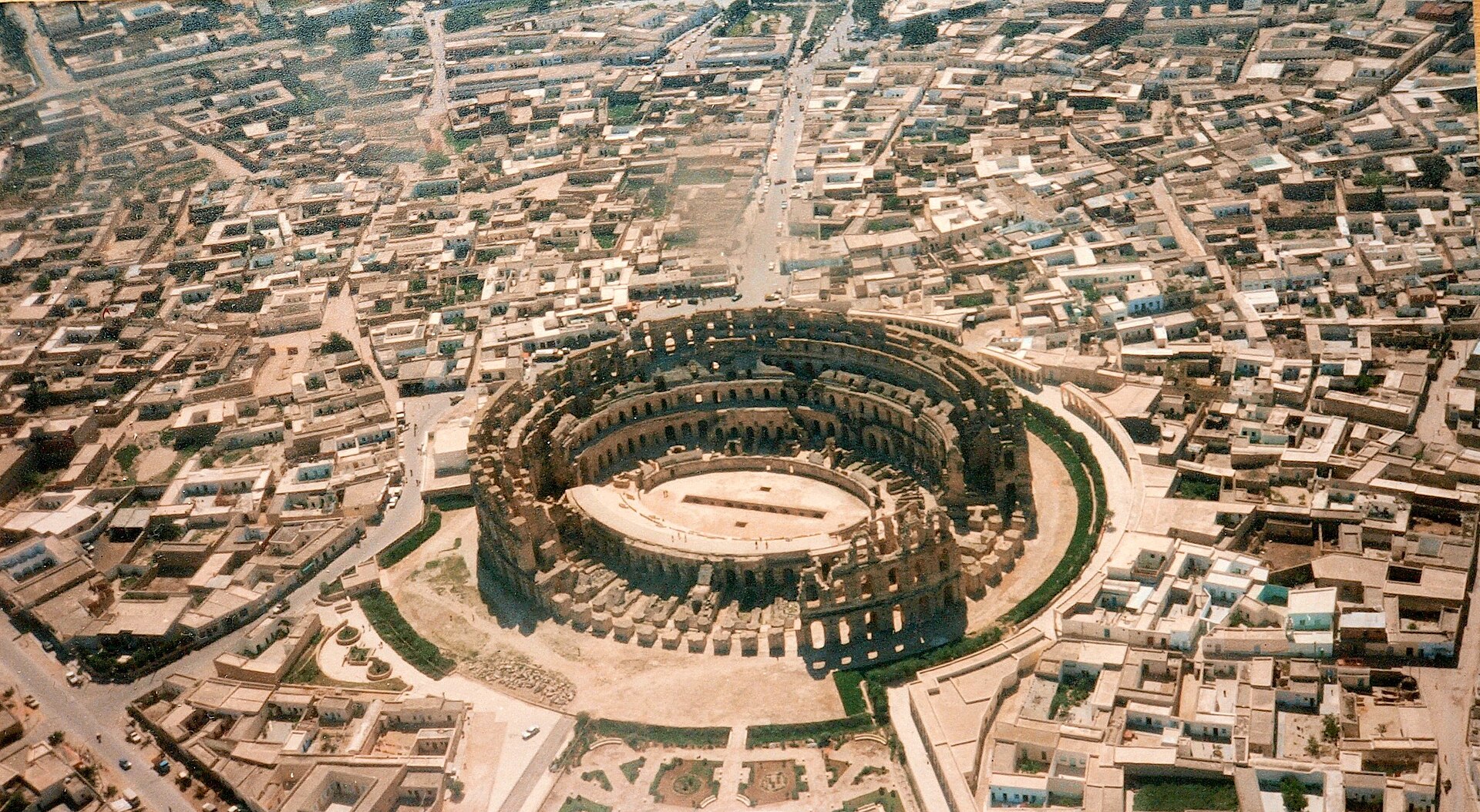 El Djem Amphitheater aerial view Hp.Baumeler, CC BY-SA 4.0
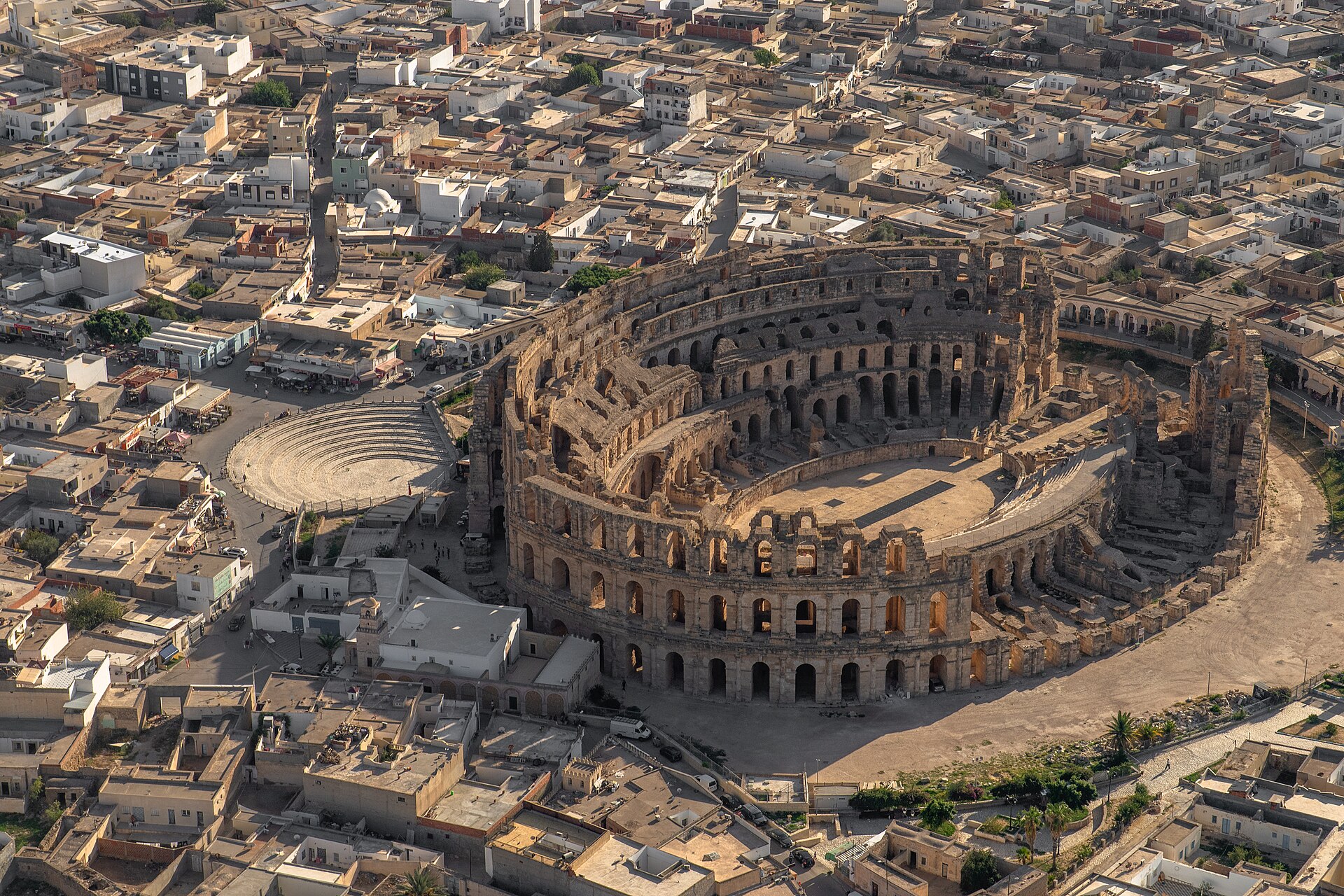 Roman The El Jem Amphitheater, also 'Colosseum of Thysdrus', present-day El Jem, Tunisia Skander zarrad, CC BY-SA 4.0
Relics and treasures
- Amphitheatre of El Jemthe giant stone arena, still standing in town
- Underground passagestunnels beneath the arena floor, still at the site
- El Jem mosaicsRoman floors showing animals and gods, in the El Jem Archaeological Museum
- Roman villashouses with mosaic floors, near the museum
How we know
The amphitheater has stood in plain sight for centuries. Archaeologists have studied its building methods and dug at Roman villas nearby. Roman historians wrote about the revolt of 238 CE that began in Thysdrus.
What you would see today
Visitors walk around the arena, climb to the upper levels for views over the town, and explore the tunnels below. The nearby El Jem Museum displays beautiful mosaics from Roman villas.
For teachers and classrooms
Suggested level: grades 3-5. Print this page as a lesson sheet with the story, vocabulary, discussion questions and a quiz with an answer key.
Key words
- amphitheater
- a round or oval open-air building with seats around a central arena
- arena
- the central floor where shows took place, often covered with sand
- gladiator
- a trained fighter who performed in Roman shows
Talk about it
- How are Roman arena shows like and unlike sports games today?
- Why do you think cities built such huge buildings for entertainment?
Try this activity
- Draw a map of El Jem Amphitheatre as it looked at its busiest, and label three things people did there.
- Find El Jem Amphitheatre on the Ruinscape timeline, then pick another place from the same century and compare them.
- Use one link in Sources below to find a real object from this place. Describe what it is made of and what it tells us.
Quick quiz
About how many people could El Jem's amphitheater hold?
- 500
- 3,500
- 35,000
- 350,000
Show the answer
C. It held about 35,000 spectators.
What made the city of Thysdrus rich?
- Olive oil
- Gold mines
- Silk
- Fishing for pearls
Show the answer
A. Thysdrus grew rich selling olive oil.
What was under the arena floor?
- A river
- Tunnels for animals and performers
- A library
- A tomb
Show the answer
B. Animals and performers waited in tunnels under the floor.
Sources and further reading
Ruinscape lessons are written for students and checked against encyclopedia and museum records. Go to the sources: these links search real museum collections, the UNESCO list and research by archaeologists.
- Wikipedia articleEncyclopedia overview with its own references
- UNESCO World HeritageOfficial listing, if the site is protected
- Google Arts & CultureMuseum exhibits, virtual tours and close-up photos
- British Museum collectionReal objects, photos and catalog notes
- The Met collectionObjects and essays from the Metropolitan Museum of Art
- Smithsonian collectionsU.S. national museum records
- 3D models on SketchfabScans of sites and artifacts (check each license)
- Scholarly articlesResearch papers by archaeologists and historians
Read the full background
The Amphitheatre of El Jem (Arabic: قصر الجم, romanized: Qaṣr al-Jamm) is an oval amphitheatre in the modern-day city of El Djem, Tunisia, formerly Thysdrus in the Roman province of Africa. It has been listed by UNESCO since 1979 as a World Heritage Site.
Background text from Wikipedia, available under CC BY-SA 4.0.
Last updated: October 2026. How we make Ruinscape.