No. 54
Ggantija

- Where
- Gozo, Malta
- Built by
- Temple builders
- Era
- 3600 BCE
- Known for
- Freestanding stone temples older than the pyramids.
- How it ended
- The temple culture vanished around 2500 BCE; the cause is unknown.

Lyra Kael can take you here on the globe, tell you the story out loud and answer your questions. Start the time jump.
Background
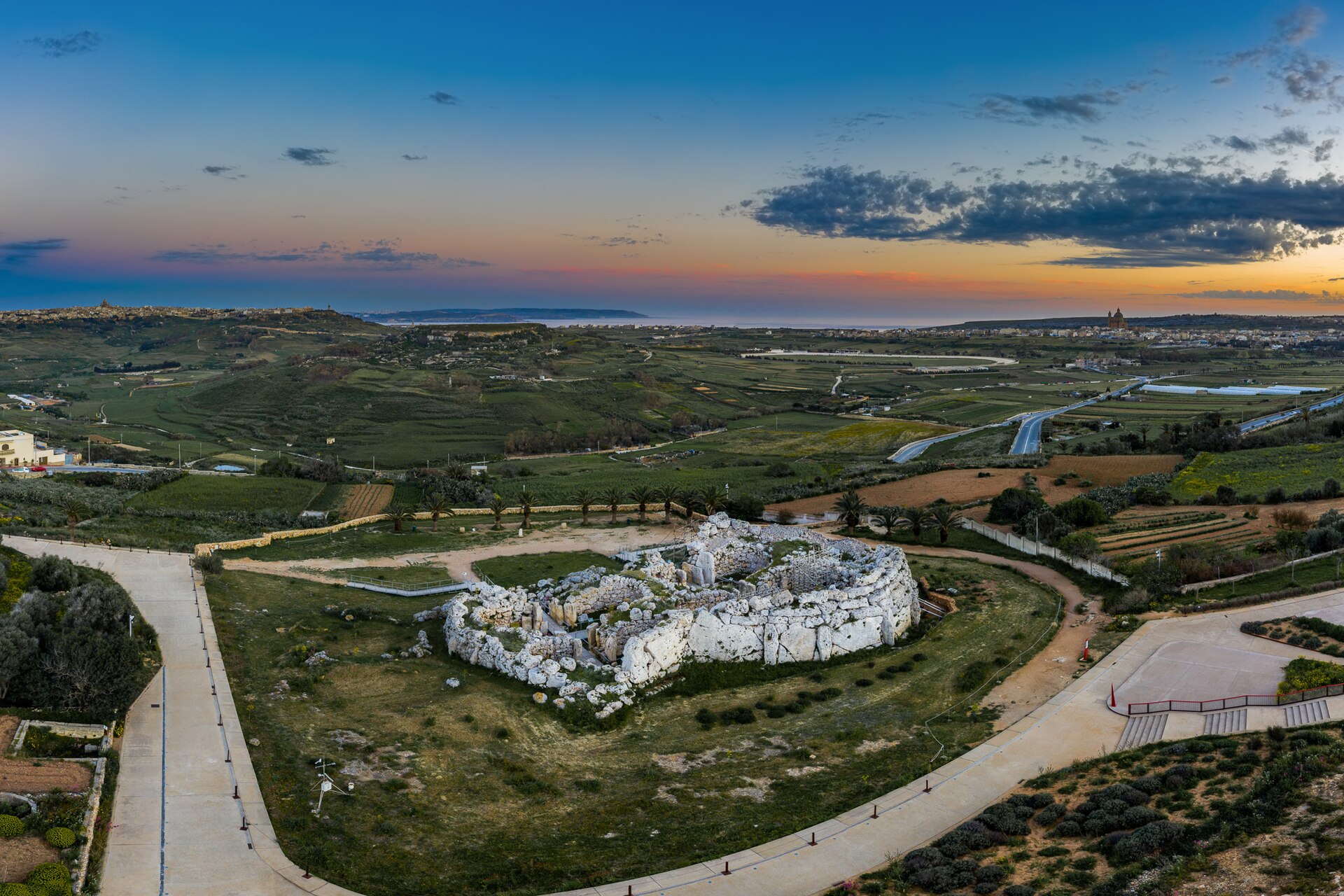
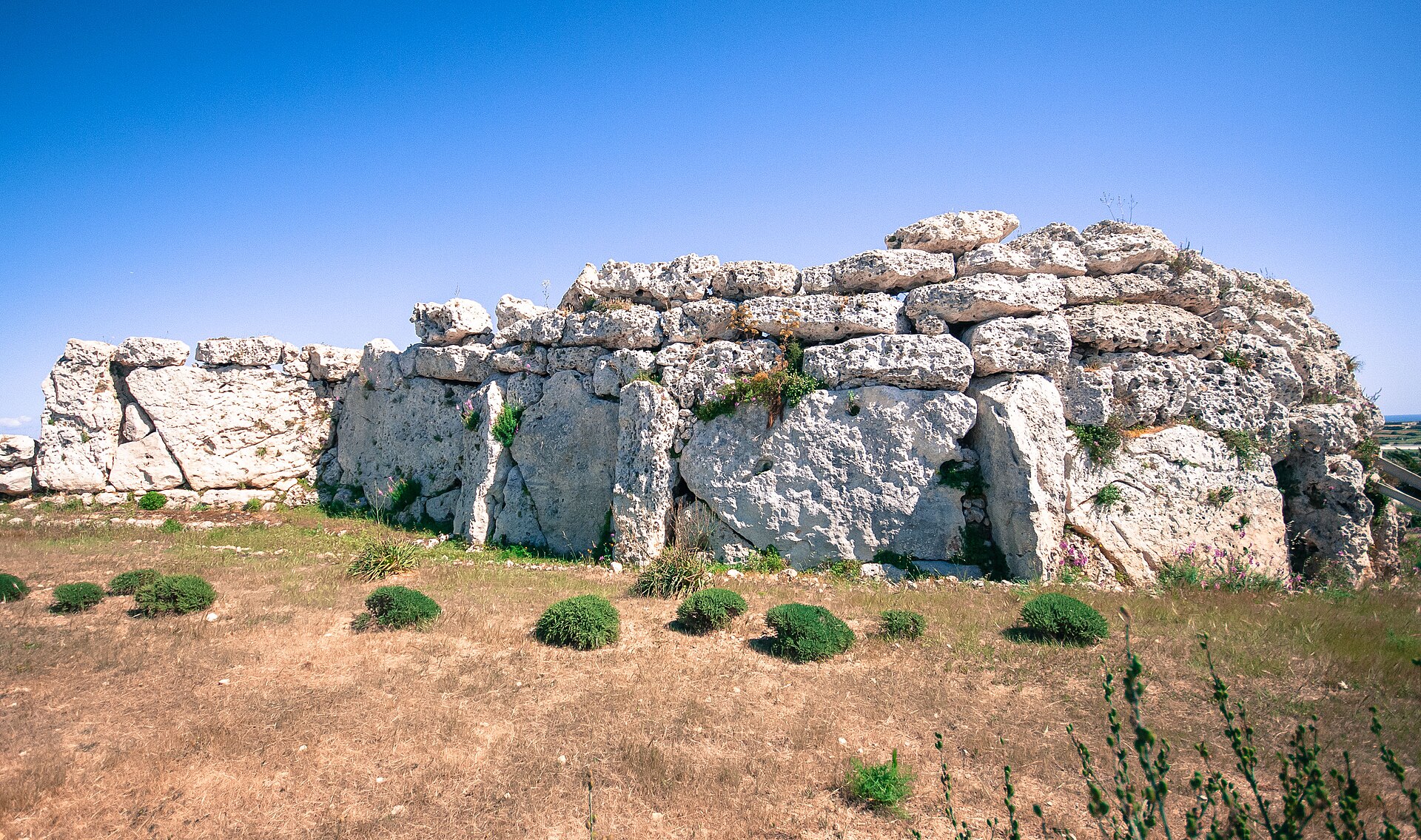
Ġgantija (Maltese pronunciation: [d͡ʒɡɐnˈtiːjɐ]; "place of giants") is a megalithic temple complex from the Neolithic era (c. 3600–2500 BC), on the Mediterranean island of Gozo in Malta. The Ġgantija temples are the earliest of the Megalithic Temples of Malta and are older than the pyramids of Egypt. Their makers erected the two Ġgantija temples during the Neolithic, which makes these temples more than 5,500 years old and the world's second-oldest existing manmade religious structures after Göbekli Tepe in present-day Turkey. Together with other similar structures, these have been designated a UNESCO World Heritage Site, the Megalithic Temples of Malta.
The temples are elements of a ceremonial site used in a fertility rite. Researchers have found that the numerous figurines and statues found on the site are associated with that cult. According to local Gozitan folklore, a giantess named Sansuna who ate nothing but fava beans and honey bore a child from a man of the common people. With the child hanging from her shoulder, she built these temples and used them as places of worship.
Text from Wikipedia, licensed CC BY-SA 4.0.