The story
Segesta was a city of the Elymians, one of the native peoples of Sicily. They were rivals of the Greek city of Selinunte, but they admired Greek culture.
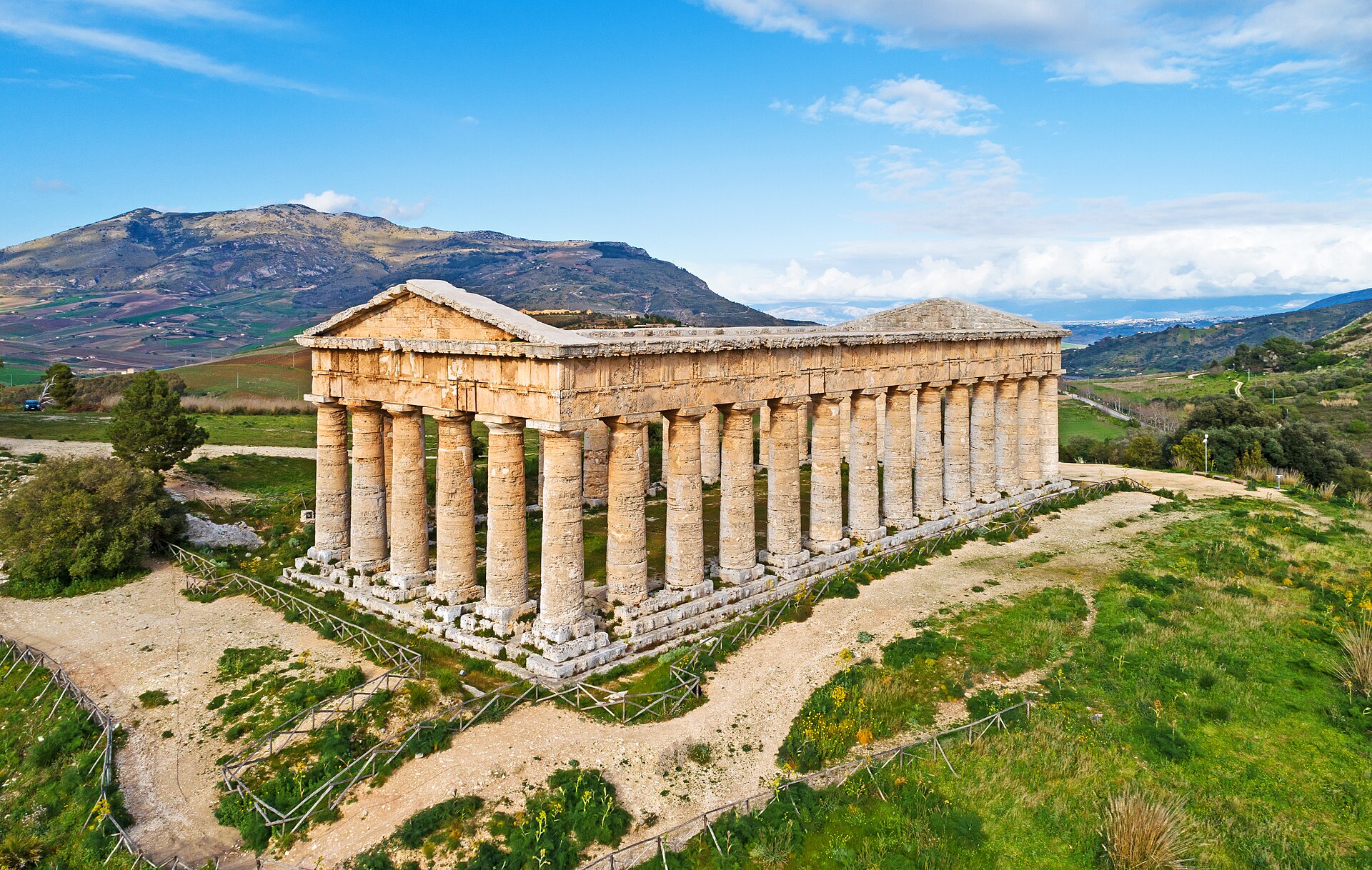
Around 420 BCE, the people of Segesta began building a large temple in the Greek Doric style. They set up 36 columns and the beams on top, but the columns were never smoothed and no inner rooms or roof were added. Wars with neighbors may have stopped the work.
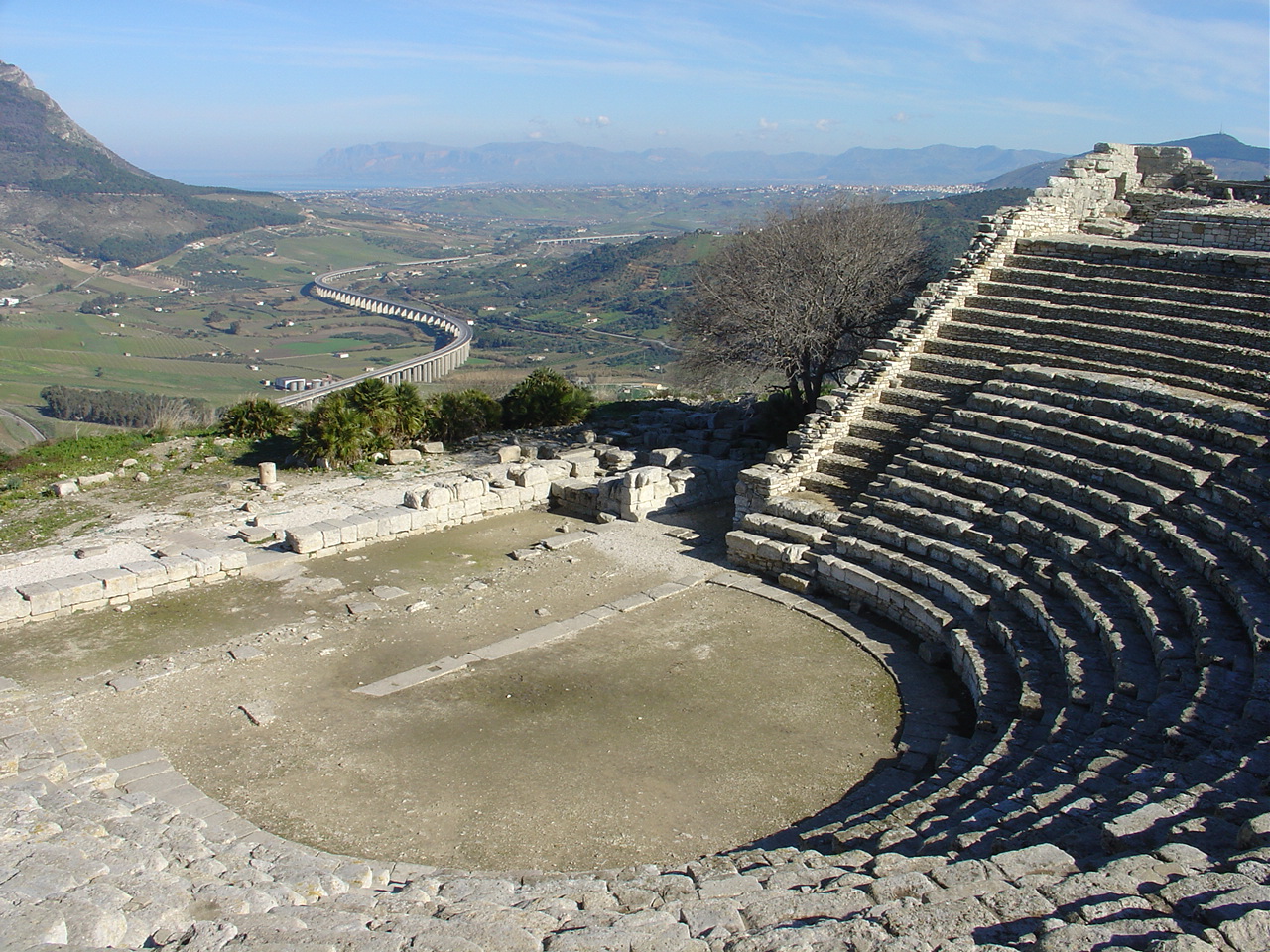
Higher up the hill, they built a theater looking out over the valleys toward the sea. Segesta later sided with Rome, which helped it survive for a while. In the 400s CE, Vandals damaged it, and by the Middle Ages, it was abandoned.
How it ended
Segesta was damaged by Vandal raids in the 400s CE. People stayed on in small numbers, and a castle and mosque were built later, but by the 1200s the hill was empty.
What life was like
Segesta's people farmed grapes, olives and grain in the hills. They traded with Greeks and Carthaginians and sometimes fought them. Citizens gathered at the theater to watch plays and hold meetings. Workers cut stone from nearby quarries and hauled it up the hill by ox cart.
Wow facts
- The temple columns were never smoothed, so you can see the knobs builders left for lifting.
- The theater looks out over valleys all the way toward the sea.
- Segesta asked Athens for help in a war, which led to a famous Athenian invasion of Sicily.
Photos
 Unknown author, Public domain
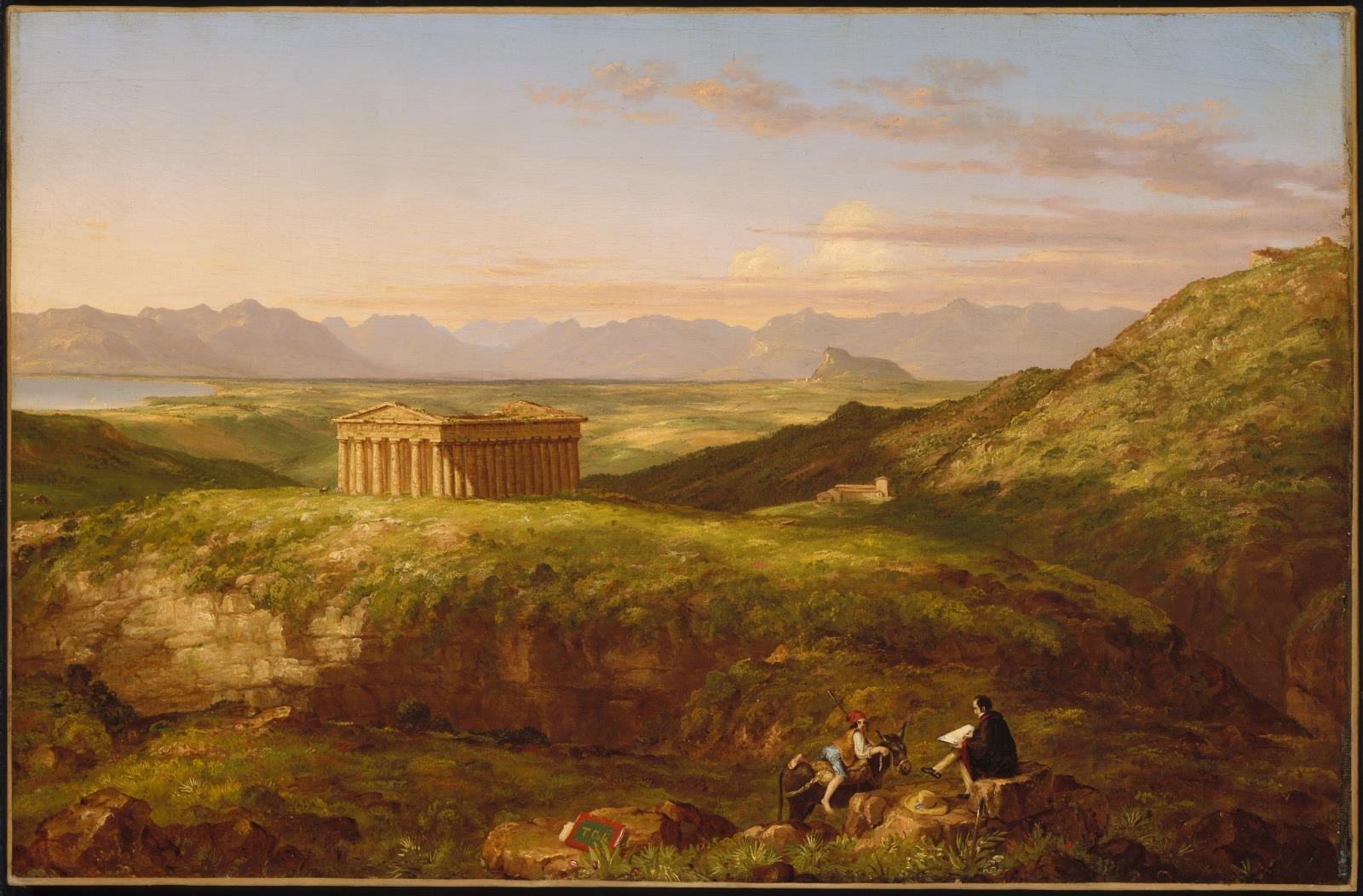 Thomas Cole, Public domain
Relics and treasures
- The Doric Temple36 columns of the unfinished temple, at the site
- The Theatera hilltop theater facing the valleys, still used for summer shows
- Lifting knobsstone bumps used to move blocks, still on the temple
- Medieval castle ruinsremains near the theater, at the site
How we know
Ancient Greek historians like Thucydides wrote about Segesta and its wars. Archaeologists have dug at the theater, town and temple. The unfinished stone surfaces show exactly how builders worked.
What you would see today
Visitors walk up to the temple and take a shuttle or hike higher to the theater, where summer concerts and plays are held. The site is part of an archaeological park.
For teachers and classrooms
Suggested level: grades 3-5. Print this page as a lesson sheet with the story, vocabulary, discussion questions and a quiz with an answer key.
Key words
- Doric
- a simple, strong style of Greek column
- column
- a tall post that holds up part of a building
- rival
- someone you compete against
Talk about it
- Why do you think people stopped building the temple?
- What could an unfinished building teach us about how it was made?
Try this activity
- Draw a map of Segesta as it looked at its busiest, and label three things people did there.
- Find Segesta on the Ruinscape timeline, then pick another place from the same century and compare them.
- Use one link in Sources below to find a real object from this place. Describe what it is made of and what it tells us.
Quick quiz
What is unusual about Segesta's temple?
- It was never finished
- It is underwater
- It is made of gold
- It floats
Show the answer
A. It has columns and beams but no roof or inner rooms.
On which island is Segesta?
- Crete
- Sicily
- Malta
- Cyprus
Show the answer
B. Segesta is in western Sicily.
Who were the people of Segesta?
- Elymians
- Vikings
- Maya
- Persians
Show the answer
A. The Elymians were a native people of Sicily.
Sources and further reading
Ruinscape lessons are written for students and checked against encyclopedia and museum records. Go to the sources: these links search real museum collections, the UNESCO list and research by archaeologists.
- Wikipedia articleEncyclopedia overview with its own references
- UNESCO World HeritageOfficial listing, if the site is protected
- Google Arts & CultureMuseum exhibits, virtual tours and close-up photos
- British Museum collectionReal objects, photos and catalog notes
- The Met collectionObjects and essays from the Metropolitan Museum of Art
- Smithsonian collectionsU.S. national museum records
- 3D models on SketchfabScans of sites and artifacts (check each license)
- Scholarly articlesResearch papers by archaeologists and historians
Read the full background
Segesta (Ancient Greek: Ἔγεστα, Egesta, or Σέγεστα, Ségesta, or Αἴγεστα, Aígesta; Sicilian: Siggesta) was one of the major cities of the Elymians, one of the three indigenous peoples of Sicily. The other major cities of the Elymians were Eryx and Entella.
Segesta is located in the northwestern part of Sicily in Italy, near the modern commune of Calatafimi-Segesta in the province of Trapani. The hellenization of Segesta happened very early and had a profound effect on its people.
The sixth century geographer Stephanus of Byzantium writes that the city also was called Akeste (Ἀκέστη), named after a certain Akestes (Ἀκέστης). Researchers state that the form Ἀκέστη is an otherwise unattested analogical form to the Latin Acesta. The city is usually called Ἔγεστα or Αἴγεστα.
Background text from Wikipedia, available under CC BY-SA 4.0.
Last updated: October 2026. How we make Ruinscape.