The story
Uxmal was a major Maya city in the Puuc hills, at its height from about 700 to 1000 CE. Its buildings are famous for their decoration. Builders covered upper walls with stone mosaics of geometric patterns, latticework and masks of Chaac, the rain god, with long curling noses.
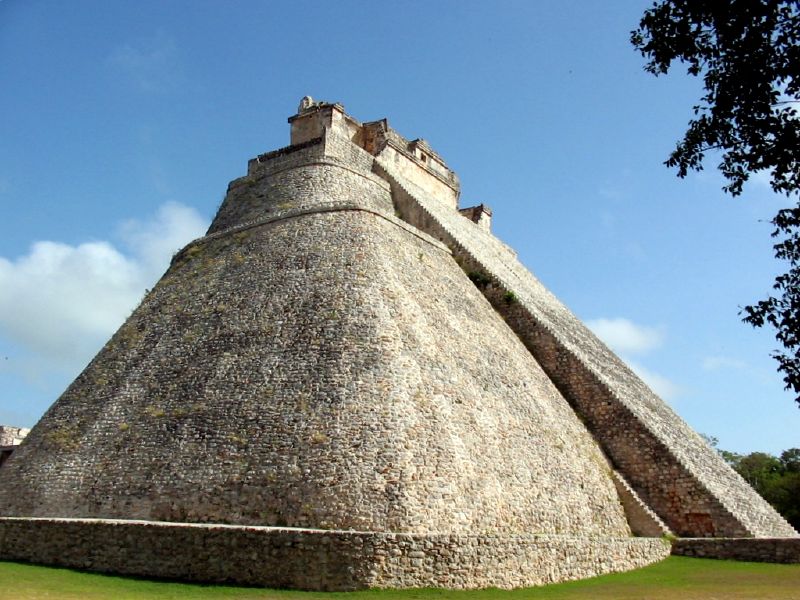
The Pyramid of the Magician, about 35 meters tall, has rounded sides, which is rare. Legend says a dwarf built it in one night. Archaeologists found it was actually built in several stages, one temple on top of another.
The Nunnery Quadrangle is a group of four long buildings around a courtyard, named by the Spanish. The Governor's Palace sits on a huge platform and is often called one of the finest buildings in the ancient Americas.
How it ended
Uxmal declined around 1000 CE, possibly because of drought and changing power in the region. People still lived nearby when the Spanish arrived in the 1500s, but the great city was left to the forest.
What life was like
Uxmal had no rivers, so people collected rainwater in underground tanks called chultuns. Praying to Chaac for rain was very important. Farmers grew corn, beans and squash. Nobles lived in the palaces, while most people lived in houses of wood and thatch. A raised road called a sacbe connected Uxmal to the nearby city of Kabah.
Wow facts
- The Pyramid of the Magician has rounded sides, which is unusual for Maya pyramids.
- Hundreds of masks of the rain god Chaac decorate the buildings.
- A white stone road connected Uxmal to Kabah about 18 kilometers away.
Photos
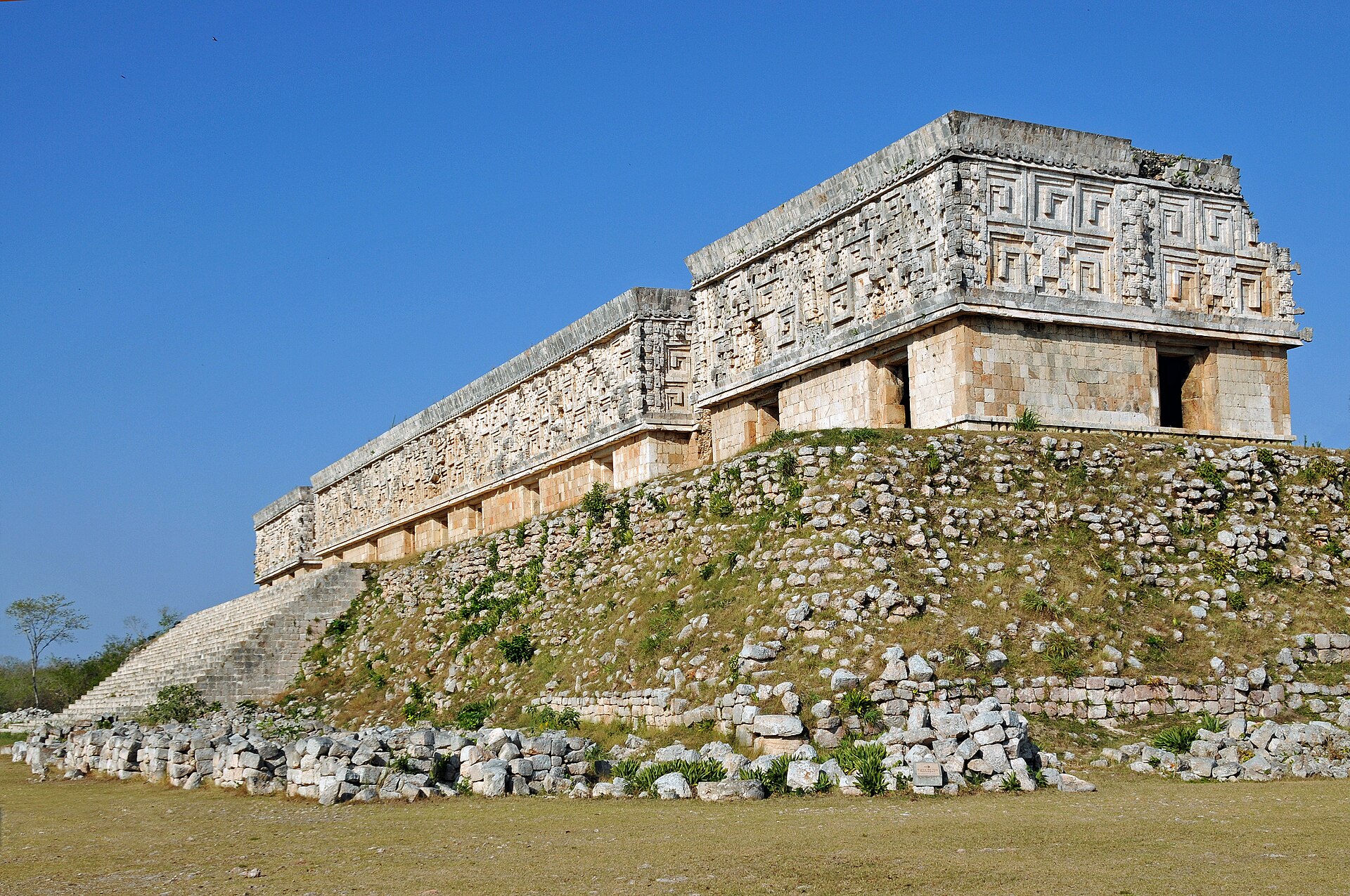 In its size and intricate stonework, the Governor's Palace rivals the Magician's Pyramid... Dennis G. Jarvis, CC BY-SA 2.0
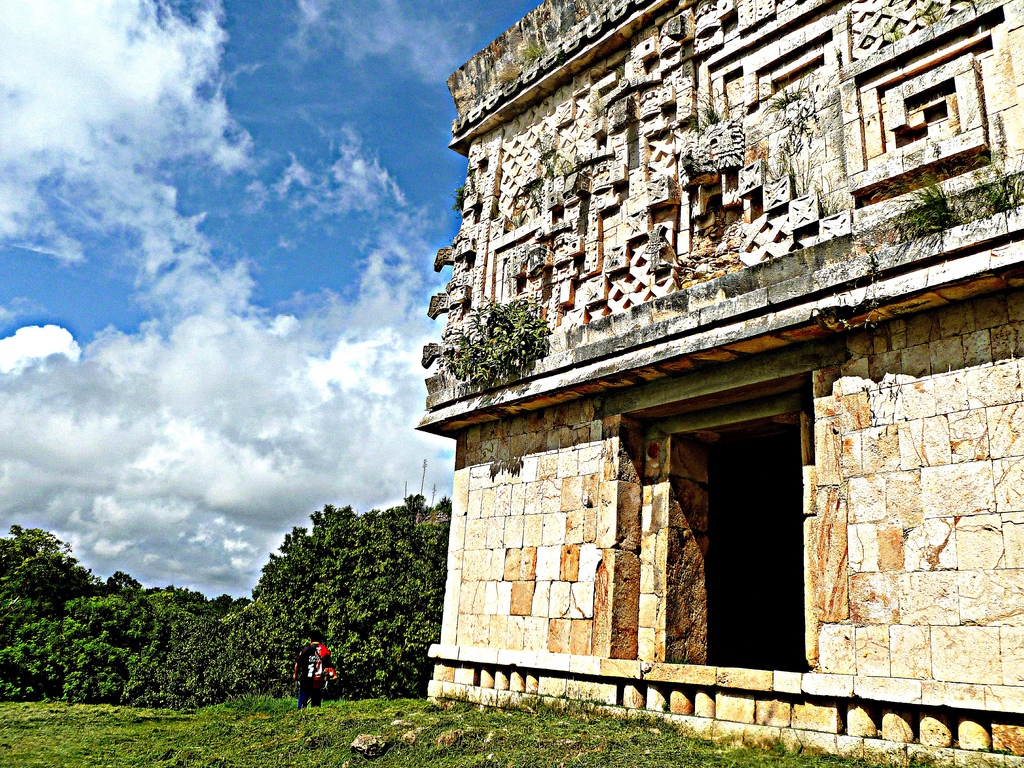 Governor's Palace details, Uxmal Mesoamerican, CC BY-SA 3.0
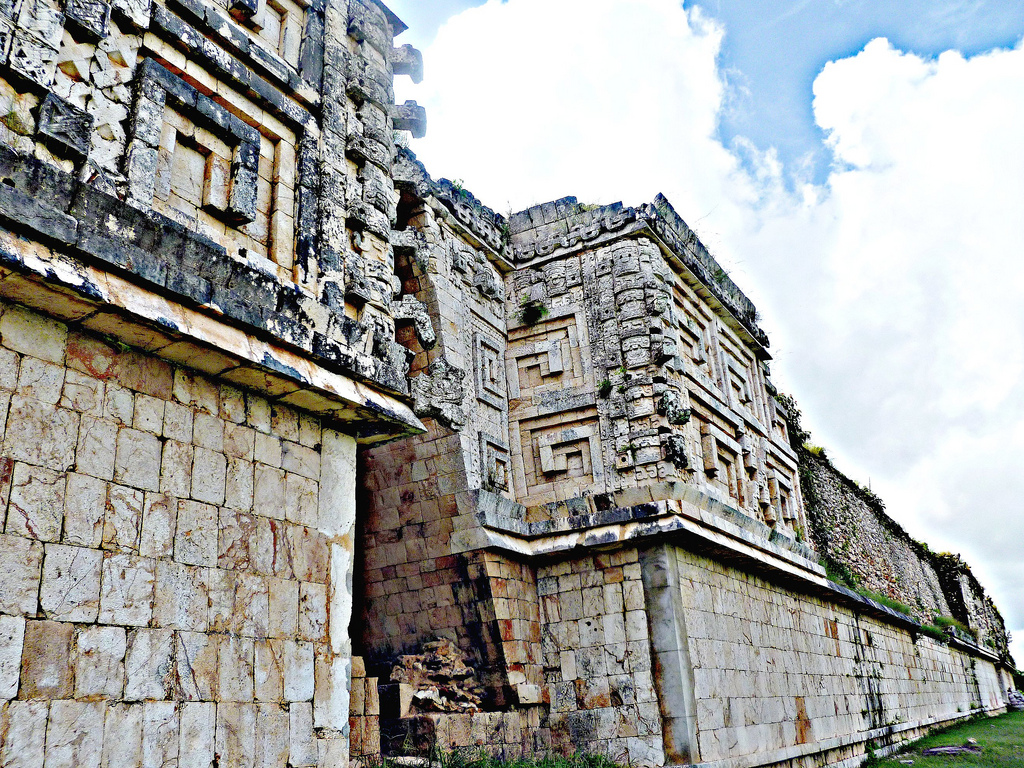 Governor's Palace rear view and details, Uxmal Mesoamerican, CC BY-SA 3.0
Relics and treasures
- Pyramid of the Magicianthe tall rounded pyramid, at the site
- Governor's Palacea long palace with detailed stone mosaics, at the site
- Chaac masksstone rain-god faces, on many buildings at the site
- Nunnery Quadranglefour decorated buildings around a courtyard, at the site
How we know
Explorers John Lloyd Stephens and Frederick Catherwood described and drew Uxmal in the 1840s. Mexican archaeologists restored many buildings. Maya inscriptions name a ruler called Lord Chak around 900 CE.
What you would see today
Visitors walk among the pyramids, palaces and ball court, and an evening light-and-sound show tells the legends of Uxmal. It is a UNESCO World Heritage Site.
For teachers and classrooms
Suggested level: grades 3-5. Print this page as a lesson sheet with the story, vocabulary, discussion questions and a quiz with an answer key.
Key words
- Chaac
- the Maya god of rain
- chultun
- an underground tank for storing water
- sacbe
- a raised white stone road built by the Maya
Talk about it
- Why would a city with no river care so much about the rain god?
- Why do you think people made up a legend about the pyramid being built in one night?
Try this activity
- Draw a map of Uxmal as it looked at its busiest, and label three things people did there.
- Find Uxmal on the Ruinscape timeline, then pick another place from the same century and compare them.
- Use one link in Sources below to find a real object from this place. Describe what it is made of and what it tells us.
Quick quiz
What is unusual about the Pyramid of the Magician?
- It has rounded sides
- It is underwater
- It is made of wood
- It is upside down
Show the answer
A. Its sides are rounded instead of sharp.
Who was Chaac?
- The Maya rain god
- A Spanish explorer
- A king of Egypt
- A sea monster
Show the answer
A. Chaac was the Maya god of rain.
How did Uxmal get water?
- Underground rain tanks
- A big river
- Snow
- Pipes from the sea
Show the answer
A. People stored rainwater in chultuns.
Sources and further reading
Ruinscape lessons are written for students and checked against encyclopedia and museum records. Go to the sources: these links search real museum collections, the UNESCO list and research by archaeologists.
- Wikipedia articleEncyclopedia overview with its own references
- UNESCO World HeritageOfficial listing, if the site is protected
- Google Arts & CultureMuseum exhibits, virtual tours and close-up photos
- British Museum collectionReal objects, photos and catalog notes
- The Met collectionObjects and essays from the Metropolitan Museum of Art
- Smithsonian collectionsU.S. national museum records
- 3D models on SketchfabScans of sites and artifacts (check each license)
- Scholarly articlesResearch papers by archaeologists and historians
Read the full background
Uxmal (Yucatec Maya: Óoxmáal [óˑʃmáˑl]) is an ancient Maya city of the classical period located in present-day Mexico. It is considered one of the most important archaeological sites of Maya culture, along with Palenque, Chichen Itza and Calakmul in Mexico, Caracol and Xunantunich in Belize, and Tikal in Guatemala. It is located in the Puuc region of the western Yucatán Peninsula, and is considered one of the Maya cities most representative of the region's dominant architectural style. It was designated a UNESCO World Heritage Site along with the nearby ruins of Kabah, Sayil and Labna.
Uxmal is located 62 km south of Mérida, capital of Yucatán state in Mexico. Its buildings are noted for their size and decoration. Ancient roads called sacbes connect the buildings, and also were built to other cities in the area such as Chichén Itzá in modern-day Mexico, Caracol and Xunantunich in modern-day Belize, and Tikal in modern-day Guatemala.
Its buildings are typical of the Puuc style, with smooth low walls that open on ornate friezes based on representations of typical Maya huts. These are represented by columns (representing the reeds used for the walls of the huts) and trapezoidal shapes (representing the thatched roofs). Entwined snakes and, in many cases two-headed snakes are used for masks of the rain god, Chaac; its big noses represent the rays of the storms. Feathered serpents with open fangs are shown leaving from the same human beings. Also seen in some cities are the influences of the Nahua peoples, who followed the cult of Quetzalcoatl and Tlaloc. These were integrated with the original elements of the Puuc tradition.
The buildings take advantage of the terrain to gain height and acquire important volumes, including the Pyramid of the Magician, with five levels, and the Governor's Palace, which covers an area of more than 1,200 m2 (12,917 sq ft).
Background text from Wikipedia, available under CC BY-SA 4.0.
Last updated: October 2026. How we make Ruinscape.