No. 138
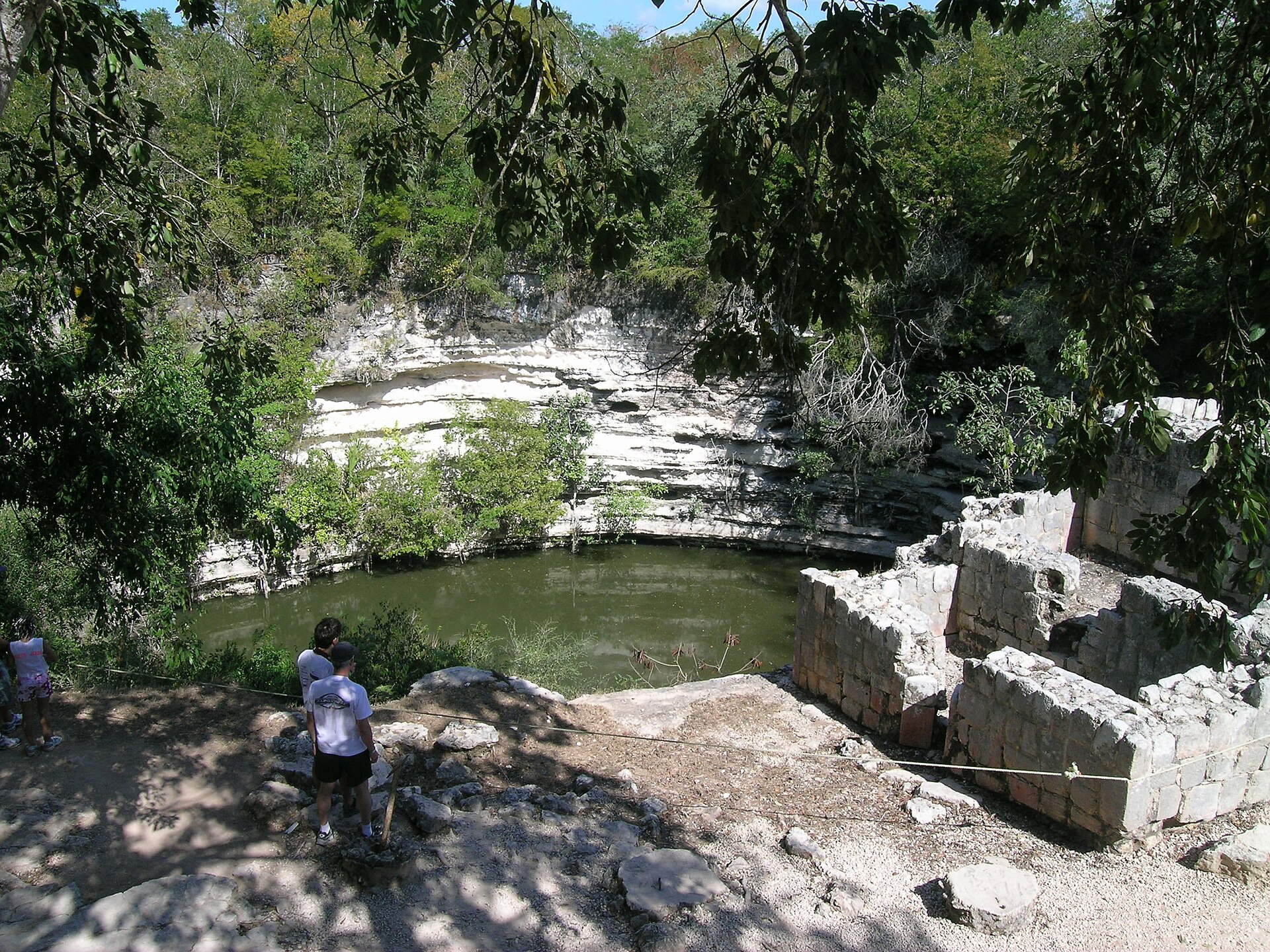
Sacred Cenote

- Where
- Chichen Itza, Mexico
- Built by
- Maya
- Era
- 800-1500s
- Known for
- Offerings of gold, jade and human remains.
- How it went under
- Thrown into the sinkhole as offerings.

Lyra Kael can take you here on the globe, tell you the story out loud and answer your questions. Start the time jump.
Background
The Sacred Cenote (Spanish: cenote sagrado, Latin American Spanish: [ˌsenote saˈɣɾaðo], "sacred well"; alternatively known as the "Well of Sacrifice") is a water-filled sinkhole in limestone at the pre-Columbian Maya archaeological site of Chichen Itza, in the northern Yucatán Peninsula.
According to both Maya and Spanish post-Conquest sources, pre-Columbian Maya deposited valuables and human bodies into the cenote as a form of sacrifice to the rain god Chaac. Archaeologists and explorers confirmed these accounts by means of a series of 20th century excavations of the Sacred Cenote.
Text from Wikipedia, licensed CC BY-SA 4.0.