The story
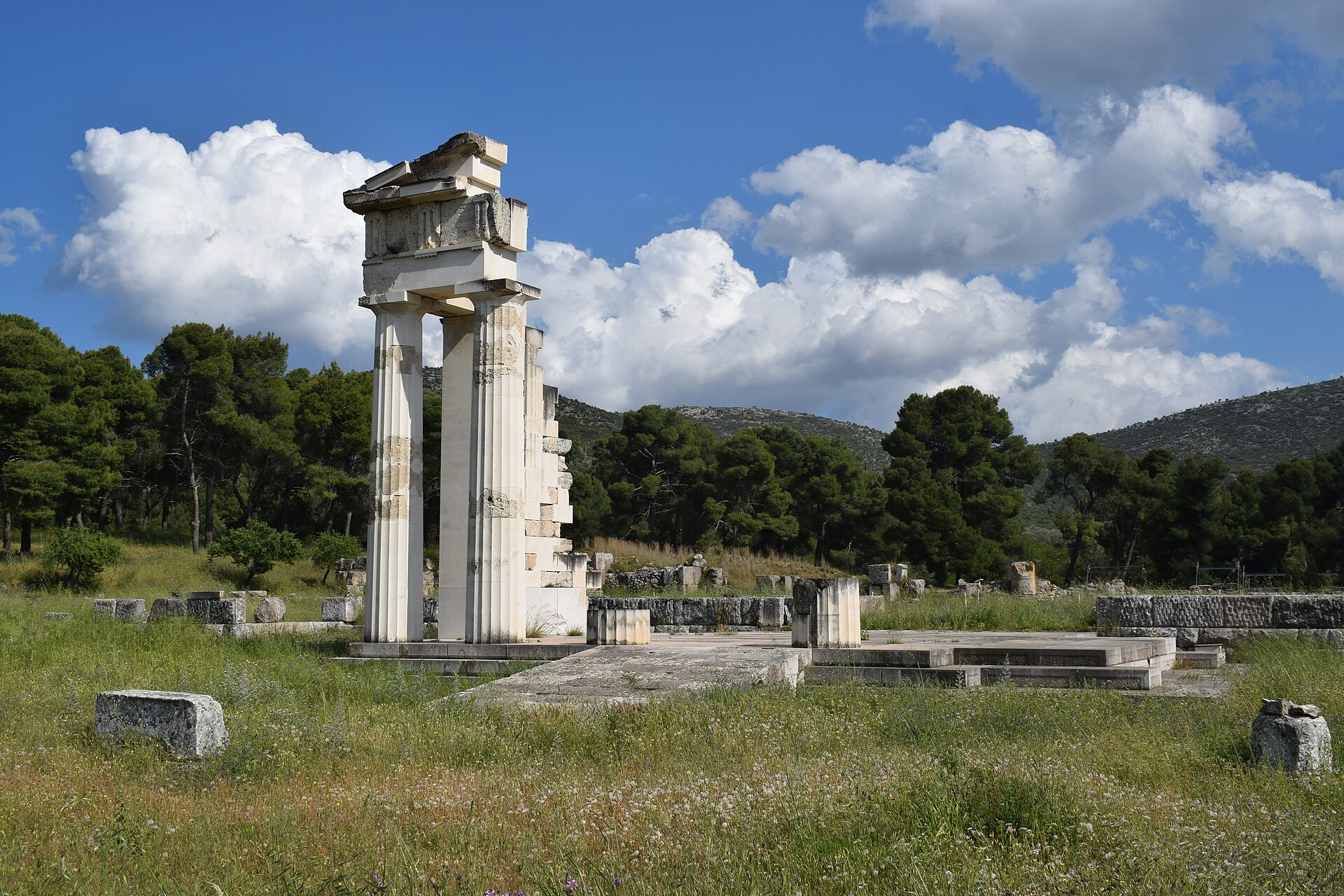
Epidaurus was home to a famous sanctuary of Asclepius, the Greek god of healing. People traveled from all over Greece hoping to be cured. They prayed, bathed, and slept in a special hall, hoping the god would send a healing dream.
Around 340 BCE, the Greeks built a great theater here for festivals in the god's honor. It has 55 rows of seats and could hold about 13,000 people.
The theater is famous for its sound. The way the rows rise and curve helps quiet background noise while carrying voices from the stage. Scientists still study why it works so well. Today, Greek plays are performed here again every summer.
How it ended
The sanctuary lost importance as Christianity spread and the old gods were abandoned in late Roman times. Earthquakes and time covered the theater with soil, which protected its seats until it was uncovered in the 1800s.
What life was like
Visitors to Epidaurus came to be healed. Priests and helpers cared for them, gave them baths, special diets and exercise. Grateful patients left carved stones describing their cures. Festivals included athletic games, music and plays. People sat on stone seats for hours watching tragedies and comedies.
Wow facts
- The theater has 55 rows of seats and held about 13,000 people.
- Scientists found the rows of seats help filter out low background noises.
- Plays are still performed here every summer, about 2,300 years after it was built.
Photos
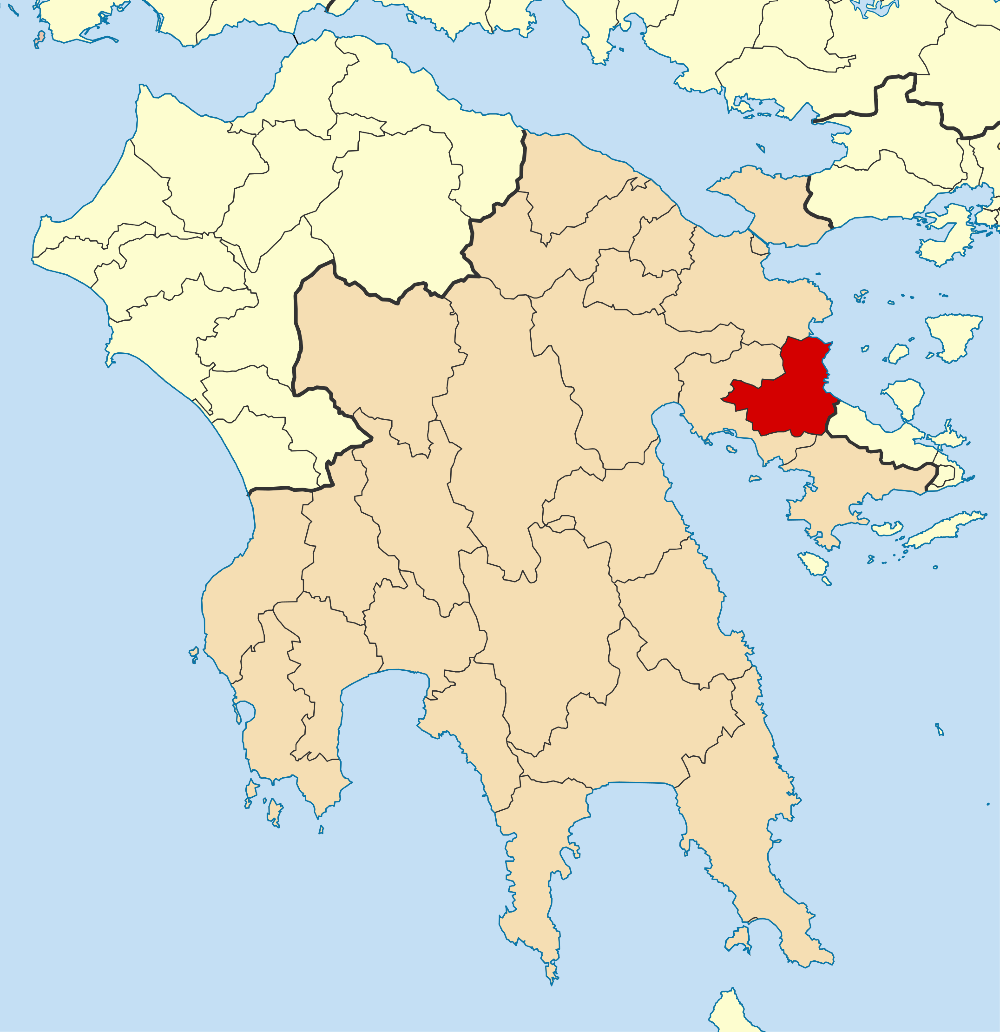 Locator map for Epidavros municipality in Greek region Peloponnese (2011) Pitichinaccio, CC BY 3.0
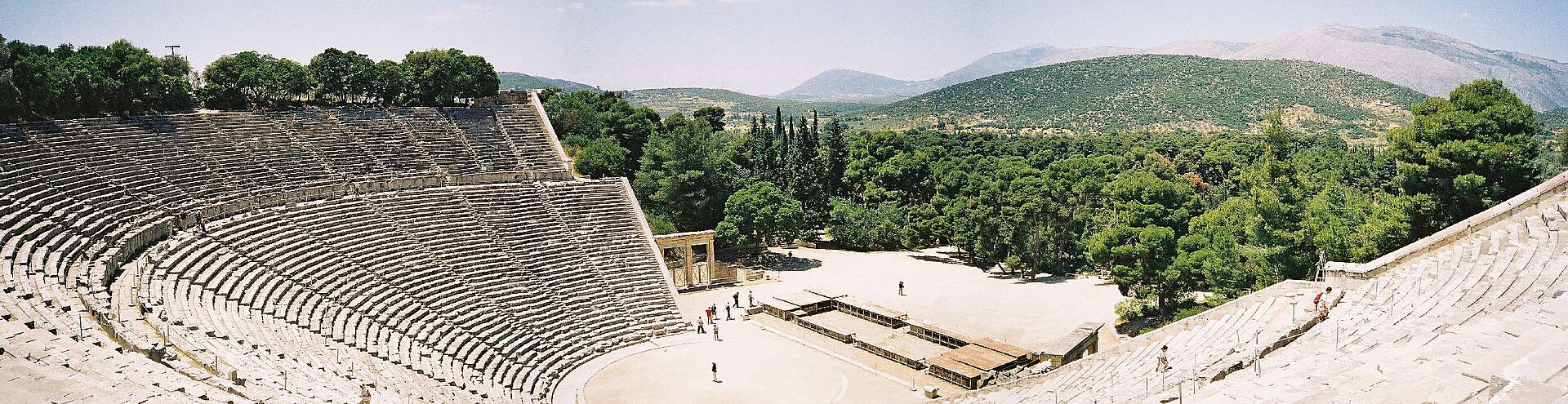 Epidaurus (Epidauros), Greece: Theatre Morn, Public domain
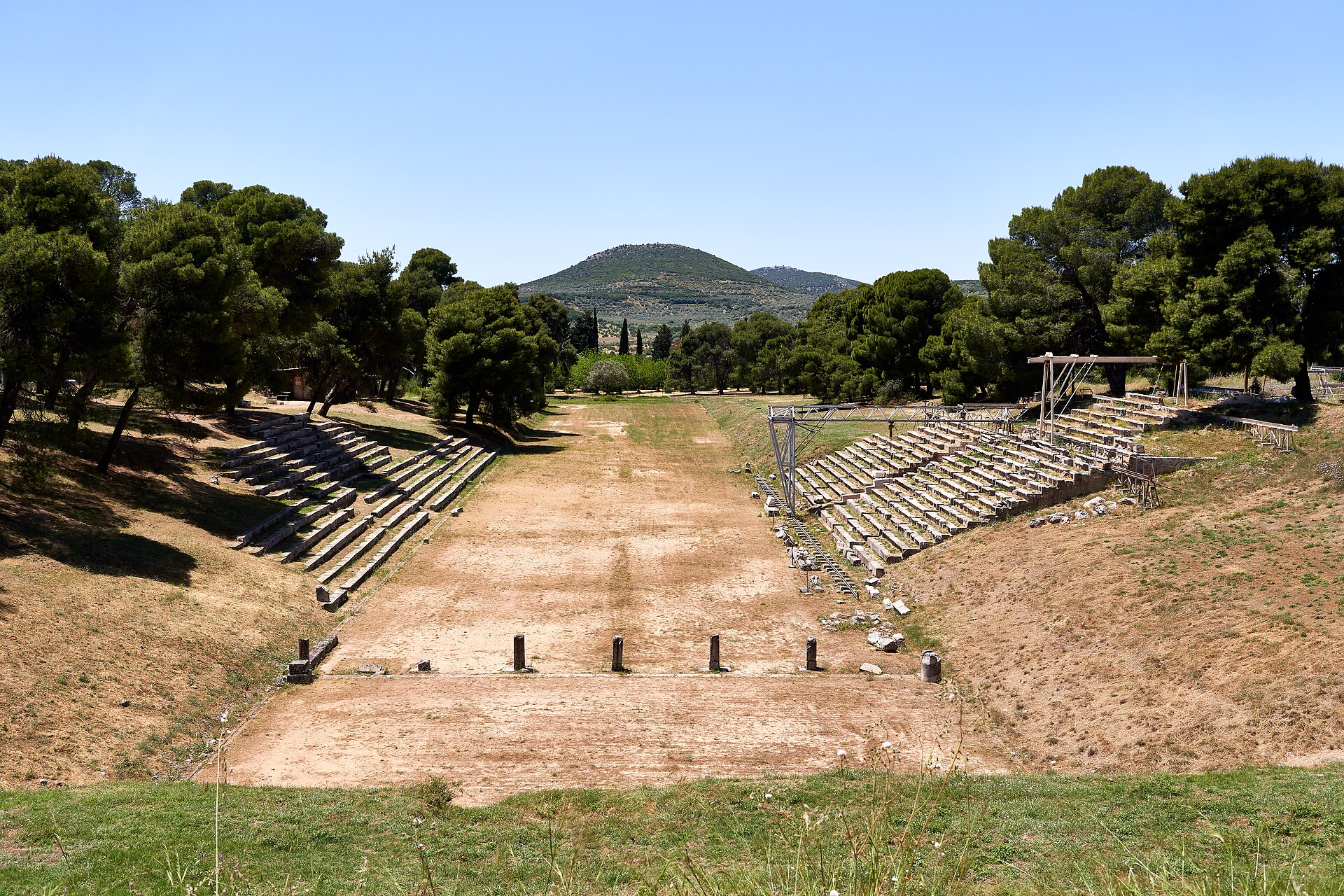 The Ancient Stadium of Epidaurus. Argolis, Greece. George E. Koronaios, CC BY-SA 4.0
Relics and treasures
- The Theatrethe stone theater with its 55 rows, still in use at the site
- Healing stonescarved records of cures, in the Epidaurus Archaeological Museum
- Tholosthe ruins of a round building with a maze-like base, at the site
- Temple of Asclepiusthe foundations of the god's temple, at the site
How we know
Greek archaeologist Panagiotis Kavvadias excavated the sanctuary starting in 1881. Inscriptions describe healings and building costs. Sound experts test the theater with modern equipment.
What you would see today
Visitors test the sound by whispering or dropping a coin on the stage. In summer, the Athens and Epidaurus Festival puts on plays at night. The sanctuary ruins and a small museum are nearby.
For teachers and classrooms
Suggested level: grades 3-5. Print this page as a lesson sheet with the story, vocabulary, discussion questions and a quiz with an answer key.
Key words
- acoustics
- how sound moves and is heard in a space
- sanctuary
- a holy place, often with temples and other buildings
- tragedy
- a serious play with a sad ending
Talk about it
- Why would good sound be so important in a theater before microphones?
- How is a healing sanctuary like a hospital, and how is it different?
Try this activity
- Draw a map of Theatre of Epidaurus as it looked at its busiest, and label three things people did there.
- Find Theatre of Epidaurus on the Ruinscape timeline, then pick another place from the same century and compare them.
- Use one link in Sources below to find a real object from this place. Describe what it is made of and what it tells us.
Quick quiz
What is the Theatre of Epidaurus famous for?
- Amazing sound
- Being underwater
- Its gold roof
- Its moving seats
Show the answer
A. Even a whisper on stage can be heard in the top rows.
Which god was honored at Epidaurus?
- Asclepius
- Zeus
- Poseidon
- Ares
Show the answer
A. Asclepius was the god of healing.
About how many people could the theater hold?
- 1,300
- 13,000
- 130,000
- 130
Show the answer
B. It seated about 13,000 people.
Sources and further reading
Ruinscape lessons are written for students and checked against encyclopedia and museum records. Go to the sources: these links search real museum collections, the UNESCO list and research by archaeologists.
- Wikipedia articleEncyclopedia overview with its own references
- UNESCO World HeritageOfficial listing, if the site is protected
- Google Arts & CultureMuseum exhibits, virtual tours and close-up photos
- British Museum collectionReal objects, photos and catalog notes
- The Met collectionObjects and essays from the Metropolitan Museum of Art
- Smithsonian collectionsU.S. national museum records
- 3D models on SketchfabScans of sites and artifacts (check each license)
- Scholarly articlesResearch papers by archaeologists and historians
Read the full background
Epidaurus (Greek: Ἐπίδαυρος) was a small city (polis) in ancient Greece, on the Argolid Peninsula at the Saronic Gulf. Two modern towns bear the name Epidavros: Palaia Epidavros and Nea Epidavros. Since 2010 they belong to the new municipality of Epidaurus, part of the regional unit of Argolis. The chair of the municipality is the town Lygourio. The nearby sanctuary of Asclepius and ancient theatre were inscribed on the UNESCO World Heritage List in 1988 because of their exemplary architecture and importance in the development and spread of healing sanctuaries and cults across the ancient Greek and Roman worlds.
Background text from Wikipedia, available under CC BY-SA 4.0.
Last updated: October 2026. How we make Ruinscape.