No. 43
Delphi

- Where
- Greece
- Built by
- Ancient Greeks
- Era
- 800 BCE-390s CE
- Known for
- The oracle of Apollo.
- How it ended
- Closed when Emperor Theodosius banned pagan worship.

Lyra Kael can take you here on the globe, tell you the story out loud and answer your questions. Start the time jump.
Background
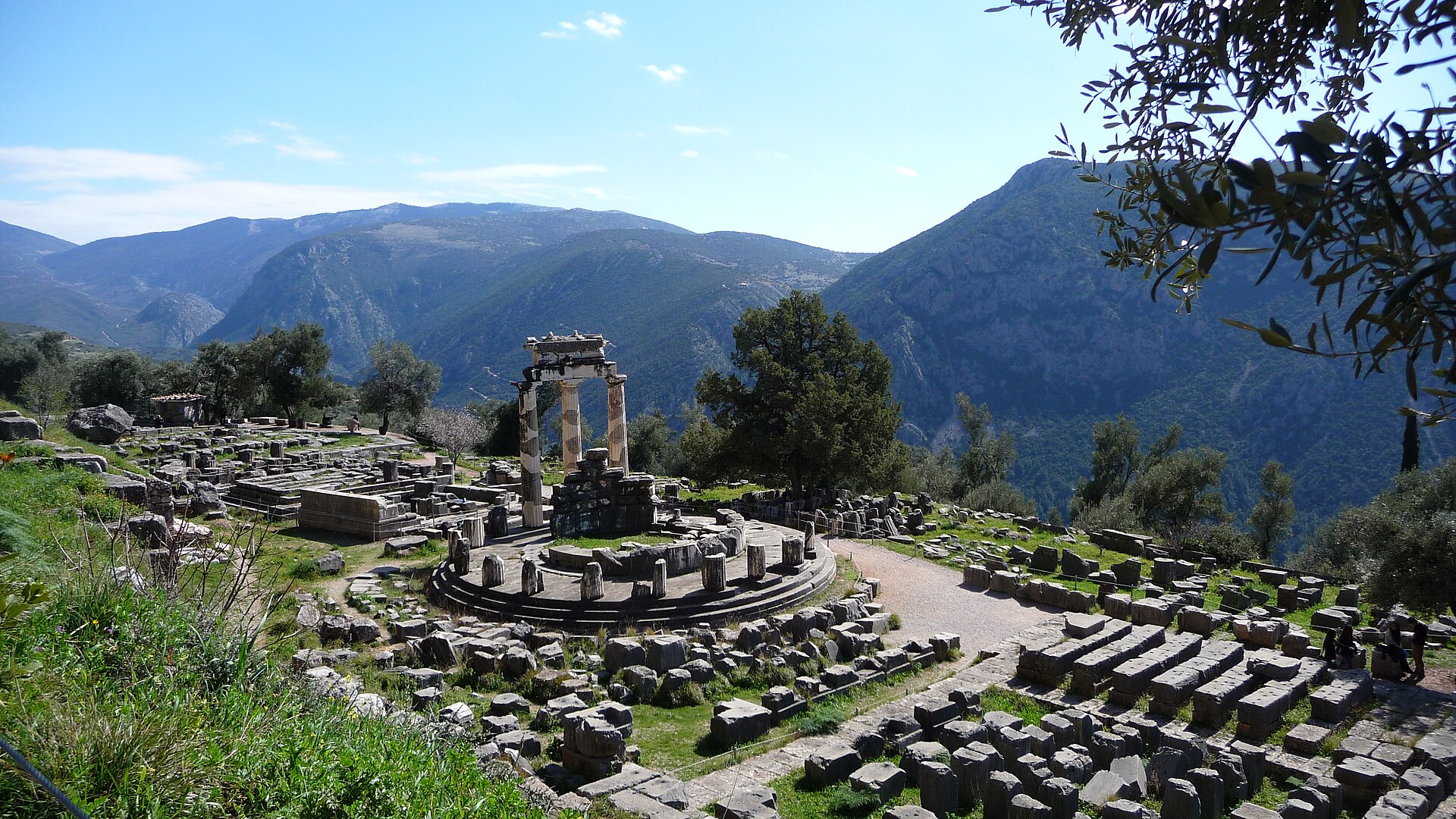
Delphi (; Greek: Δελφοί [ðelˈfi]), in legend previously called Pytho (Πυθώ), was an ancient sacred precinct in central Greece. It was the seat of Pythia, the major oracle who was consulted about important decisions throughout the ancient classical world. The ancient Greeks considered the centre of the world to be in Delphi, marked by the stone monument known as the Omphalos of Delphi. The term omphalos was the Greek word for "navel."
According to the Suda, Delphi took its name from the Delphyne, the she-serpent (drakaina) who lived there and was killed by the god Apollo (in other accounts the serpent was the male serpent (drakon) Python).
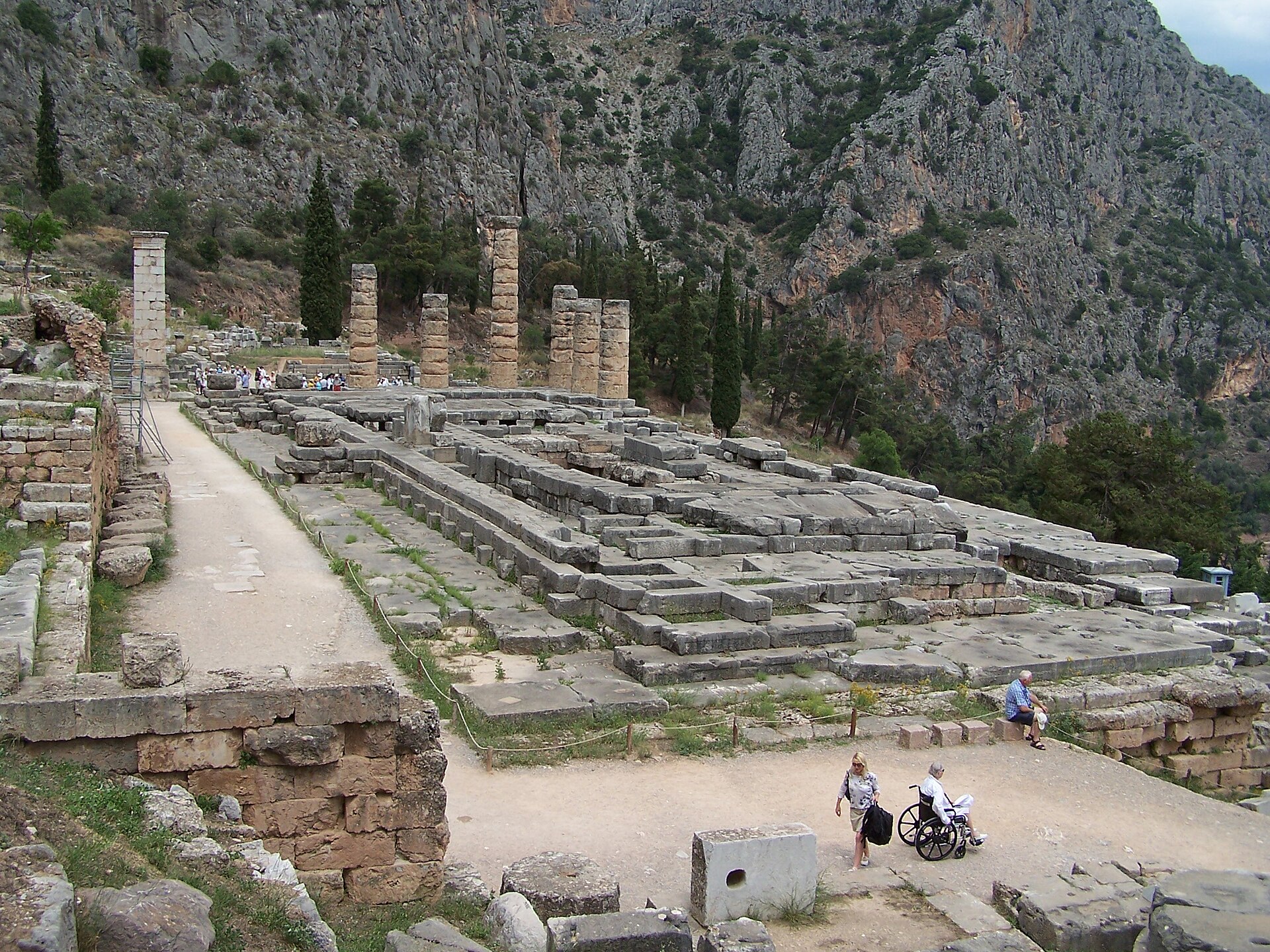
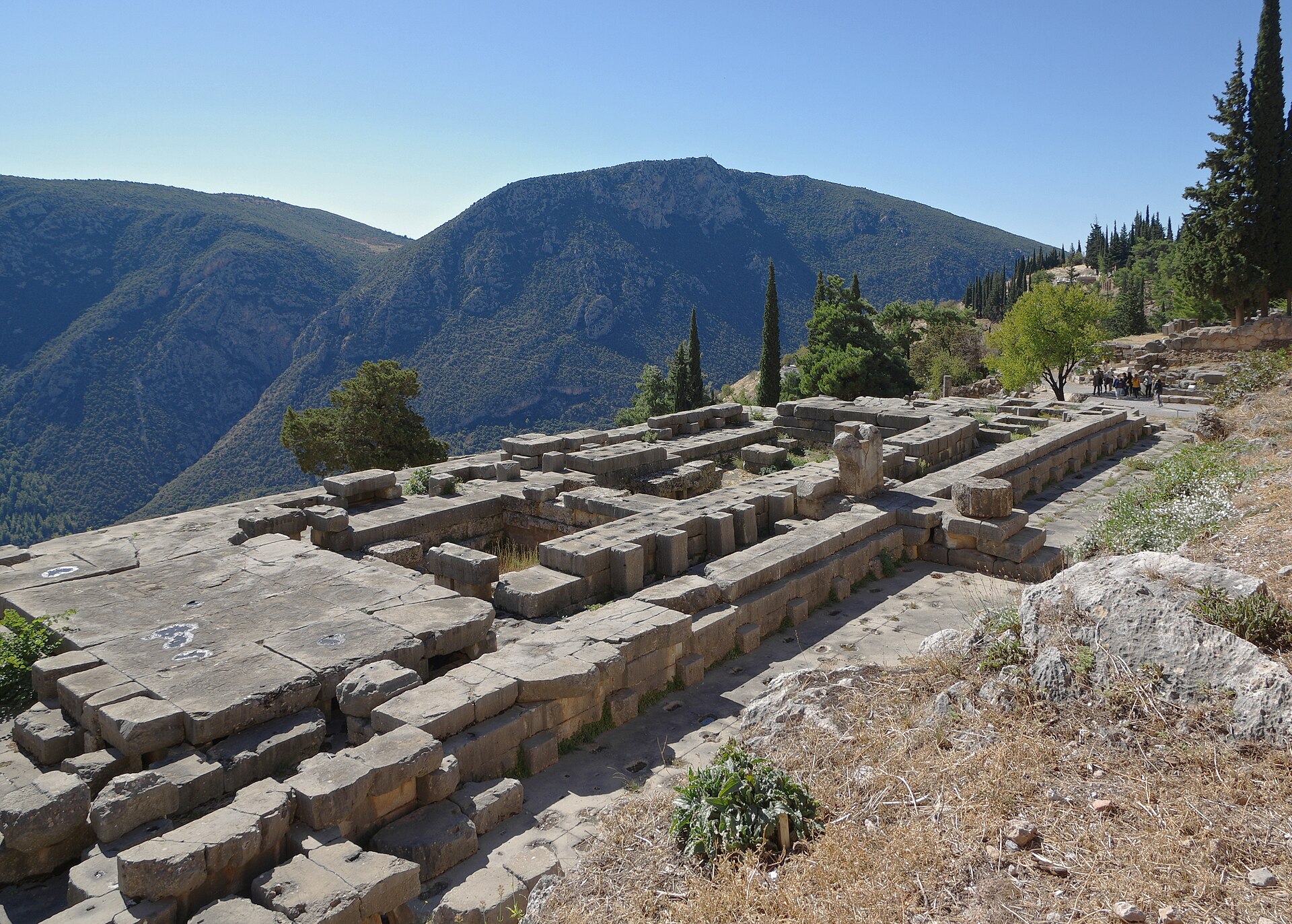
The sacred precinct occupies a delineated region on the southwestern slope of Mount Parnassus. It is now an extensive archaeological site, and since 1938, it has been a part of Parnassos National Park.
The precinct is recognized by UNESCO as a World Heritage Site in having had a great influence in the ancient world, as evidenced by the various monuments built there by most of the important ancient Greek city-states, demonstrating their fundamental Hellenic unity.
Text from Wikipedia, licensed CC BY-SA 4.0.