The story
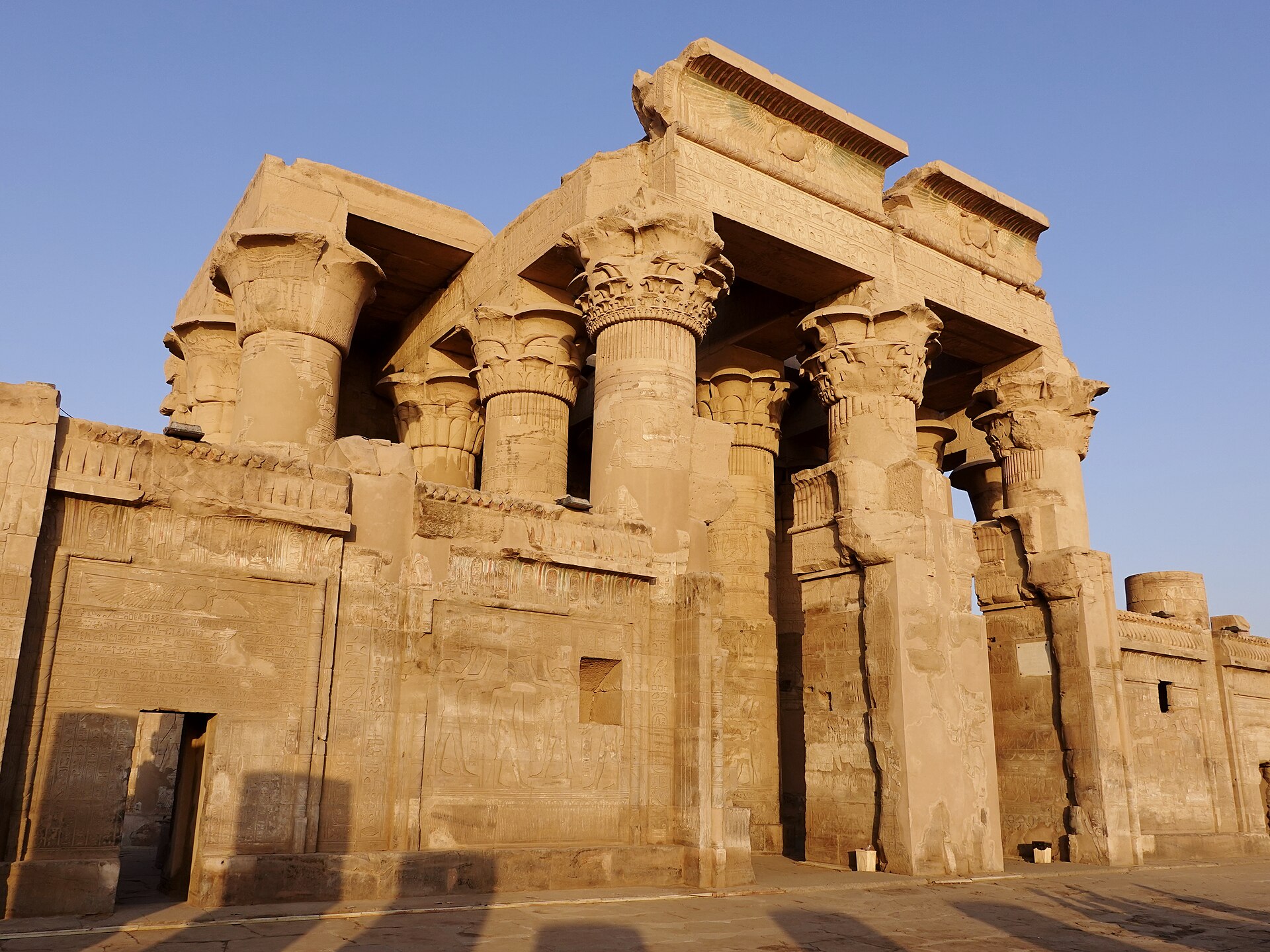
The Temple of Kom Ombo was built mostly between about 180 and 47 BCE, under the Ptolemies. Its design is unusual. The left side was for Haroeris, a falcon-headed form of Horus. The right side was for Sobek, the crocodile god of the Nile. Each god had its own entrance, its own halls and its own shrine.
Crocodiles were common along this part of the river, so people honored Sobek to stay safe and to ask for good floods. Some crocodiles were kept at the temple, and when they died, they were mummified.
The temple also seems to have been a place of healing. One wall shows tools that look like medical instruments, and visitors came hoping to get well.
How it ended
After the old religion ended in Roman times, the temple was abandoned. Floods from the Nile, earthquakes and people taking stone damaged it. Part of the front washed away, but much still stands today.
What life was like
Priests at Kom Ombo served two gods every day, so the temple needed twice the rituals. Nearby farmers counted on the yearly Nile flood, and a special well called a Nilometer measured how high the water rose. A high flood meant good crops, and higher taxes. Sick people came to pray and sleep near the temple, hoping for healing dreams.
Wow facts
- A small museum beside the temple displays mummified crocodiles.
- A carving on the temple wall shows tools that many people think are surgical instruments.
- Part of the temple fell into the river after it was undercut by the Nile.
Photos
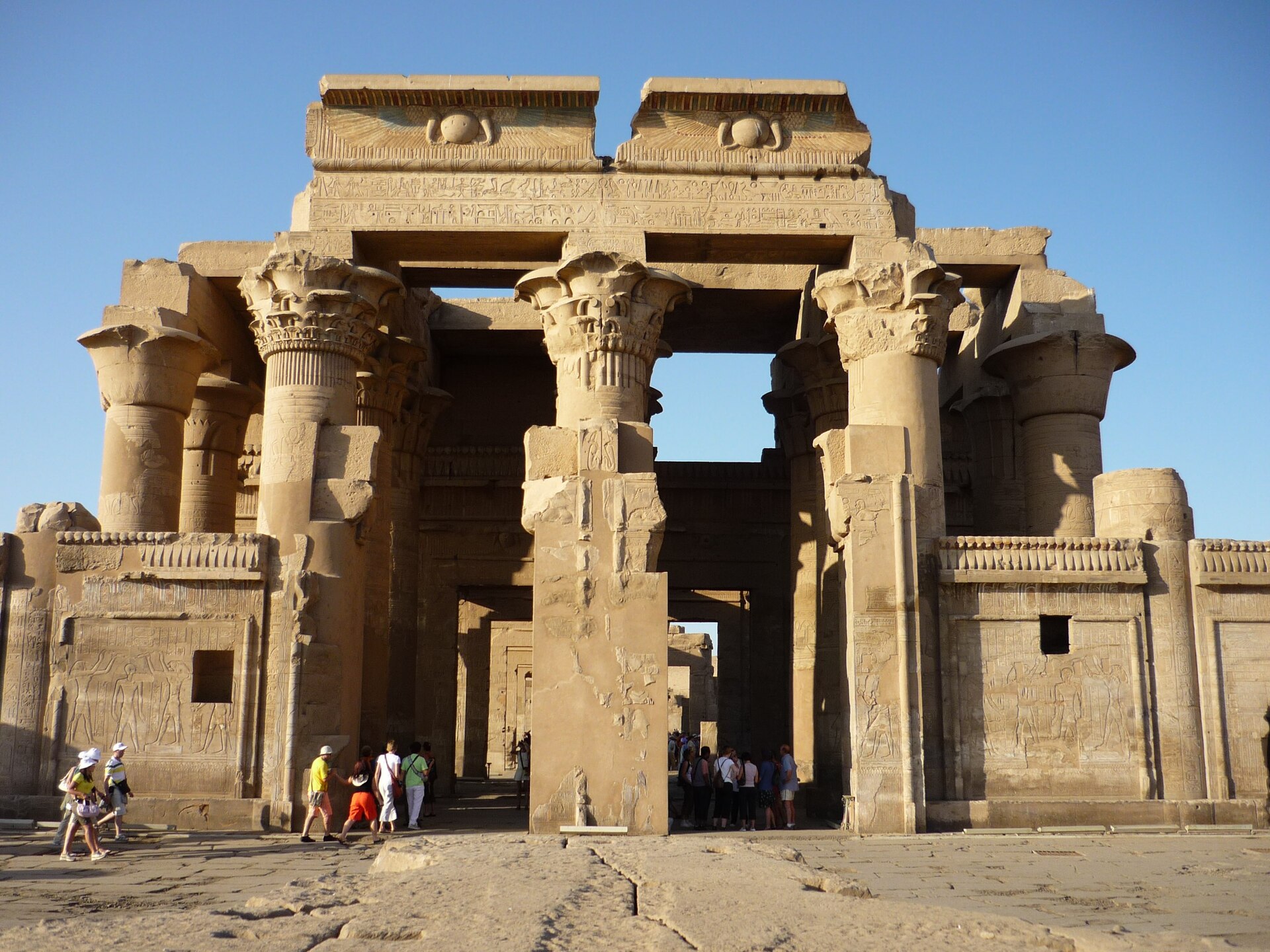 Kom Ombo Temple, Egypt Rémih, CC BY-SA 3.0
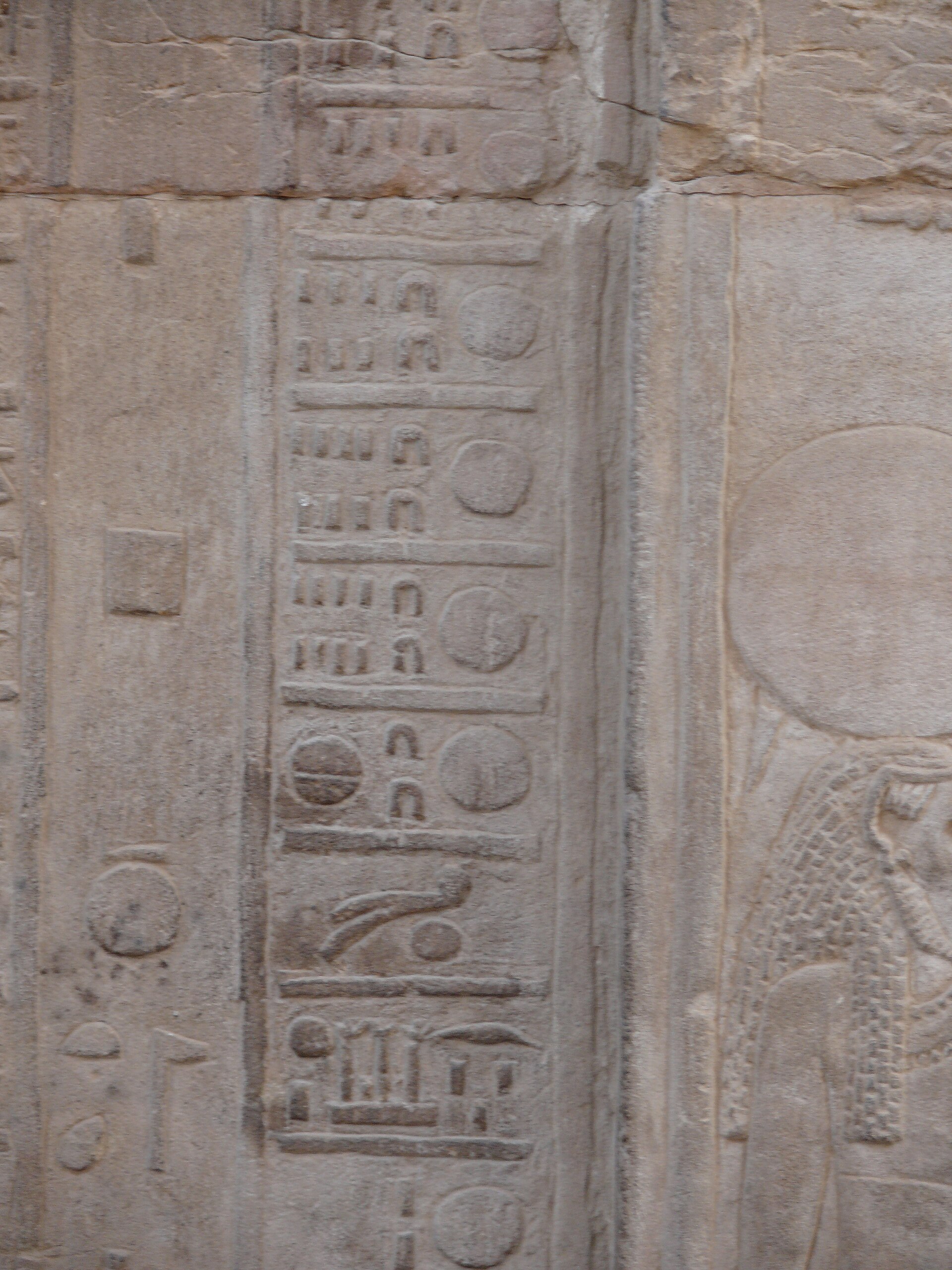 Calendar in the temple of Kom Ombo. The calendar shows the figures for the days of the... Ad Meskens, CC BY-SA 3.0
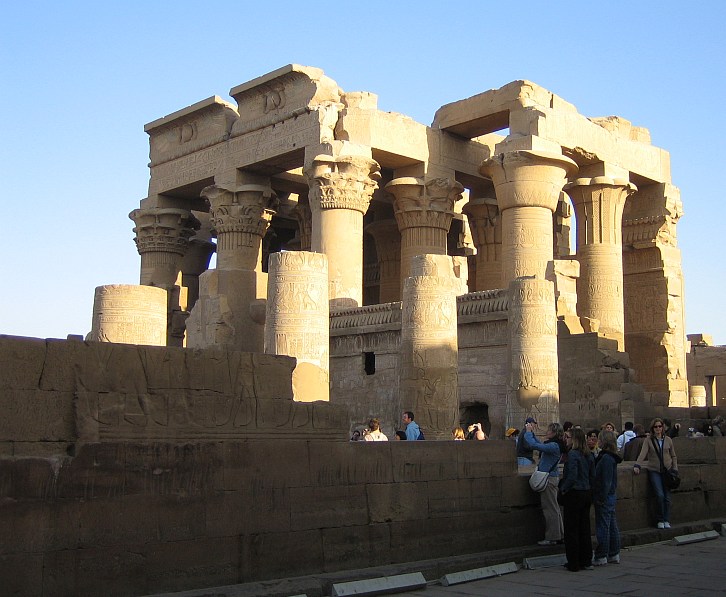 Overview of the Kom Ombo temple in Egypt, on the Nile. Photo taken in December 2004 by... The original uploader was Isewell at English Wikipedia., CC BY 1.0
Relics and treasures
- Mummified crocodilespreserved crocodiles from nearby burials, in the Crocodile Museum at Kom Ombo
- Medical instruments reliefa carving of tools on the temple's back wall, still at the site
- Nilometera stone well with steps used to measure Nile floods, still at the site
- Temple calendarcarved lists of festivals and offerings, still on the walls
How we know
French archaeologist Jacques de Morgan cleared the temple in the 1890s. Scholars read its inscriptions to learn which rulers built each part. Scientists study the crocodile mummies with scans to learn how they were prepared.
What you would see today
Visitors walk through the twin entrances, look at the carved calendar and medical scenes, peer down into the Nilometer well, and visit the Crocodile Museum next door. At night the temple is lit up beside the river.
For teachers and classrooms
Suggested level: grades 3-5. Print this page as a lesson sheet with the story, vocabulary, discussion questions and a quiz with an answer key.
Key words
- Nilometer
- a structure used to measure how high the Nile River rose
- mummify
- to preserve a body by drying it and wrapping it
- twin
- one of a matching pair
Talk about it
- Why would people worship an animal they were afraid of?
- What would be tricky about sharing a building with someone very different from you?
Try this activity
- Draw a map of Temple of Kom Ombo as it looked at its busiest, and label three things people did there.
- Find Temple of Kom Ombo on the Ruinscape timeline, then pick another place from the same century and compare them.
- Use one link in Sources below to find a real object from this place. Describe what it is made of and what it tells us.
Quick quiz
What animal was Sobek?
- A falcon
- A crocodile
- A cat
- A hippo
Show the answer
B. Sobek was the crocodile god of the Nile.
What makes Kom Ombo unusual?
- It is underwater
- It is a double temple for two gods
- It is made of wood
- It has no walls
Show the answer
B. It has two entrances and two shrines for two gods.
What was a Nilometer used for?
- Measuring flood height
- Telling time
- Grinding grain
- Catching fish
Show the answer
A. It measured how high the Nile flood rose each year.
Sources and further reading
Ruinscape lessons are written for students and checked against encyclopedia and museum records. Go to the sources: these links search real museum collections, the UNESCO list and research by archaeologists.
- Wikipedia articleEncyclopedia overview with its own references
- UNESCO World HeritageOfficial listing, if the site is protected
- Google Arts & CultureMuseum exhibits, virtual tours and close-up photos
- British Museum collectionReal objects, photos and catalog notes
- The Met collectionObjects and essays from the Metropolitan Museum of Art
- Smithsonian collectionsU.S. national museum records
- 3D models on SketchfabScans of sites and artifacts (check each license)
- Scholarly articlesResearch papers by archaeologists and historians
Read the full background
The Temple of Kom Ombo is an unusual double temple in the town of Kom Ombo in Aswan Governorate, Upper Egypt. It was constructed during the Ptolemaic dynasty, 180–47 BC. Some additions to it were later made during the Roman period. In ancient times, Kom Ombo was called NBU, meaning "Gold". Later, the Greeks and Romans called it OMBOS. In Arabic, "Kom" means mound, so Kom Ombo means "Mound of Gold".
Background text from Wikipedia, available under CC BY-SA 4.0.
Last updated: October 2026. How we make Ruinscape.