The story
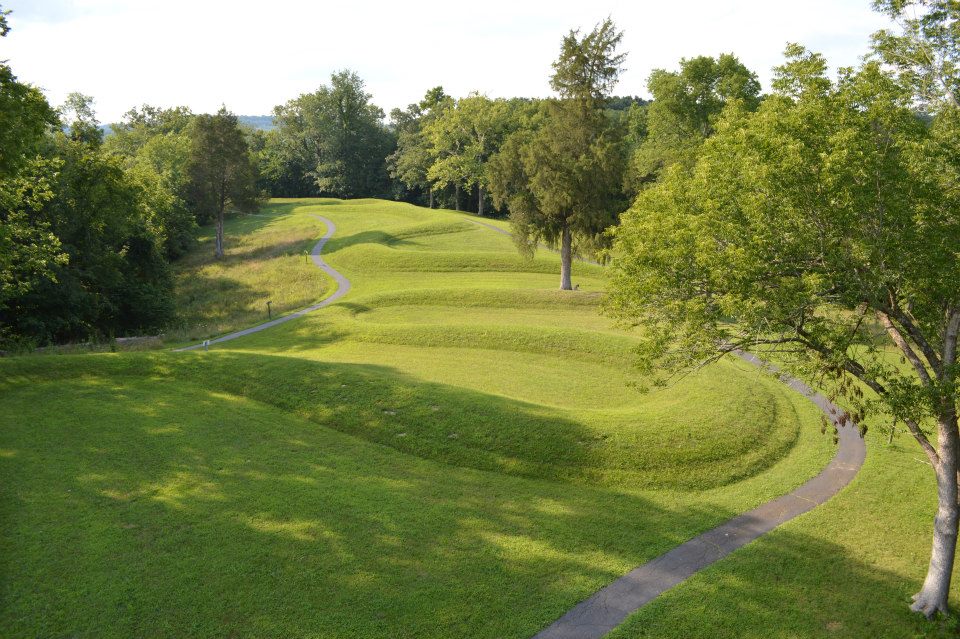
Serpent Mound is an effigy mound, which means it was built in the shape of an animal. It is about 411 meters long, about 1 meter high, and curves seven times before ending in a coiled tail. At the head is an oval shape, which some see as an egg or an eye.
Who built it? Early archaeologists thought it was made by the Adena culture around 300 BCE because of nearby burial mounds. Later radiocarbon dating suggested it was built by the Fort Ancient culture around 1070 CE. More recent tests point back toward the earlier date. Experts still discuss it.
Serpent Mound sits on the edge of an ancient crater, possibly made by a meteorite impact millions of years ago. The snake's head seems to line up with the sunset on the summer solstice.
How it ended
The builders' cultures changed over time, and the meaning of the serpent was lost. Farming threatened the mound in the 1800s, but it was protected after Putnam's efforts and is now a state memorial.
What life was like
The people who built Serpent Mound were Native American farmers and gatherers. They grew plants like squash and sunflowers, hunted deer and gathered nuts. Building the mound meant moving tons of soil with baskets. Many think it was a sacred place for ceremonies connected to the sky and seasons.
Wow facts
- The head may line up with the sunset on the longest day of the year.
- The mound sits on an ancient crater that may have come from a meteorite.
- Frederic Putnam raised money in the 1880s to buy the land and save the mound from farming.
Photos
 An artists conception of the Emerald Site, (22 AD 504), a Plaquemine culture mound site... user:RHorning, Public domain
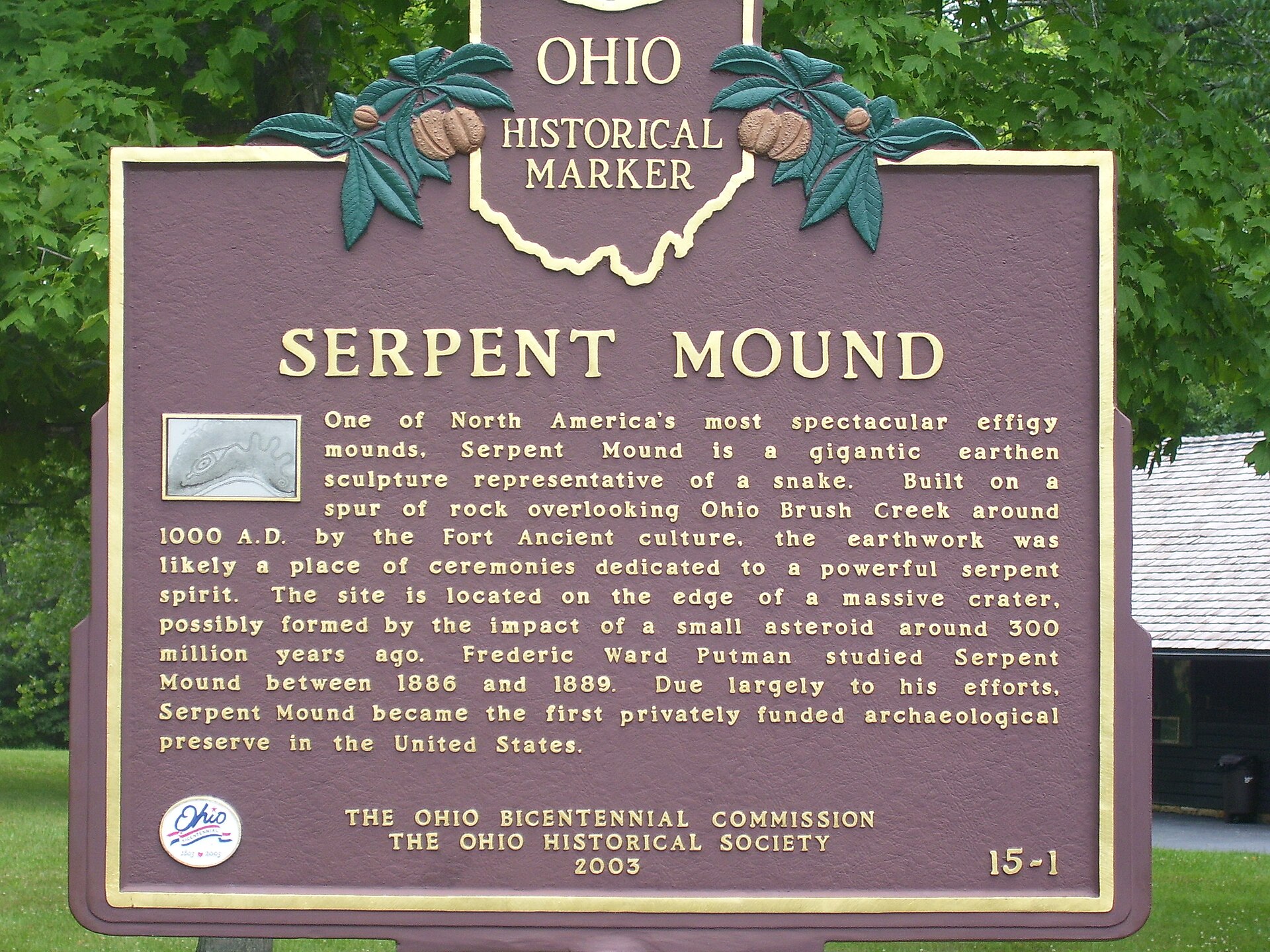 Image of the w:Serpent Mound plaque Stepshep, CC BY-SA 3.0
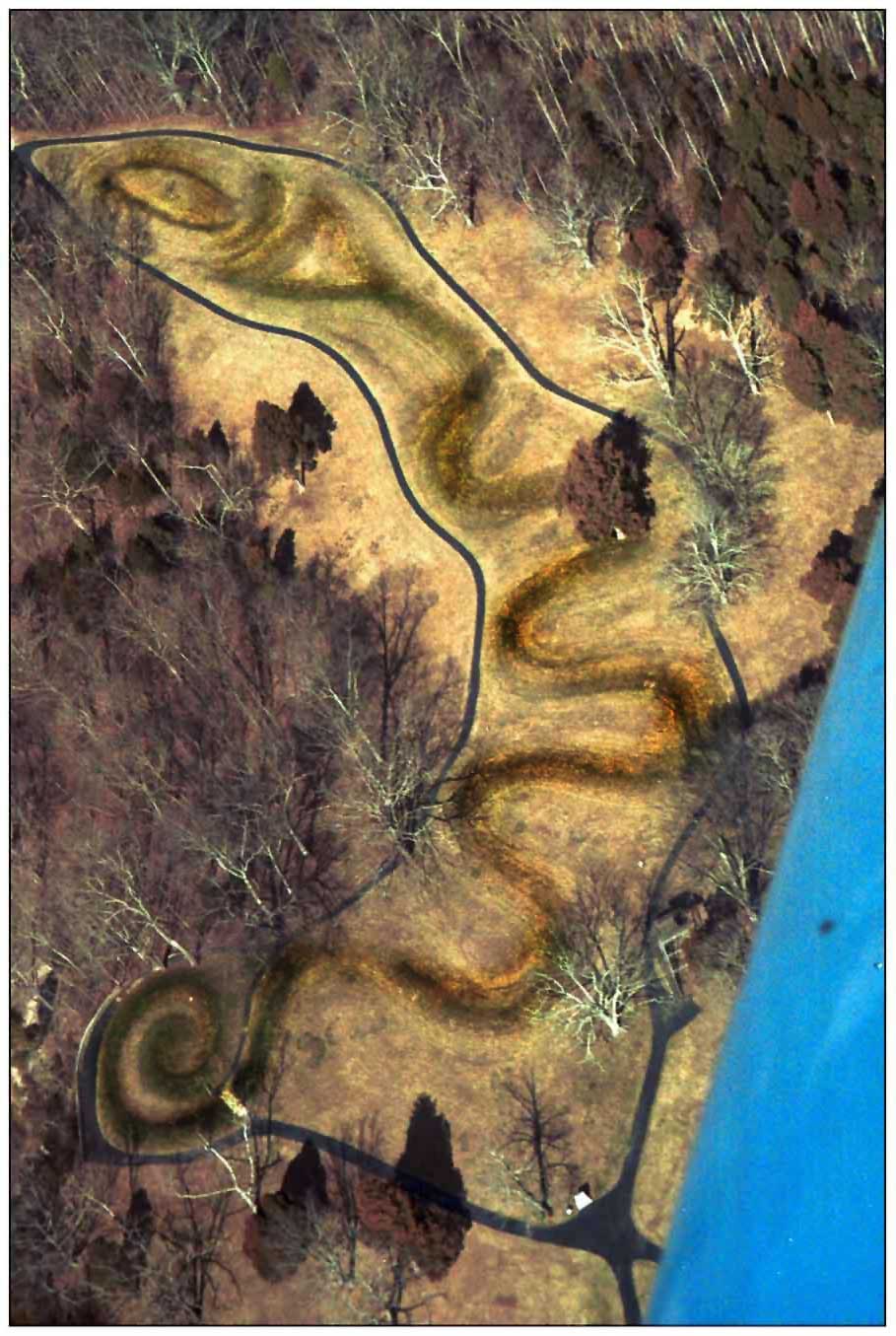 View of the The Great Serpent Mound, one of the most important prehistoric effigy mound... Timothy A. Price and Nichole I.; uploaded by the authors., CC BY 2.5
Relics and treasures
- The Serpent effigythe coiled earthen snake, at the site
- Burial moundsnearby Adena and Fort Ancient mounds, at the site
- Observation towera viewing tower to see the full shape, at the site
- Artifacts from excavationsstudied by Harvard's Peabody Museum
How we know
Frederic Ward Putnam excavated in the 1880s for Harvard's Peabody Museum. Radiocarbon dating of charcoal in the mound gave different dates in 1991 and 2014, which is why the debate continues.
What you would see today
Visitors walk a paved path around the serpent and climb an observation tower to see its shape. A small museum explains its history and the debate about who built it. The site is cared for by the Ohio History Connection with the Arc of Appalachia.
For teachers and classrooms
Suggested level: grades 3-5. Print this page as a lesson sheet with the story, vocabulary, discussion questions and a quiz with an answer key.
Key words
- effigy mound
- a mound of earth built in the shape of an animal or figure
- radiocarbon dating
- a way scientists find the age of things that were once alive
- crater
- a bowl-shaped hole, sometimes made by a meteorite
Talk about it
- Why might people build a giant shape that is best seen from above?
- Why do scientists sometimes get different dates for the same place?
Try this activity
- Draw a map of Serpent Mound as it looked at its busiest, and label three things people did there.
- Find Serpent Mound on the Ruinscape timeline, then pick another place from the same century and compare them.
- Use one link in Sources below to find a real object from this place. Describe what it is made of and what it tells us.
Quick quiz
What shape is Serpent Mound?
- A snake
- A bird
- A bear
- A turtle
Show the answer
A. It is shaped like a coiling serpent.
In which state is Serpent Mound?
- Ohio
- California
- Texas
- Florida
Show the answer
A. It is in southern Ohio.
Why are its builders debated?
- Dating tests gave different results
- No one has seen it
- It moves
- It is underwater
Show the answer
A. Radiocarbon tests pointed to different cultures and dates.
Sources and further reading
Ruinscape lessons are written for students and checked against encyclopedia and museum records. Go to the sources: these links search real museum collections, the UNESCO list and research by archaeologists.
- Wikipedia articleEncyclopedia overview with its own references
- UNESCO World HeritageOfficial listing, if the site is protected
- Google Arts & CultureMuseum exhibits, virtual tours and close-up photos
- British Museum collectionReal objects, photos and catalog notes
- The Met collectionObjects and essays from the Metropolitan Museum of Art
- Smithsonian collectionsU.S. national museum records
- 3D models on SketchfabScans of sites and artifacts (check each license)
- Scholarly articlesResearch papers by archaeologists and historians
Read the full background
The Great Serpent Mound is a 1,348-feet-long (411m), four-feet-high precontact effigy mound located in Peebles, Ohio, United States. It was built on what is known as the Serpent Mound crater plateau, running along the Ohio Brush Creek in Adams County, Ohio. The mound is the largest serpent effigy known in the world.
The first published surveys of the mound, by E. G. Squier and Edwin Hamilton Davis, were featured in their 1848 study Ancient Monuments of the Mississippi Valley, commissioned by the Smithsonian Institution.
The United States Department of the Interior designated the mound as a National Historic Landmark in 1966. It is maintained by the Ohio History Connection, a nonprofit organization dedicated to preserving historical sites in Ohio.
Background text from Wikipedia, available under CC BY-SA 4.0.
Last updated: October 2026. How we make Ruinscape.