The story
Queen Anne's Revenge began life as a French slave ship called La Concorde. In 1717, the pirate Edward Teach, better known as Blackbeard, captured it in the Caribbean. He added cannons, renamed it, and made it his flagship.
In May 1718, Blackbeard blockaded the port of Charleston, South Carolina, for about a week, stopping ships and taking hostages. He demanded a chest of medicine before letting them go.
A few weeks later, Queen Anne's Revenge ran aground on a sandbar near Beaufort Inlet. Some historians think Blackbeard did it on purpose to break up his large crew and keep more treasure for himself. He was killed in a battle later that year.
How it went under
The ship ran aground in 1718 and was left behind. Over time, sand and sea covered it. It was found in 1996, and most of it has now been raised and preserved.
What life was like
Pirate life was harsh. Crews lived crowded together, ate salted meat and hard biscuits, and often got sick. They elected captains and split stolen goods by rules written in articles. Blackbeard reportedly tied slow-burning fuses under his hat to look scary in battle. Kids, called ship's boys, sometimes served on ships too.
Wow facts
- Divers have recovered more than 30 cannons from the wreck.
- Blackbeard once traded hostages for a chest of medicine.
- Tiny gold dust and flakes were found in the wreck.
Photos
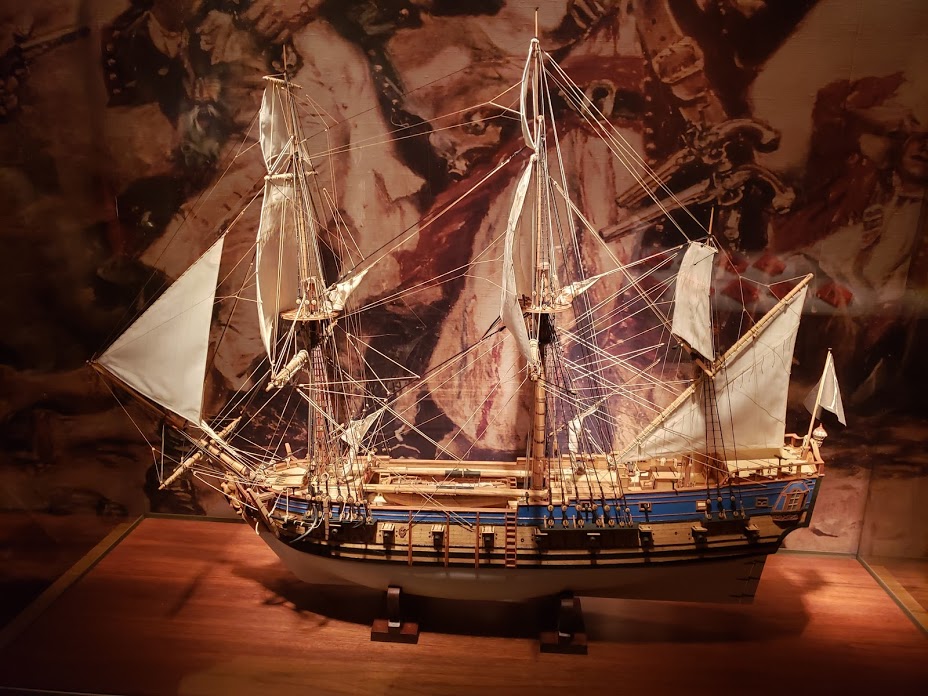
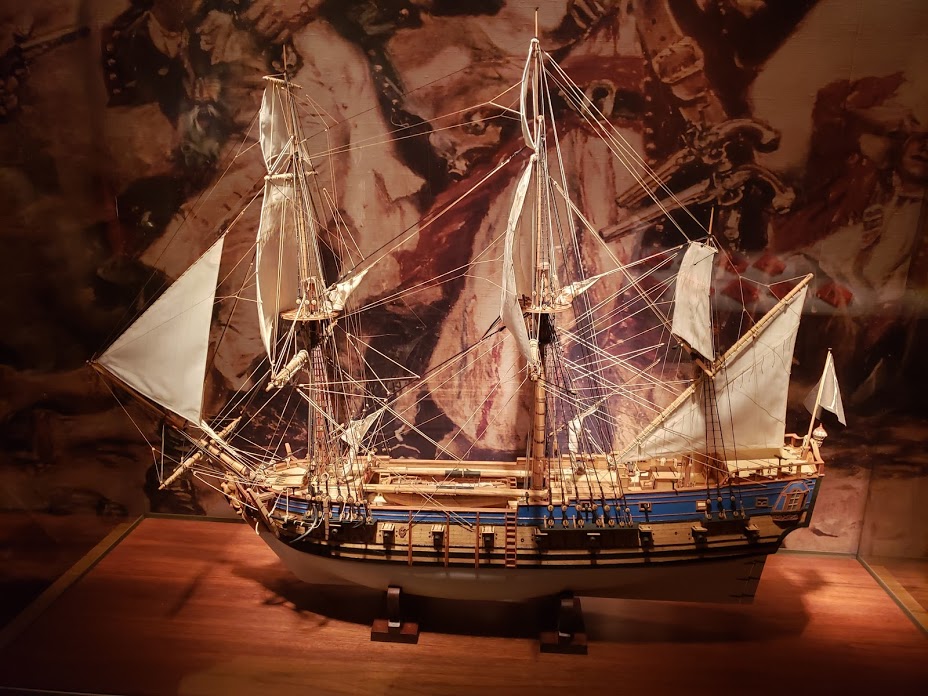 Model of the pirate ship Queen Anne's Revenge in the NC Museum of History. Qualiesin, CC BY-SA 4.0
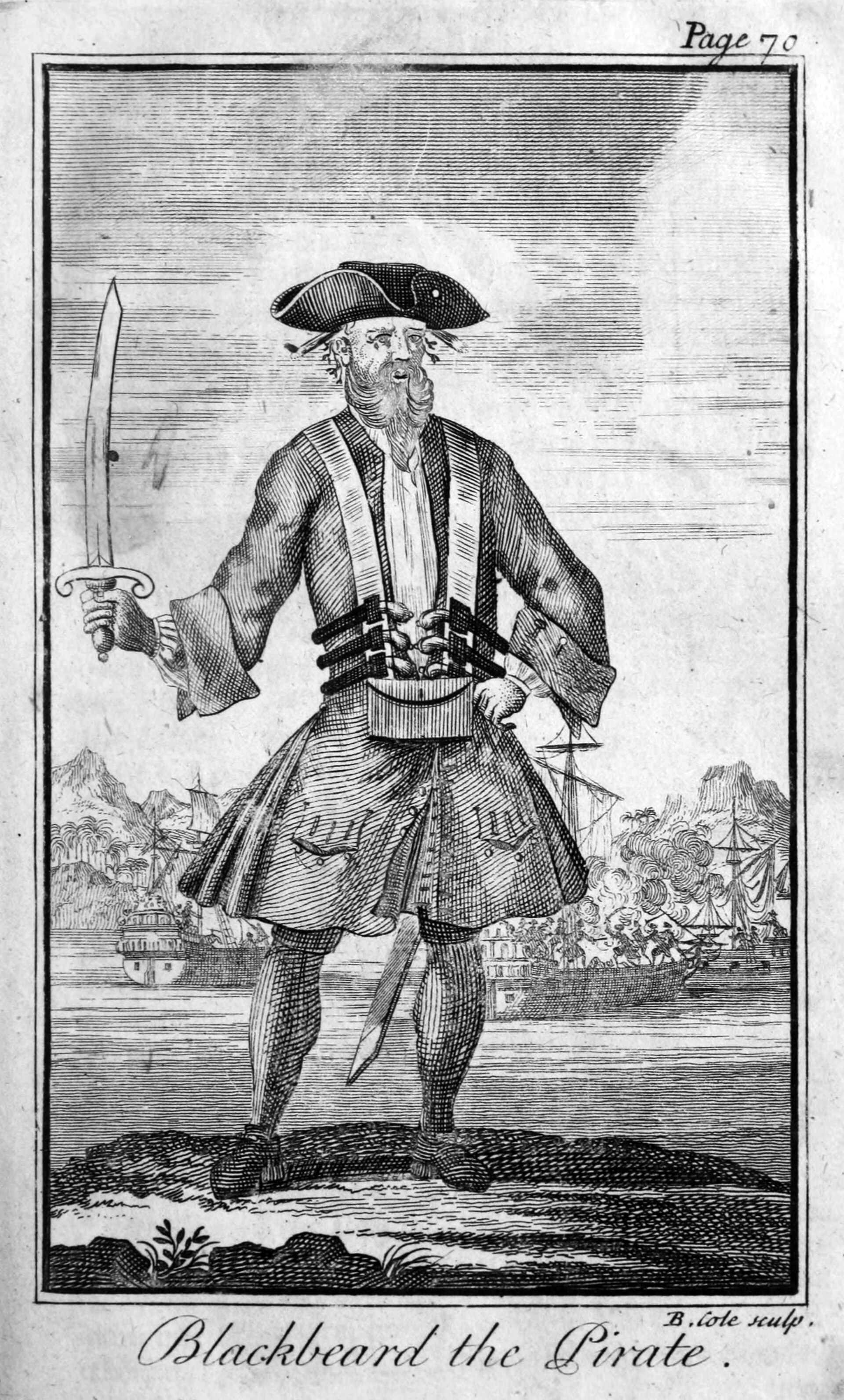 Blackbeard the Pirate Engraved by Benjamin Cole[1] (1695–1766), Public domain
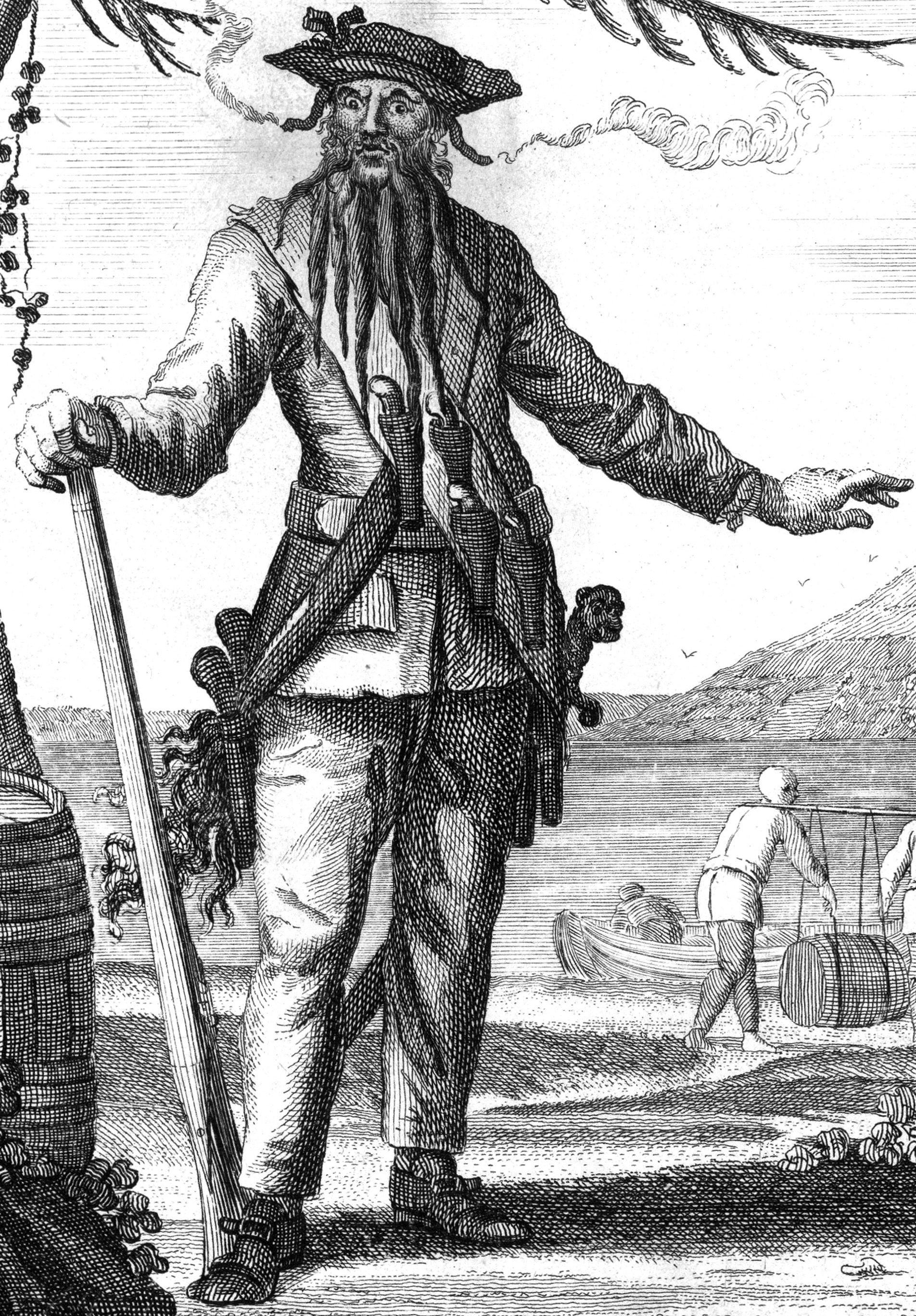 Blackbeard the Pirate: this was published in Defoe, Daniel; Johnson, Charles (1736 -... Joseph Nicholls (fl. 1726–55).[1] Although James Basire (1730–1802) is attributed as the engraver based on the signature, Public domain
Relics and treasures
- Cannonsover 30 cannons raised from the wreck, at the North Carolina Maritime Museum and conservation lab
- Anchorslarge iron anchors, in North Carolina museums
- Medical toolsa urethral syringe and other tools, at the North Carolina Maritime Museum
- Gold dusttiny gold flakes found in the wreck, at the North Carolina Maritime Museum
How we know
Letters, trial records and reports from 1718 describe the wreck. Archaeologists matched the bell, dated 1709, and the cannons to the right time. Divers mapped the site and raised objects for conservation.
What you would see today
The wreck was found in 1996 by a private research company. North Carolina's archaeologists have raised most of it. Visitors can see cannons, an anchor and other finds at the North Carolina Maritime Museum in Beaufort.
For teachers and classrooms
Suggested level: grades 3-5. Print this page as a lesson sheet with the story, vocabulary, discussion questions and a quiz with an answer key.
Key words
- flagship
- the main ship of a group, carrying the leader
- blockade
- blocking a port so ships cannot come or go
- conservation
- cleaning and protecting objects so they last
Talk about it
- Why do you think pirates became famous characters in stories?
- Why do objects from the sea need special cleaning before they go in museums?
Try this activity
- Draw a map of Queen Anne's Revenge as it looked at its busiest, and label three things people did there.
- Find Queen Anne's Revenge on the Ruinscape timeline, then pick another place from the same century and compare them.
- Use one link in Sources below to find a real object from this place. Describe what it is made of and what it tells us.
Quick quiz
Which pirate sailed Queen Anne's Revenge?
- Blackbeard
- Captain Hook
- Long John Silver
- Redbeard
Show the answer
A. It was Blackbeard's flagship.
What did Blackbeard demand at Charleston?
- A chest of medicine
- A crown
- A horse
- A map
Show the answer
A. He demanded medicine before releasing hostages.
When was the wreck found?
- 1996
- 1718
- 1066
- 2020
Show the answer
A. It was discovered in 1996.
Sources and further reading
Ruinscape lessons are written for students and checked against encyclopedia and museum records. Go to the sources: these links search real museum collections, the UNESCO list and research by archaeologists.
- Wikipedia articleEncyclopedia overview with its own references
- UNESCO World HeritageOfficial listing, if the site is protected
- Google Arts & CultureMuseum exhibits, virtual tours and close-up photos
- British Museum collectionReal objects, photos and catalog notes
- The Met collectionObjects and essays from the Metropolitan Museum of Art
- Smithsonian collectionsU.S. national museum records
- 3D models on SketchfabScans of sites and artifacts (check each license)
- Scholarly articlesResearch papers by archaeologists and historians
Read the full background
Queen Anne's Revenge was an early-18th-century ship, most famously used as a flagship by Edward Teach, better known as Blackbeard. The date and place of the ship's construction are uncertain, and there is no record of her actions prior to 1710 when she was operating as a French privateer as La Concorde. Surviving features of the ship's construction strongly suggest she was built by French shipwrights, based on differences in fastening patterns in the late 17th and early 18th centuries. After several years of French service, both as a naval frigate and as a merchant vessel – much of that time as a slave ship – she was captured by Blackbeard in 1717. Blackbeard used the ship for less than a year, but captured numerous prizes using her as his flagship.
In May 1718, Blackbeard ran the ship aground at Topsail Inlet, now known as Beaufort Inlet, in present-day Carteret County. After the grounding, her crew and supplies were transferred to smaller ships. In 1996, Intersal Inc., a private firm, discovered the remains of a vessel that was later determined to be Queen Anne's Revenge, which was added to the U.S. National Register of Historic Places.
Background text from Wikipedia, available under CC BY-SA 4.0.
Last updated: October 2026. How we make Ruinscape.