The story
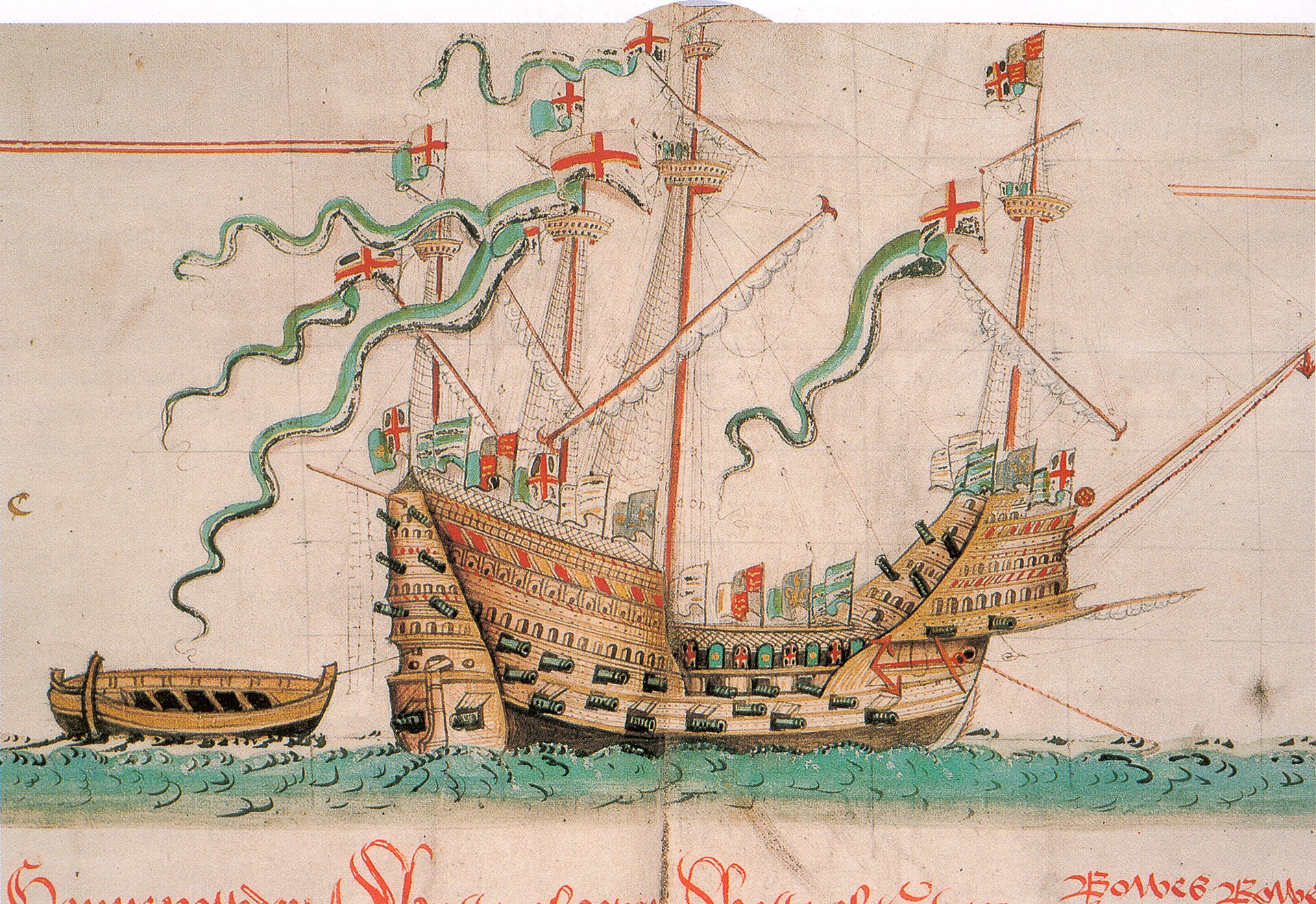
The Mary Rose was built in 1510 for King Henry VIII. It was one of the first English ships able to fire big guns through ports in its side, and it served in the navy for 34 years.
In July 1545, a French fleet attacked near Portsmouth. As the Mary Rose turned, it heeled over, water rushed into its open gunports, and it sank fast. Of about 500 men aboard, fewer than 35 survived. Henry VIII watched from shore.
The wreck settled into soft mud, which preserved one side of the ship and everything on it. In 1982, after years of work, the hull was lifted from the sea, watched live on TV by millions of people.
How it went under
The Mary Rose sank in battle in 1545. Some salvage was attempted soon after, but it failed. The ship was forgotten in the mud, and much of the exposed part wore away until it was found again.
What life was like
Life aboard was crowded. Sailors ate salted beef, fish and biscuits, and drank beer. Archers trained with longbows, and skeletons show strong shoulders from years of pulling them. Divers found combs, dice, musical instruments, a surgeon's chest and the bones of the ship's dog, now nicknamed Hatch.
Wow facts
- The ship's dog, a terrier nicknamed Hatch, was found near the carpenter's cabin.
- More than 170 longbows and thousands of arrows were recovered.
- The raising in 1982 was watched on TV by about 60 million people.
Photos
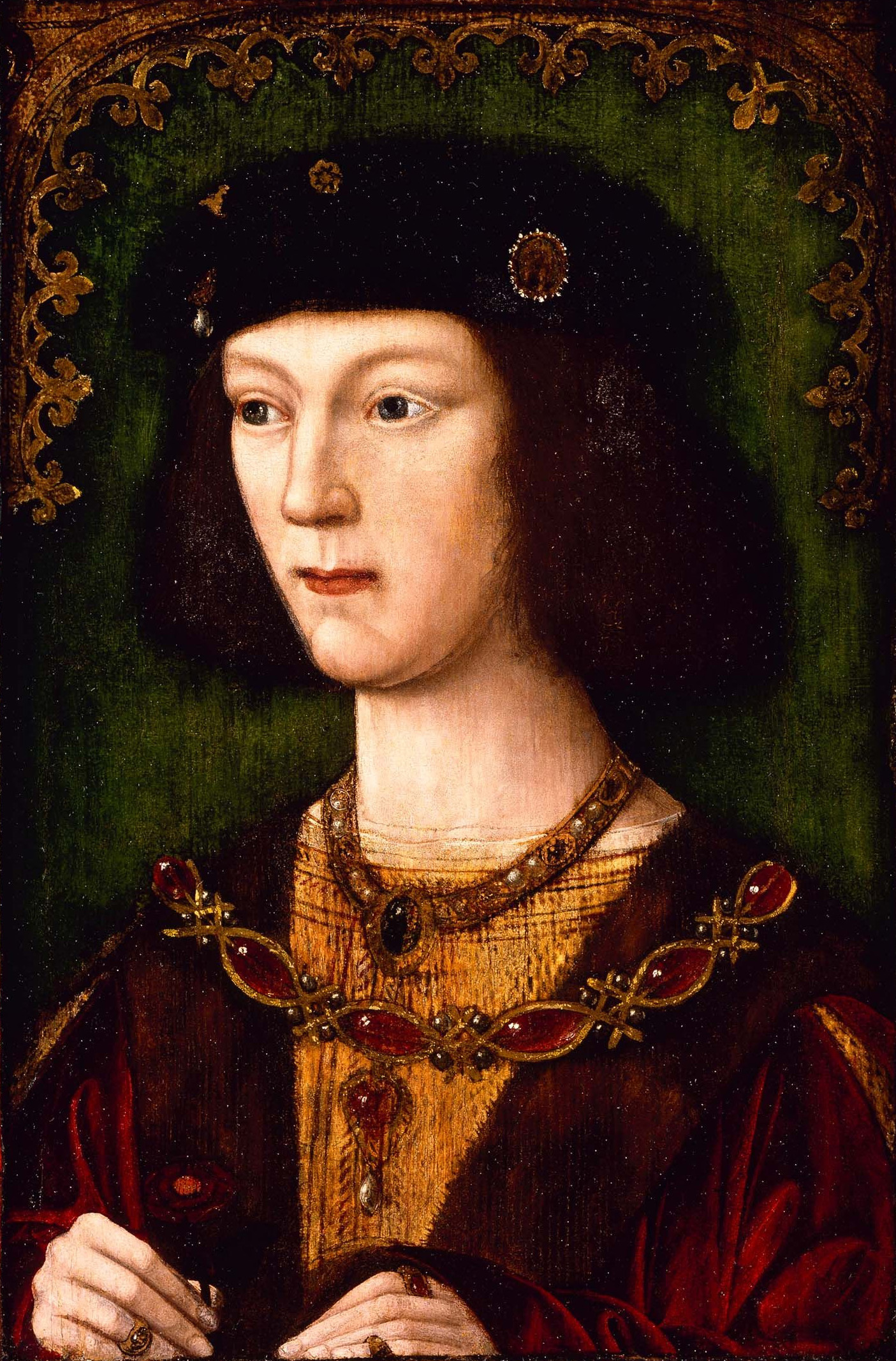 Portrait of Henry VIII of England (1491-1547), reigned 1509-1547. Attributed to Meynnart Wewyck, Public domain
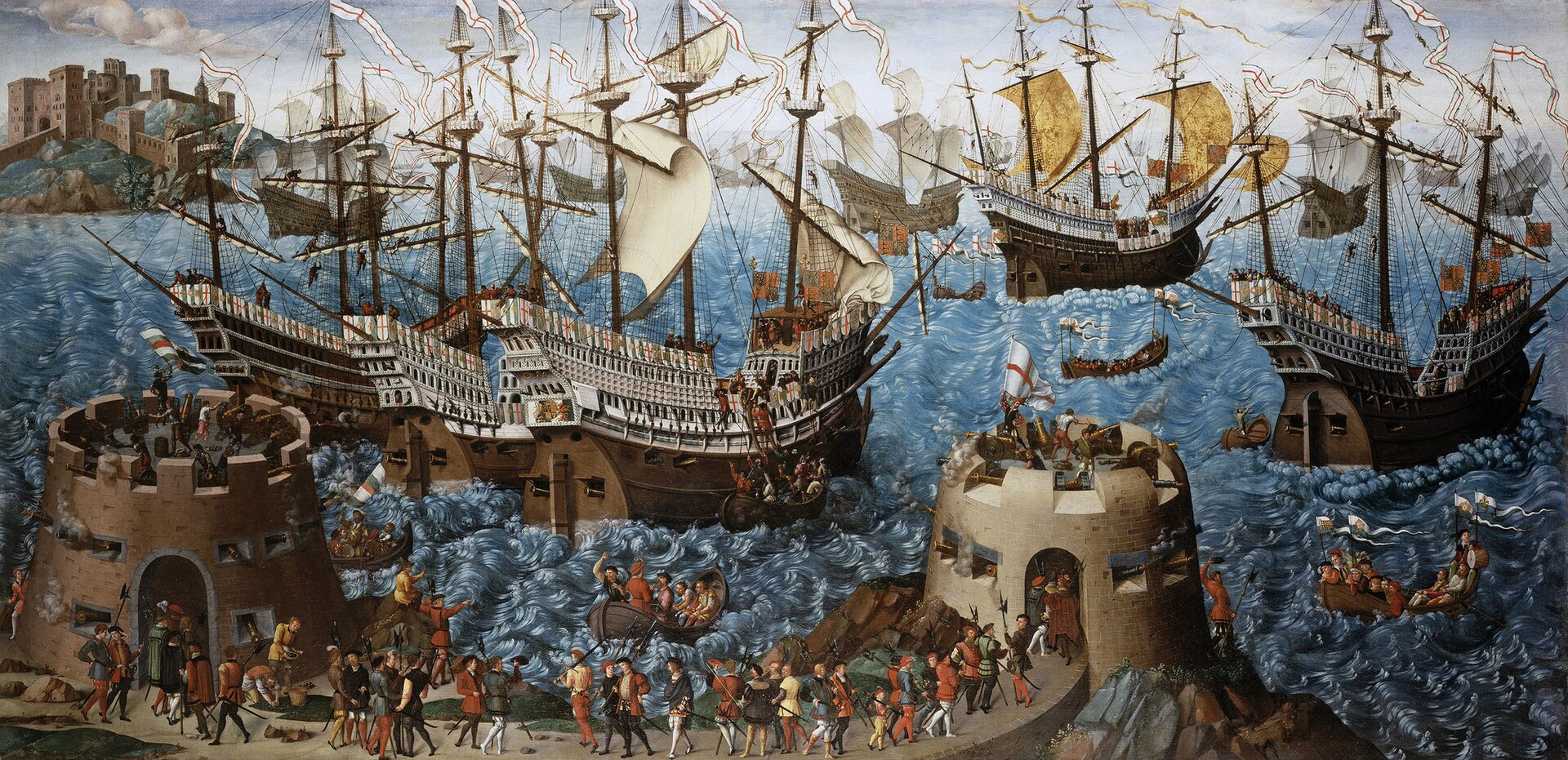 The Embarkation of Henry VIII at Dover c. 1520-40. Downloaded directly from the Royal... Unknown artist, Public domain
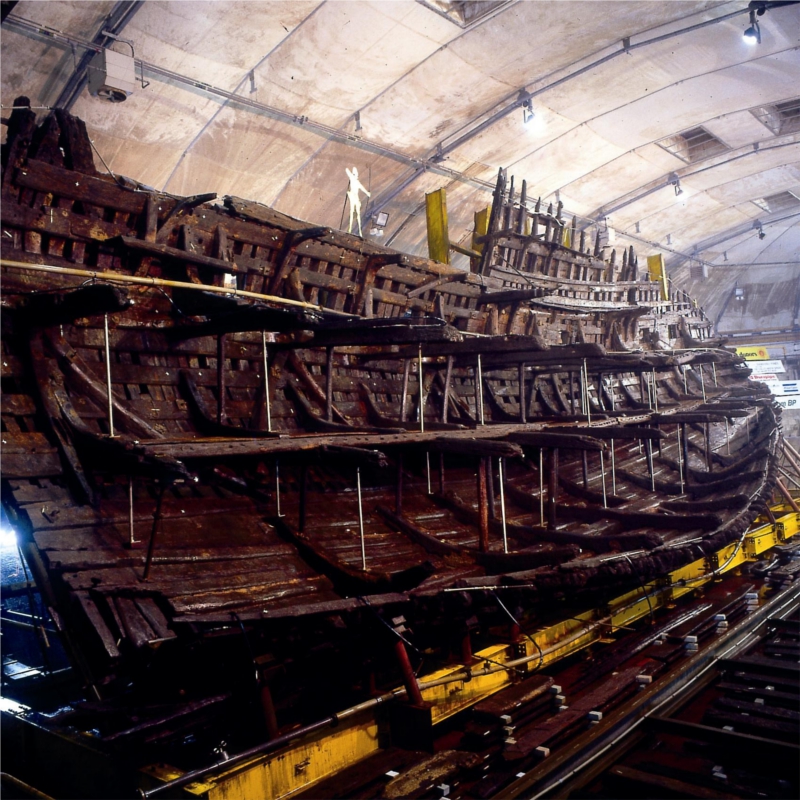 The Tudor period carrack Mary Rose in its specially designed building at the Historic... Mary Rose Trust, CC BY-SA 3.0
Relics and treasures
- The hullthe preserved side of the ship, in the Mary Rose Museum
- Longbows and arrowsTudor archery weapons, in the Mary Rose Museum
- Hatch the dogthe skeleton of the ship's dog, in the Mary Rose Museum
- Barber-surgeon's chestmedical tools, in the Mary Rose Museum
How we know
Letters from 1545 describe the sinking. Divers led by Alexander McKee searched from 1965 and found the wreck in 1971. Margaret Rule led the excavation, and scientists studied bones, DNA and objects.
What you would see today
The Mary Rose Museum in Portsmouth Historic Dockyard shows the ship's hull with its objects displayed right next to where they were found. Visitors can see Hatch's skeleton and the crew's belongings.
For teachers and classrooms
Suggested level: grades 3-5. Print this page as a lesson sheet with the story, vocabulary, discussion questions and a quiz with an answer key.
Key words
- hull
- the main body of a ship
- longbow
- a tall, powerful bow used by English archers
- Tudor
- the royal family that ruled England from 1485 to 1603
Talk about it
- What can everyday objects like combs and dice tell us about sailors' lives?
- Why do you think millions of people watched the raising?
Try this activity
- Draw a map of Mary Rose as it looked at its busiest, and label three things people did there.
- Find Mary Rose on the Ruinscape timeline, then pick another place from the same century and compare them.
- Use one link in Sources below to find a real object from this place. Describe what it is made of and what it tells us.
Quick quiz
Which king's ship was the Mary Rose?
- Henry VIII
- William the Conqueror
- Charles I
- Richard III
Show the answer
A. It was built for Henry VIII in 1510.
What animal was found aboard?
- A dog
- A parrot
- A monkey
- A horse
Show the answer
A. The skeleton of the ship's dog, nicknamed Hatch, was found.
When was the Mary Rose raised?
- 1982
- 1545
- 1900
- 2015
Show the answer
A. The hull was lifted in 1982.
Sources and further reading
Ruinscape lessons are written for students and checked against encyclopedia and museum records. Go to the sources: these links search real museum collections, the UNESCO list and research by archaeologists.
- Wikipedia articleEncyclopedia overview with its own references
- UNESCO World HeritageOfficial listing, if the site is protected
- Google Arts & CultureMuseum exhibits, virtual tours and close-up photos
- British Museum collectionReal objects, photos and catalog notes
- The Met collectionObjects and essays from the Metropolitan Museum of Art
- Smithsonian collectionsU.S. national museum records
- 3D models on SketchfabScans of sites and artifacts (check each license)
- Scholarly articlesResearch papers by archaeologists and historians
Read the full background
The Mary Rose was a carrack in the English Tudor navy of King Henry VIII. She was launched in 1511 and served for 34 years in several wars against France, Scotland, and Brittany. After being substantially rebuilt in 1536, she saw her last action on 19 July 1545. She led the attack on the galleys of a French invasion fleet, but sank off Spithead in the Solent, the strait north of the Isle of Wight.
The wreck of the Mary Rose was located in 1971 and was raised on 11 October 1982 by the Mary Rose Trust in one of the most complex and expensive maritime salvage projects in history. The surviving section of the ship and thousands of recovered artefacts are of significance as a Tudor period time capsule. The excavation and raising of the Mary Rose was a milestone in the field of maritime archaeology, comparable in complexity and cost to the raising of the 17th-century Swedish warship Vasa in 1961. The Mary Rose site is designated under the Protection of Wrecks Act 1973 by statutory instrument 1974/55. The wreck is a Protected Wreck managed by Historic England.
The finds include weapons, sailing equipment, naval supplies, and a wide array of objects used by the crew. Many of the artefacts are unique to the Mary Rose and have provided insights into topics ranging from naval warfare to the history of musical instruments. The remains of the hull have been on display at the Portsmouth Historic Dockyard since the mid-1980s while undergoing restoration. An extensive collection of well-preserved artefacts is on display at the Mary Rose Museum, built to display the remains of the ship and her artefacts.
Mary Rose was one of the largest ships in the English navy through more than three decades of intermittent war, and she was one of the earliest examples of a purpose-built sailing warship. She was armed with new types of heavy guns that could fire through the recently invented gun-ports. She was substantially rebuilt in 1536 and was also one of the earliest ships that could fire a broadside, although the line of battle tactics had not yet been developed. Several theories have sought to explain the demise of the Mary Rose, based on historical records, knowledge of 16th-century shipbuilding, and modern experiments. The precise cause of her sinking is subject to conflicting testimonies and a lack of conclusive evidence.
Background text from Wikipedia, available under CC BY-SA 4.0.
Last updated: October 2026. How we make Ruinscape.