No. 69
Sutton Hoo

- Where
- England
- Built by
- Anglo-Saxons
- Era
- 625 CE
- Known for
- A king buried in a 90-foot ship with his treasure.
- How it ended
- Sealed as a grave and found in 1939.

Lyra Kael can take you here on the globe, tell you the story out loud and answer your questions. Start the time jump.
Background
Sutton Hoo is the site of two Anglo-Saxon cemeteries dating from the 6th to 7th centuries near Woodbridge, Suffolk, England. Archaeologists have excavated the site since the discovery of a previously undisturbed ship burial containing a wealth of artifacts in 1938. Sutton Hoo illuminates the culture of the Anglo-Saxons during a period that lacks historical documentation.
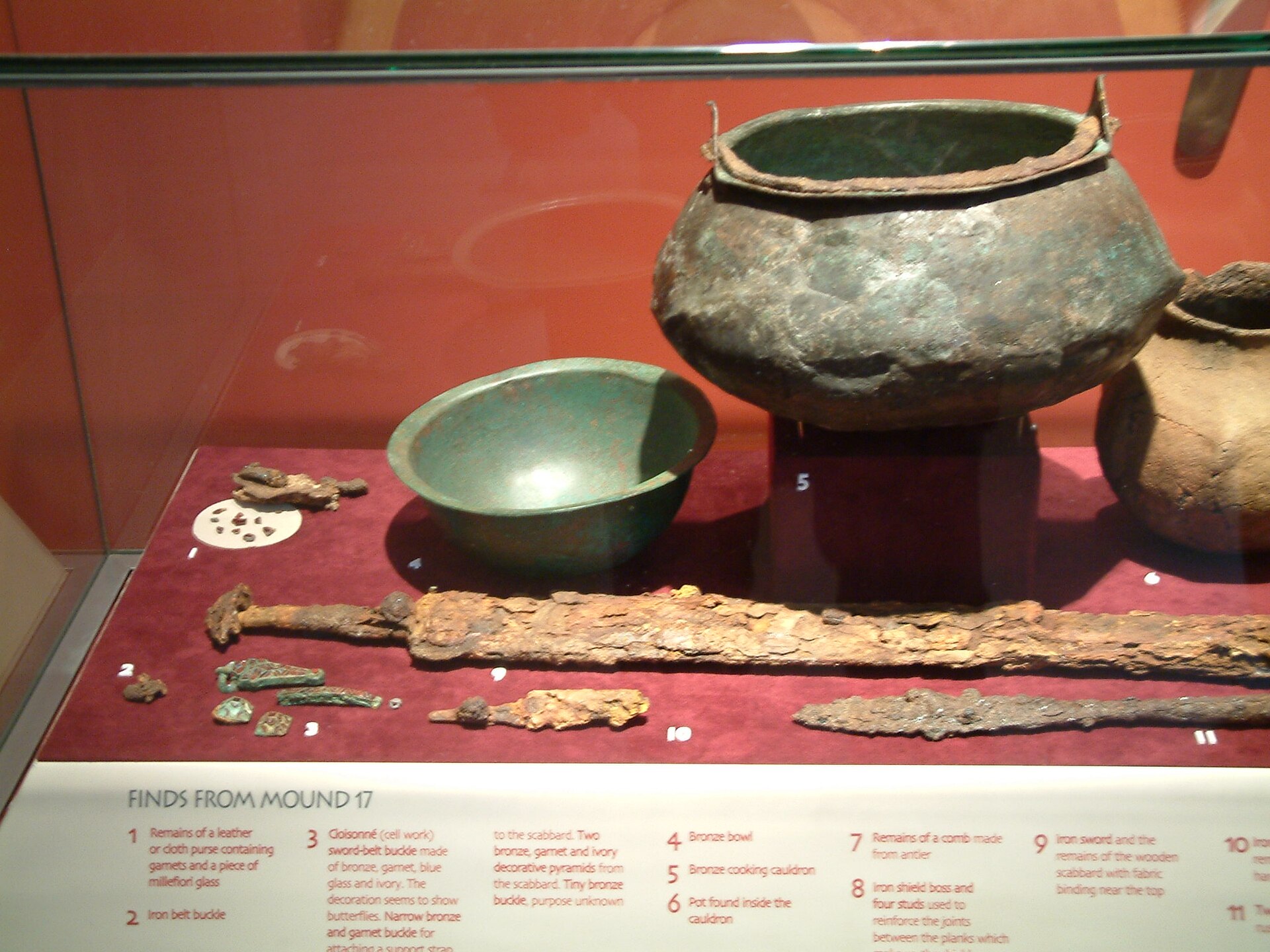
The site was first excavated by Basil Brown, a self-taught archaeologist, under the auspices of the landowner Edith Pretty. When its importance became apparent, national scholars took over. The artefacts found in the ship's burial chamber included a suite of dress fittings in gold and gems, a ceremonial helmet, a shield, a sword, a lyre, and silver plate from the Eastern Roman Empire. The ship burial has prompted comparisons with the world of the Old English poem Beowulf, which is in part set in Götaland in southern Sweden, a place that has archaeological parallels with some of the Sutton Hoo artefacts. Scholars believe that Rædwald, the first king of the East Angles who was an actual historical figure, is the most likely person to have been buried in the ship.
During the 1960s and 1980s, the wider area around the ship burial at Sutton Hoo was explored by archaeologists, and other burials were revealed. A second burial ground, situated on a hill-spur about 500 m (1,600 ft) upstream of the first mound, was discovered and partially explored in 2000, during preliminary work for the construction of a new tourist visitor centre. The tops of the mounds had been obliterated by agricultural activity.
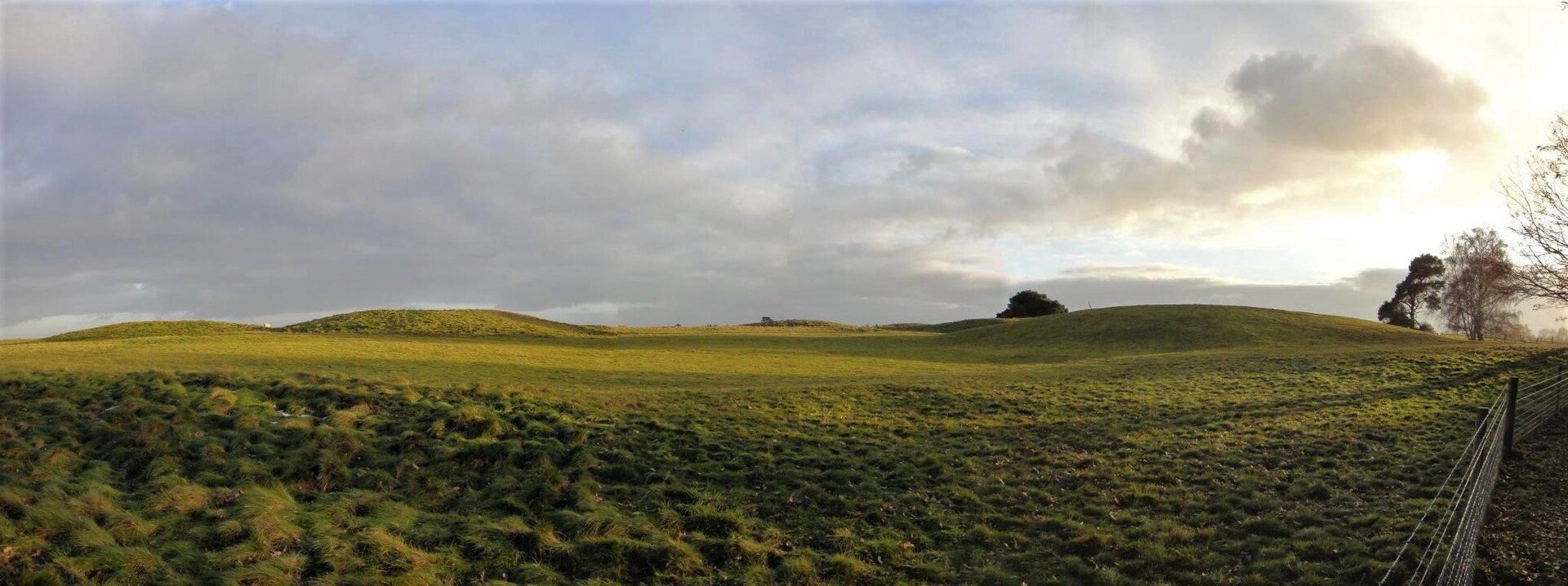
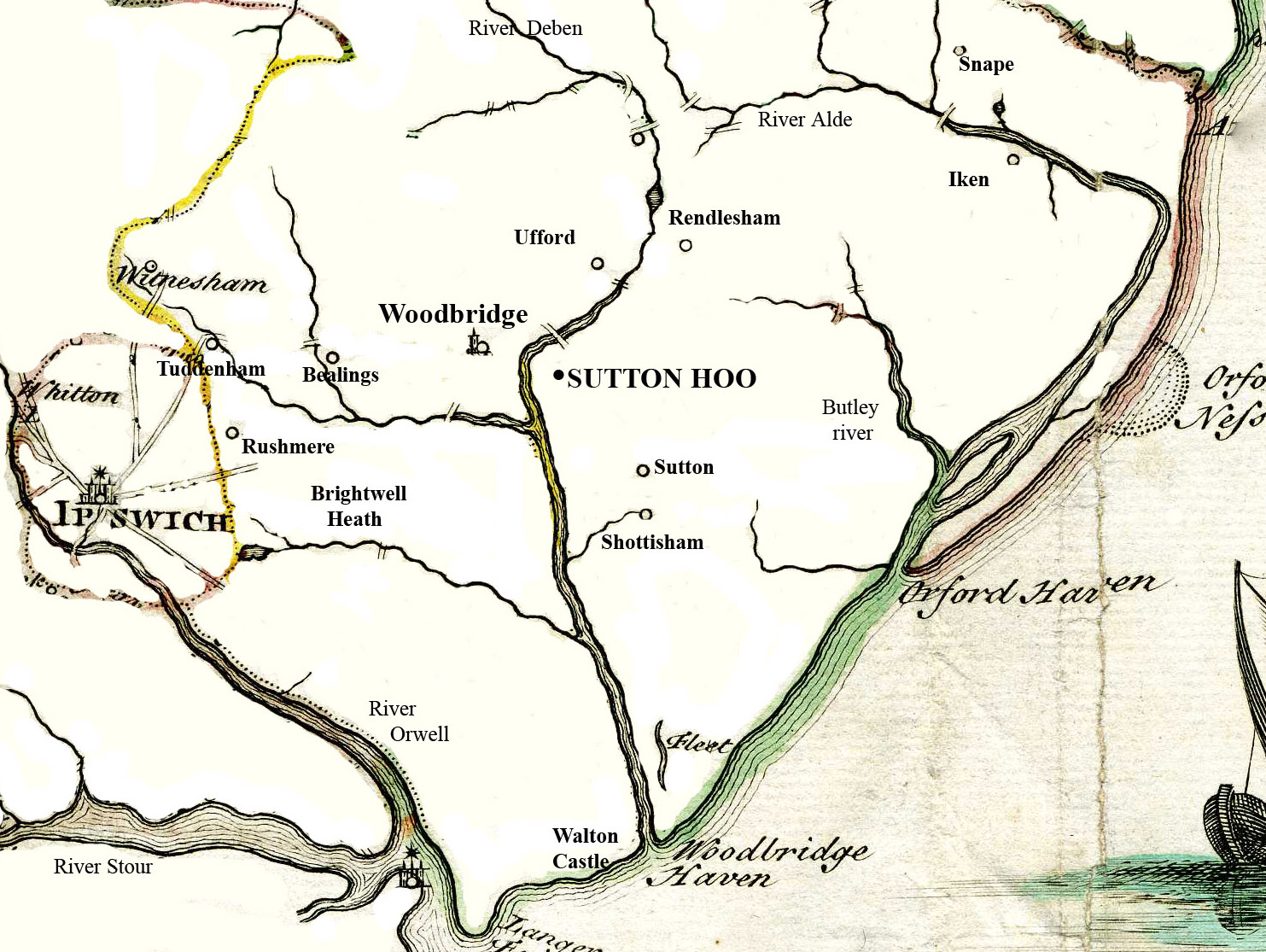
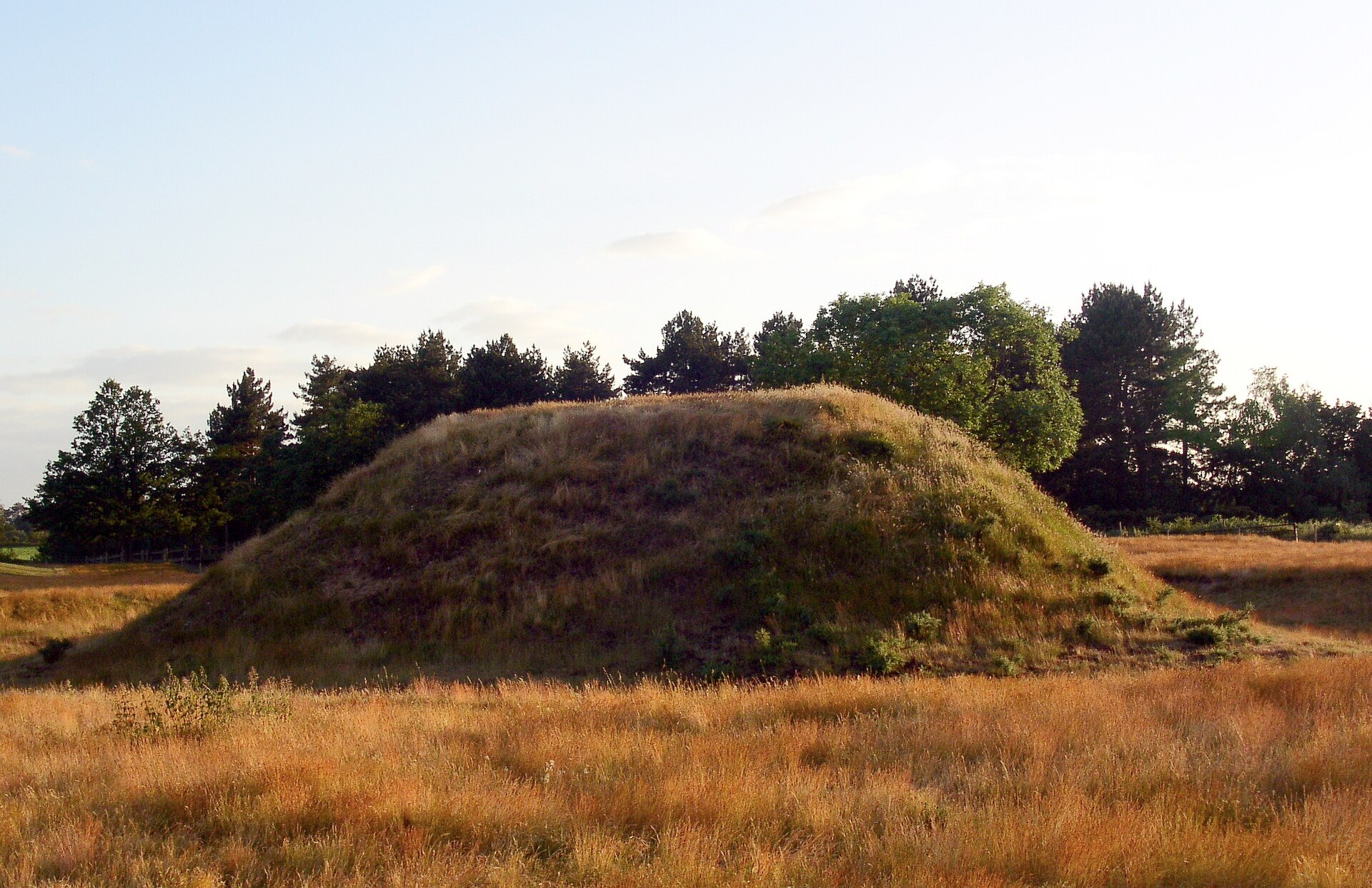
The cemeteries at Sutton Hoo are located close to the estuary of the River Deben, and are in the vicinity of other archaeological sites. They appear as a group of approximately 20 earthen mounds that rise slightly above the horizon of the hill-spur when viewed from the opposite bank. The visitor centre contains original artefacts, replicas of finds and a reconstruction of the ship burial chamber. The site is in the care of the National Trust; most of the objects found there are held by the British Museum.
Text from Wikipedia, licensed CC BY-SA 4.0.