The story
Kilwa Kisiwani grew into one of the richest towns on the Swahili Coast of East Africa between about 1000 and 1500 CE. Swahili culture mixed African traditions with ideas from Arabia, Persia and India, all connected by the Indian Ocean.
Kilwa's rulers controlled the trade in gold that came from Great Zimbabwe and the inland, along with ivory. Ships sailed with the monsoon winds to Arabia, India and even China. Kilwa minted its own copper coins, and one of them was found as far away as northern Australia.
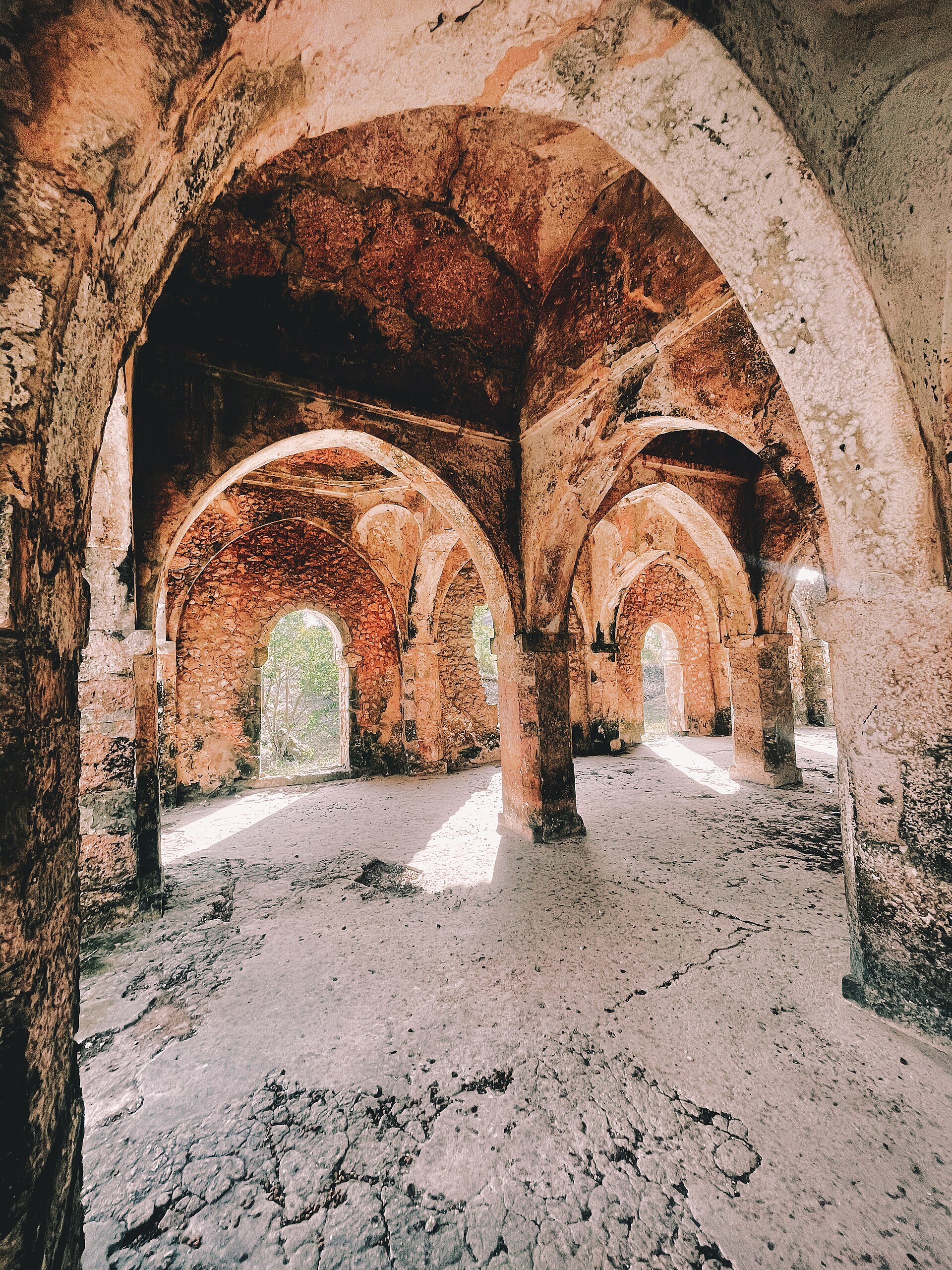
In 1331, the traveler Ibn Battuta visited and praised the city's beauty. Kilwa's builders used coral stone to make the Great Mosque and a huge palace called Husuni Kubwa, with more than 100 rooms and an eight-sided pool.
How it ended
In 1505, Portuguese ships attacked Kilwa and took over the gold trade. Trade routes shifted, and the town slowly lost its wealth and people. Its stone buildings were left to crumble beside the sea.
What life was like
Kilwa's merchants traded gold, ivory and iron for cloth, beads and Chinese porcelain. Many people farmed, fished and built ships. Swahili, the language of the coast, grew from Bantu languages and borrowed words from Arabic. Wealthy families lived in coral stone houses, while others lived in homes of wood and thatch.
Wow facts
- A Kilwa copper coin was found on an island off northern Australia.
- Husuni Kubwa palace had an eight-sided swimming pool.
- Chinese porcelain was so loved here that bowls were set into the walls and ceilings as decoration.
Photos
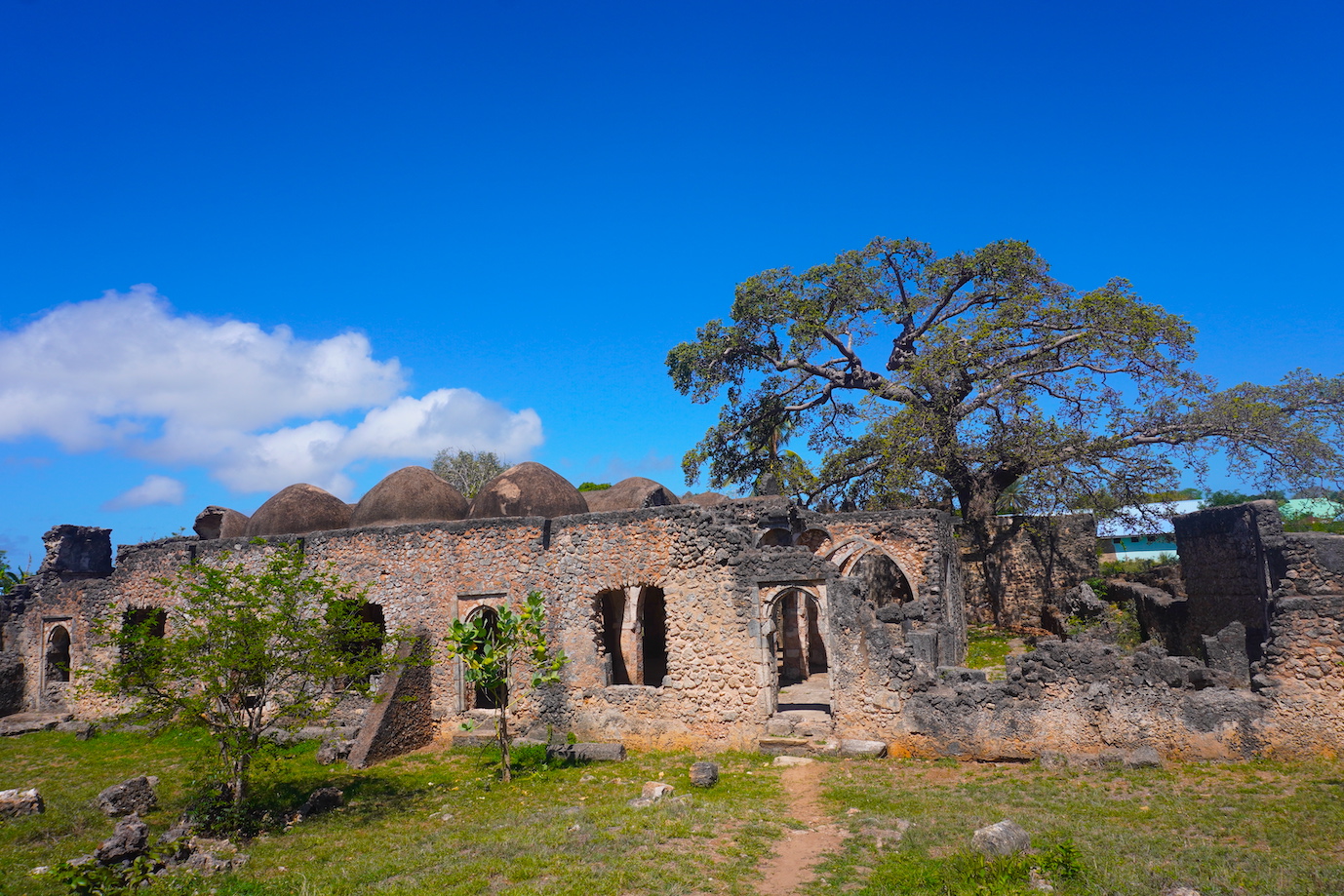 Kilwa Kisiwani ruins Tanzania CosMapi, CC BY-SA 4.0
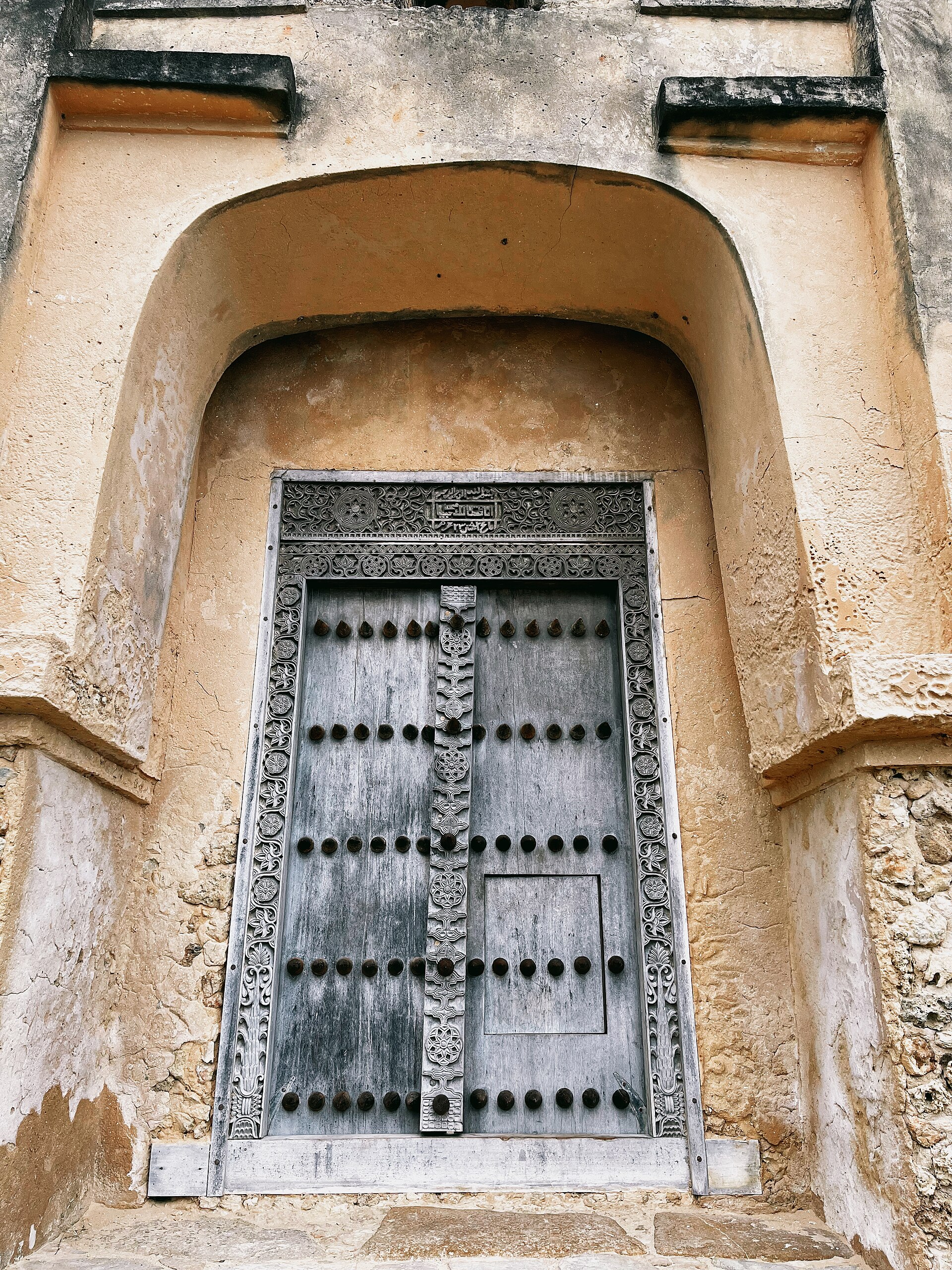 The replica of the Swahili Door of Gerezani, the original door is stored at the National... Khalidsalewa, CC BY-SA 4.0
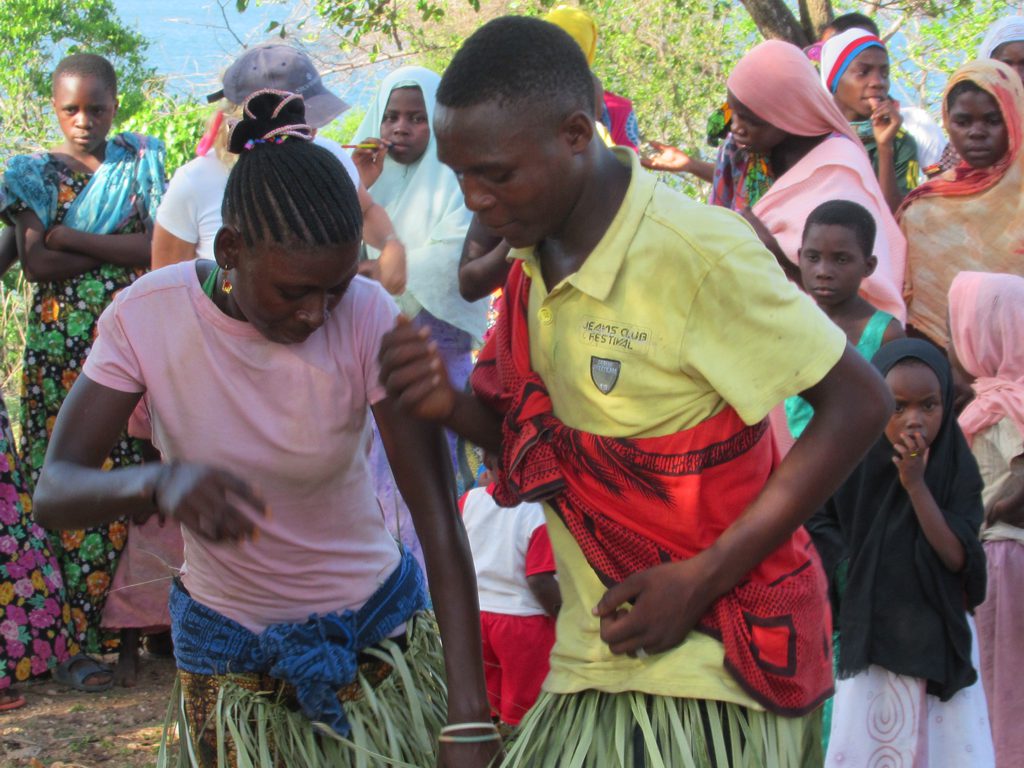 Residents of Kilwa Kisiwani Island, Tanzania, perform a dance for overseas visitors. David Stanley from Nanaimo, Canada, CC BY 2.0
Relics and treasures
- Great Mosque of Kilwaa coral stone mosque with domes and arches, still at the site
- Husuni Kubwathe clifftop palace with its eight-sided pool, still at the site
- Kilwa copper coinscoins made by Kilwa's sultans, in museums including the British Museum
- Chinese porcelain shardspieces of imported pottery, found across the site
How we know
Archaeologist Neville Chittick led big excavations in the 1950s and 1960s. The Kilwa Chronicle, a history written centuries ago, lists its sultans. Ibn Battuta's travel account describes the city, and coins and pottery show its trade links.
What you would see today
Visitors take a boat to the island to explore the Great Mosque, Husuni Kubwa palace and a Portuguese fort. The ruins are a UNESCO World Heritage Site, and people still live in a small village nearby.
For teachers and classrooms
Suggested level: grades 6-8. Print this page as a lesson sheet with the story, vocabulary, discussion questions and a quiz with an answer key.
Key words
- monsoon
- seasonal winds that change direction and help sailors cross the ocean
- Swahili
- the culture and language of the East African coast
- porcelain
- fine, hard pottery first made in China
Talk about it
- How do you think the monsoon winds helped Kilwa become rich?
- What do the objects found at Kilwa tell us about how connected the world was 700 years ago?
Try this activity
- Draw a map of Kilwa Kisiwani as it looked at its busiest, and label three things people did there.
- Find Kilwa Kisiwani on the Ruinscape timeline, then pick another place from the same century and compare them.
- Use one link in Sources below to find a real object from this place. Describe what it is made of and what it tells us.
Quick quiz
What was Kilwa's most valuable trade good?
- Gold
- Oil
- Coffee
- Tea
Show the answer
A. Kilwa controlled much of the gold trade of East Africa.
Which famous traveler visited Kilwa in 1331?
- Marco Polo
- Ibn Battuta
- Leif Erikson
- Zheng He
Show the answer
B. Ibn Battuta visited and praised the city.
What were Kilwa's big buildings made of?
- Coral stone
- Wood only
- Ice
- Steel
Show the answer
A. Builders used coral stone from the coast.
Sources and further reading
Ruinscape lessons are written for students and checked against encyclopedia and museum records. Go to the sources: these links search real museum collections, the UNESCO list and research by archaeologists.
- Wikipedia articleEncyclopedia overview with its own references
- UNESCO World HeritageOfficial listing, if the site is protected
- Google Arts & CultureMuseum exhibits, virtual tours and close-up photos
- British Museum collectionReal objects, photos and catalog notes
- The Met collectionObjects and essays from the Metropolitan Museum of Art
- Smithsonian collectionsU.S. national museum records
- 3D models on SketchfabScans of sites and artifacts (check each license)
- Scholarly articlesResearch papers by archaeologists and historians
Read the full background
Kilwa Kisiwani ('Kilwa Island') is an island, national historic site, and hamlet community located in the township of Kilwa Masoko, the district seat of Kilwa District in the Tanzanian region of Lindi in southern Tanzania. Kilwa Kisiwani is the largest of the nine hamlets in the town of Kilwa Masoko and is also the least populated hamlet in the township with around 1,150 residents.
Historically, it was the center of the Kilwa Sultanate, a medieval Swahili sultanate whose authority at its height in the 13th, 14th and 15th centuries stretched the entire length of the Swahili Coast. At its peak in the Middle Ages, Kilwa had over 10,000 inhabitants. Since 1981, the entire island of Kilwa Kisiwani has been designated by UNESCO as a World Heritage Site along with the nearby ruins of Songo Mnara. Apart from its significant historical reputation, Kilwa Kisiwani is still home to a small and resilient community of natives who have inhabited the island for centuries. Kilwa Kisiwani is one of the seven World Heritage Sites in Tanzania. Additionally, the site is a registered National Historic Site of Tanzania.
Background text from Wikipedia, available under CC BY-SA 4.0.
Last updated: October 2026. How we make Ruinscape.