No. 205
Mapungubwe

- Where
- South Africa
- Built by
- Kingdom of Mapungubwe
- Era
- 1075-1220 CE
- Known for
- The golden rhinoceros.
- How it ended
- Abandoned around 1300 as the climate dried; power shifted to Great Zimbabwe.

Lyra Kael can take you here on the globe, tell you the story out loud and answer your questions. Start the time jump.
Background
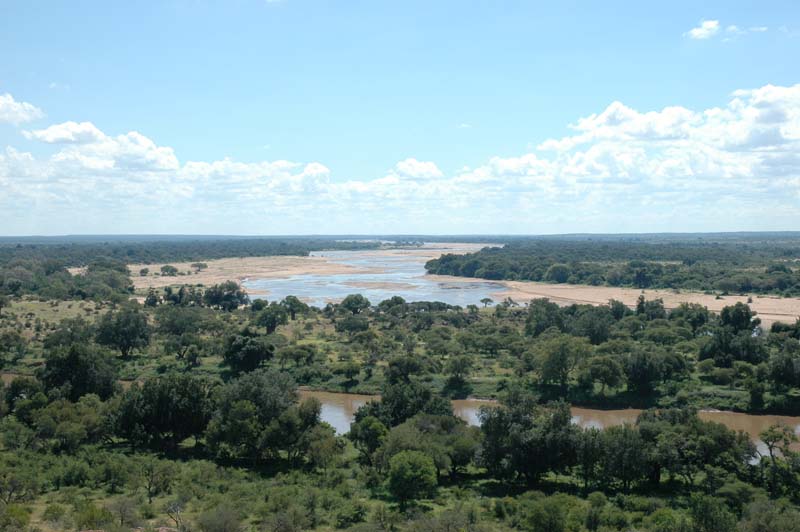
The Kingdom of Mapungubwe (pronounced mah-POON-goob-weh) was an ancient state located at the confluence of the Shashe and Limpopo rivers in present day South Africa, south of Great Zimbabwe. The capital's population was 5,000 by 1250, and the state likely covered 30,000 km2 (12,000 sq mi).
Around 1000 CE, some Leopard's Kopje people moved across the Limpopo to Bambandyanalo where they practiced agropastoralism, moving large cattle herds to other communities' grazing land which fostered socio-political relations, while also engaging in the Indian Ocean trade via Swahili city-states on the East African coast. Over the centuries, increased wealth among the growing population produced inequalities for which Bambandyanalo's spatial arrangement was unsuited.
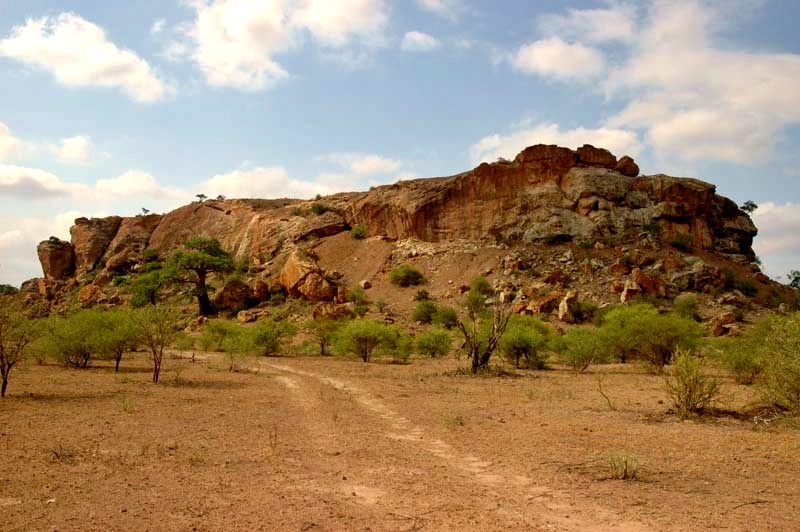
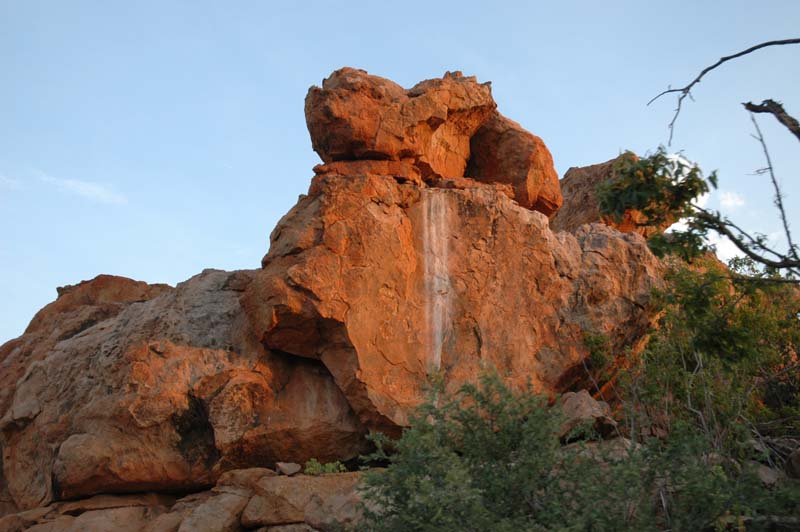
Around 1220, amid a dry period, the Mapungubwe elite moved to settle the top of Mapungubwe Hill, followed by the population who settled the surrounding land below. Hills often served as rainmaking sites, and Mapungubwe Hill became the sole such site; its habitation by the leader was substantial in the development of sacred kingship. A large amount of wealth was accumulated via tributes, facilitated by the Limpopo-Shashe confluence being a trade centre, and ivory and gold was exported to the east coast. Following unknown events and shifting trade routes north around 1300, Mapungubwe's population migrated elsewhere. In the present day they are often associated with the Kalanga (Shona) and Venda peoples.
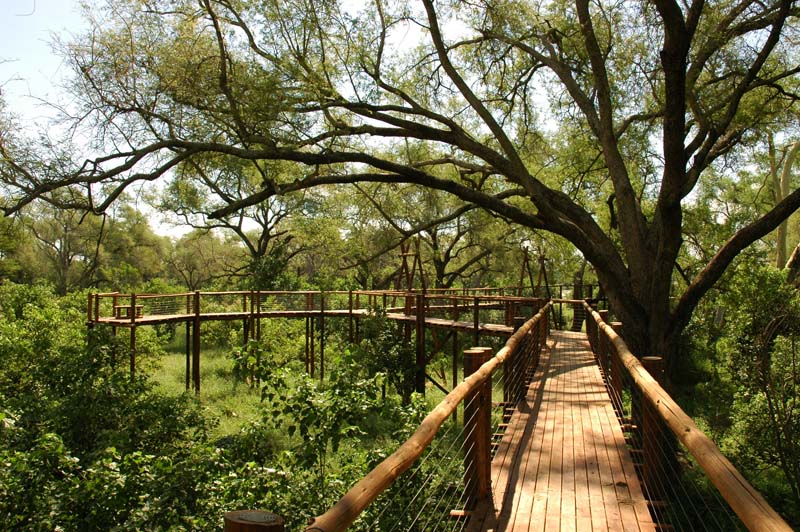
Despite locals having knowledge of the sacred site, Mapungubwe was only rediscovered by the scientific community and colonial government in 1933. The Mapungubwe Collection of artefacts found at the archaeological site is housed in the Mapungubwe Museum in Pretoria. The site is located in the Mapungubwe National Park in South Africa, on the border with Zimbabwe and Botswana. Although traditionally assumed to have been the first state in Southern Africa, excavations in the same region at Mapela Hill show evidence for sacral kingship nearly 200 years earlier.
Text from Wikipedia, licensed CC BY-SA 4.0.