No. 14
Great Zimbabwe

- Where
- Zimbabwe
- Built by
- Ancestors of the Shona
- Era
- 1100-1450 CE
- Known for
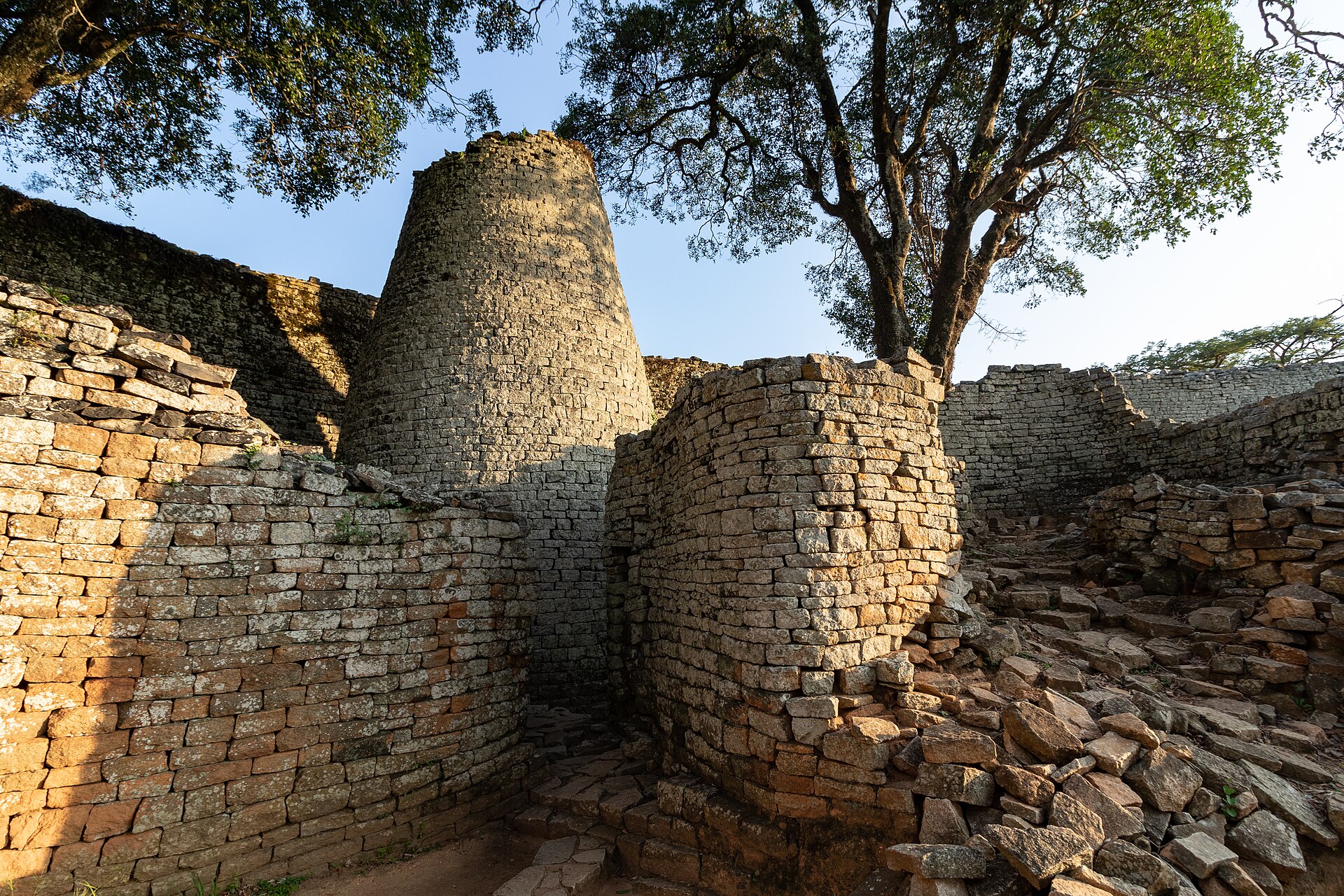
- Stone walls 36 feet high built without mortar.
- How it ended
- Abandoned around 1450, likely from overgrazing and a shift in the gold trade.

Lyra Kael can take you here on the globe, tell you the story out loud and answer your questions. Start the time jump.
Background
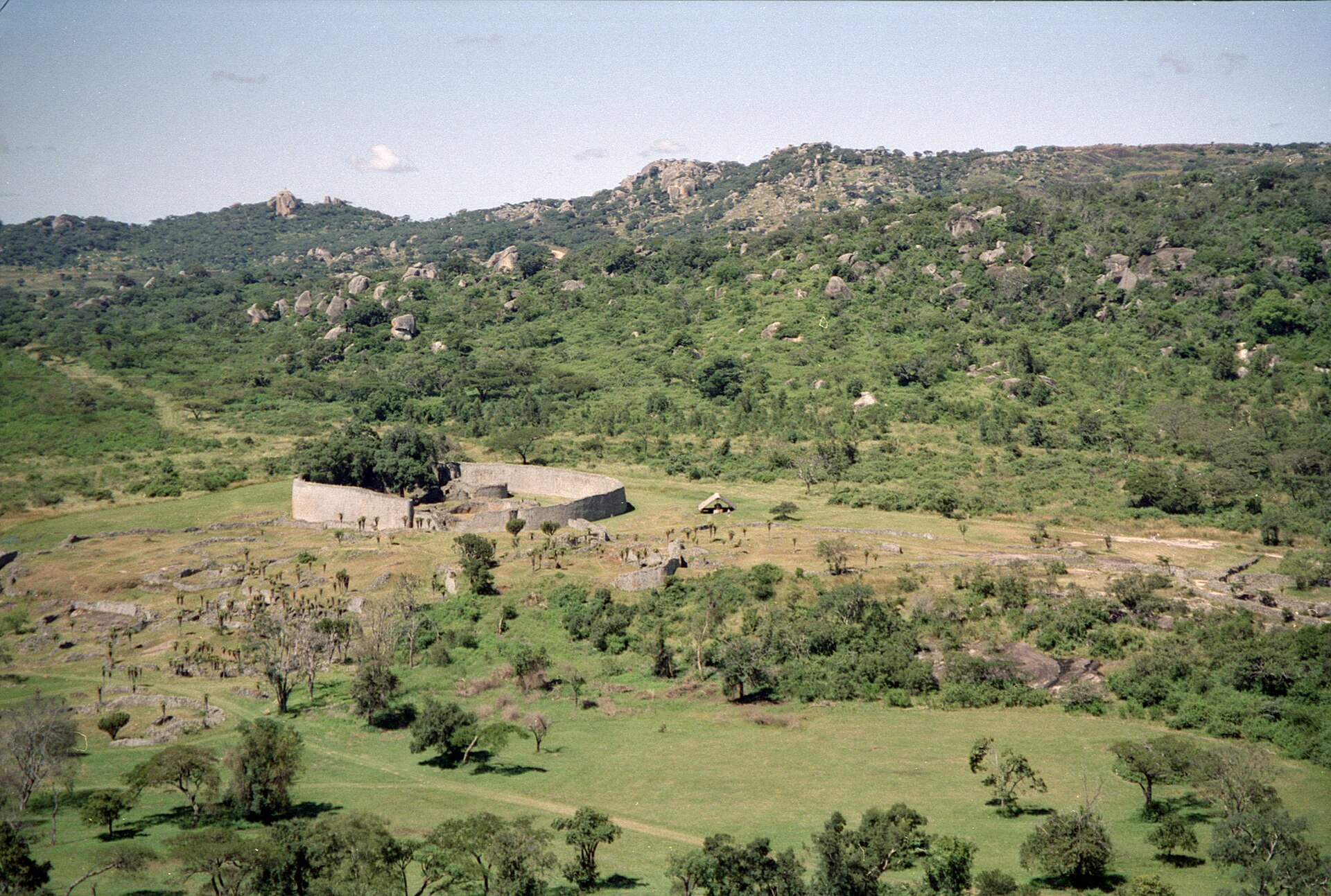
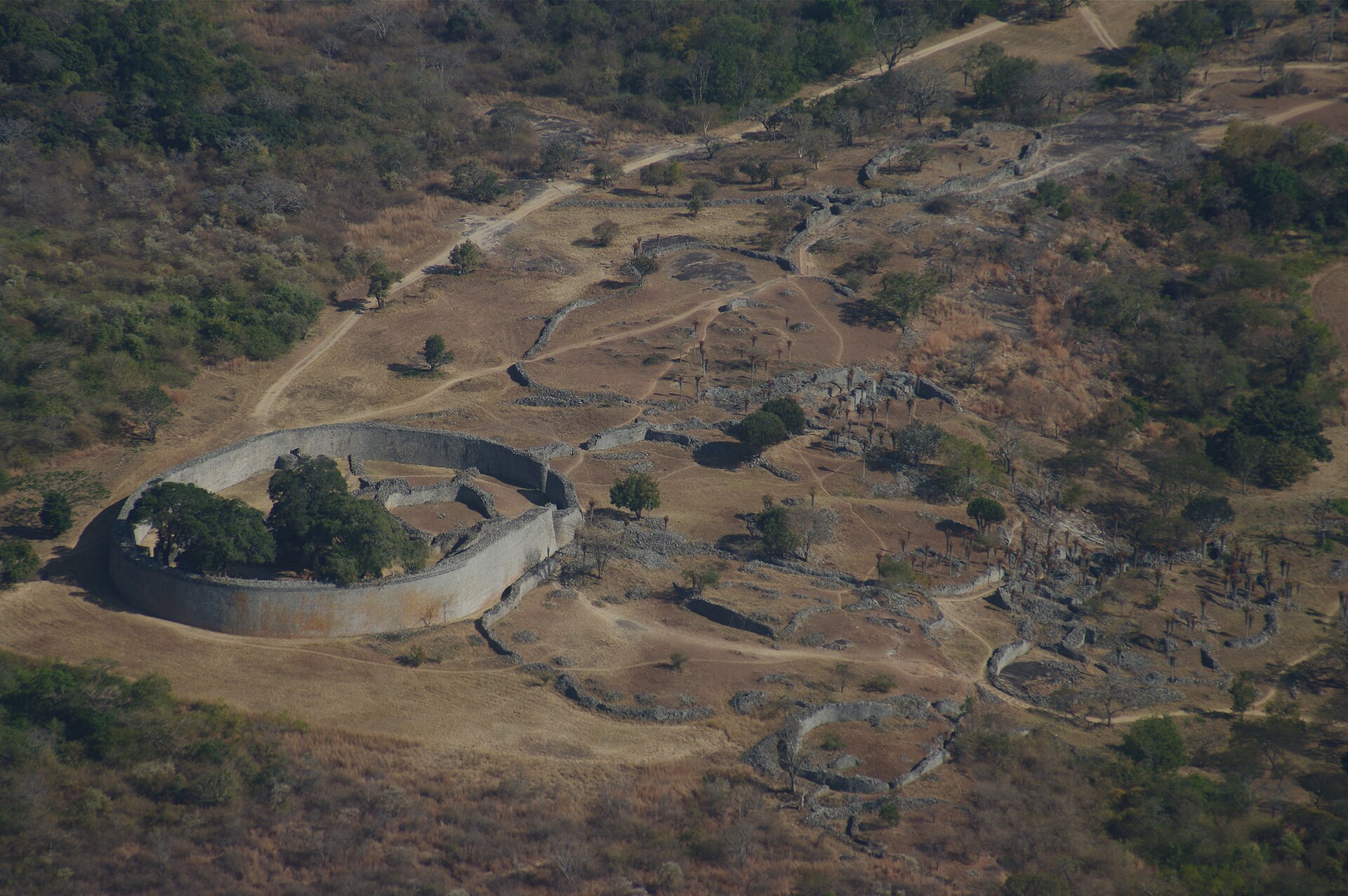
Great Zimbabwe was a city in the south-eastern hills of the modern country of Zimbabwe, near Masvingo. It was settled from around 1000 AD, and served as the capital of the Kingdom of Great Zimbabwe from the 13th century. It is the largest stone structure in precolonial Southern Africa. Major construction on the city began in the 11th century and continued until the 15th century. The city was abandoned in the 16th or 17th century. The edifices were erected by ancestors of the Shona people, who live in Zimbabwe and nearby countries. The stone city spans an area of 7.22 square kilometres (2.79 mi2). Population estimates vary. Earlier estimates suggest a peak population of around 20,000 people. A recent study using archaeological, ethnographic, and historical evidence, along with statistical modeling, suggests that the site's population did not exceed 10,000. The Zimbabwe state centred on it likely covered 50,000 km² (19,000 sq mi). It is recognised as a World Heritage Site by UNESCO.
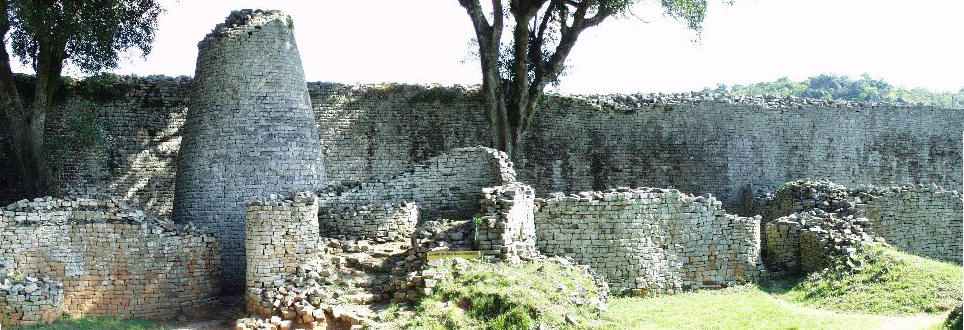
The site of Great Zimbabwe is composed of the Hill Complex, the Valley Complex, and the Great Enclosure (constructed at different times). It also contained area for commoner housing within the perimeter walls. Scholars disagree on the functions of the complexes. Some believe them to have been residences for royals and elites at different periods, while others suggest they had separate functions. The Great Enclosure, with its 11 m (36 ft) high dry stone walls (constructed without mortar), was built during the 13th and 14th centuries, and likely served as the royal residence, with demarcated public spaces for rituals.
The first confirmed visits by Europeans were in the latter 19th century, with investigations of the site starting in 1871. Great Zimbabwe and surrounding sites were looted by European antiquarians between the 1890s and 1920s.
Some later studies of the monument were controversial, as the white government of Rhodesia pressured archaeologists to deny its construction by black Africans. Its African origin did not become consensus among scholars until the 1950s. Great Zimbabwe has since been adopted as a national monument by the Zimbabwean government, and the modern independent state was named after it.
The word great distinguishes the site from the many smaller ruins, known as "zimbabwes", or "houses of stone", spread across the Zimbabwe Highveld. More than 400 such sites
Text from Wikipedia, licensed CC BY-SA 4.0.