The story
Around 600 CE, Joya de Ceren was a small Maya farming village. Families lived in houses made of a mix of wood, clay and thatch, called wattle and daub. They had kitchens, storehouses, a sweat bath and a community building.
One evening, the ground shook and a nearby volcanic vent called Loma Caldera began to erupt. The villagers ran away, leaving everything behind. Ash and volcanic rock buried the village about 5 meters deep.
Because it was buried so quickly, Joya de Ceren is called the Pompeii of the Americas. Unlike Pompeii, no human remains have been found, so it seems everyone escaped.
How it ended
The Loma Caldera eruption, around 600 CE, buried the village under ash. People never returned to live on that spot. It stayed hidden until 1976.
What life was like
Villagers grew corn, beans, squash, cacao, chili peppers and cotton. They used manioc and kept ducks. Each home had pots, grinding stones and tools. Archaeologists even found a duck tied up in a storehouse and fingerprints in clay. Life here shows how ordinary Maya people lived, not just kings.
Wow facts
- Archaeologists found ash-covered fields still showing rows of crops.
- Pots still held food remains, and a few seemed to have been in use when people fled.
- No bodies were found, so the villagers likely escaped.
Photos
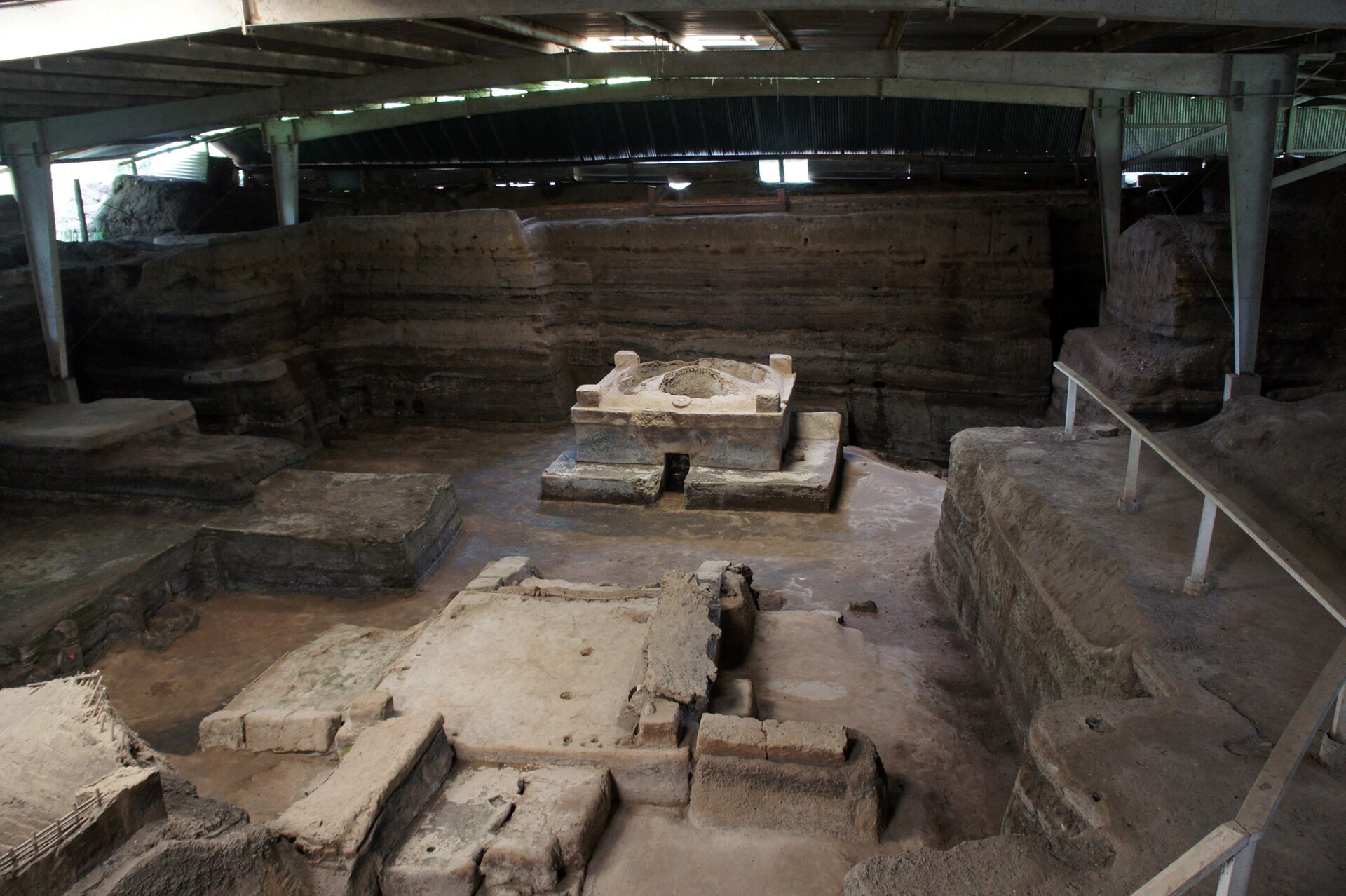
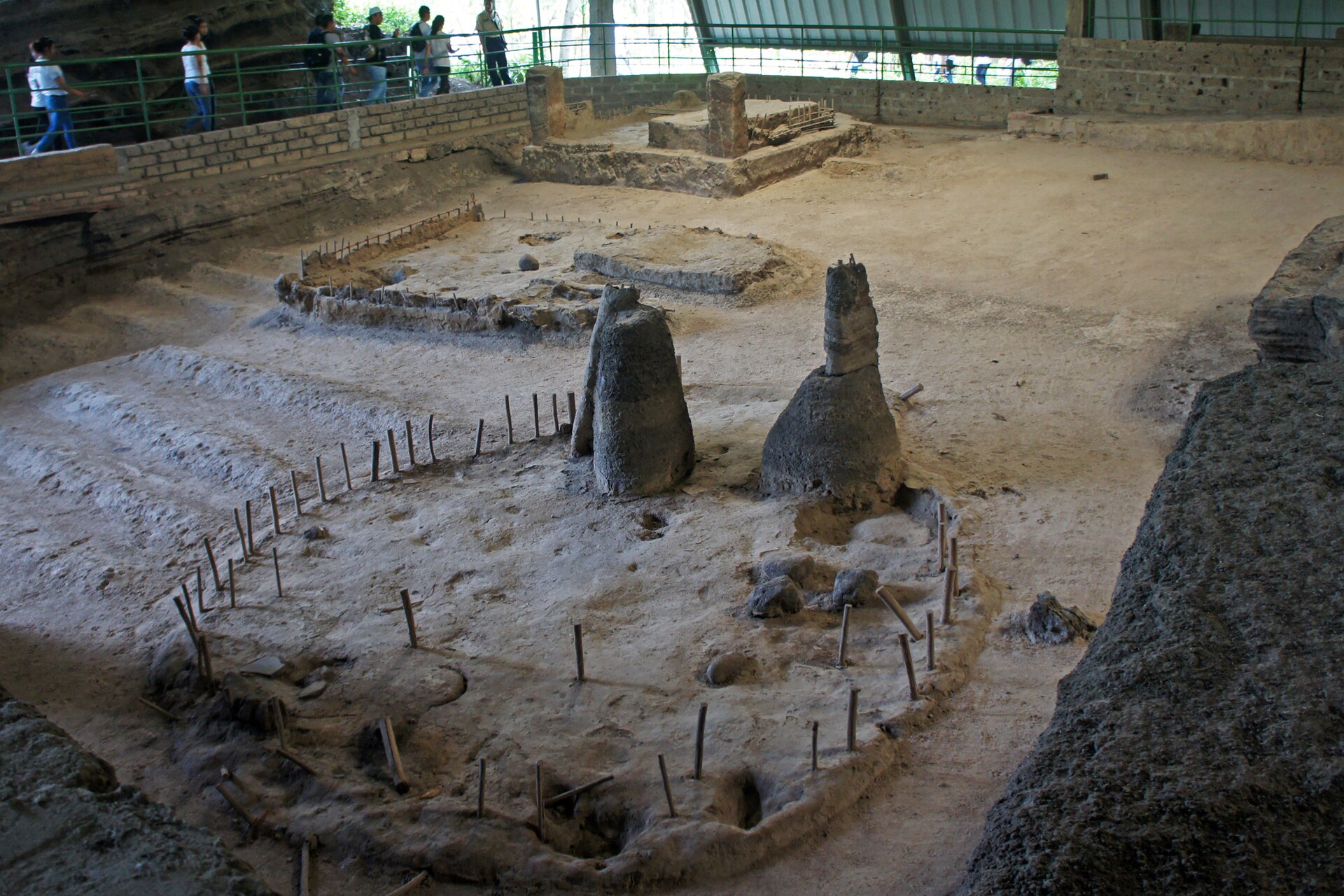 Remains of the Mayan village of Joya de Ceren buried by volcano eruption around A.D.... Mariordo (Mario Roberto Duran Ortiz), CC BY-SA 3.0
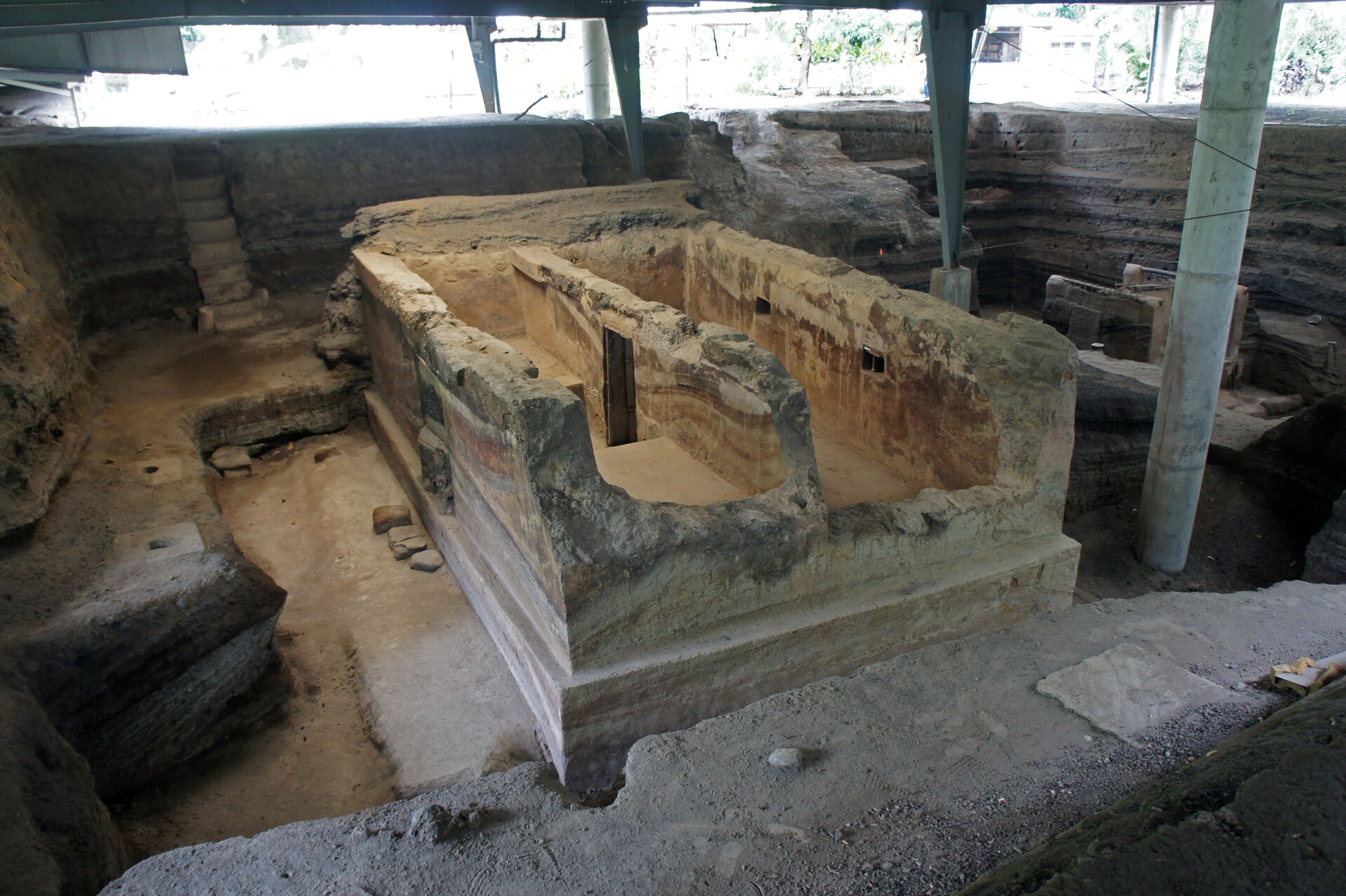 Structure 3 at area 3, part of the remains of the maya village of Joya de Cerén buried... Mariordo (Mario Roberto Durán Ortiz), CC BY-SA 3.0
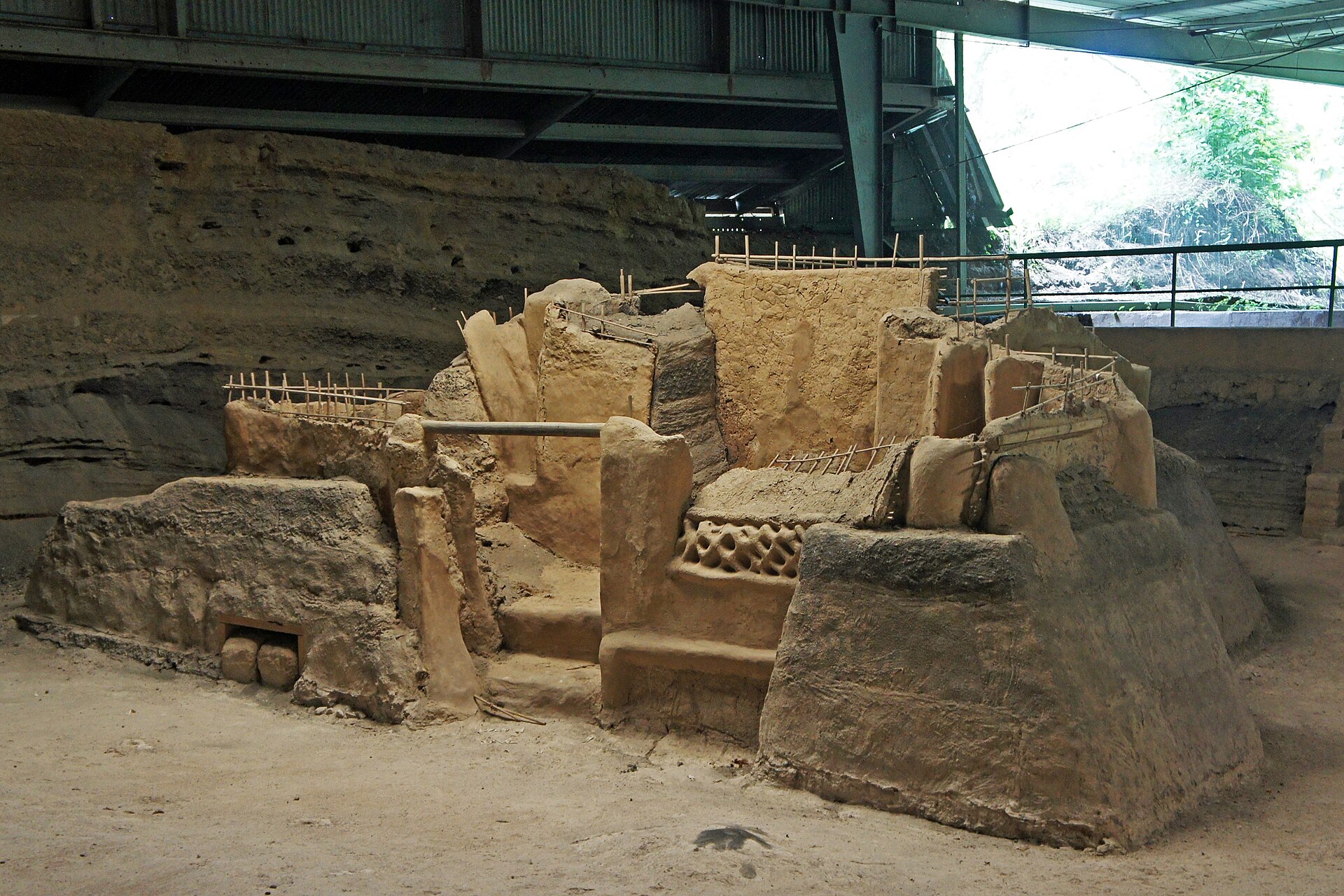 Structure 12 at Area 1, Joya de Cerén archaeological site, El Salvador. Mariordo (Mario Roberto Duran Ortiz), CC BY-SA 3.0
Relics and treasures
- Household buildingshomes and storehouses preserved in ash, at the site
- Sweat batha dome-shaped steam bath building, at the site
- Ash-covered crop fieldsrows of planted manioc and corn, at the site
- Pottery and toolseveryday objects, in the site museum and National Museum of Anthropology in San Salvador
How we know
In 1976, a bulldozer leveling land for grain silos hit a building. Archaeologist Payson Sheets later led long studies. Scientists dated the ash and studied the plants, foods and tools left behind.
What you would see today
Visitors see uncovered houses and storehouses under protective roofs and a small museum. It is a UNESCO World Heritage Site. Excavations are slow and careful because so much is preserved.
For teachers and classrooms
Suggested level: grades 3-5. Print this page as a lesson sheet with the story, vocabulary, discussion questions and a quiz with an answer key.
Key words
- wattle and daub
- a building method using woven sticks covered with mud or clay
- eruption
- when a volcano pushes out lava, ash and gas
- manioc
- a root vegetable also called cassava
Talk about it
- What would archaeologists learn if your house were buried today?
- Why is studying ordinary people's homes just as important as studying palaces?
Try this activity
- Draw a map of Joya de Ceren as it looked at its busiest, and label three things people did there.
- Find Joya de Ceren on the Ruinscape timeline, then pick another place from the same century and compare them.
- Use one link in Sources below to find a real object from this place. Describe what it is made of and what it tells us.
Quick quiz
What buried Joya de Ceren?
- Volcanic ash
- Sand
- Snow
- Mud from a flood
Show the answer
A. A nearby volcanic vent erupted around 600 CE.
What nickname does it have?
- The Pompeii of the Americas
- The Rome of Asia
- The Lost Atlantis
- The Ice City
Show the answer
A. It was buried quickly by a volcano like Pompeii.
How was it found?
- A bulldozer hit a building
- A plane crash
- A fisherman's net
- A treasure map
Show the answer
A. In 1976, a bulldozer found a building while clearing land.
Sources and further reading
Ruinscape lessons are written for students and checked against encyclopedia and museum records. Go to the sources: these links search real museum collections, the UNESCO list and research by archaeologists.
- Wikipedia articleEncyclopedia overview with its own references
- UNESCO World HeritageOfficial listing, if the site is protected
- Google Arts & CultureMuseum exhibits, virtual tours and close-up photos
- British Museum collectionReal objects, photos and catalog notes
- The Met collectionObjects and essays from the Metropolitan Museum of Art
- Smithsonian collectionsU.S. national museum records
- 3D models on SketchfabScans of sites and artifacts (check each license)
- Scholarly articlesResearch papers by archaeologists and historians
Read the full background
Joya de Cerén (Jewel of Cerén in Spanish) is an archaeological site in La Libertad Department, El Salvador, containing the remains of a pre-Columbian Maya farming village. The site is located in the Zapotitán Valley, approximately 36 km (22 mi) northwest of San Salvador. It is often called the "Pompeii of the Americas", for its similar preservation beneath volcanic ash.
This site is notable for the exceptional preservation of a Classic period settlement, which was rapidly buried by ash from an eruption of the Loma Caldera around AD 600. The abundance of paleoethnobotanical remains has provided important insights into the daily life of ancient Maya agricultural communities. Among the most significant discoveries is a manioc field, the earliest known evidence of manioc cultivation at an archeological site in the New World. The site is thought to have been occupied between AD 200 and AD 600. Joya de Cerén was inscribed on the UNESCO World Heritage List in 1993 in recognition of its archeological significance and is a major tourist attraction in El Salvador.
Background text from Wikipedia, available under CC BY-SA 4.0.
Last updated: October 2026. How we make Ruinscape.