The story
During the last Ice Age, people lived near the entrance of the Cave of Altamira. They hunted bison, deer and horses and gathered plants. Over thousands of years, artists painted and engraved the cave walls and ceiling. Some art may be over 36,000 years old, but the most famous paintings are about 14,000 to 18,000 years old.
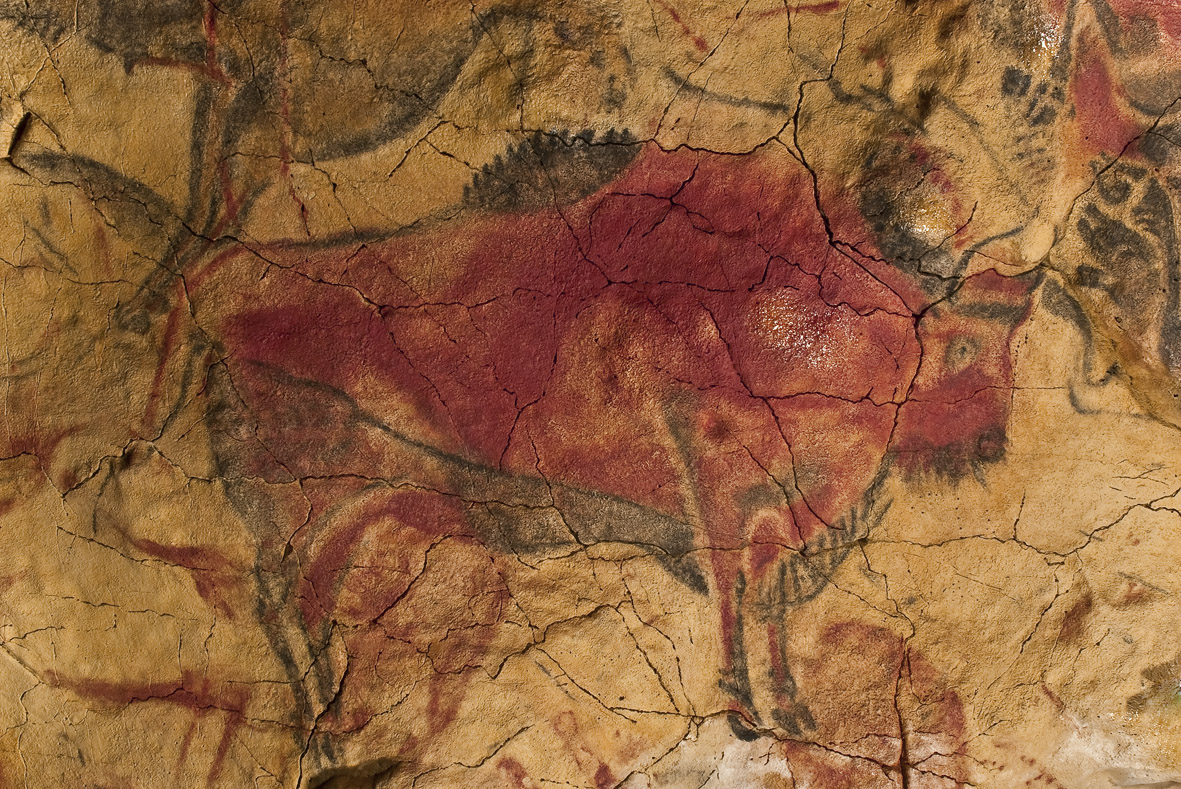
The great ceiling shows bison painted in red ochre and black charcoal. The artists used bumps in the rock to make the animals look round and alive.
In 1879, Maria Sanz de Sautuola, about 8 years old, was exploring with her father, Marcelino. She looked up and saw the bison. Many experts did not believe Ice Age people could make such art, and they said it was fake. Years later, more caves were found, and they had to admit it was real.
How it ended
About 13,000 years ago, a rockfall sealed the cave entrance. That protected the paintings for thousands of years. A hunter found the entrance in 1868, and the paintings were noticed in 1879.
What life was like
Altamira's people were hunter-gatherers. They wore clothes of animal skins, made tools of stone, bone and antler, and cooked over fires near the cave entrance. They made paint by grinding colored minerals and mixing them with water. Some art was made by blowing paint around hands to make outlines.
Wow facts
- The paintings use the cave's bumps to make the bison look 3D.
- A child was the first person to notice the ceiling paintings in modern times.
- The real cave is mostly closed, but a perfect copy lets visitors see the art.
Photos
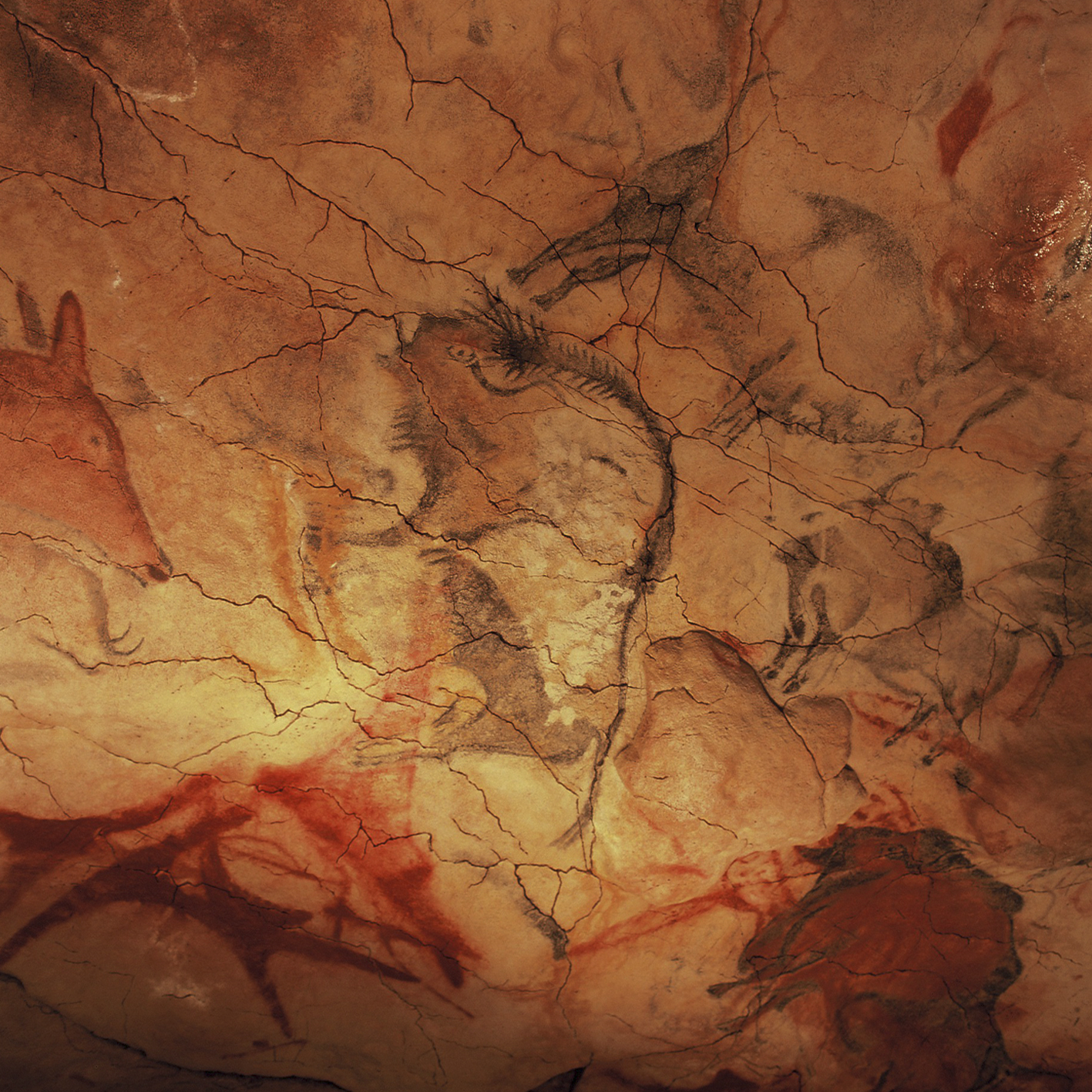 Cave of Altamira and Paleolithic Cave Art of Northern Spain Yvon Fruneau, CC BY-SA 3.0 igo
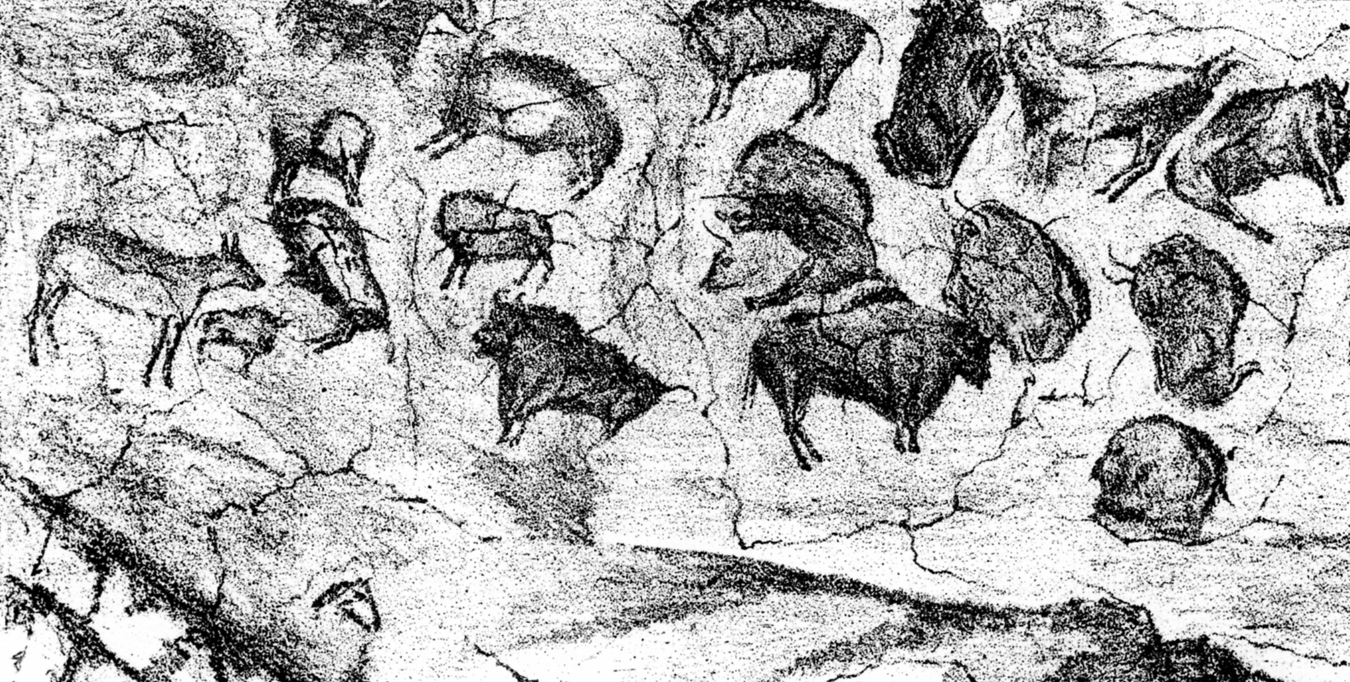 Unknown author, Public domain
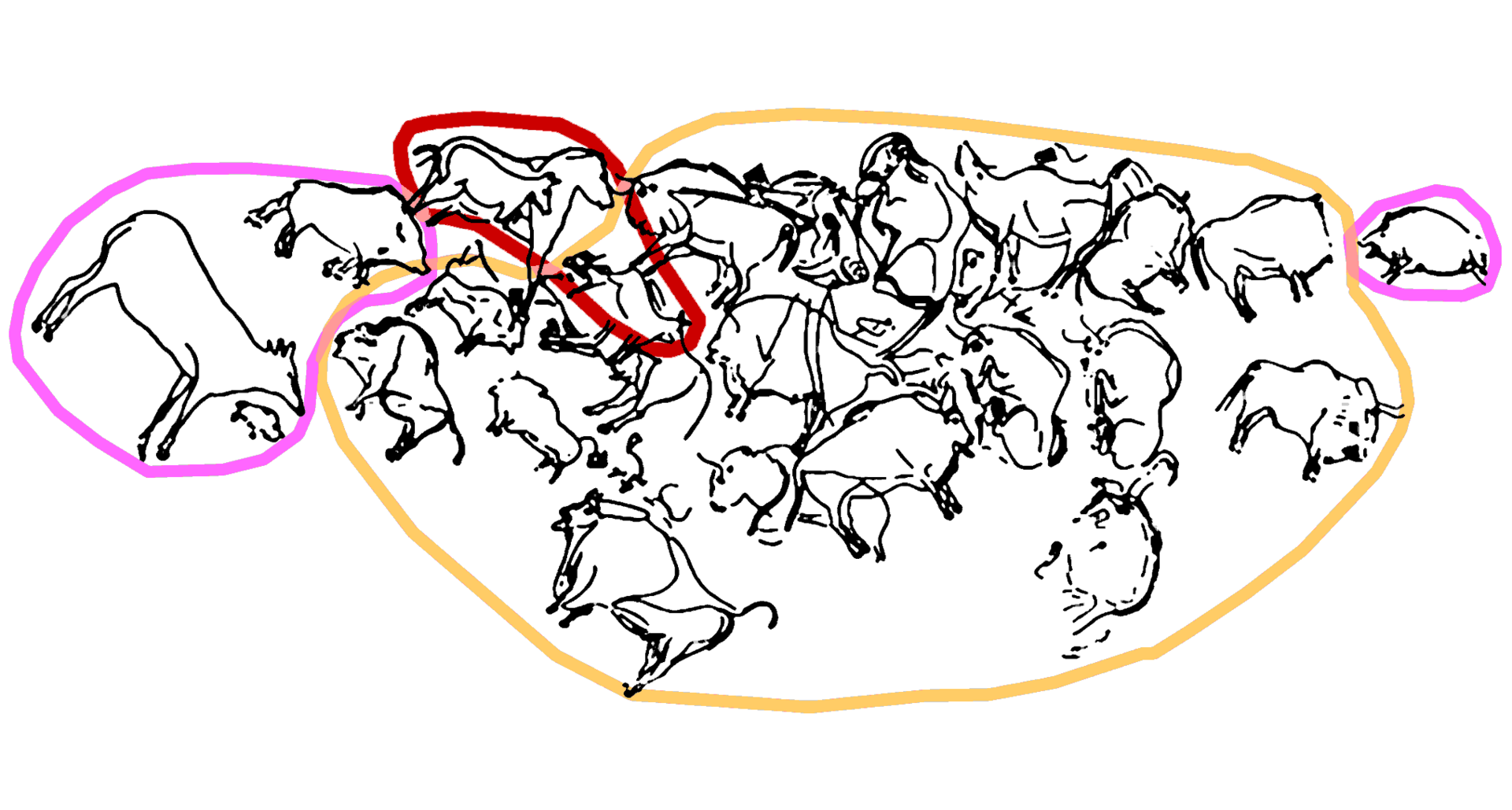 Asociación de animales en el gran panel de la Cueva de Altamira (Cantabria, España)... José-Manuel Benito, Public domain
Relics and treasures
- Ceiling of the Bisonthe famous painted ceiling, in the original cave
- Neocavean exact copy of the painted ceiling, at the Altamira Museum
- Stone and bone toolstools left by Ice Age people, in the Altamira Museum
- Hand stencilsoutlines of hands on the walls, in the original cave
How we know
Marcelino Sanz de Sautuola published the find in 1880. Later scientists used radiocarbon dating and uranium-series dating on crusts over the paint to learn its age. Tools and bones show what people ate and how they lived.
What you would see today
Because breath and visitors damaged the paintings, the cave is almost always closed. Visitors explore the Neocave, an exact replica, at the Altamira Museum next door. A very small number of people are chosen by lottery to enter the real cave.
For teachers and classrooms
Suggested level: grades 3-5. Print this page as a lesson sheet with the story, vocabulary, discussion questions and a quiz with an answer key.
Key words
- ochre
- a natural earth pigment, often red or yellow
- Ice Age
- a long time when ice sheets covered much of the Earth
- replica
- an exact copy
Talk about it
- Why do you think early people painted animals on cave walls?
- Why is it sometimes better to close a site to visitors?
Try this activity
- Draw a map of Cave of Altamira as it looked at its busiest, and label three things people did there.
- Find Cave of Altamira on the Ruinscape timeline, then pick another place from the same century and compare them.
- Use one link in Sources below to find a real object from this place. Describe what it is made of and what it tells us.
Quick quiz
Who first noticed the ceiling paintings in 1879?
- A young girl named Maria
- A king
- A soldier
- A farmer's dog
Show the answer
A. Maria Sanz de Sautuola spotted the bison.
Which animal is most famous at Altamira?
- Bison
- Lion
- Elephant
- Shark
Show the answer
A. The great ceiling shows a herd of bison.
Why is the real cave mostly closed?
- Visitors damaged the paintings
- It is underwater
- It is haunted
- It is too hot
Show the answer
A. Breath and crowds harmed the art, so a replica was built.
Sources and further reading
Ruinscape lessons are written for students and checked against encyclopedia and museum records. Go to the sources: these links search real museum collections, the UNESCO list and research by archaeologists.
- Wikipedia articleEncyclopedia overview with its own references
- UNESCO World HeritageOfficial listing, if the site is protected
- Google Arts & CultureMuseum exhibits, virtual tours and close-up photos
- British Museum collectionReal objects, photos and catalog notes
- The Met collectionObjects and essays from the Metropolitan Museum of Art
- Smithsonian collectionsU.S. national museum records
- 3D models on SketchfabScans of sites and artifacts (check each license)
- Scholarly articlesResearch papers by archaeologists and historians
Read the full background
The Cave of Altamira ( AL-tə-MEER-ə; Spanish: Cueva de Altamira [ˈkweβa ðe altaˈmiɾa]) is a cave complex, located near the historic town of Santillana del Mar in Cantabria, Spain. It is renowned for prehistoric cave art featuring charcoal drawings and polychrome paintings of contemporary local fauna and human hands. The earliest paintings were applied during the Upper Paleolithic, around 36,000 years ago. The site was discovered in 1868 by Modesto Cubillas and subsequently studied by Marcelino Sanz de Sautuola.
Aside from the striking quality of its multicolor art, Altamira's fame stems from the fact that its paintings were the first European cave paintings for which a prehistoric origin was suggested and promoted. Sautuola published his research with the support of Juan de Vilanova y Piera in 1880, to initial public acclaim.
However, the publication of Sanz de Sautuola's research quickly led to a bitter public controversy among experts, some of whom rejected the prehistoric origin of the paintings on the grounds that prehistoric human beings lacked sufficient ability for abstract thought. The controversy continued until 1902, by which time reports of similar findings of prehistoric paintings in the Franco-Cantabrian region had accumulated and the evidence could no longer be rejected.
Altamira is located in the Franco-Cantabrian region and in 1985 was declared a World Heritage Site by UNESCO as a key location of the Cave of Altamira and Paleolithic Cave Art of Northern Spain. The cave can no longer be visited, for conservation reasons, but there are replicas of a section at the site and elsewhere.
Background text from Wikipedia, available under CC BY-SA 4.0.
Last updated: October 2026. How we make Ruinscape.