No. 57
Merida (Emerita Augusta)

- Where
- Spain
- Built by
- Romans
- Era
- 25 BCE onward
- Known for
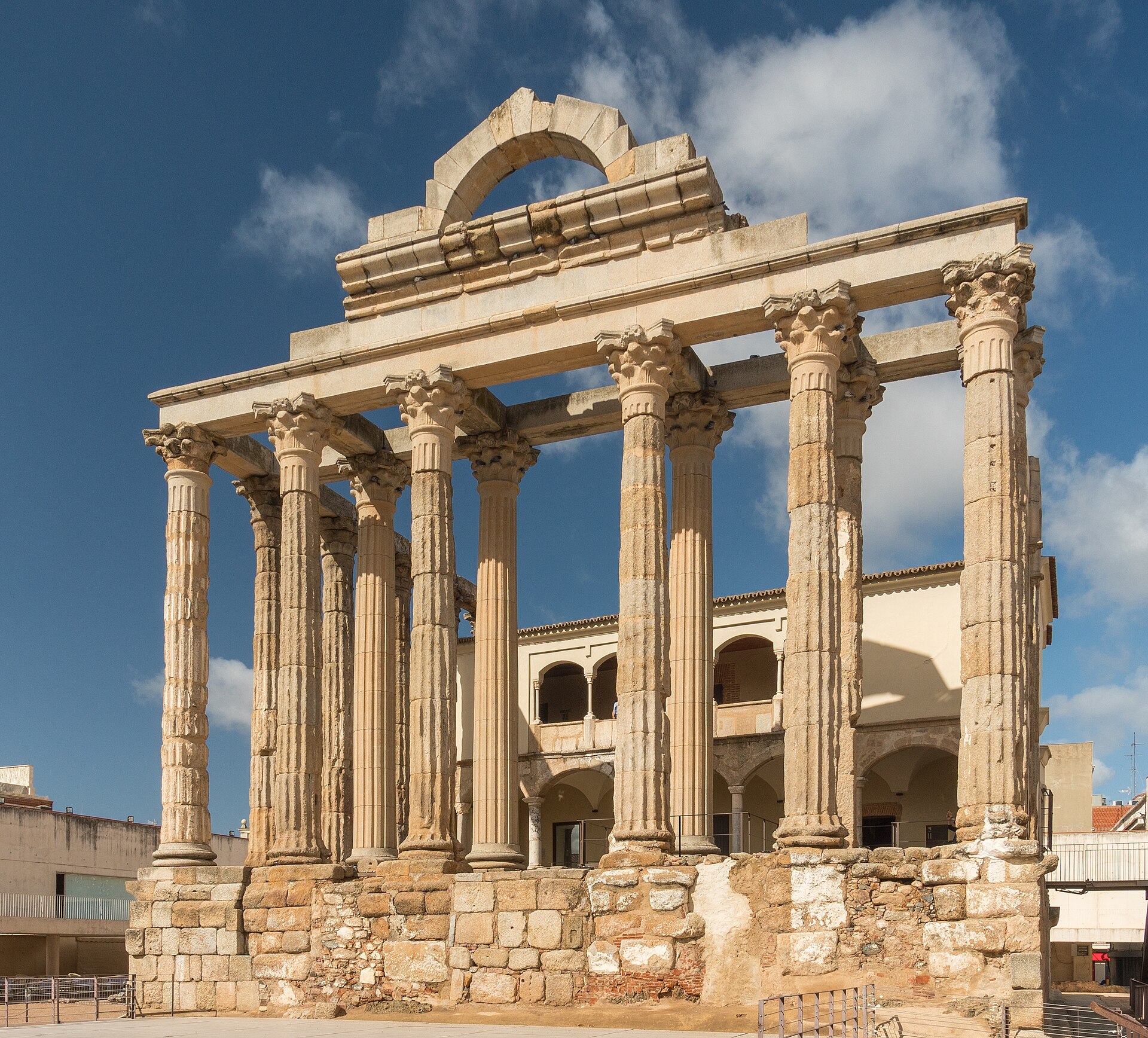
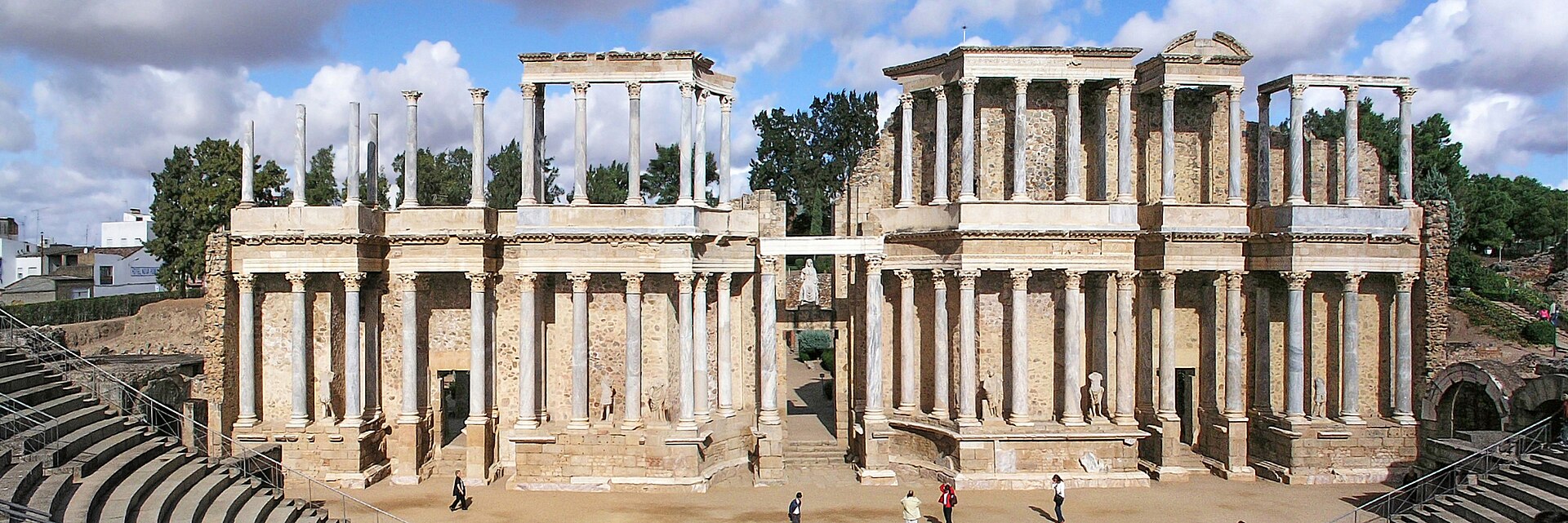
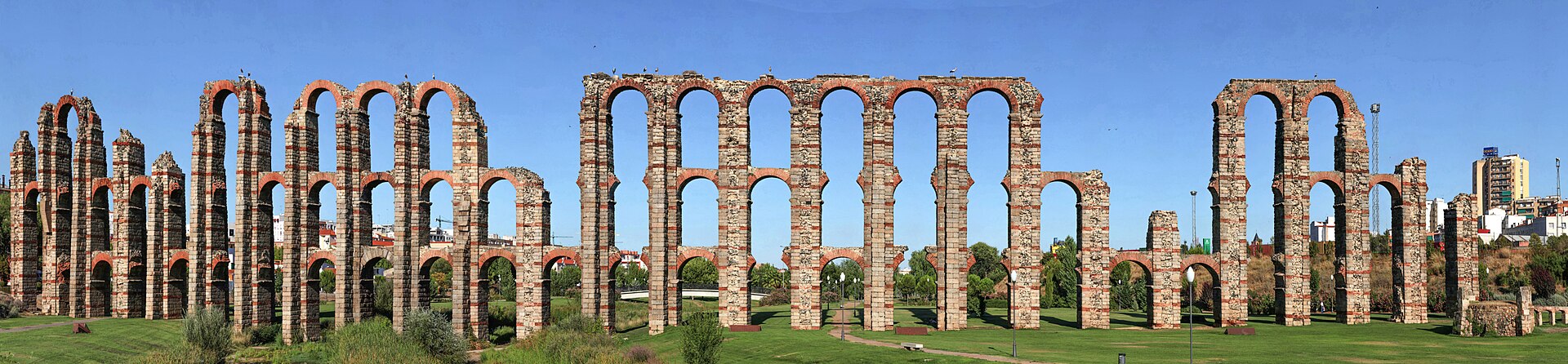
- A Roman theater, bridge and aqueduct still standing.
- How it ended
- Declined after Rome fell and the Moors took it in 713.

Lyra Kael can take you here on the globe, tell you the story out loud and answer your questions. Start the time jump.
Background
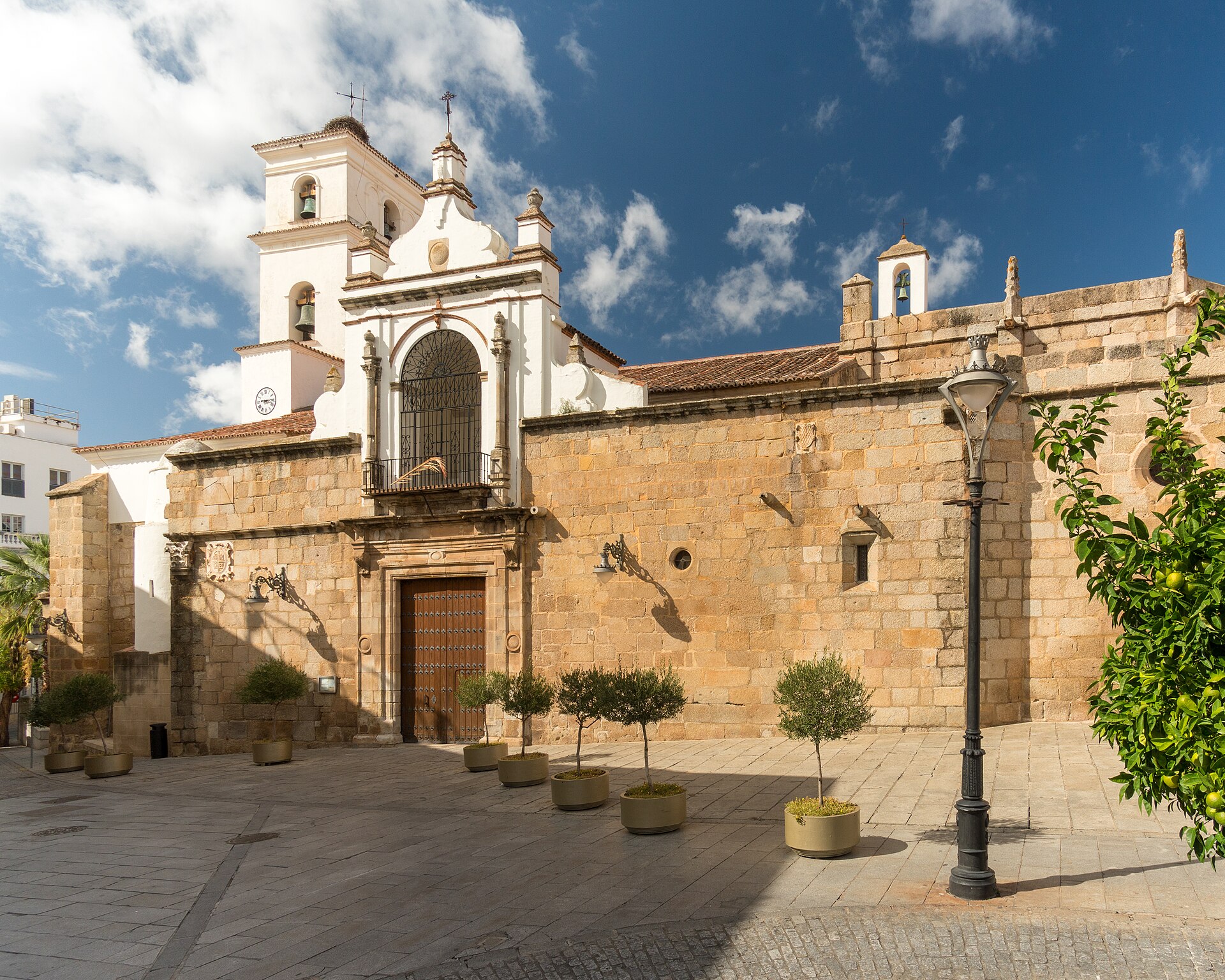
Mérida (Spanish: [ˈmeɾiða] ) is a city and municipality of Spain, part of the Province of Badajoz, and capital of the autonomous community of Extremadura. Located in the western-central part of the Iberian Peninsula at 217 metres above sea level, the city is crossed by the Guadiana and Albarregas rivers. The population was 60,119 in 2017.
The primitive settlement was founded by the Roman Empire as Augusta Emerita in the 1st century BCE to allocate discharged soldiers, eventually prospering as one of the largest cities of Hispania and the capital of the province of Lusitania. Its ecclesiastical metropolitan seat was taken away by the Archdiocese of Santiago de Compostela in 1119. Conquered by the Kingdom of León in 1230, shortly before the latter's final integration into the Crown of Castile, it was handed over to the Order of Santiago. On numerous occasions over the course of the middle ages and the Modern Period, it suffered from the effects of warfare due to its location close to the border with Portugal.
Text from Wikipedia, licensed CC BY-SA 4.0.