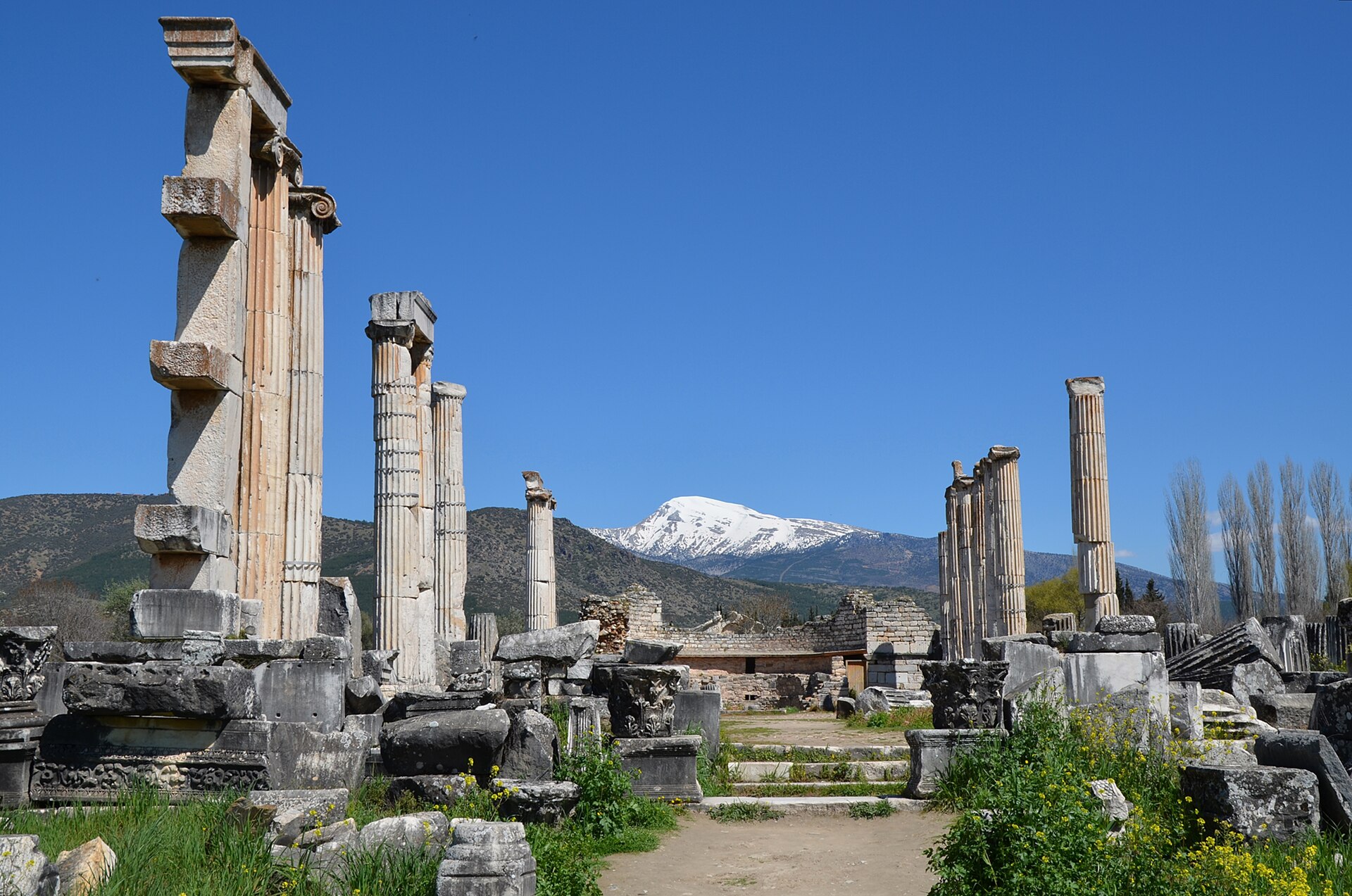
The story
People lived at Aphrodisias for thousands of years, but it grew into a grand city in the 1st century BCE. It was named for Aphrodite, goddess of love and beauty, and her temple drew visitors from far away.
The city had a special friend in Rome. It supported Julius Caesar's family, and Emperor Augustus gave it privileges. Nearby quarries gave fine marble, so the city became home to a famous school of sculptors whose work was shipped across the empire.
Aphrodisias built a stadium that held about 30,000 people, a theater, baths, and the Sebasteion, a temple to the emperors decorated with carved panels. Later, the city became Christian and the temple of Aphrodite was turned into a church. Earthquakes and changing times slowly emptied it.
How it ended
Earthquakes in the 300s and 600s damaged Aphrodisias, and its water supply was disrupted. As the Byzantine Empire weakened, people moved away. By the Middle Ages, a small village sat among the ruins.
What life was like
Sculptors carved statues and portraits in workshops right in town. Athletes trained and raced in the stadium. Families went to the theater for plays and gathered at the baths. Farmers grew grain and olives in the valley. Inscriptions name ordinary people too, including a list of donors with their jobs.
Wow facts
- Its stadium is one of the best-preserved in the Mediterranean world.
- Unfinished statues show how ancient sculptors worked step by step.
- The Sebasteion had about 200 carved panels of gods, emperors and myths.
Photos
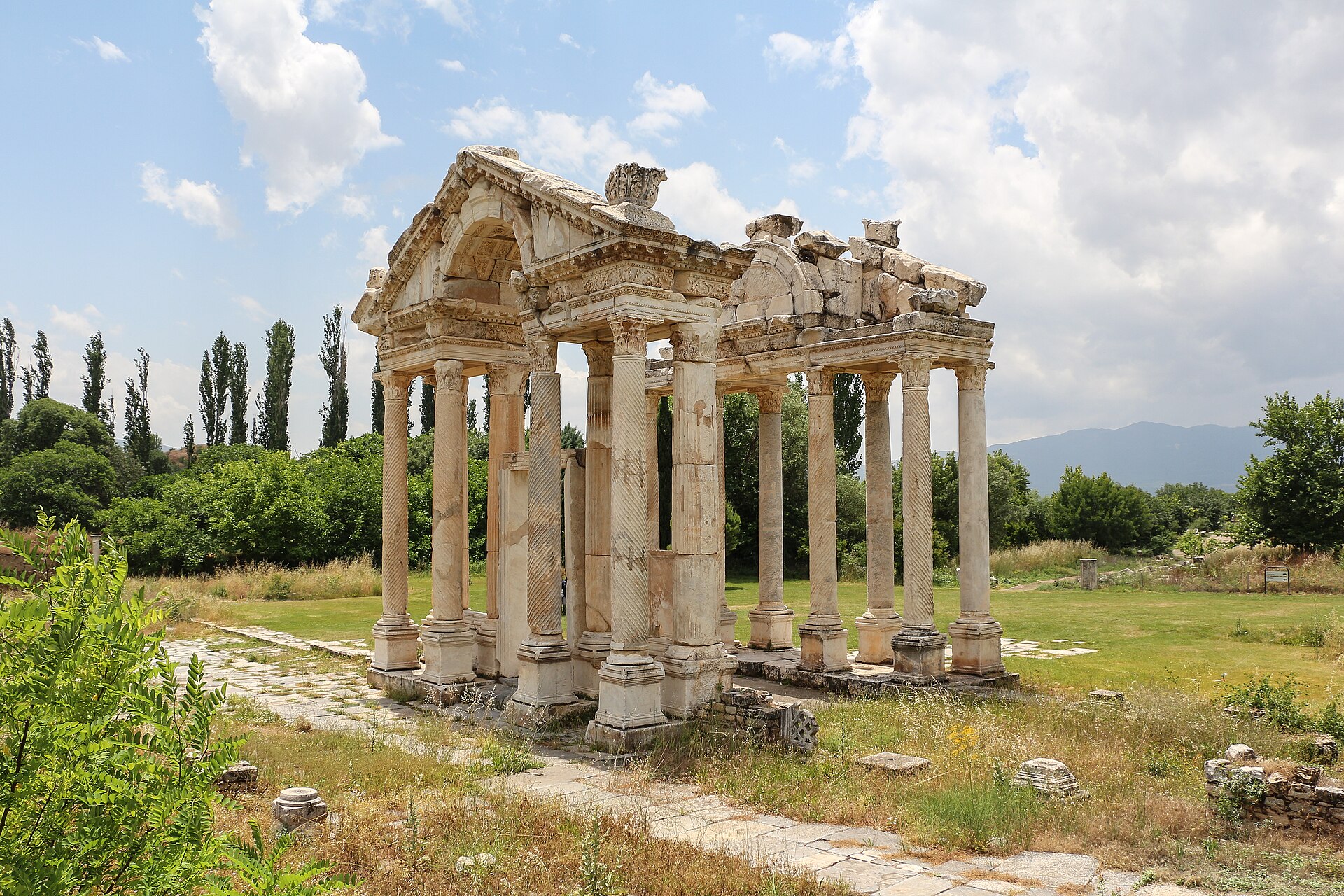 Tetrapylon of Aphrodisias, Turkey Bernard Gagnon, CC BY-SA 3.0
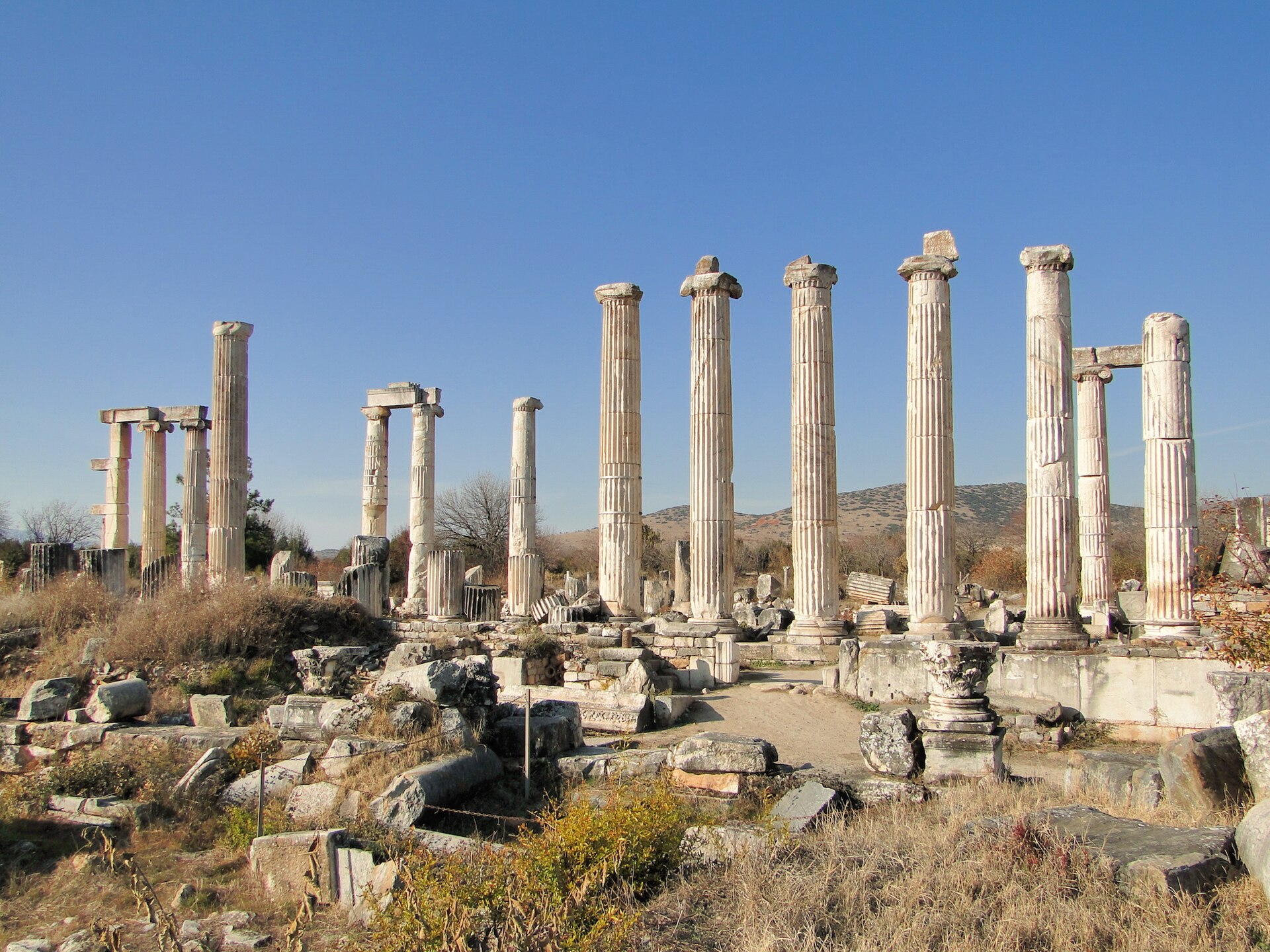 Afrodisias Turquie Viault, CC BY-SA 3.0
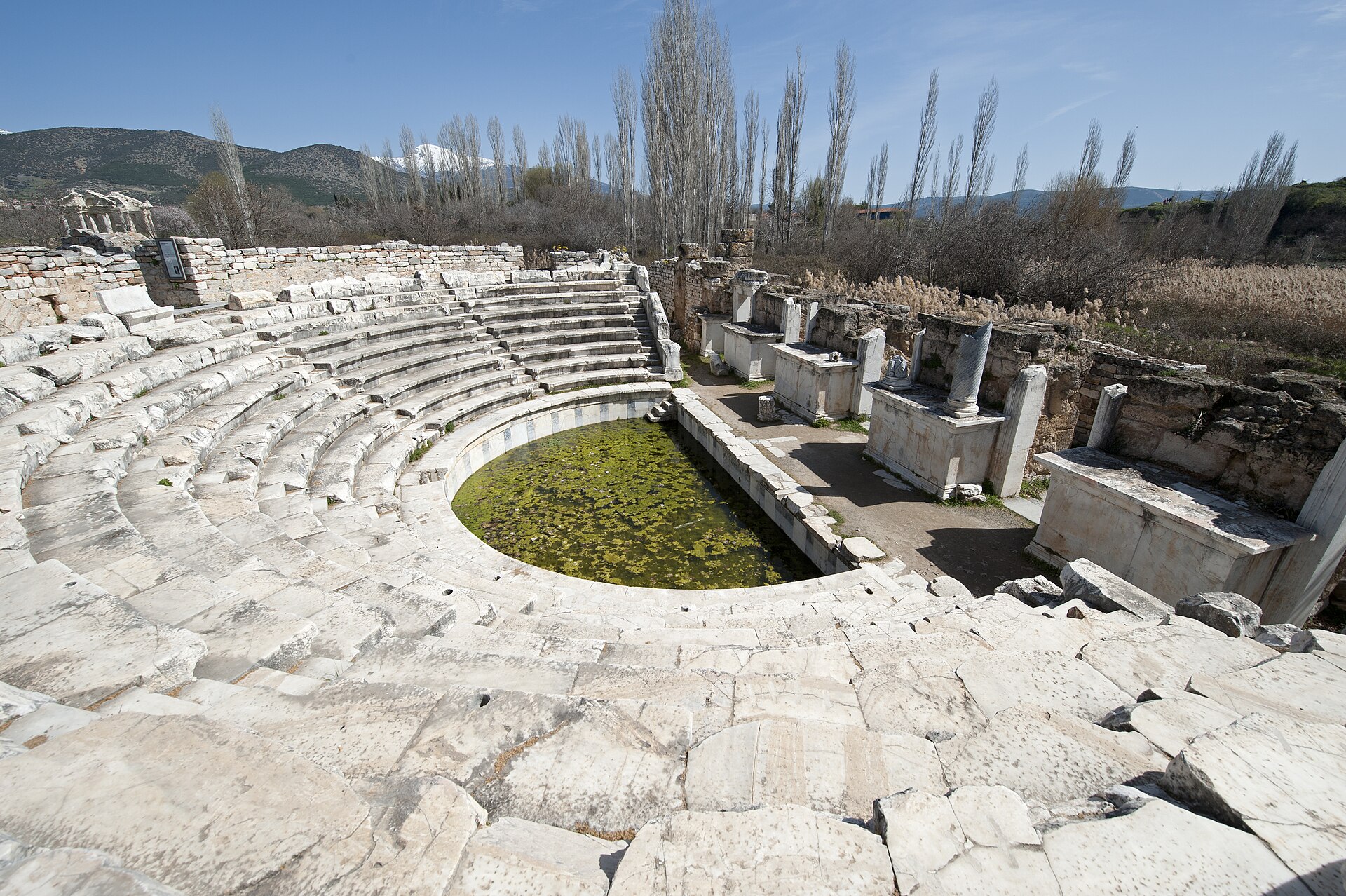 From a note on site: “The Bouleuterion (Council House) was central to the civic life of... Dosseman, CC BY-SA 4.0
Relics and treasures
- The Stadiuma huge racetrack with seats for about 30,000, at the site
- Tetrapylona decorated gateway to the sanctuary of Aphrodite, at the site
- Sebasteion reliefscarved panels of emperors and myths, in the Aphrodisias Museum
- Sculptors' workshop piecesunfinished statues, in the Aphrodisias Museum
How we know
Kenan Erim of New York University led digs from 1961 until 1990, and work continues today. Many inscriptions on stone record laws, donors and letters from emperors. Unfinished sculptures reveal how artists worked.
What you would see today
Visitors walk through the monumental gate called the Tetrapylon, sit in the giant stadium, and see the Sebasteion's reliefs and many statues in the site museum. Excavations by New York University continue each year.
For teachers and classrooms
Suggested level: grades 6-8. Print this page as a lesson sheet with the story, vocabulary, discussion questions and a quiz with an answer key.
Key words
- quarry
- a place where stone is dug or cut out of the ground
- sculptor
- an artist who carves or shapes statues
- inscription
- words carved into stone or metal
Talk about it
- How did having marble nearby shape what this city became famous for?
- What could unfinished art teach us that finished art cannot?
Try this activity
- Draw a map of Aphrodisias as it looked at its busiest, and label three things people did there.
- Find Aphrodisias on the Ruinscape timeline, then pick another place from the same century and compare them.
- Use one link in Sources below to find a real object from this place. Describe what it is made of and what it tells us.
Quick quiz
Which goddess was Aphrodisias named after?
- Athena
- Aphrodite
- Artemis
- Hera
Show the answer
B. The city was named for Aphrodite.
What were the city's artists famous for?
- Marble sculpture
- Glass making
- Silk weaving
- Pottery wheels
Show the answer
A. Its school of sculptors shipped statues across the empire.
About how many people could the stadium hold?
- 300
- 3,000
- 30,000
- 300,000
Show the answer
C. The stadium held about 30,000 people.
Sources and further reading
Ruinscape lessons are written for students and checked against encyclopedia and museum records. Go to the sources: these links search real museum collections, the UNESCO list and research by archaeologists.
- Wikipedia articleEncyclopedia overview with its own references
- UNESCO World HeritageOfficial listing, if the site is protected
- Google Arts & CultureMuseum exhibits, virtual tours and close-up photos
- British Museum collectionReal objects, photos and catalog notes
- The Met collectionObjects and essays from the Metropolitan Museum of Art
- Smithsonian collectionsU.S. national museum records
- 3D models on SketchfabScans of sites and artifacts (check each license)
- Scholarly articlesResearch papers by archaeologists and historians
Read the full background
Aphrodisias (; Ancient Greek: Ἀφροδισιάς, romanized: Aphrodisiás) was a Hellenistic Greek city in the historic Caria cultural region of western Asia Minor, today's Anatolia in Turkey. It is located near the modern village of Geyre, about 100 km (62 mi) east/inland from the coast of the Aegean Sea, and 230 km (140 mi) southeast of İzmir.
Aphrodisias was named after Aphrodite, the Greek goddess of love, who had here her unique cult image, the Aphrodite of Aphrodisias. According to the Suda, a Byzantine encyclopedic compilation, before the city became known as Aphrodisias (c. 3rd century BC) it had three previous Greek names: Lelégōn Pólis (Λελέγων πόλις, "City of the Leleges"), Megálē Pólis (Μεγάλη Πόλις, "Great City"), and Ninóē (Νινόη).
Sometime before 640, in the Late Antique period when it was within the Byzantine Empire, the city was renamed Stauropolis (Σταυρούπολις, "City of the Cross").
In 2017, it was inscribed on the UNESCO World Heritage Site list.
Background text from Wikipedia, available under CC BY-SA 4.0.
Last updated: October 2026. How we make Ruinscape.