No. 45
Delos

- Where
- Greece
- Built by
- Ancient Greeks
- Era
- 900-88 BCE peak
- Known for
- A sacred island that became a huge grain and slave market.
- How it ended
- Sacked in 88 BCE and again in 69 BCE, then abandoned.

Lyra Kael can take you here on the globe, tell you the story out loud and answer your questions. Start the time jump.
Background
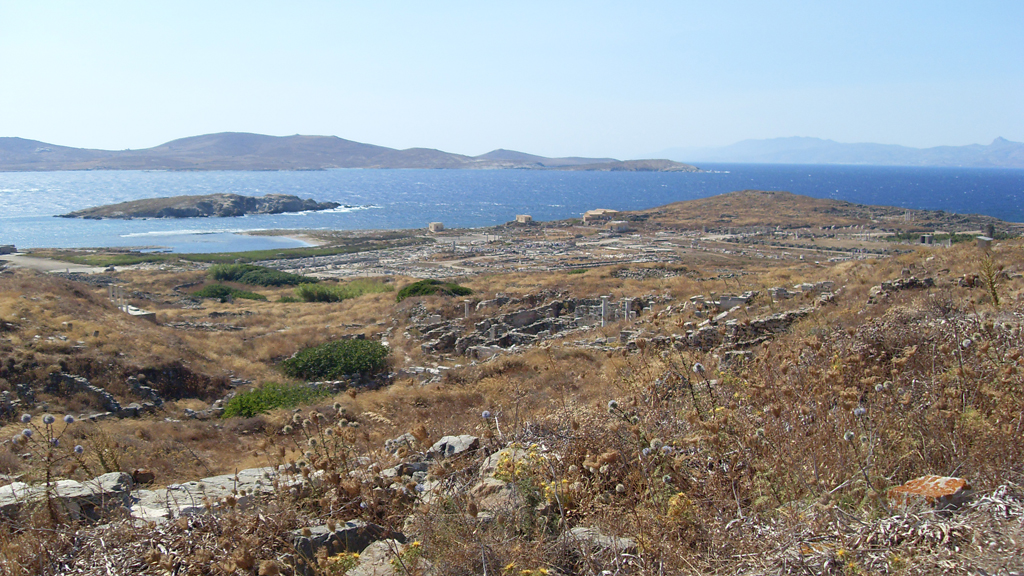
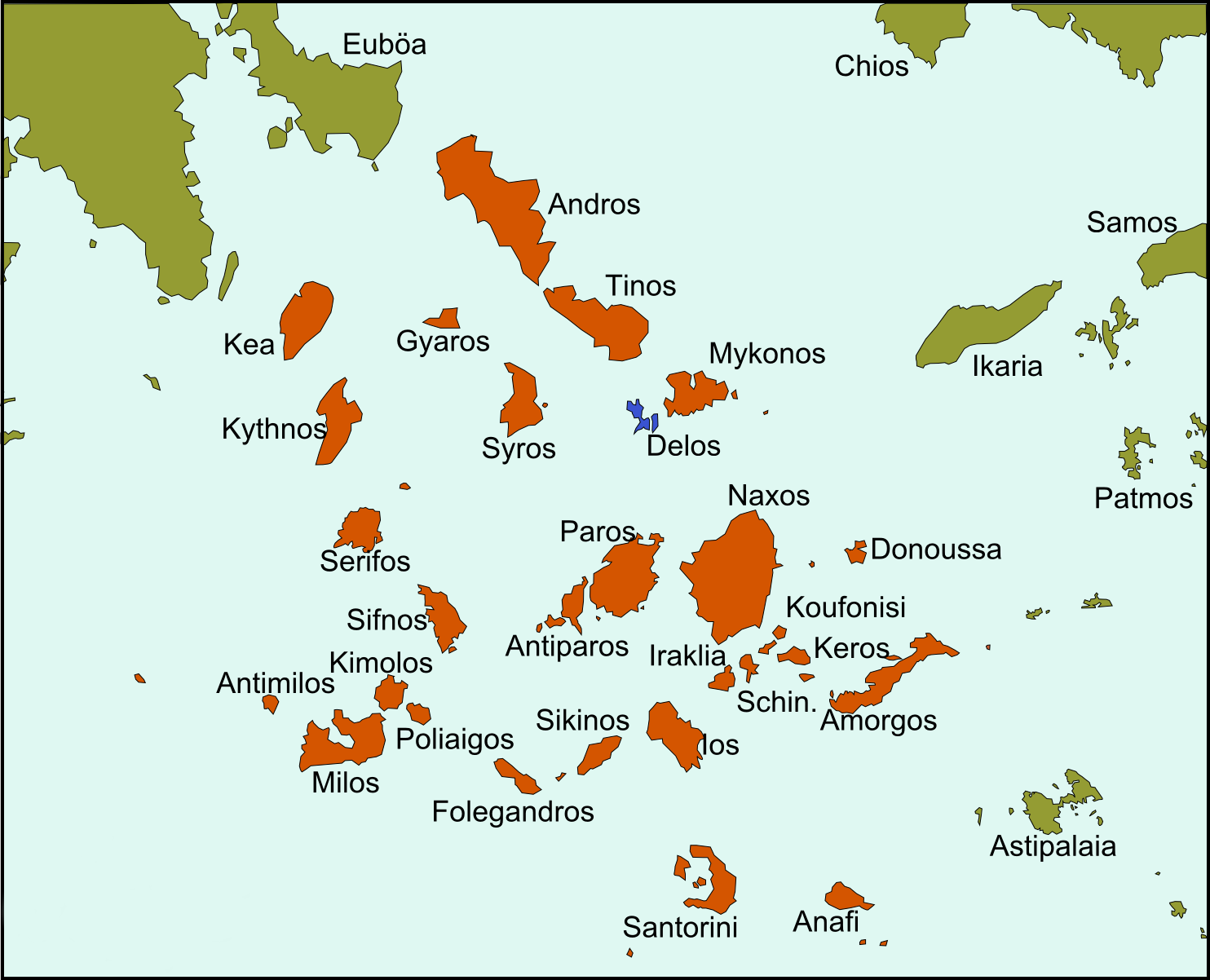
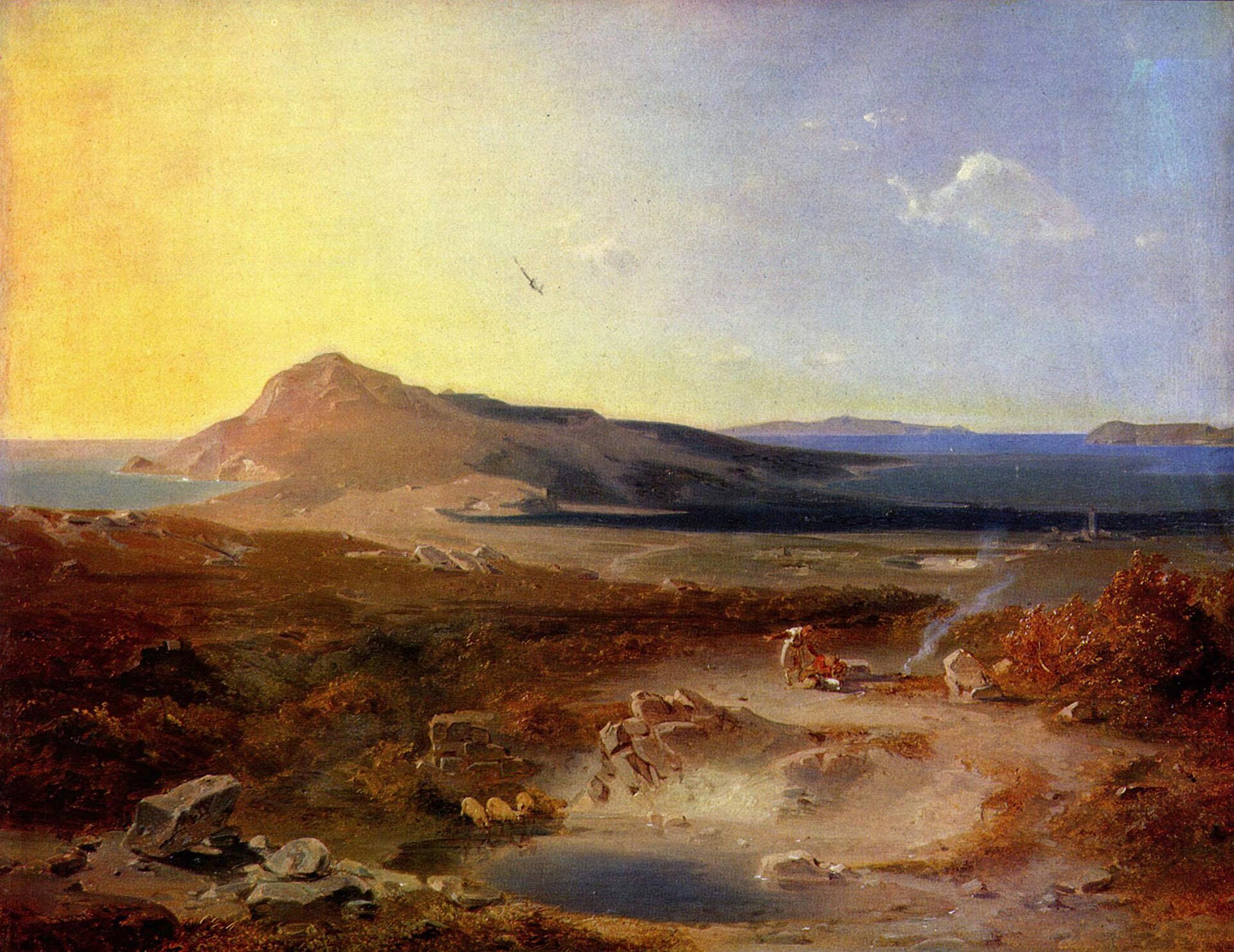
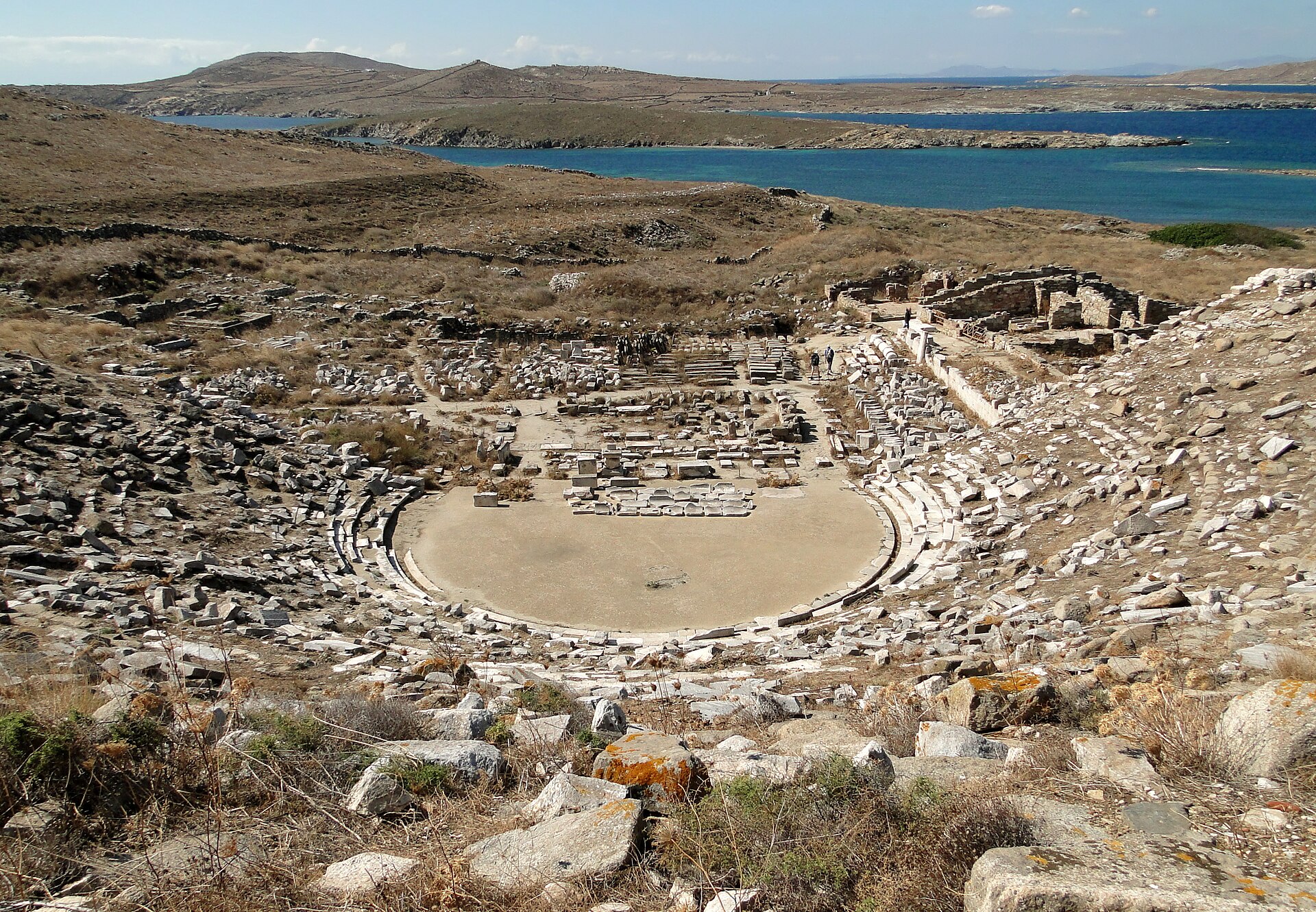
Delos or Dilos (; Greek: Δήλος [ˈðilos]; Attic Greek: Δῆλος Dêlos, Doric Greek: Δᾶλος Dâlos), is a small Greek island near Mykonos, close to the centre of the Cyclades archipelago. Though only 3.43 km2 (1.32 sq mi) in area, it is one of the most important mythological, historical, and archaeological sites in Greece. The ongoing excavations in the island are among the most extensive in the Mediterranean, and many of the artefacts found are displayed at the Archaeological Museum of Delos and the National Archaeological Museum of Athens.
Delos had a position as a holy sanctuary for a millennium before Olympian Greek mythology made it the birthplace of Apollo and Artemis. From its Sacred Harbour are visible the three conical mounds that have identified landscapes sacred to a goddess (presumably Athena). Another site, retaining its Pre-Greek name Mount Cynthus, is crowned with a sanctuary of Zeus.
In 1990, UNESCO added Delos to the World Heritage List, citing its exceptional archaeological site which "conveys the image of a great cosmopolitan Mediterranean port", its influence on the development of Greek architecture, and its sacred importance throughout Ancient Greece.
Text from Wikipedia, licensed CC BY-SA 4.0.