The story
Anuradhapura was the capital of Sri Lanka's kings for about 1,400 years, from the 300s BCE until the 1000s CE. It was one of the great cities of ancient Asia.
Buddhism came to Sri Lanka around 250 BCE. A cutting from the tree in India where the Buddha found enlightenment was brought here and planted in 288 BCE. That sacred fig tree, the Sri Maha Bodhi, is still alive and cared for today.
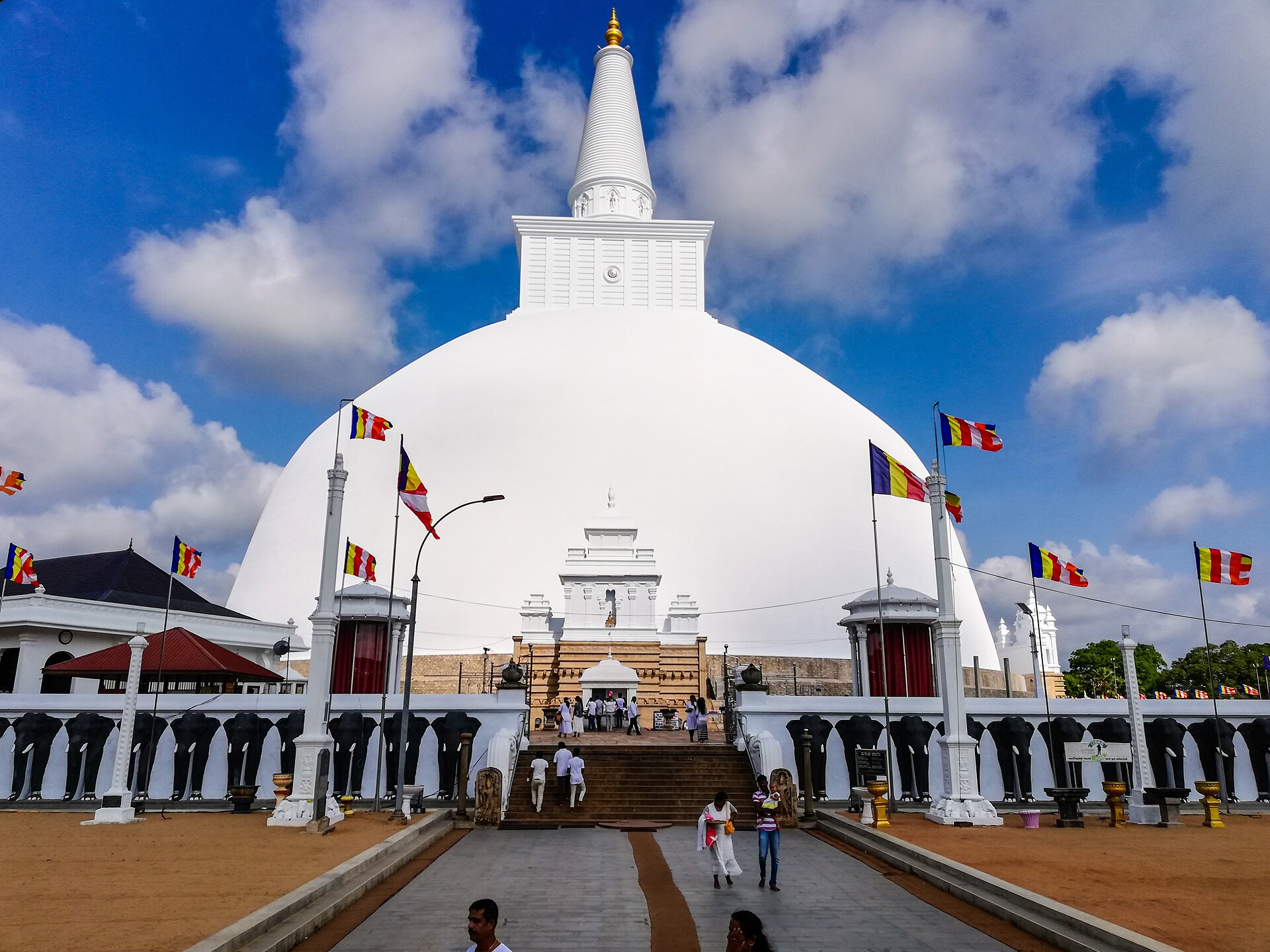
Kings built huge dome-shaped shrines called stupas. The Jetavanaramaya, made of millions of bricks, was one of the tallest buildings in the ancient world, around 120 meters tall when it was built. The city also had giant water tanks, which were artificial lakes for farming.
How it ended
Invasions from South India weakened the kingdom, and around 1017 CE the capital moved to Polonnaruwa. Anuradhapura's buildings were overgrown by jungle until they were cleared and restored in the 1800s and 1900s.
What life was like
Farmers grew rice using water from giant reservoirs and canals, which people still use today. Monks lived in large monasteries and taught. Pilgrims came to honor the sacred tree and stupas. Traders from India, Rome, Persia and China visited Sri Lanka's ports.
Wow facts
- The Jetavanaramaya stupa was once one of the tallest buildings in the world.
- The sacred fig tree has been looked after for over 2,300 years.
- Ancient reservoirs built by the kings still water farms today.
Photos
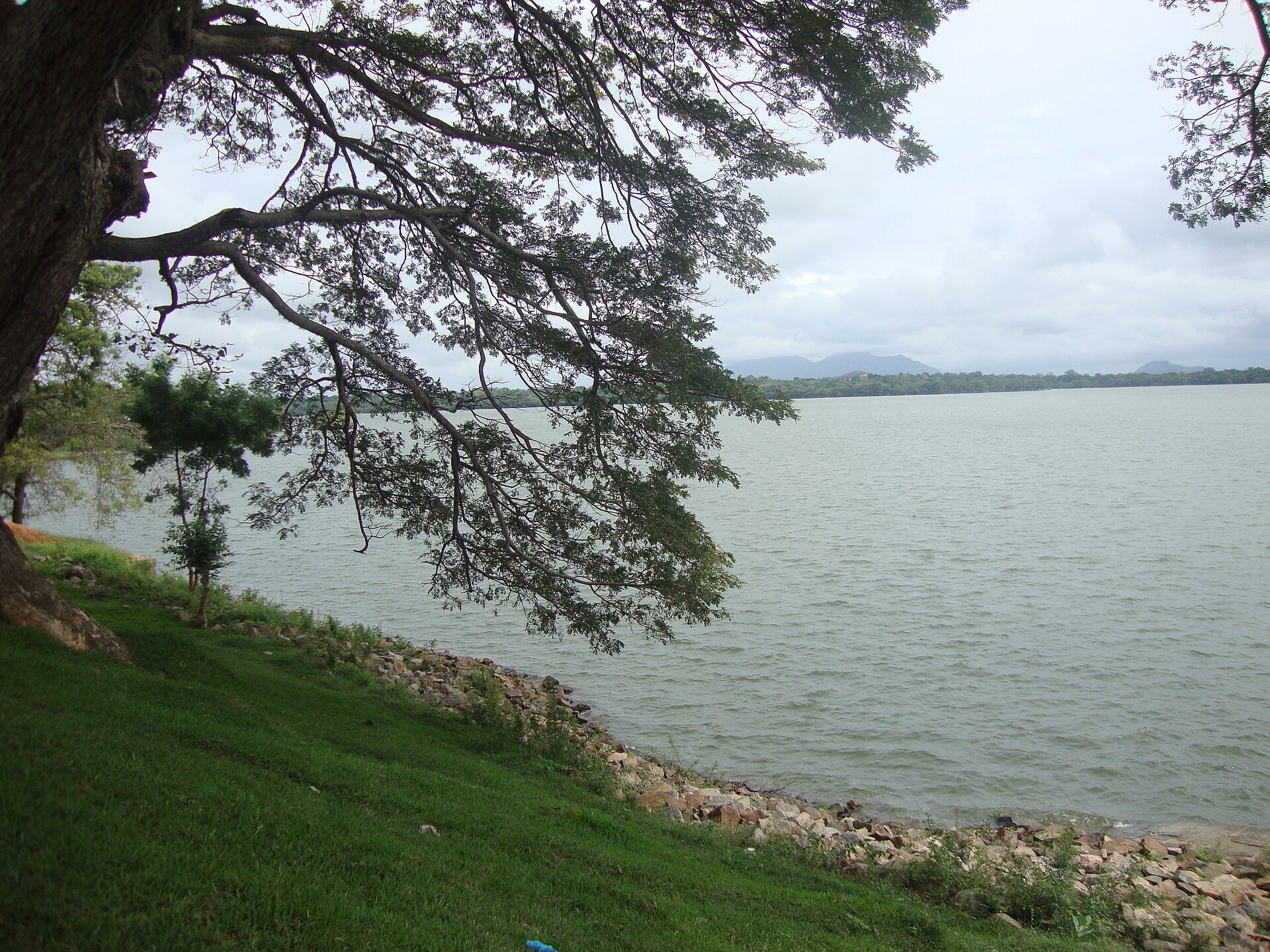 This is a resevoir named 'Kala weva' in Sri Lanka built by King Dhatusena in 307 BC. Pjohoofanasterix, CC BY-SA 4.0
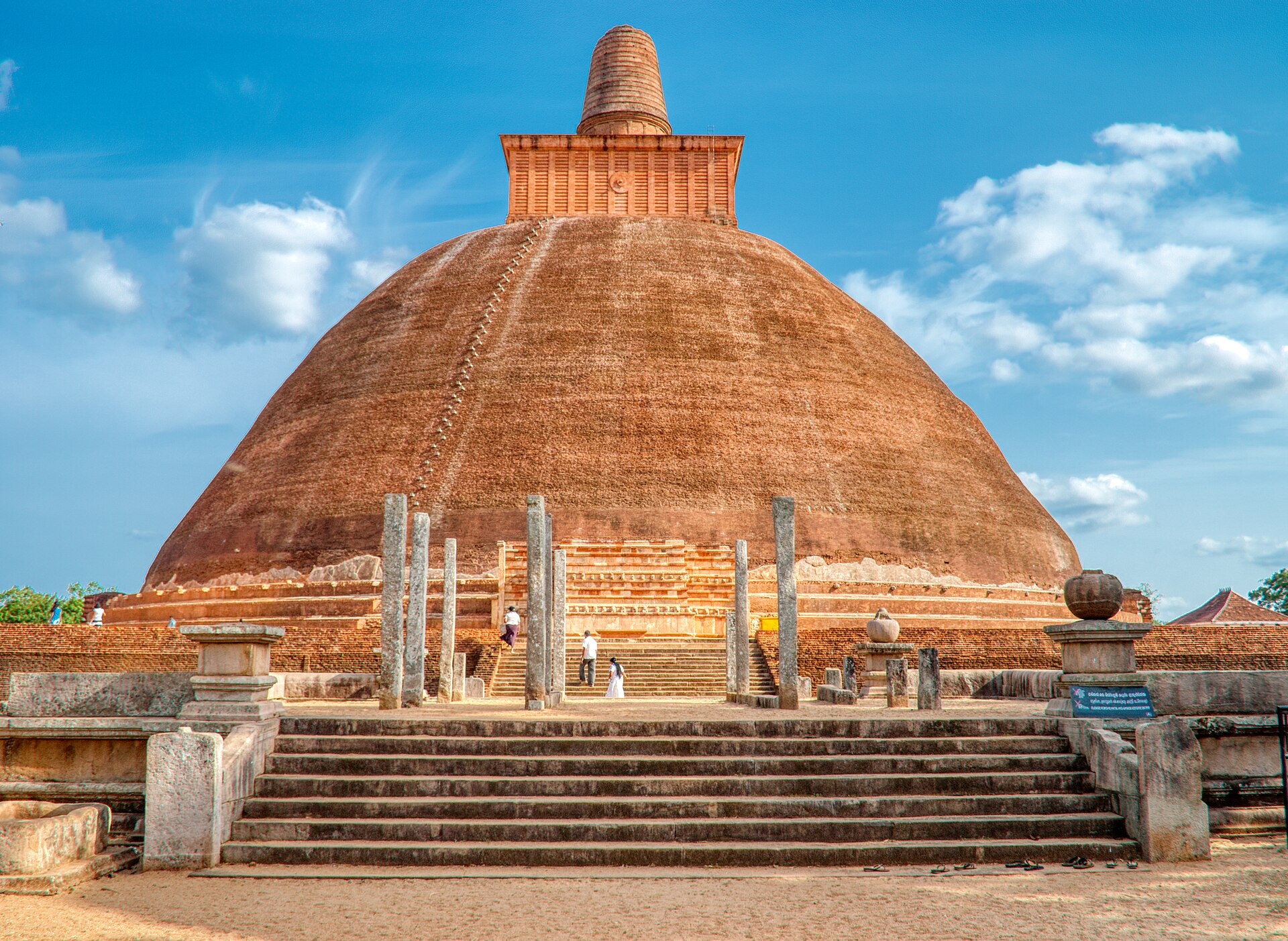 Jetavanaramaya Stupa as seen from the east side Wimukthi Bandara, CC BY-SA 4.0
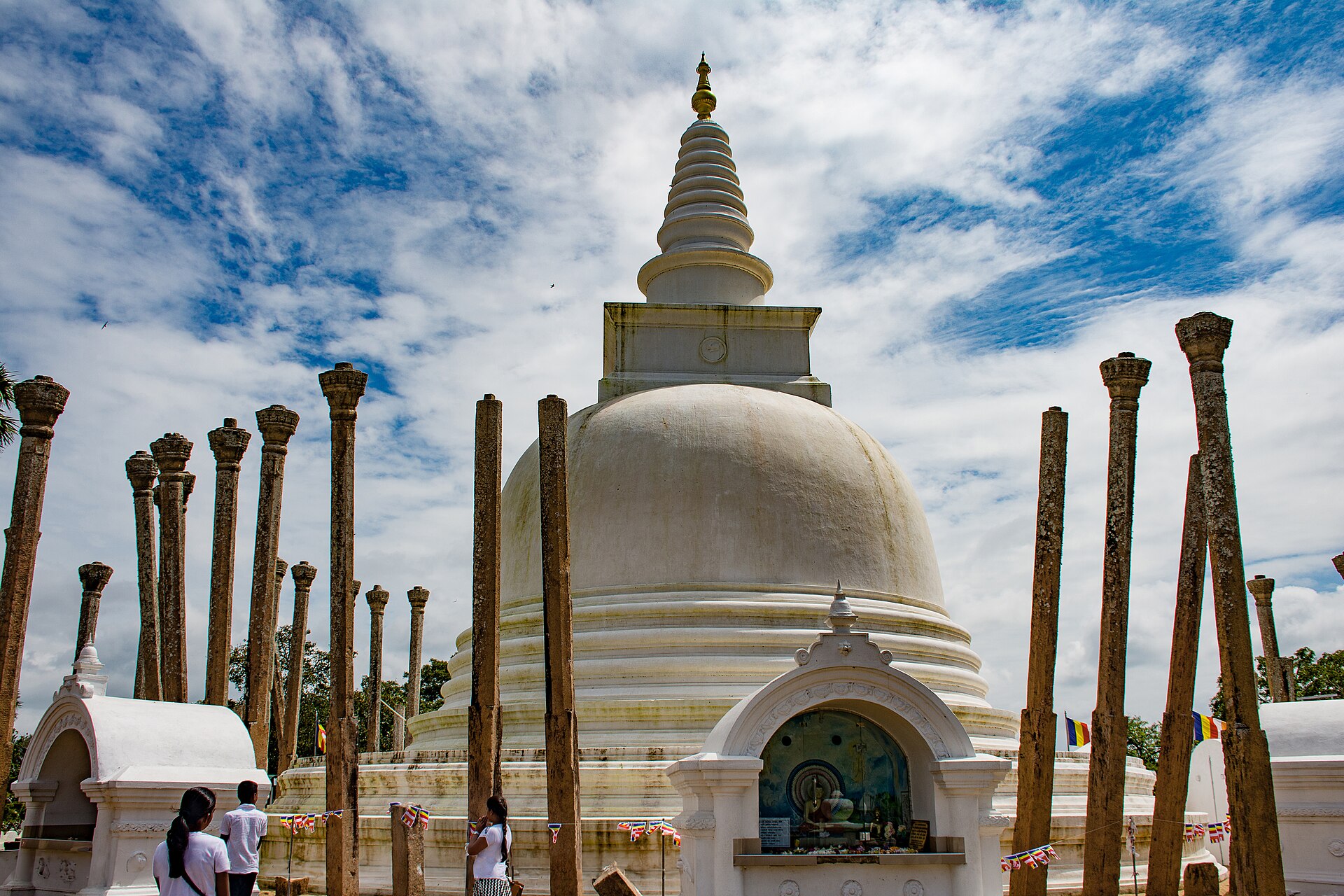 The stone pillars around the stupa was the structural support for a dome that covered... Exploreslk, CC BY-SA 4.0
Relics and treasures
- Sri Maha Bodhithe sacred fig tree, still growing in Anuradhapura
- Ruwanwelisayaa great white stupa, at the site
- Jetavanaramayaa giant brick stupa, at the site
- Samadhi Buddhaa calm stone Buddha statue, at the site
How we know
Sri Lanka's ancient chronicles, like the Mahavamsa, describe its kings and buildings. Archaeologists from Sri Lanka and other countries have dug at the city. Inscriptions and coins, including Roman coins, show its long history and trade.
What you would see today
Anuradhapura is a sacred city where pilgrims and visitors walk or cycle between stupas, monasteries and the sacred tree. Monkeys live among the ruins. It is a UNESCO World Heritage Site.
For teachers and classrooms
Suggested level: grades 3-5. Print this page as a lesson sheet with the story, vocabulary, discussion questions and a quiz with an answer key.
Key words
- stupa
- a dome-shaped Buddhist shrine
- reservoir
- a large artificial lake used to store water
- enlightenment
- in Buddhism, a deep understanding of the truth about life
Talk about it
- Why do you think people have cared for one tree for over 2,000 years?
- How did big reservoirs help an ancient city grow?
Try this activity
- Draw a map of Anuradhapura as it looked at its busiest, and label three things people did there.
- Find Anuradhapura on the Ruinscape timeline, then pick another place from the same century and compare them.
- Use one link in Sources below to find a real object from this place. Describe what it is made of and what it tells us.
Quick quiz
What is the Sri Maha Bodhi?
- A sacred fig tree
- A palace
- A river
- A boat
Show the answer
A. It is a sacred fig tree planted in 288 BCE.
What is a stupa?
- A dome-shaped shrine
- A sword
- A type of rice
- A fishing net
Show the answer
A. Stupas are dome-shaped Buddhist shrines.
Where did the capital move to after Anuradhapura?
- Polonnaruwa
- Delhi
- Bangkok
- Kyoto
Show the answer
A. Kings moved the capital to Polonnaruwa in the 1000s.
Sources and further reading
Ruinscape lessons are written for students and checked against encyclopedia and museum records. Go to the sources: these links search real museum collections, the UNESCO list and research by archaeologists.
- Wikipedia articleEncyclopedia overview with its own references
- UNESCO World HeritageOfficial listing, if the site is protected
- Google Arts & CultureMuseum exhibits, virtual tours and close-up photos
- British Museum collectionReal objects, photos and catalog notes
- The Met collectionObjects and essays from the Metropolitan Museum of Art
- Smithsonian collectionsU.S. national museum records
- 3D models on SketchfabScans of sites and artifacts (check each license)
- Scholarly articlesResearch papers by archaeologists and historians
Read the full background
Anuradhapura (Sinhala: අනුරාධපුරය, romanised: Anurādhapuraya, IPA: [ənuraːd̪əpurəjə]; Tamil: அனுராதபுரம், romanised: Aṉurātapuram, IPA: [ɐnuɾaːðɐβuɾɐm]) is a major city located in the north central plain of Sri Lanka. It is the capital city of North Central Province and the capital of Anuradhapura District. The city lies 205 kilometres (127 mi) north of the current capital of Colombo in the North Central Province, on the banks of the historic Malwathu Oya. The city is now a World Heritage Site famous for its well-preserved ruins of the ancient Sinhalese civilisation.
While Mahāvaṃsa places the founding of the city in 437 BCE, the site has been inhabited for much longer, making it a major human settlement on the island for almost three millennia and one of the oldest continuously occupied cities in Asia. It is the cradle of the Hydraulic Sinhalese civilisation, Theravada Buddhism, and the longest-serving ancient capital of Sri Lanka that has survived for 1500 years. Moreover, it was the first capital of the Sinhala Kingdom of Rajarata, following the kingdoms of Tambapanni and Upatissa Nuwara. Anuradhapura was also the centre of Theravada Buddhism for many centuries and has been a major Buddhist pilgrimage site with ruins of many ancient Buddhist temples, including the famous Anuradhapura Maha Viharaya and the Jaya Sri Maha Bodhi, the oldest still-living, documented, planted tree in the world believed to have originated from the original Bodhi tree at Bodh Gaya (Bihar, India) under which the Buddha attained enlightenment. These vast networks of ancient temples and monasteries now cover over 100 square kilometres (40 mi2) of area of the city today.
The city was mostly destroyed and largely deserted after 993 CE, with the Chola invasion from South India. Although several attempts were made by later Sinhalese kings to return the capital to Anuradhapura, it was not reestablished as a major population centre of the island until the British colonial era in the 19th century CE. Despite its decline as a political centre, Anuradhapura remained a vital pilgrimage site for Buddhists throughout the medieval period and continues to be a significant spiritual destination today. The modern revival of Anuradhapura began in the 1870s under British colonial rule, with infrastructure and urban planning initiatives aimed at supporting administration and accommodating pilgrims. Th
Background text from Wikipedia, available under CC BY-SA 4.0.
Last updated: October 2026. How we make Ruinscape.