No. 79
Ellora and the Kailasa Temple

- Where
- India
- Built by
- Rashtrakuta dynasty
- Era
- 700s CE
- Known for
- A whole temple carved down from a single cliff.
- How it ended
- Never lost; it still stands.

Lyra Kael can take you here on the globe, tell you the story out loud and answer your questions. Start the time jump.
Background
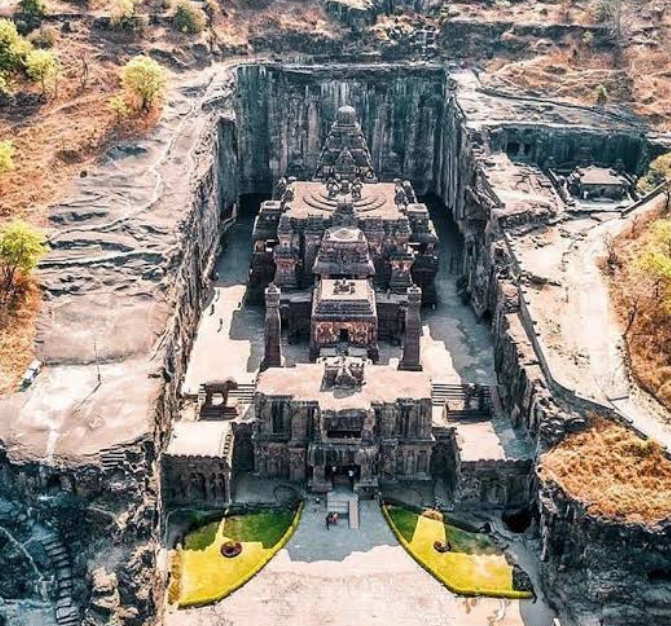
The Kailasha (IAST: Kailāśa) or Kailasha-natha (IAST: Kailāśa-nātha) temple is the largest of the rock-cut Hindu temples at the Ellora Caves in Chhatrapati Sambhaji Nagar district of Maharashtra, India.
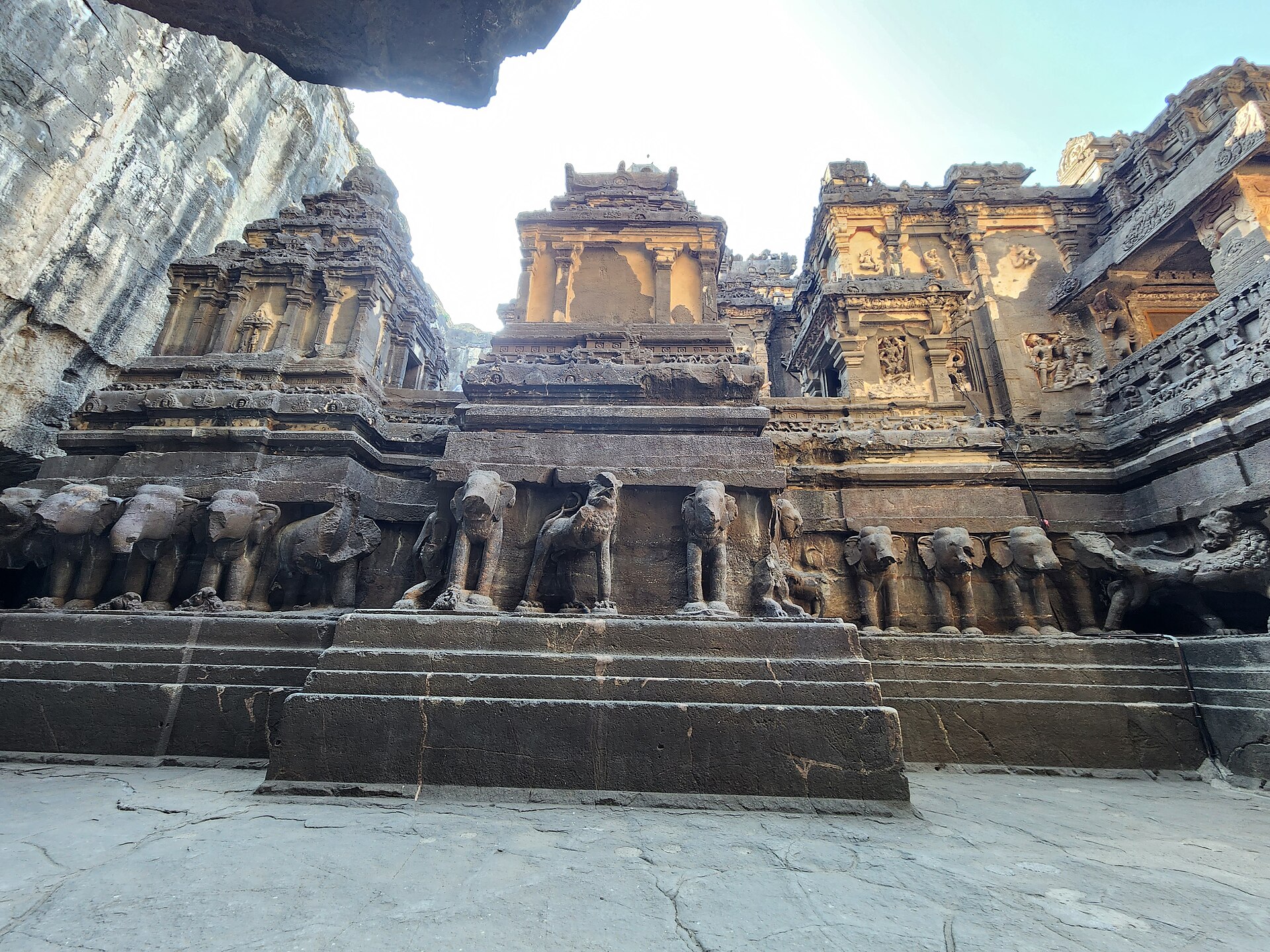
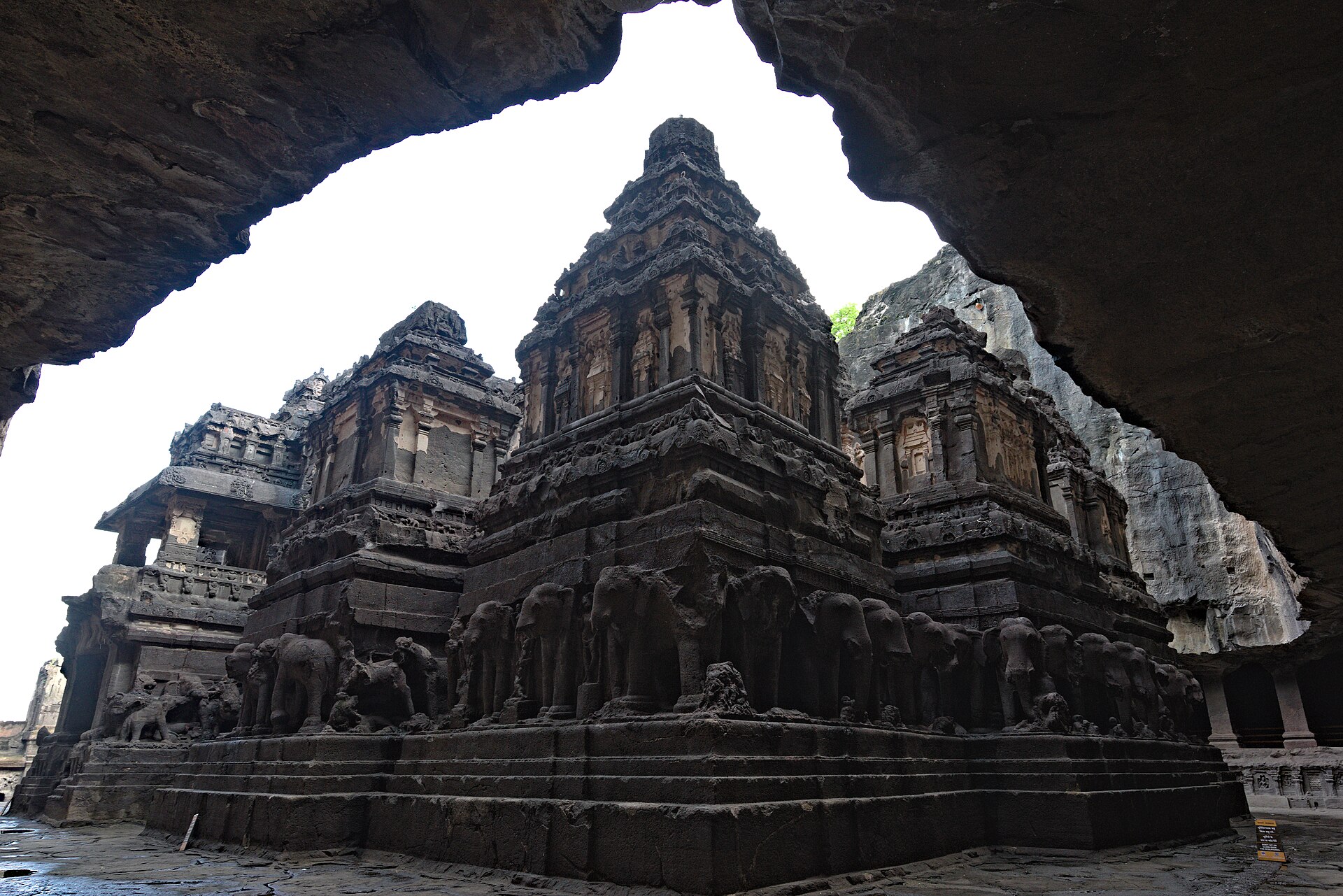
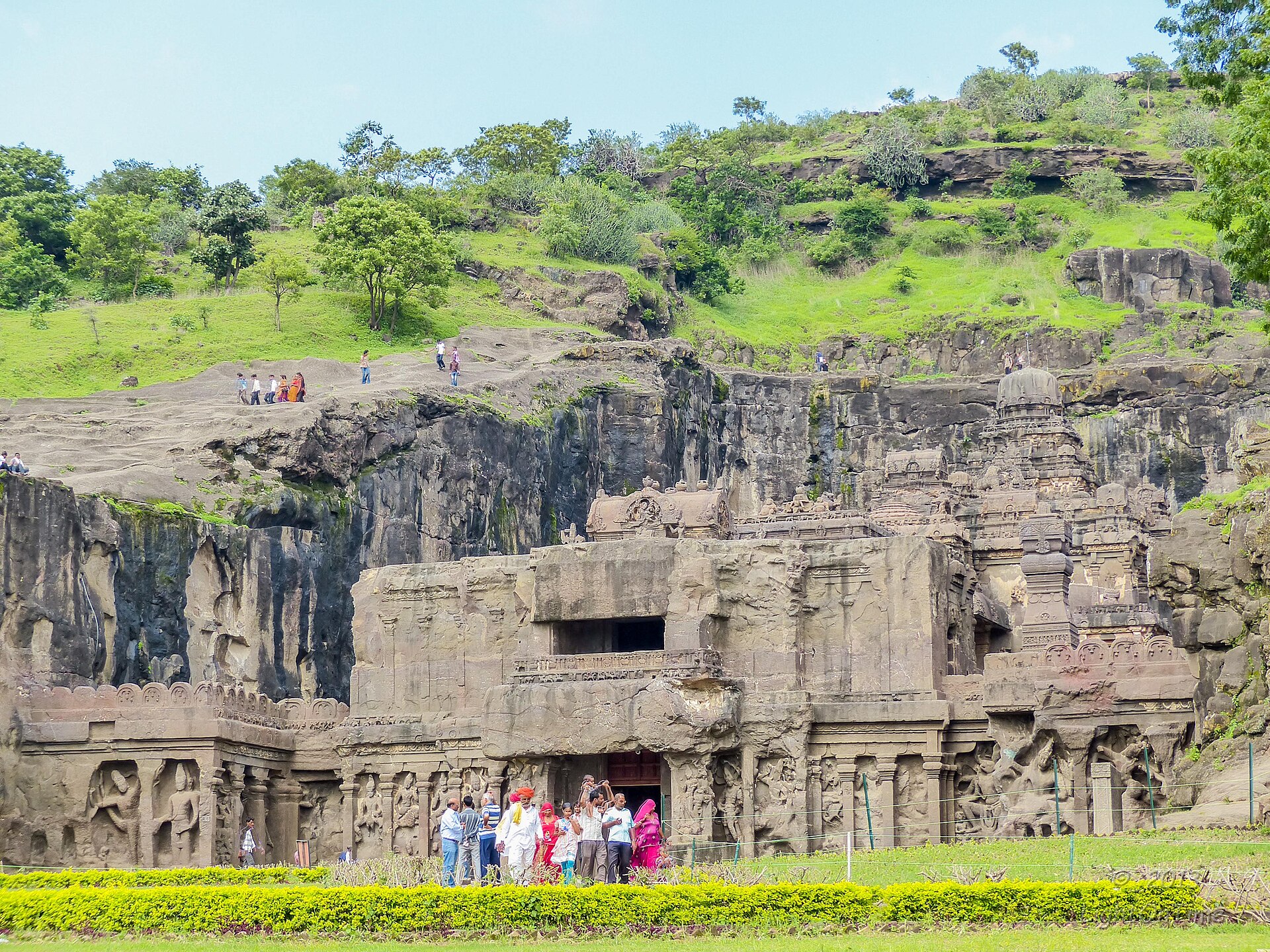
A megalith carved into a cliff face, it is considered one of the most remarkable cave temples in the world because of its size, architecture, and sculptural treatment. It has been called "the climax of the rock-cut phase of Indian architecture". The top of the structure over the sanctuary is 32.6 metres (107 ft) above the level of the court below. Although the rock face slopes downwards from the rear of the temple to the front, archaeologists believe it was sculpted from a single rock.
The Kailasa temple (Cave 16) is the largest of the 34 Hindu, Buddhist, and Jain cave temples and monasteries known collectively as the Ellora Caves, ranging for over two kilometres (1.2 mi) along the sloping basalt cliff at the site. Most of the excavation of the temple is generally attributed to the eighth century Rashtrakuta king Krishna I (r. c. 756 – 773), with some elements completed later. The temple architecture shows traces of Pallava and Chalukya styles. The temple contains a number of relief and free-standing sculptures on a grand scale equal to the architecture, though only traces remain of the paintings which originally decorated it.
Text from Wikipedia, licensed CC BY-SA 4.0.