No. 203
Sigiriya

- Where
- Sri Lanka
- Built by
- King Kashyapa
- Era
- 477-495 CE
- Known for
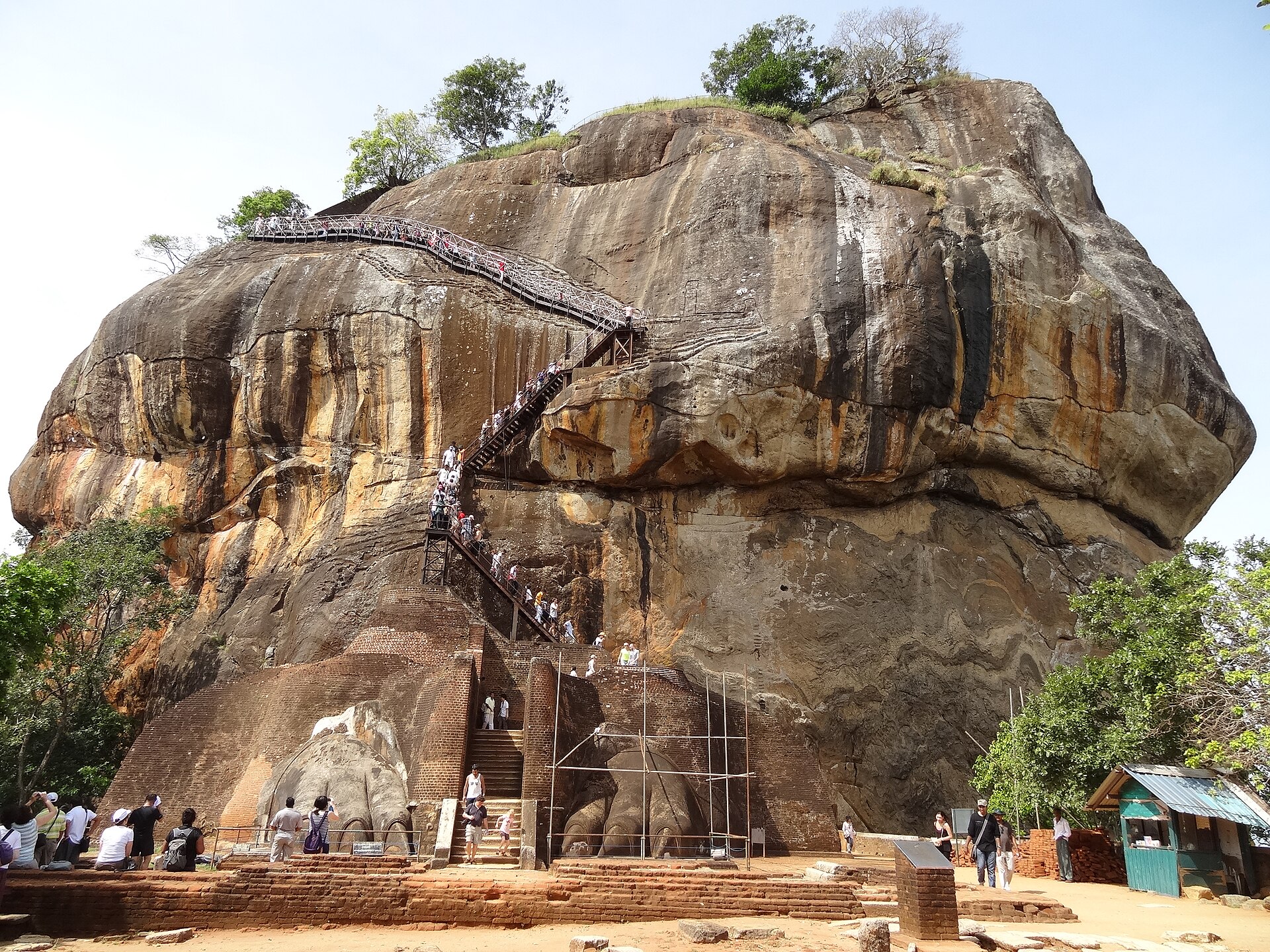
- A palace on top of a 600-foot rock, entered through a giant lion's paws.
- How it ended
- Abandoned after the king's defeat; a monastery, then forgotten until the 1800s.

Lyra Kael can take you here on the globe, tell you the story out loud and answer your questions. Start the time jump.
Background
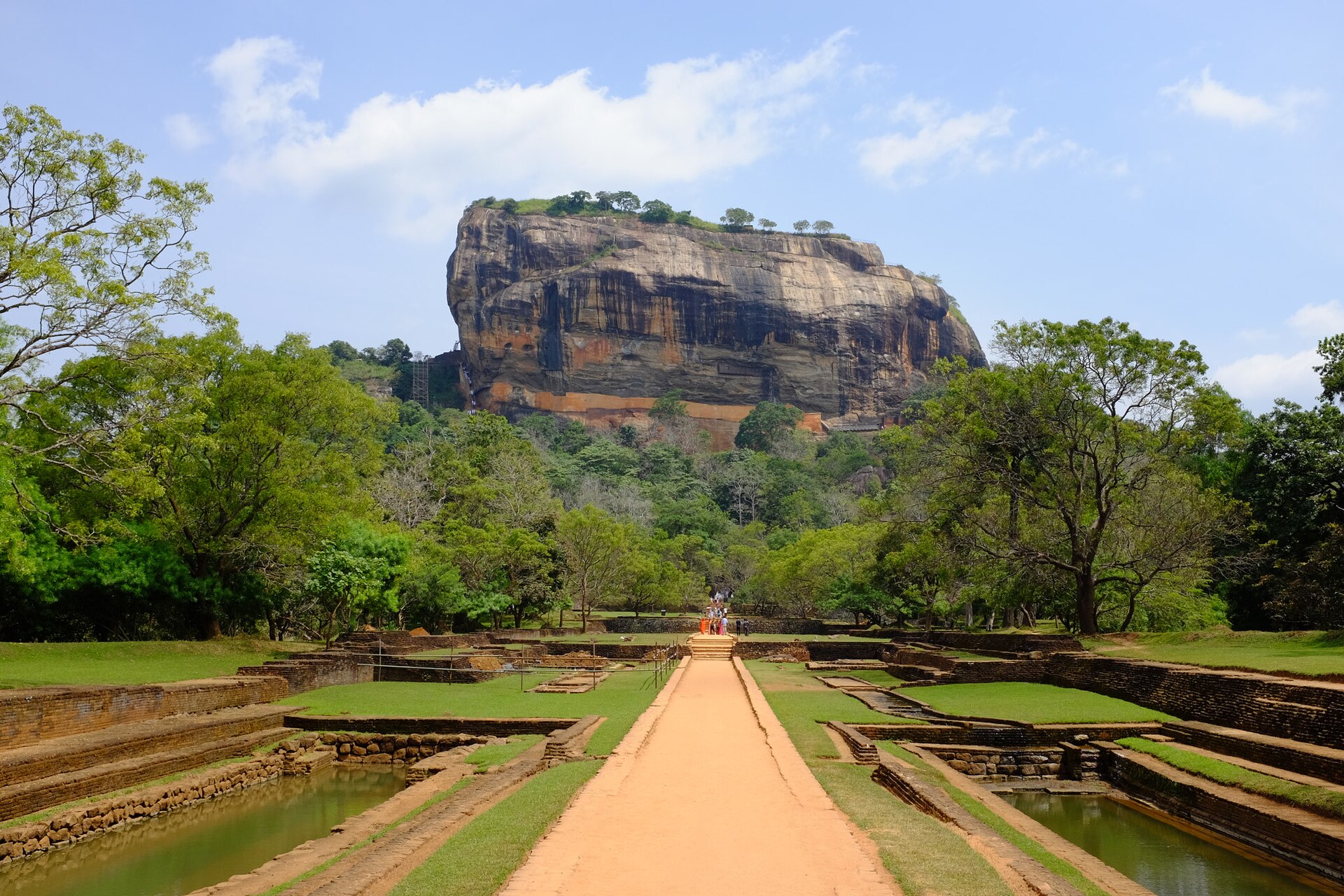
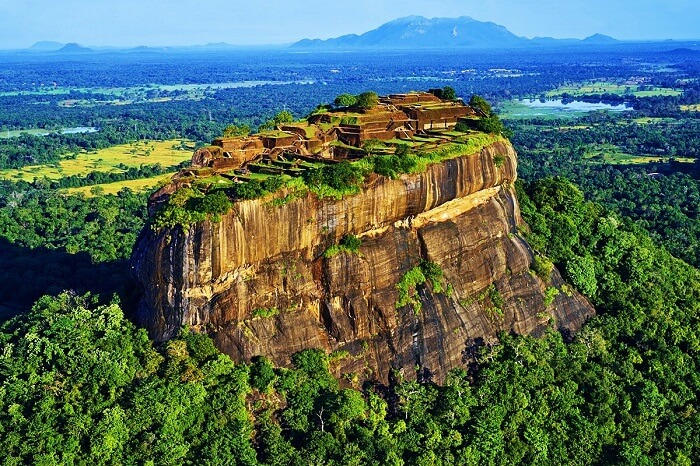
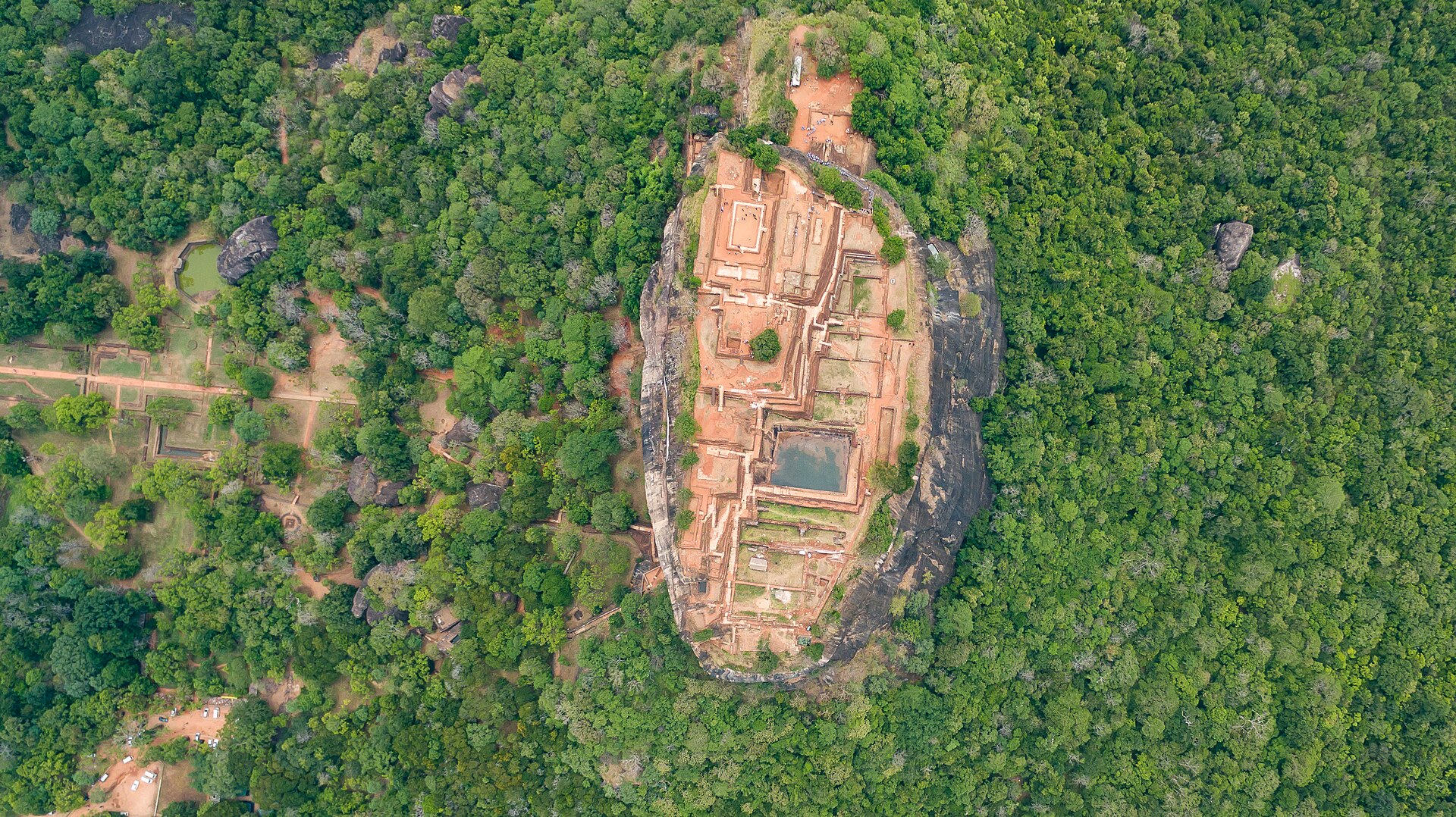
Sigiriya or Sinhagiri (Lion Rock Sinhala: සීගිරිය, Tamil: சிகிரியா/சிங்ககிரி, ) is an ancient rock fortress located in the northern Matale District near the town of Dambulla in the Central Province, Sri Lanka. It is a site of historical and archaeological significance that is dominated by a massive column of granite approximately 180 m (590 ft) high.
According to the ancient Sri Lankan chronicle the Cūḷavaṃsa, this area was a large forest, then after storms and landslides it became a hill and was selected by King Kashyapa (CE 477–495) for his new capital. He built his palace on top of this rock and decorated its sides with colourful frescoes. On a small plateau about halfway up the side of this rock he built a gateway in the form of an enormous lion. The name of this place is derived from this structure; Sinhagiri, the Lion Rock.
The capital and the royal palace were abandoned after the king's death. It was used as a Buddhist monastery until the 14th century. Sigiriya today is a UNESCO listed World Heritage Site. It is one of the best preserved examples of ancient urban planning.
Text from Wikipedia, licensed CC BY-SA 4.0.