The story
The Yayoi period in Japan began roughly 2,500 to 3,000 years ago, when rice farming spread to Japan. People learned to grow rice in wet fields, and they began working bronze and iron.
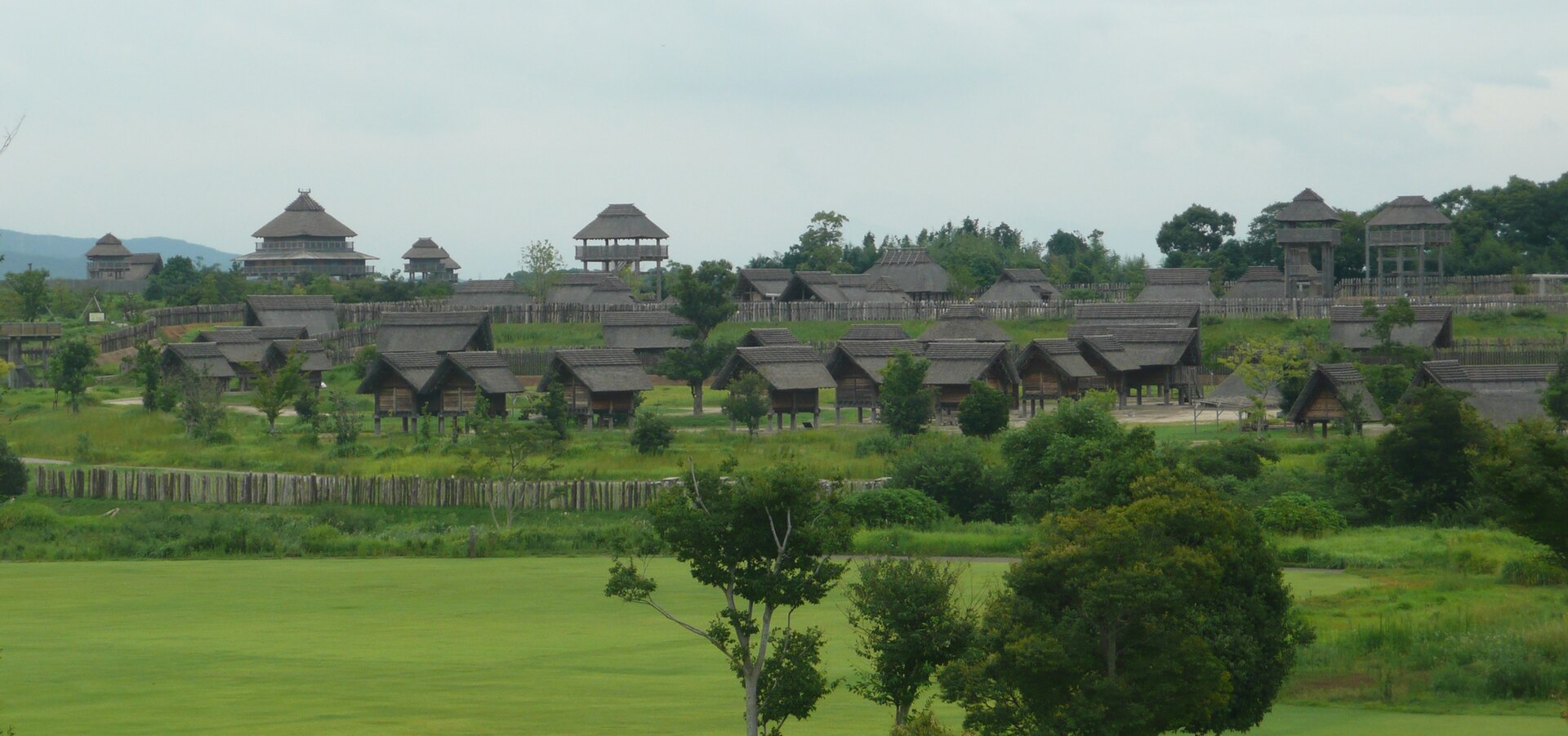
Yoshinogari started as a small village and grew into one of the largest settlements of its time, with deep moats and wooden fences around it. Watchtowers let guards look out over the land. There were raised storehouses for rice, homes in pits with thatched roofs, and a special area where leaders held ceremonies.
Archaeologists found a long row of large jar burials. Some skeletons had injuries from arrows or had no heads, showing that there were conflicts between villages.
How it ended
As the Kofun period began around 250 to 300 CE, people and power moved elsewhere, and the village was abandoned. It was buried under farmland until it was found in 1986.
What life was like
Families at Yoshinogari grew rice, fished and gathered nuts. They lived in pit houses that were partly underground, which kept them warm in winter. Raised storehouses kept rice safe from mice and damp. Craftworkers made bronze bells and mirrors, weaving and pottery. Leaders organized work, festivals and defense.
Wow facts
- The village was surrounded by a moat about 2.5 kilometers long.
- People were buried in large clay jars placed end to end.
- Raised storehouses kept rice away from mice and floods.
Photos
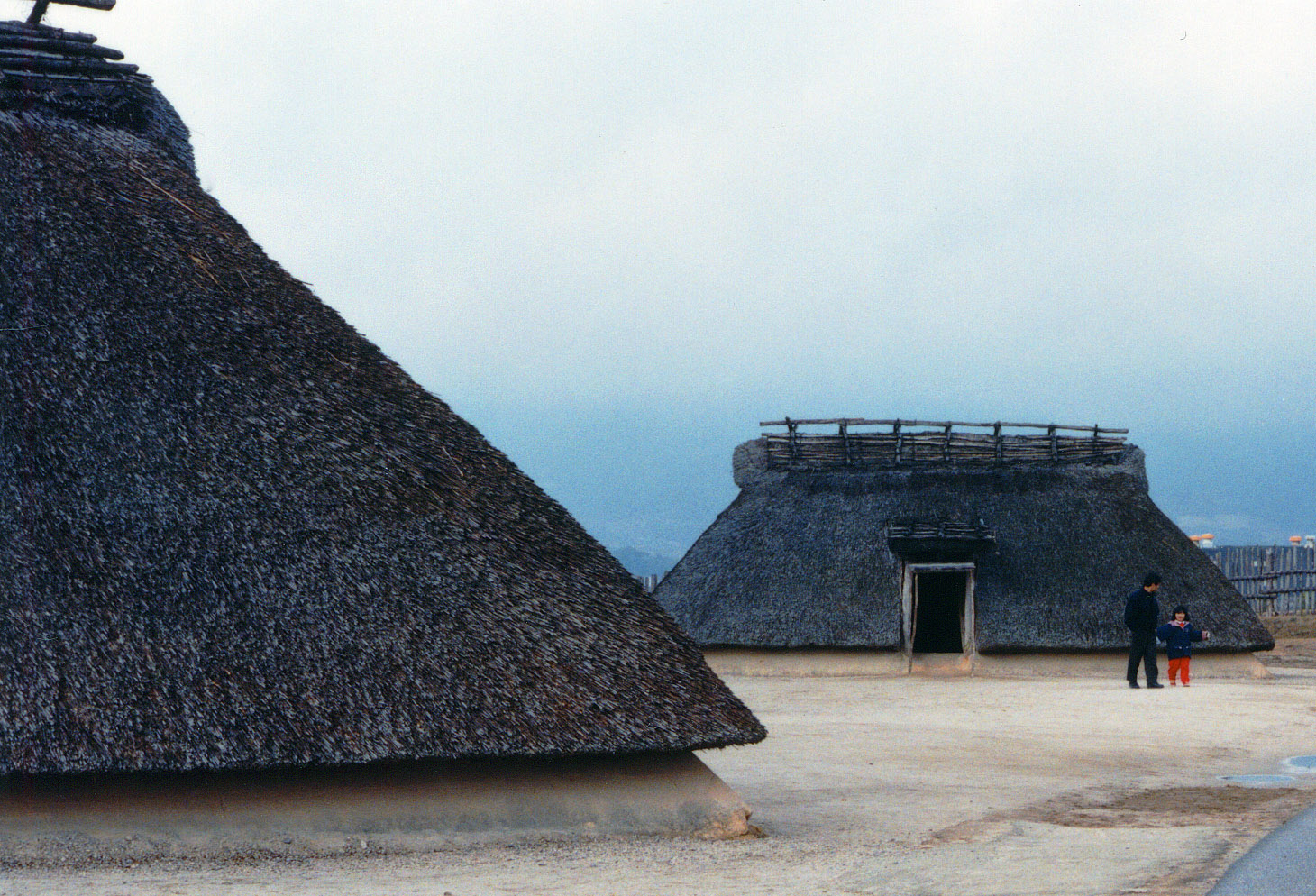 Reconstructed dwellings from a Yayoi-period site at Yoshinogari in Saga Prefecture,... No machine-readable author provided. Fg2 assumed (based on copyright claims)., Public domain
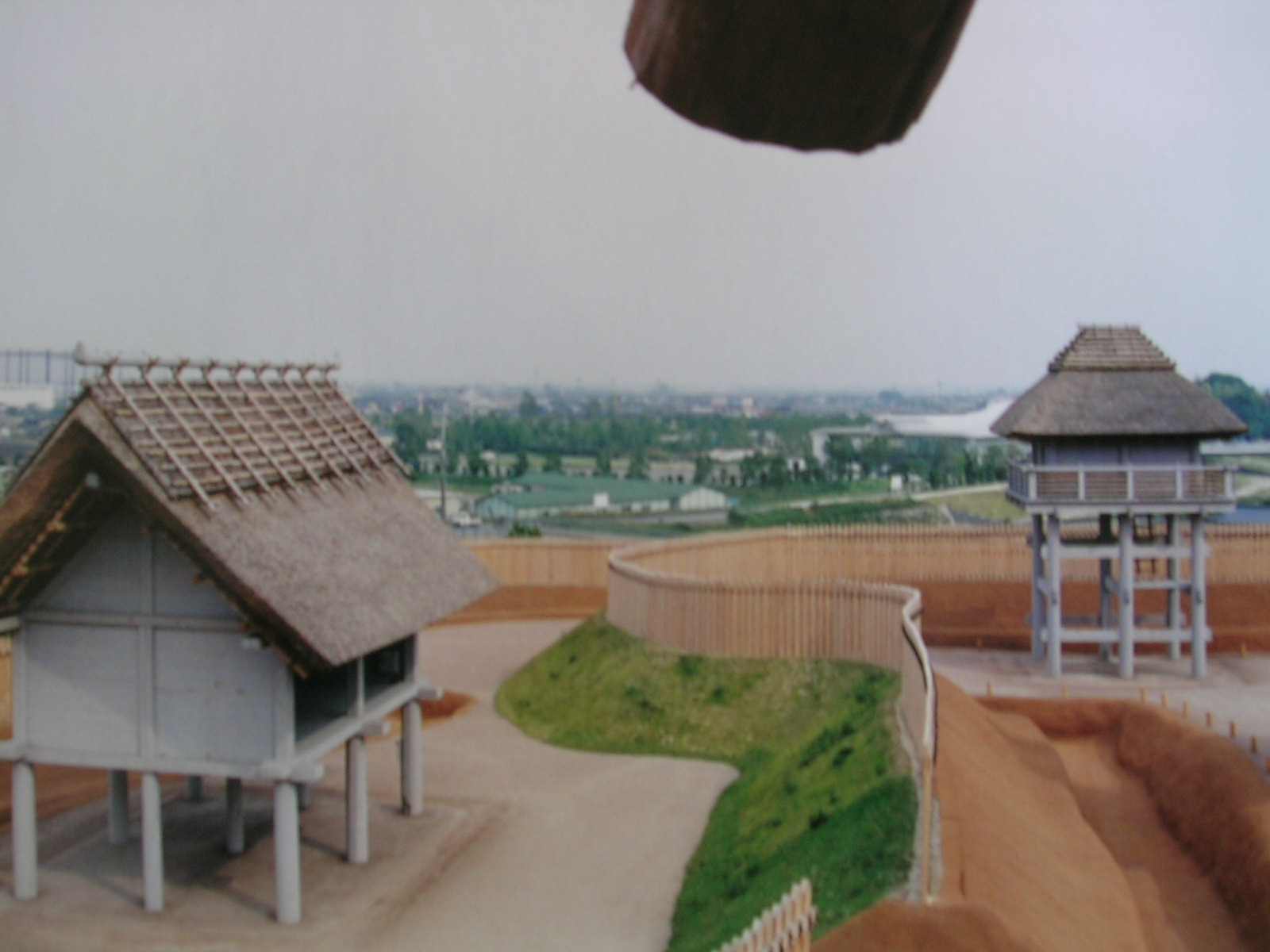 M.T. Bale Flamebroil at English Wikipedia, CC BY-SA 3.0
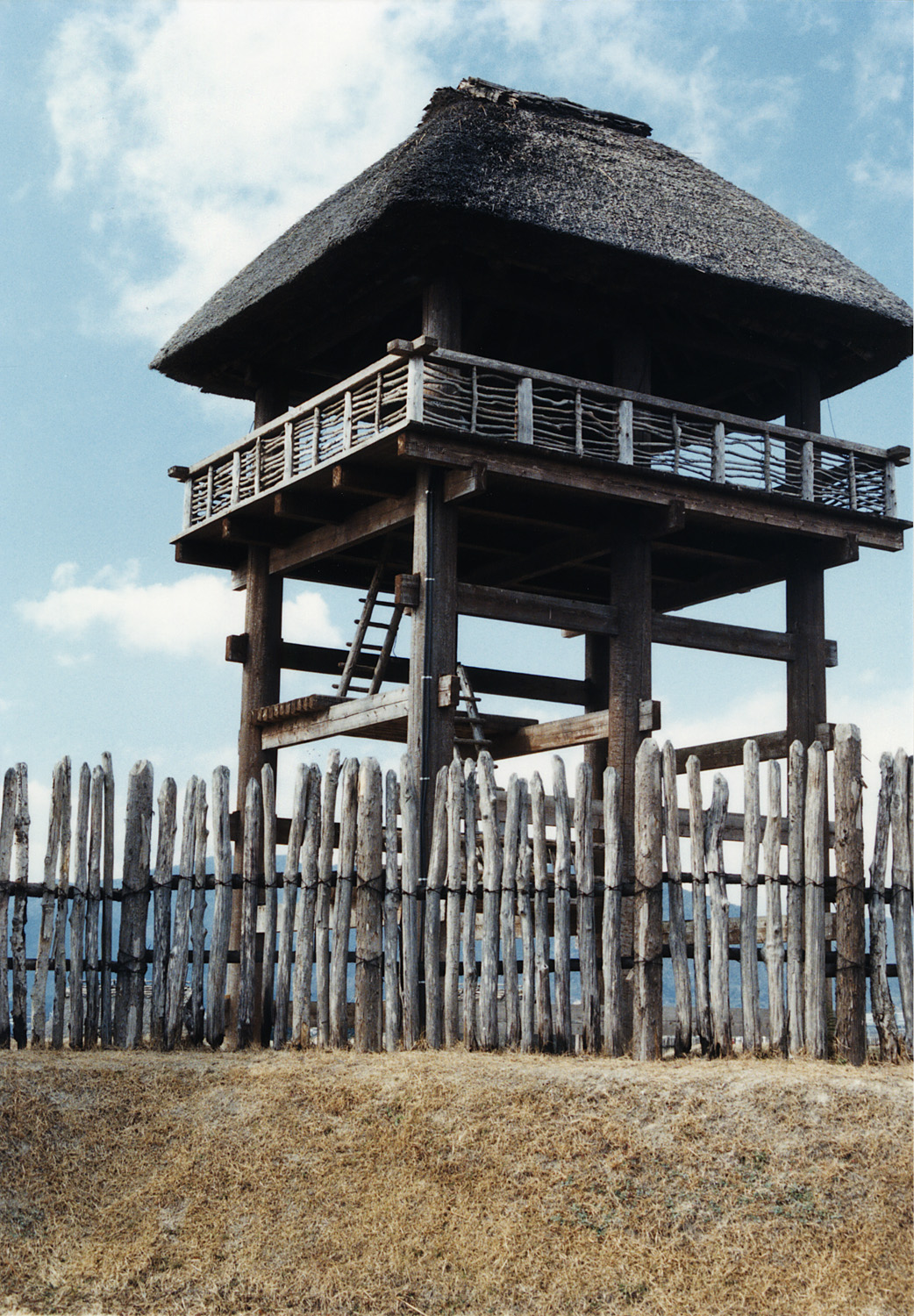 Unknown author, Public domain
Relics and treasures
- Rebuilt watchtowerstall wooden towers, in Yoshinogari Historical Park
- Jar burialsrows of large clay burial jars, displayed at the park
- Bronze objectsbells and mirrors found at the site, in the park's exhibition hall
- Moat and fencesrebuilt defenses around the village, at the park
How we know
In 1986, surveys before building an industrial park revealed the huge site. Archaeologists dug carefully and found moats, homes, burials and artifacts. Old Chinese records describe Japan at this time as having many small warring states.
What you would see today
Yoshinogari Historical Park has rebuilt more than 90 buildings, including watchtowers and a leader's hall. Visitors try ancient crafts like making magatama beads and starting fires.
For teachers and classrooms
Suggested level: grades 3-5. Print this page as a lesson sheet with the story, vocabulary, discussion questions and a quiz with an answer key.
Key words
- moat
- a deep ditch around a place for protection, sometimes filled with water
- pit house
- a home built partly underground with a roof on top
- Yayoi
- a period in Japanese history when rice farming spread
Talk about it
- Why would rice farming change how people lived?
- Why might villages build moats and watchtowers?
Try this activity
- Draw a map of Yoshinogari as it looked at its busiest, and label three things people did there.
- Find Yoshinogari on the Ruinscape timeline, then pick another place from the same century and compare them.
- Use one link in Sources below to find a real object from this place. Describe what it is made of and what it tells us.
Quick quiz
What new kind of farming spread during the Yayoi period?
- Rice farming
- Corn farming
- Cattle ranching
- Apple orchards
Show the answer
A. Wet-field rice farming spread to Japan.
What protected Yoshinogari?
- Moats, fences and watchtowers
- A volcano
- An ocean
- A glass dome
Show the answer
A. It had deep moats, fences and watchtowers.
When was the site found?
- 1986
- 1066
- 1492
- 2020
Show the answer
A. Surveys for an industrial park revealed it in 1986.
Sources and further reading
Ruinscape lessons are written for students and checked against encyclopedia and museum records. Go to the sources: these links search real museum collections, the UNESCO list and research by archaeologists.
- Wikipedia articleEncyclopedia overview with its own references
- UNESCO World HeritageOfficial listing, if the site is protected
- Google Arts & CultureMuseum exhibits, virtual tours and close-up photos
- British Museum collectionReal objects, photos and catalog notes
- The Met collectionObjects and essays from the Metropolitan Museum of Art
- Smithsonian collectionsU.S. national museum records
- 3D models on SketchfabScans of sites and artifacts (check each license)
- Scholarly articlesResearch papers by archaeologists and historians
Read the full background
Yoshinogari (吉野ヶ里 遺跡, Yoshinogari iseki) is a large and complex Yayoi period archaeological site located in the town of Yoshinogari and city of Kanzaki in Saga Prefecture, Kyūshū, Japan. According to the Yayoi chronology established by pottery seriations in the 20th century, Yoshinogari dates back to between the 3rd century BC and the 3rd century AD. However, recent attempts to use absolute dating methods such as AMS radiocarbon dating have shown that the earliest Yayoi component of Yoshinogari dates back to before 400 BC.
Background text from Wikipedia, available under CC BY-SA 4.0.
Last updated: October 2026. How we make Ruinscape.