No. 195
Moctezuma II

- Where
- Aztec Empire
- Culture
- Aztec Empire
- Lived
- 1466-1520
- Why they matter
- Ruled Tenochtitlan when Cortes arrived.
- Fate
- Died in Spanish custody.

Lyra Kael can take you here on the globe, tell you the story out loud and answer your questions. Start the time jump.
Background
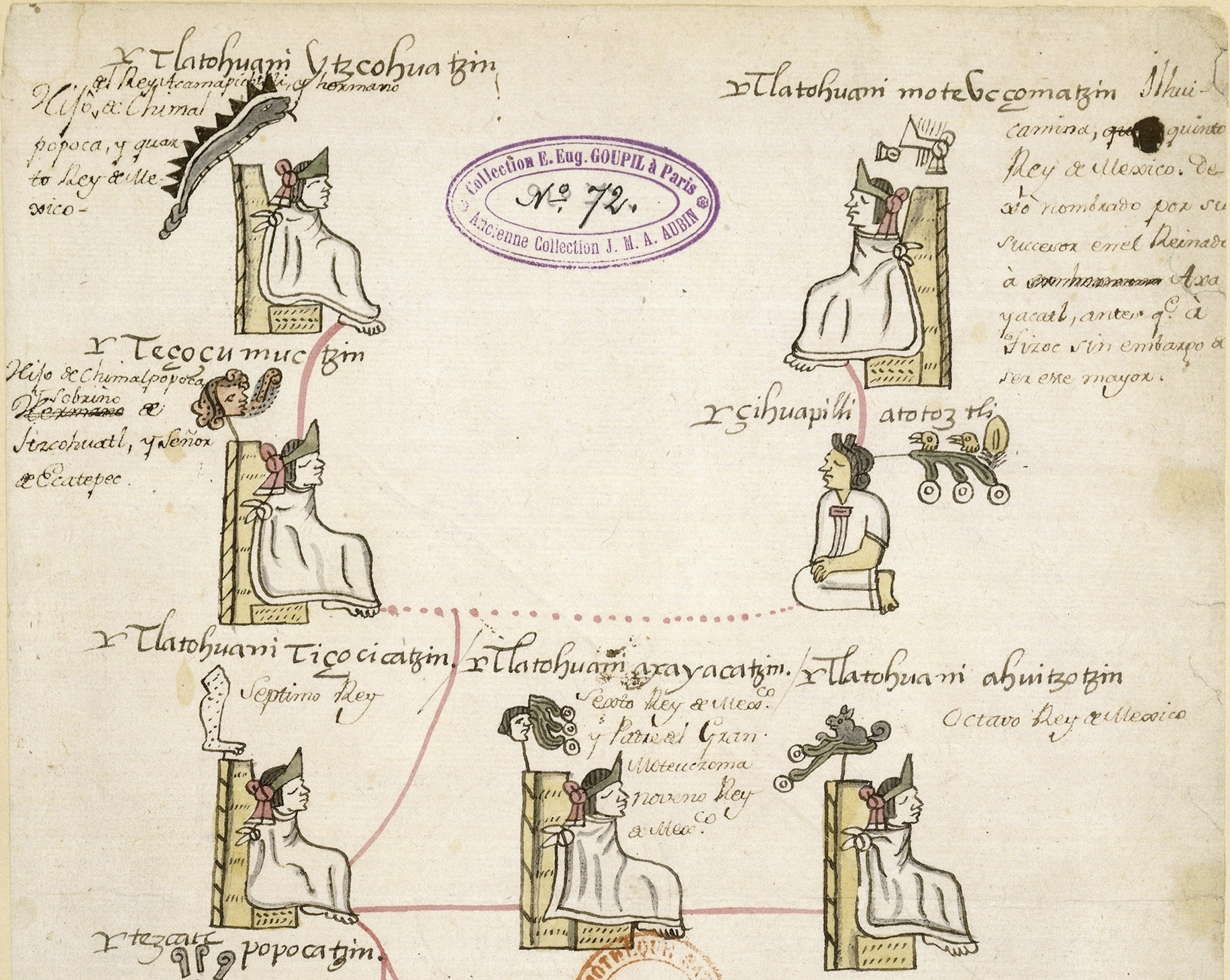
Moctezuma Xocoyotzin (c. 1466 – 29 June 1520), retroactively referred to in European sources as Moctezuma II, and often called Montezuma, was the ninth emperor of the Aztec Empire (also known as the Mexica Empire), reigning from 1502 or 1503 to 1520. Through his marriage with Queen Tlapalizquixochtzin of Ecatepec, one of his two wives, he was also the king consort of the altepetl.
The first contact between the indigenous civilizations of Mesoamerica and Europeans took place during Moctezuma's reign. He was killed during the initial stages of the Spanish conquest of the Aztec Empire when Hernán Cortés, the Spanish conquistador, and his men seized the Aztec capital of Tenochtitlan. During his reign, the Aztec Empire reached its greatest size. Through warfare, Moctezuma expanded the territory as far south as Xoconosco in Chiapas and the Isthmus of Tehuantepec, and incorporated the Zapotec and Yopi people into the empire. He changed the previous meritocratic system of social hierarchy and widened the divide between pipiltin (nobles) and macehualtin (commoners) by prohibiting commoners from working in the royal palaces.
Though two other Aztec rulers succeeded Moctezuma after his death, their reigns were short-lived and the empire quickly collapsed under them. Historical portrayals of Moctezuma have mostly been colored by his role as ruler of a defeated nation. The Spanish have described him as weak-willed, superstitious, and indecisive. However, authentic depictions of his person among his contemporaries are divided; some depict him as one of the greatest leaders Mexico had, a great conqueror who tried his best to maintain his nation together at times of crisis, while others depict him as a tyrant who wanted to take absolute control over the whole empire. Accounts of how he died and whether Spaniards or natives killed him differ. The story of the Aztecs remains one of the most well-known conquest narratives from the history of European contact with Native Americans, and Moctezuma has been mentioned or portrayed in numerous works of historical fiction and popular culture.
Text from Wikipedia, licensed CC BY-SA 4.0.