No. 117
Rapa Nui (Easter Island) moai

- Where
- Chile
- Built by
- Rapa Nui people
- Era
- 1250-1500
- Known for
- Nearly 1,000 giant stone figures, many walked upright into place.
- How it ended
- Debated: deforestation and rats, then European disease and 1860s slave raids.

Lyra Kael can take you here on the globe, tell you the story out loud and answer your questions. Start the time jump.
Background
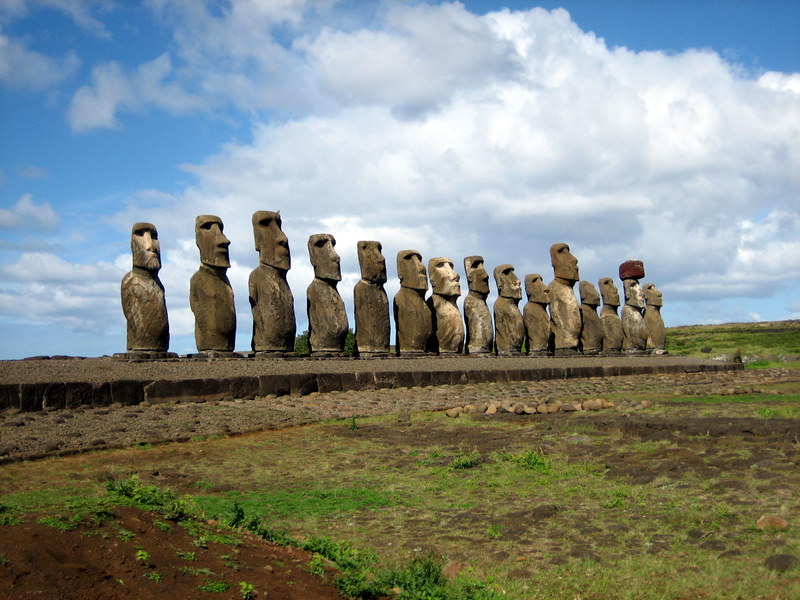
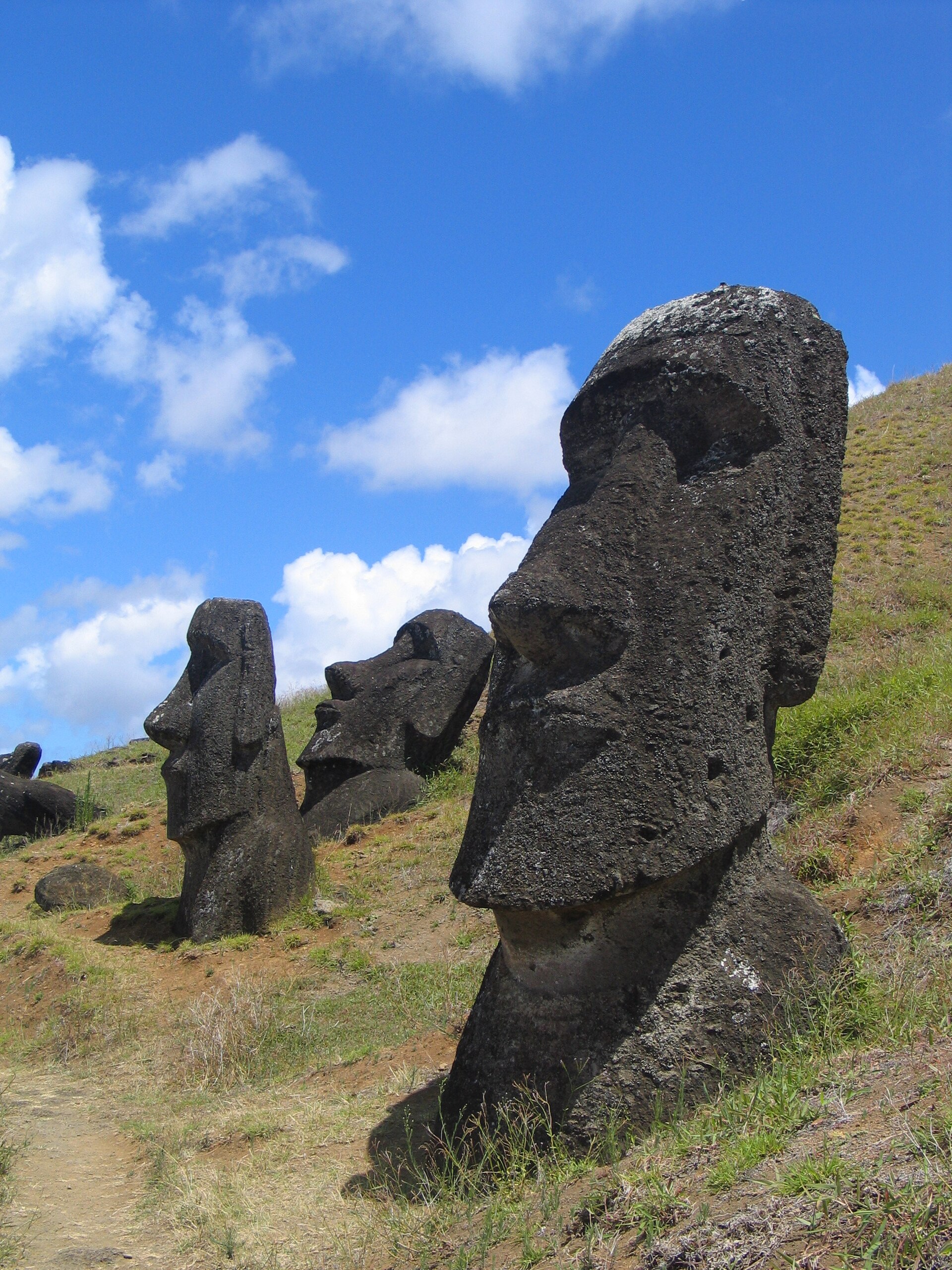
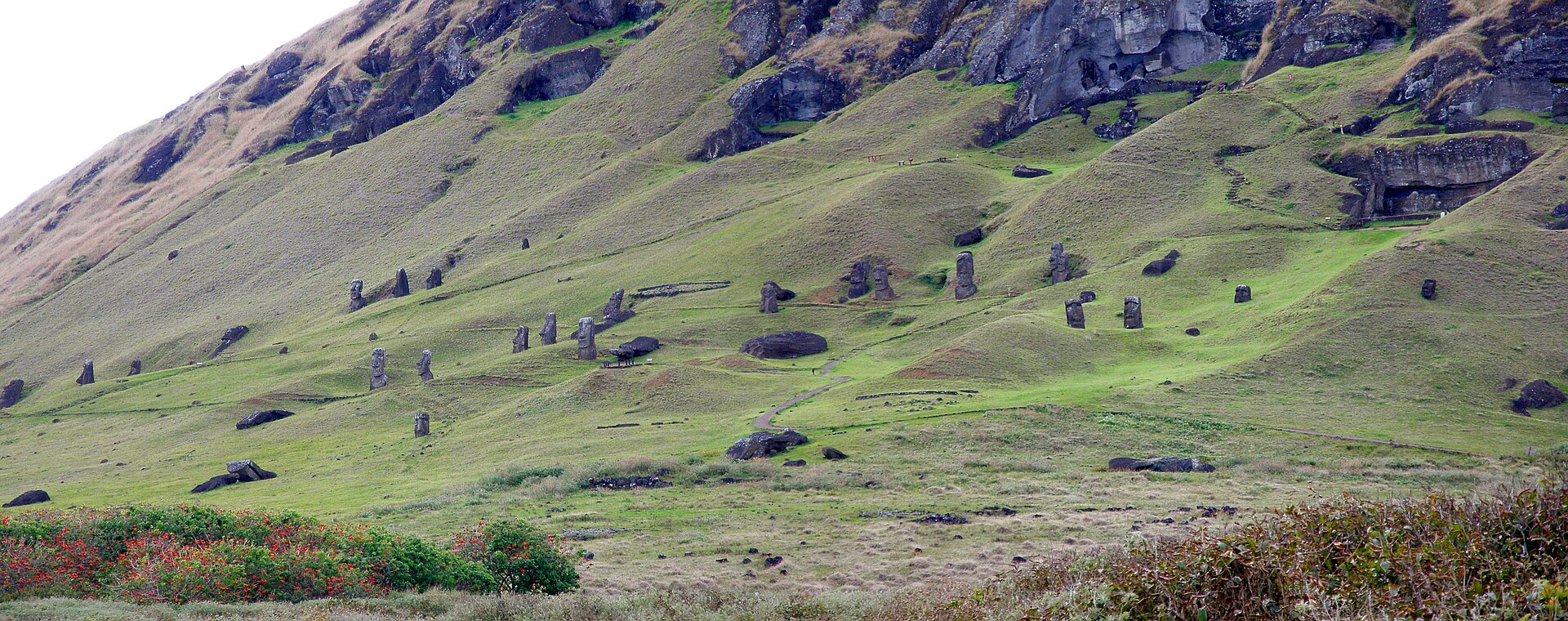
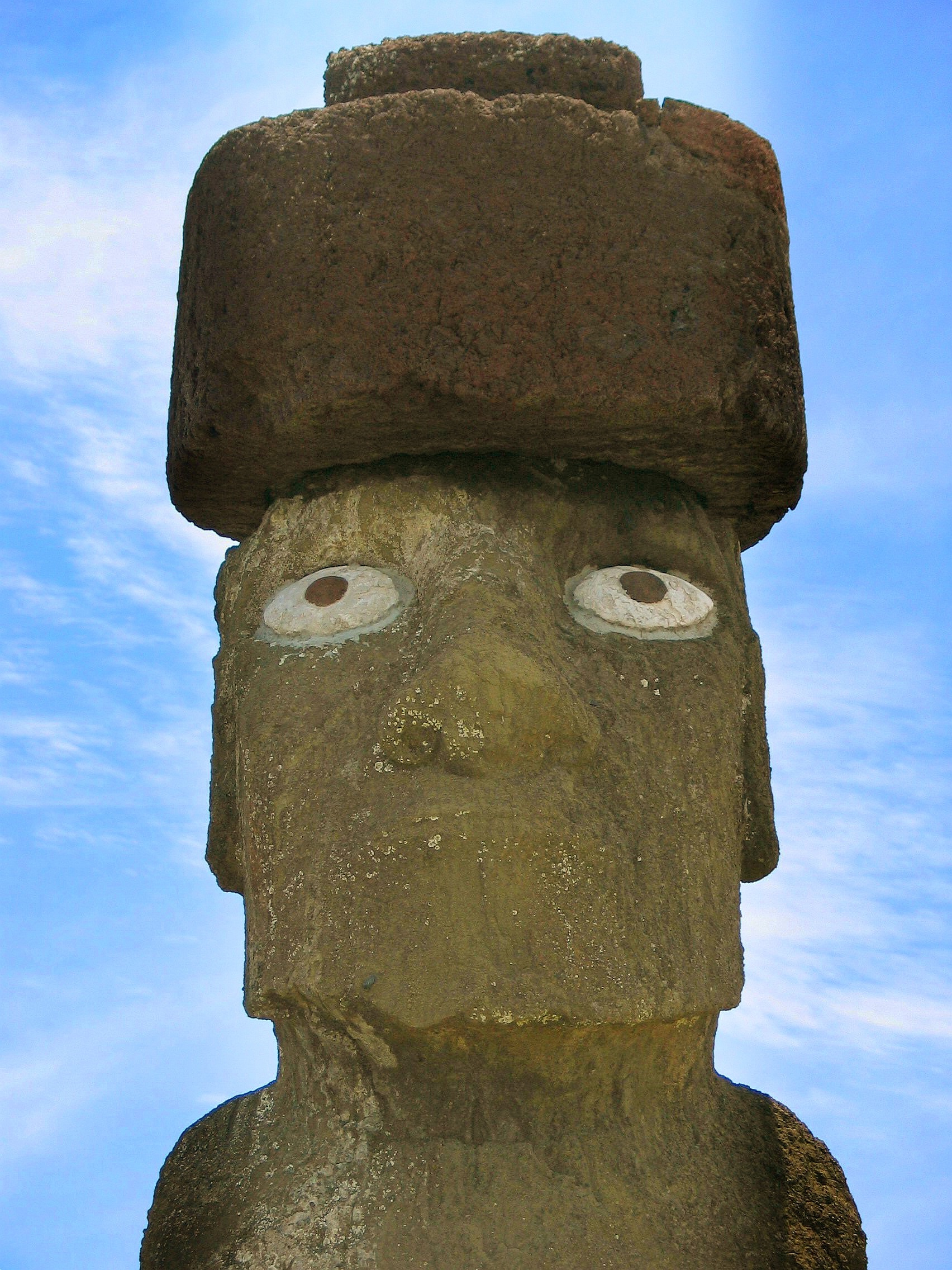
Moai or moꞌai ( MOH-eye; Rapa Nui: moꞌai, lit. 'statue', pronounced [ˈmoʔai]; Spanish: moái) are monolithic human figures carved from stone by the Rapa Nui people, on Rapa Nui (Easter Island) in eastern Polynesia between the years 1250 and 1500. Nearly half are still at Rano Raraku, the main moai quarry, but hundreds were transported from there and set on stone platforms called ahu around the island's perimeter. Almost all moai have overly large heads, which account for three-eighths of the size of the whole statue. They also have no legs. The moai are chiefly the living faces (aringa ora) of deified ancestors (aringa ora ata tepuna).
Although the stone moai are the most famous, the Rapa Nui also carved small wooden moai: moꞌai kavakava (male), moꞌai paepae/papa (female), and moꞌai taŋata (male).
The statues still gazed inland across their clan lands when Europeans first visited the island in 1722, but all of them had fallen by the latter part of the 19th century. The moai were toppled in the late 18th and early 19th centuries, possibly as a result of European contact or internecine tribal wars.
The production and transportation of the more than 900 statues is considered a remarkable creative and physical feat. The tallest moai erected, called Paro, was almost 10 metres (33 ft) high and weighed 82 tonnes (81 long tons; 90 short tons). The heaviest moai erected was a shorter but squatter moai at Ahu Tongariki, weighing 86 tonnes (85 long tons; 95 short tons). One unfinished sculpture, if completed, would be approximately 21 m (69 ft) tall, with a weight of about 145–165 tonnes (143–162 long tons; 160–182 short tons). Statues are still being discovered as of 2023.
Text from Wikipedia, licensed CC BY-SA 4.0.