No. 1
Pyramids of Giza and the Sphinx

- Where
- Egypt
- Built by
- Old Kingdom Egypt
- Era
- 2600-2500 BCE
- Known for
- The Great Pyramid was the tallest human-made structure for about 3,800 years.
- How it ended
- The Old Kingdom broke apart around 2180 BCE amid drought and weak central rule.

Lyra Kael can take you here on the globe, tell you the story out loud and answer your questions. Start the time jump.
Background
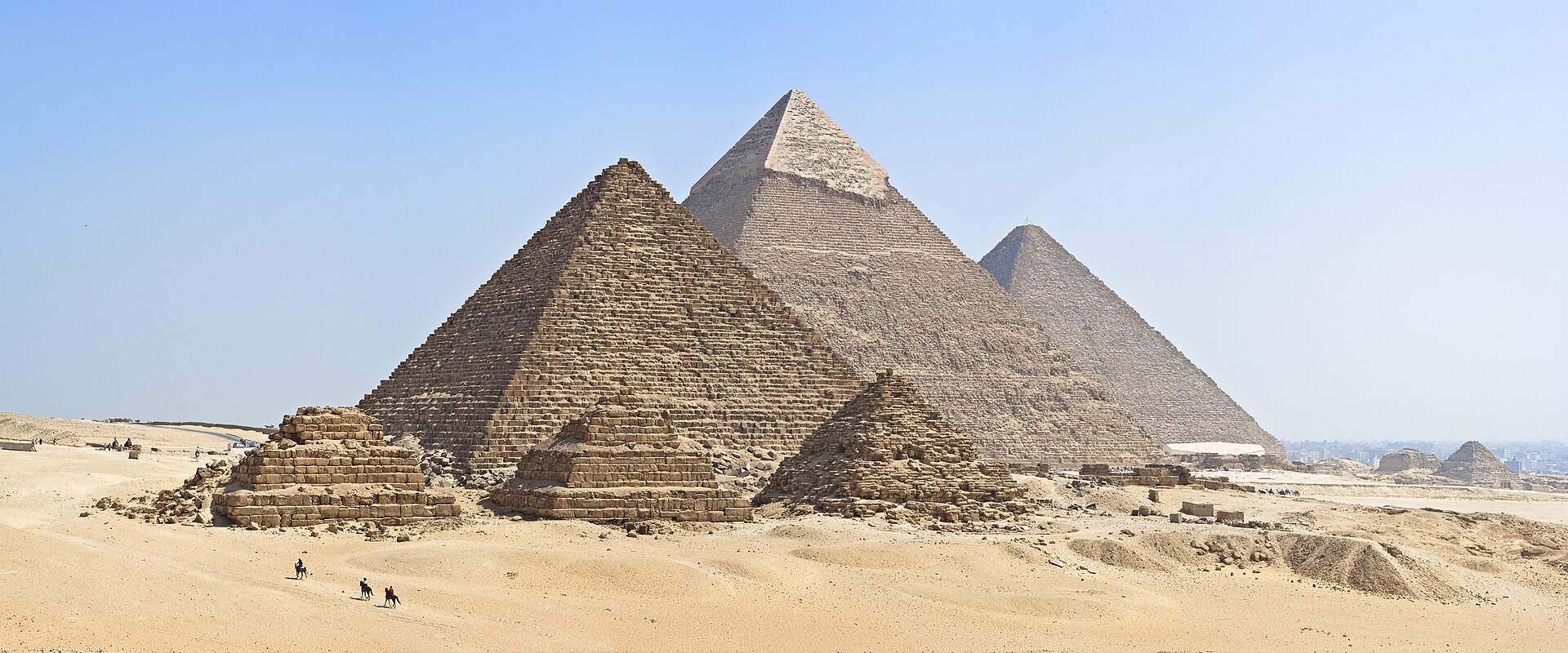
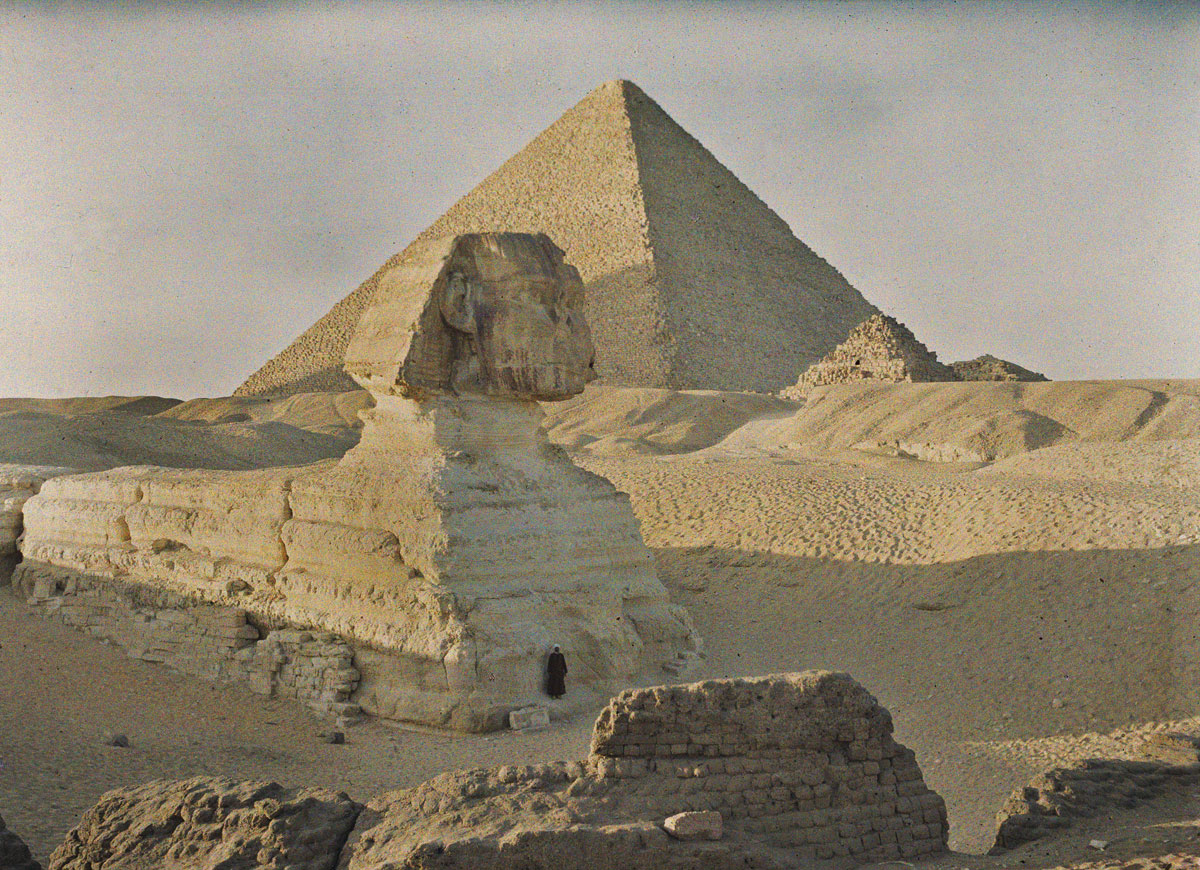
The Giza pyramid complex (also called the Giza necropolis) in Egypt is home to the Great Pyramid, the pyramid of Khafre, and the pyramid of Menkaure, along with their associated pyramid complexes and the Great Sphinx. All were built during the Fourth Dynasty of the Old Kingdom of ancient Egypt, between c. 2600 – c. 2500 BC. The site also includes several temples, cemeteries, and the remains of a workers' village.
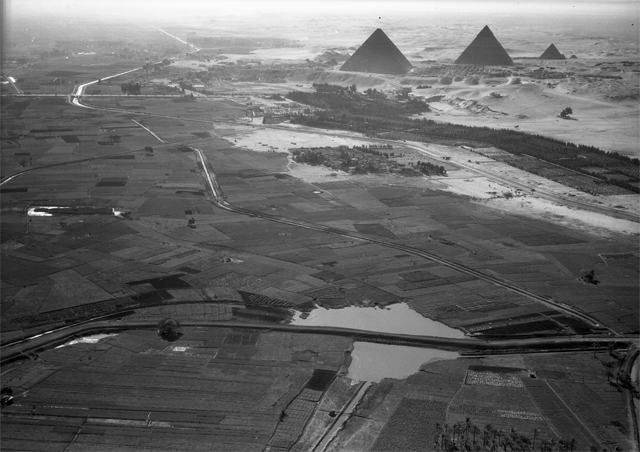
The site is at the edge of the Western Desert, approximately 9 km (5.6 mi) west of the Nile River in the city of Giza, and about 13 km (8.1 mi) southwest of the city centre of Cairo. It forms the northernmost part of the 16,000 ha (160 km2; 62 sq mi) Pyramid Fields of the Memphis and its Necropolis UNESCO World Heritage Site, inscribed in 1979. The pyramid fields include the Abusir, Saqqara, and Dahshur pyramid complexes, which were all built in the vicinity of Egypt's ancient capital of Memphis. Further Old Kingdom pyramid fields were located at the sites Abu Rawash, Zawyet El Aryan, and Meidum. Most of the limestone used to build the pyramids originates from the underlying Mokattam Formation.
The Great Pyramid and the Pyramid of Khafre are the largest pyramids built in ancient Egypt, and they have historically been common as emblems of Ancient Egypt in the Western imagination. They were popularised in Hellenistic times, when the Great Pyramid was listed by Antipater of Sidon as one of the Seven Wonders of the World. It is by far the oldest of the Ancient Wonders and the only one still in existence.
Text from Wikipedia, licensed CC BY-SA 4.0.