The story
In ancient Hawaii, life followed the kapu system, a set of sacred laws. Breaking a kapu, like walking in a chief's shadow or eating certain foods, could be punished by death.
But there was hope. If a lawbreaker could reach a pu'uhonua, a place of refuge, before being caught, a priest would perform a ceremony and they would be forgiven. Pu'uhonua o Honaunau was one of the most important. Sometimes people swam across the bay to reach it.
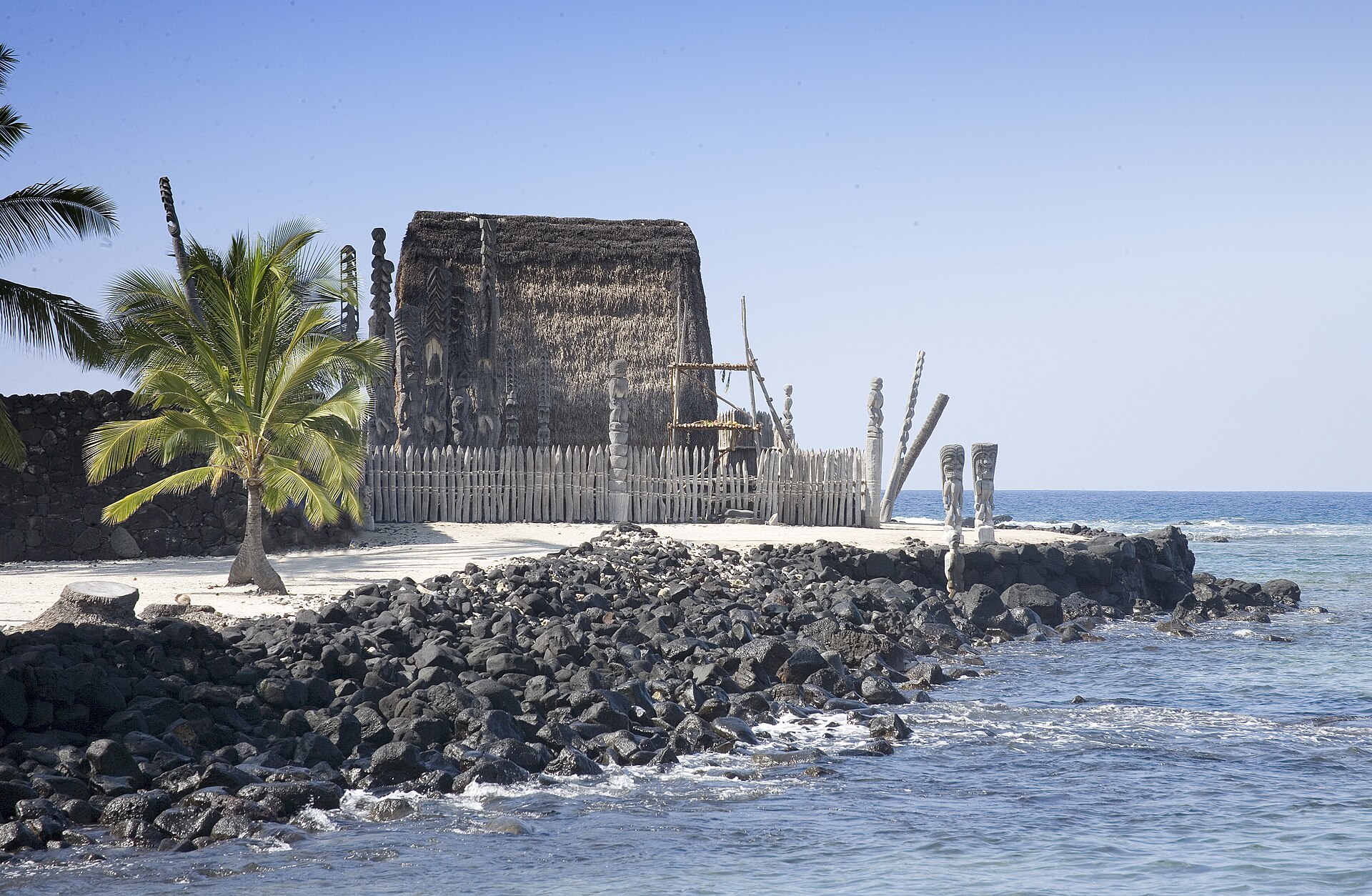
Around 1550, a great stone wall about 3 meters high and 300 meters long was built to separate the refuge from the royal grounds. The Hale o Keawe temple held the bones of chiefs, which gave the place spiritual power called mana.
How it ended
In 1819, the kapu system was ended by Hawaii's rulers, and pu'uhonua were no longer needed. The temple was taken apart, and the place became quiet, until it was protected as a national park in 1961.
What life was like
Honaunau was home to ruling chiefs who lived on royal grounds near the bay. People fished, grew taro and sweet potatoes, and made tools from stone and wood. During wartime, women, children and elders could shelter in the refuge too. Craftsmen carved wooden images called ki'i to honor the gods.
Wow facts
- The great wall was built without mortar, using lava rocks fitted together.
- People sometimes swam across the bay to reach safety.
- Carved wooden ki'i figures guard the rebuilt Hale o Keawe temple.
Photos
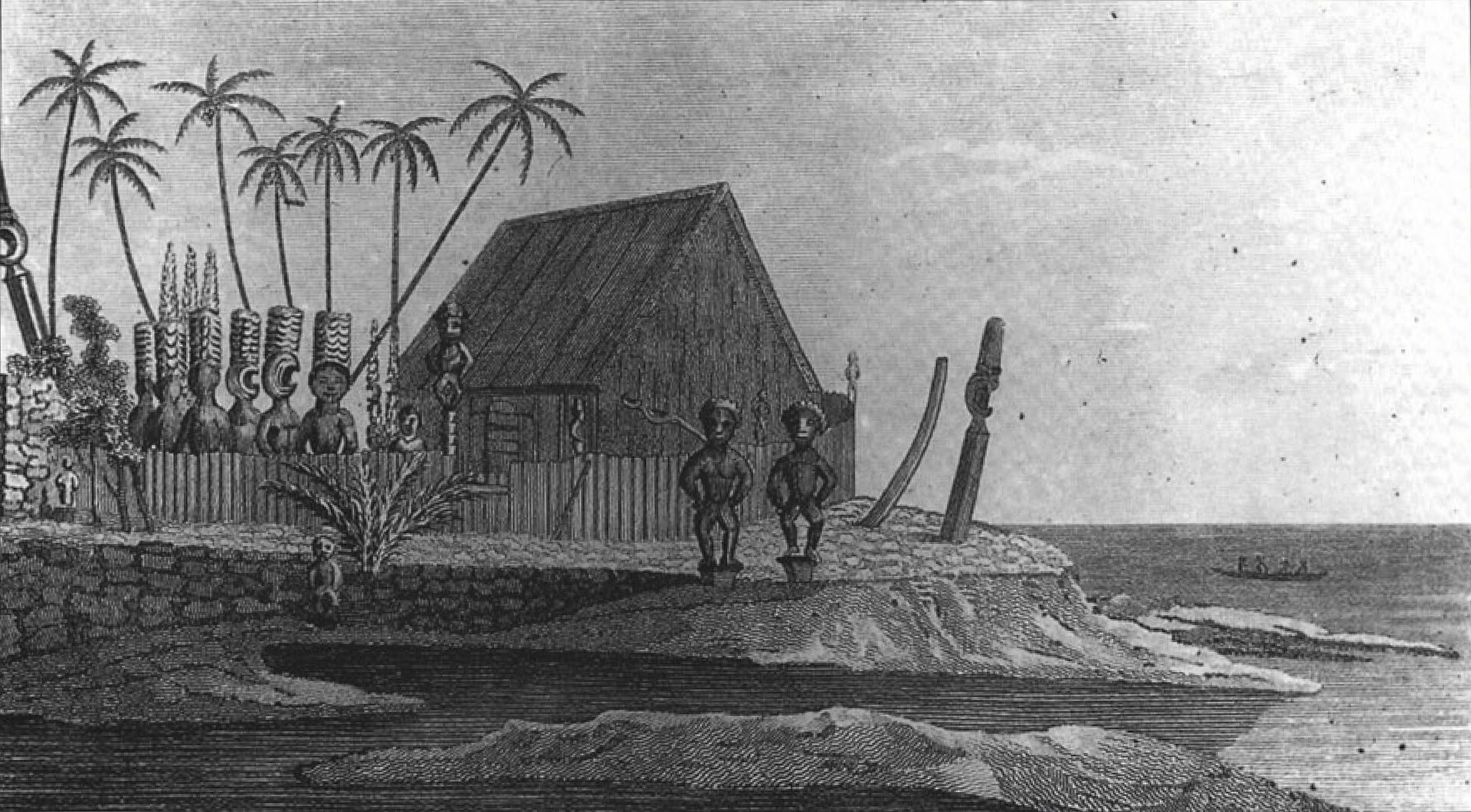 The Depository of the Kings of Hawaii, adjoining the Place of Refuge at Honaunau,... William Ellis, Public domain
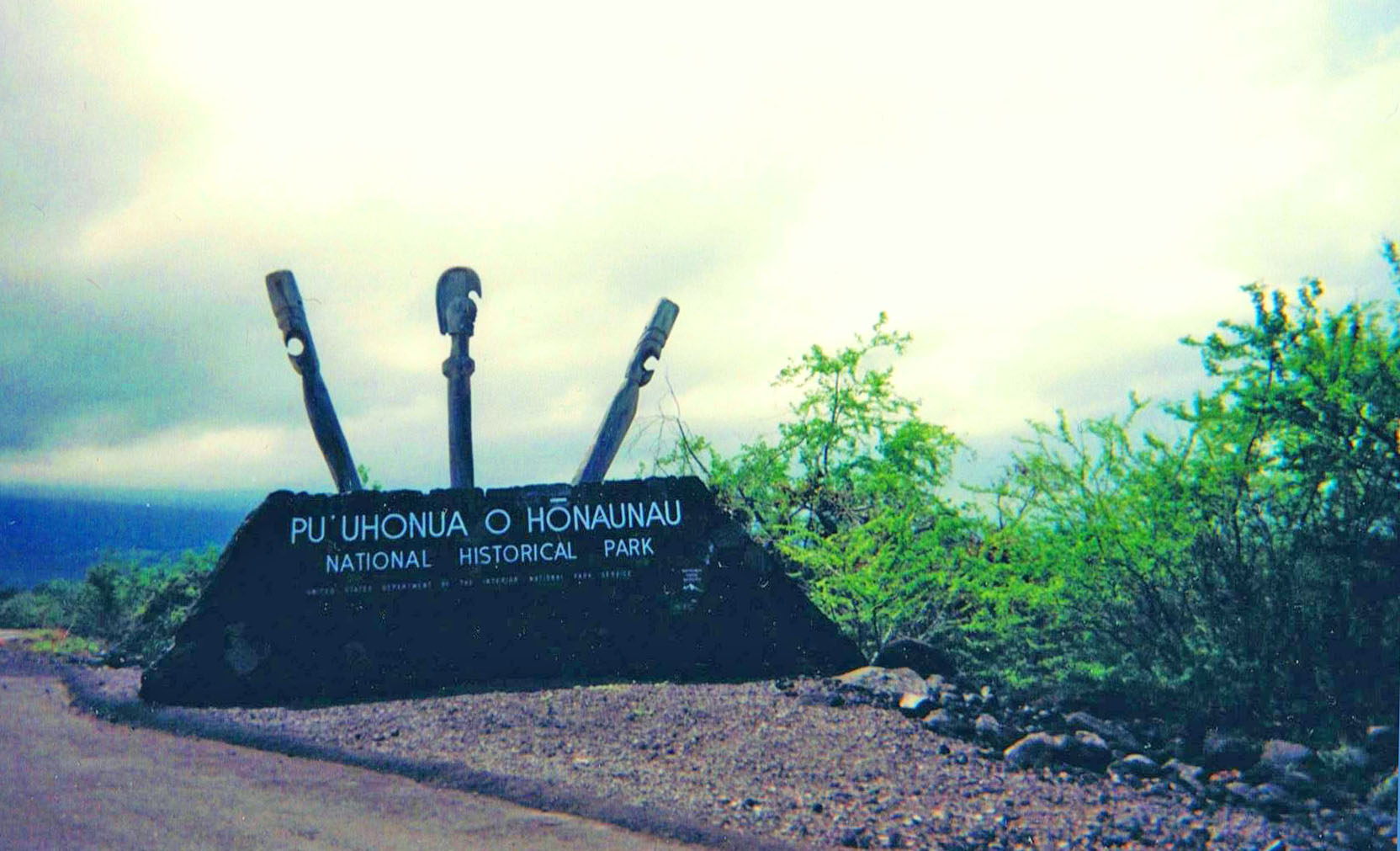 The entrance to Pu'uhonua O Honaunau National Historical Park, south of Kona, on the... Drums600 at English Wikipedia, Public domain
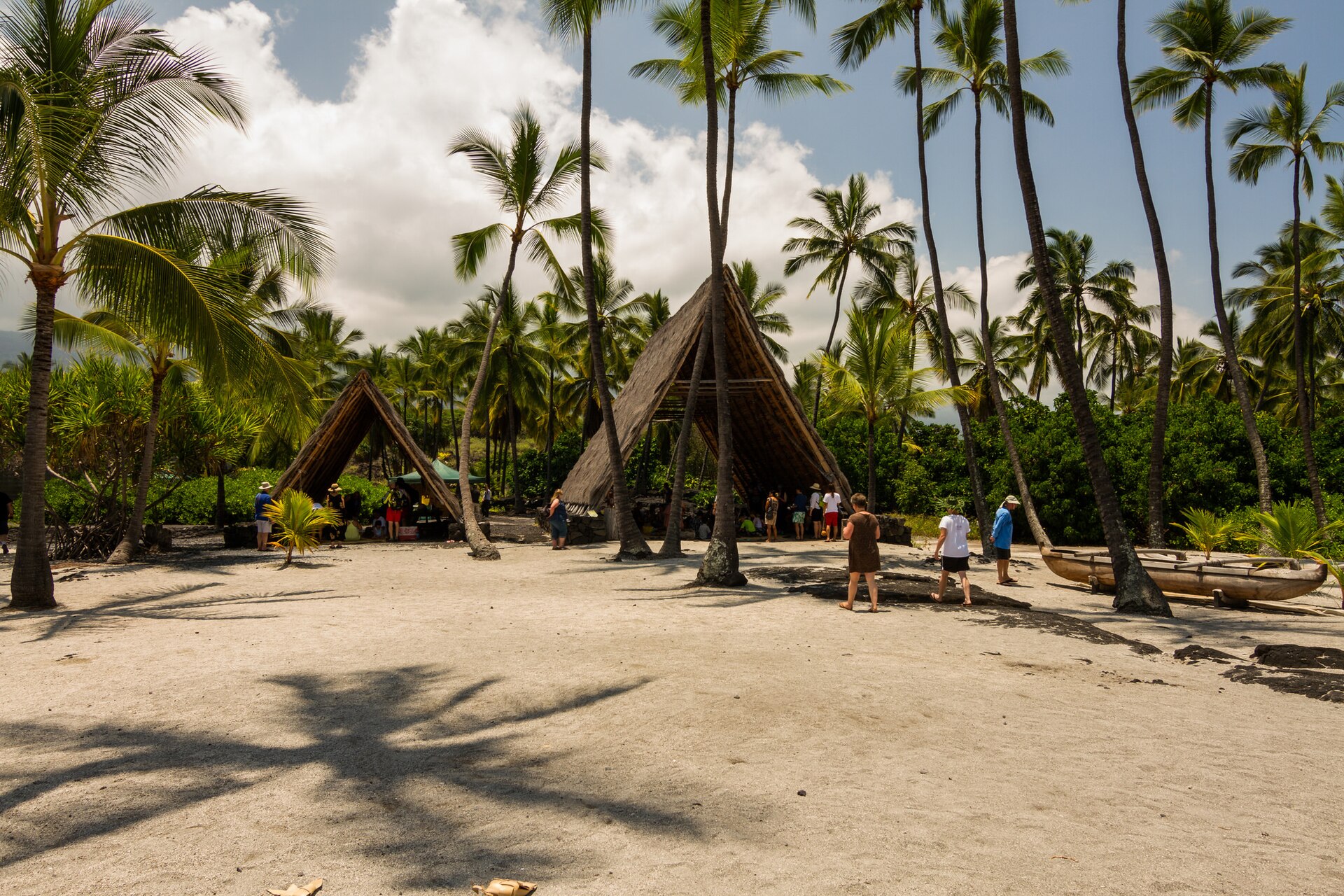 Hawaiian Hale at the Puʻuhonua o Hōnaunau National Historical Park Nnachappa64, CC BY-SA 4.0
Relics and treasures
- The Great Walla stone wall about 300 meters long, at the site
- Hale o Keawethe rebuilt temple and carved ki'i, at the site
- Royal fishpondsponds for the chiefs' fish, at the site
- Holua slidean ancient sledding track for lava slopes, in the park
How we know
Hawaiian oral histories and chants describe pu'uhonua and the kapu system. Early visitors in the 1800s described the site. Archaeologists and the National Park Service studied and restored it.
What you would see today
The site is a national historical park. Visitors walk the shore, see the rebuilt temple and carved figures, and often spot green sea turtles resting on the rocks. Cultural demonstrations share Hawaiian traditions.
For teachers and classrooms
Suggested level: grades 3-5. Print this page as a lesson sheet with the story, vocabulary, discussion questions and a quiz with an answer key.
Key words
- kapu
- sacred laws and rules in ancient Hawaii
- refuge
- a safe place to escape danger
- mana
- spiritual power in Hawaiian belief
Talk about it
- Why might a society with strict laws also need a place of forgiveness?
- How do we give people second chances today?
Try this activity
- Draw a map of Pu'uhonua o Honaunau as it looked at its busiest, and label three things people did there.
- Find Pu'uhonua o Honaunau on the Ruinscape timeline, then pick another place from the same century and compare them.
- Use one link in Sources below to find a real object from this place. Describe what it is made of and what it tells us.
Quick quiz
What was a pu'uhonua?
- A place of refuge
- A fishing boat
- A volcano
- A school
Show the answer
A. It was a place where lawbreakers could be forgiven.
What were Hawaii's sacred laws called?
- Kapu
- Mana
- Hula
- Lei
Show the answer
A. The kapu system was a set of sacred laws.
What animals do visitors often see here?
- Green sea turtles
- Penguins
- Camels
- Kangaroos
Show the answer
A. Green sea turtles rest on the rocks.
Sources and further reading
Ruinscape lessons are written for students and checked against encyclopedia and museum records. Go to the sources: these links search real museum collections, the UNESCO list and research by archaeologists.
- Wikipedia articleEncyclopedia overview with its own references
- UNESCO World HeritageOfficial listing, if the site is protected
- Google Arts & CultureMuseum exhibits, virtual tours and close-up photos
- British Museum collectionReal objects, photos and catalog notes
- The Met collectionObjects and essays from the Metropolitan Museum of Art
- Smithsonian collectionsU.S. national museum records
- 3D models on SketchfabScans of sites and artifacts (check each license)
- Scholarly articlesResearch papers by archaeologists and historians
Read the full background
Puʻuhonua o Hōnaunau National Historical Park is a United States National Historical Park located on the west coast of the island of Hawaiʻi in the U.S. state of Hawaii. The historical park preserves the site where, up until the early 19th century, Hawaiians who broke a kapu (one of the ancient laws) could avoid certain death by fleeing to this place of refuge or puʻuhonua. The offender would be absolved by a priest and freed to leave. Defeated warriors and non-combatants could also find refuge here during times of battle. The grounds just outside the Great Wall that encloses the puʻuhonua were home to several generations of powerful chiefs.
Puʻuhonua o Hōnaunau is one of the only four places in Hawaii where the flag of Hawaii can officially fly alone without the American flag; the other three places are ʻIolani Palace, the Mauna ʻAla and Thomas Square.
Background text from Wikipedia, available under CC BY-SA 4.0.
Last updated: October 2026. How we make Ruinscape.