The story
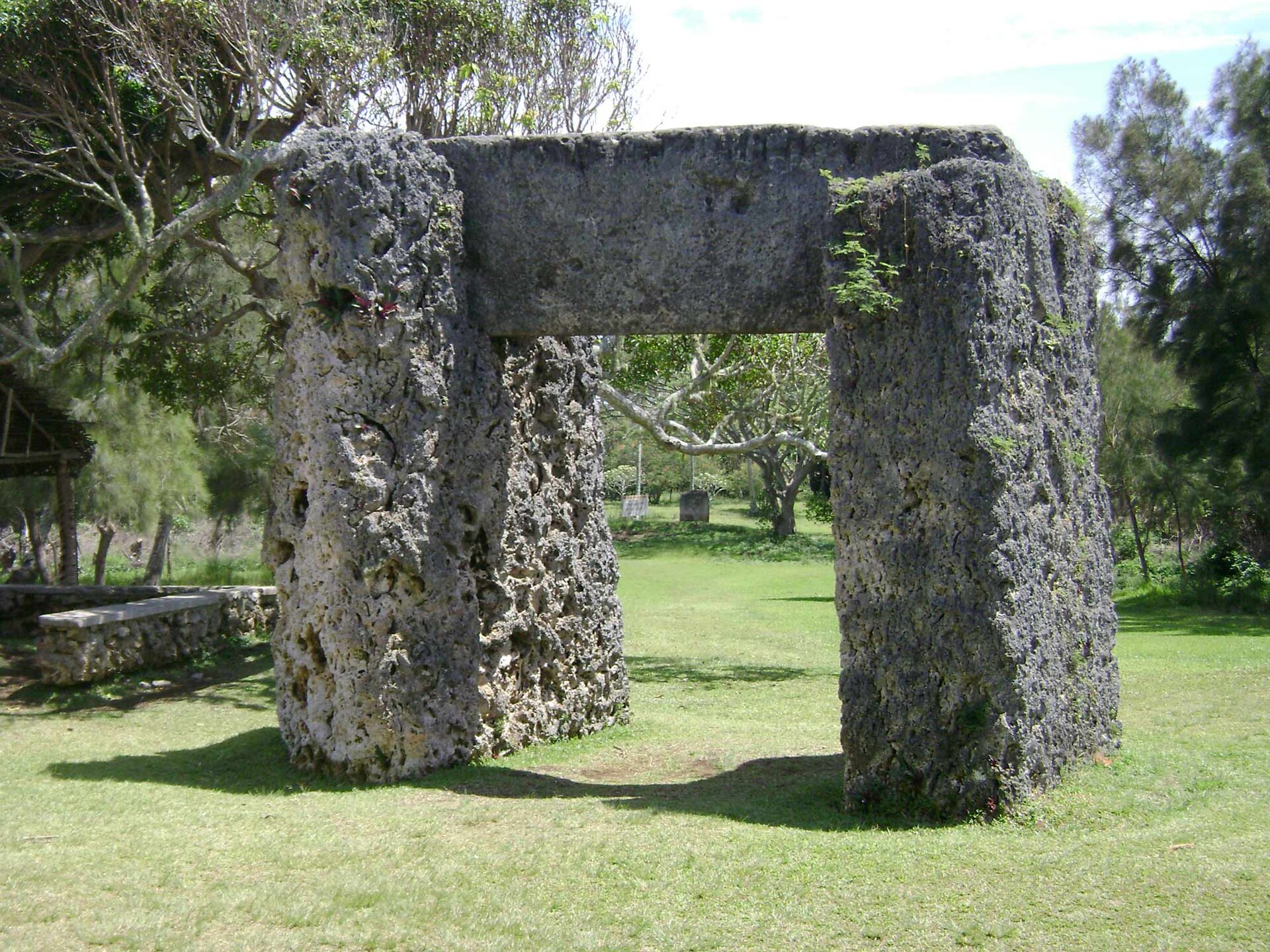
Around 1200 CE, the Tu'i Tonga, Tonga's sacred kings, ruled a large ocean empire. The 11th Tu'i Tonga, Tu'itatui, built Ha'amonga 'a Maui, which means the Burden of Maui.
The gateway is made of three blocks of coral limestone. Each upright is about 5 meters tall, and the top beam rests in notches cut into them. Each stone weighs around 30 to 40 tonnes.
Its name comes from a legend that the demigod Maui carried the stones here on a pole over his shoulder. In 1967, King Taufa'ahau Tupou IV suggested that a carving on the top beam marks the direction of sunrise on the solstices, so it may have worked like a calendar.
How it ended
Over time, the royal center of the Tu'i Tonga moved to Lapaha, and the gateway was no longer the center of power. But it still stands where it was built, after more than 800 years.
What life was like
Tonga's people farmed yams and taro, fished and sailed great double-hulled canoes between islands. The Tu'i Tonga were believed to come from the sky god and had huge power. Builders moved giant stones without metal tools, probably by rafts, rollers and many workers.
Wow facts
- Each stone weighs around 30 to 40 tonnes.
- A legend says the demigod Maui carried the stones on his shoulder.
- A carved mark on the top beam may point to the sunrise on the solstices.
Photos
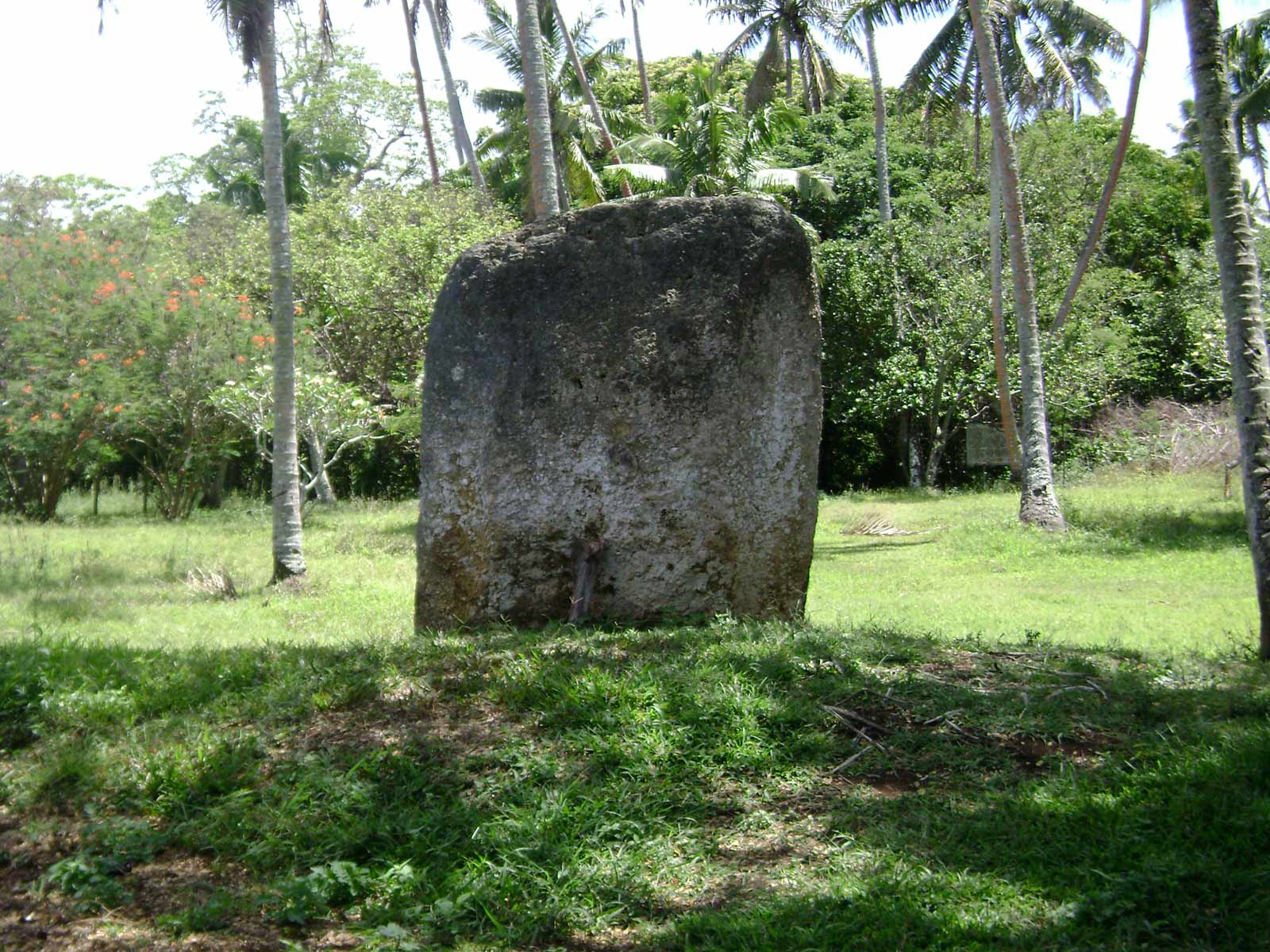 Maka faakinanga, the throne of a prehistoric king; Tonga Tauʻolunga, CC BY-SA 3.0
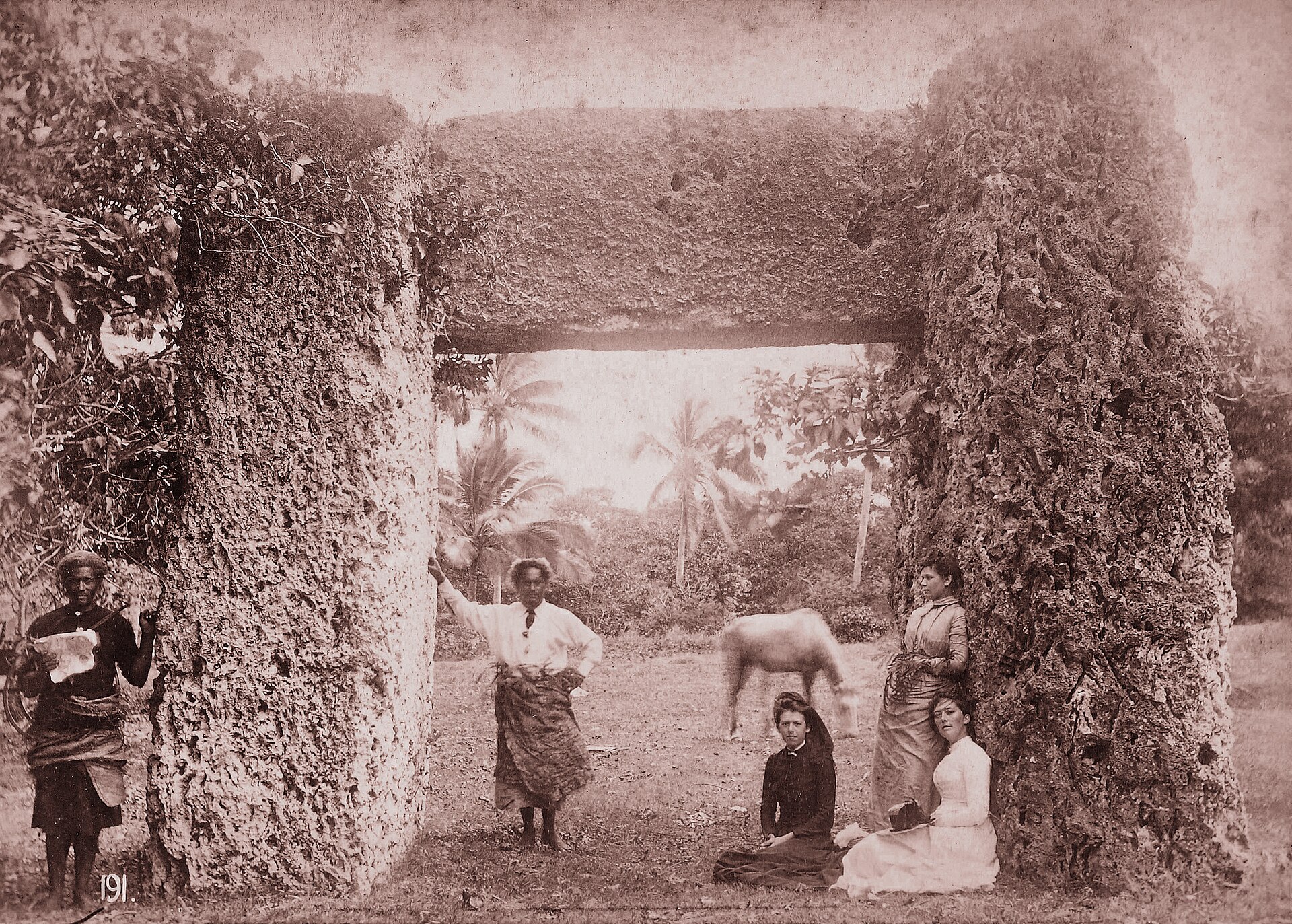 Front view of Remarkable Stones; [Mua, Tonga, c1880 to 1889]. The Haʻamonga trilithon... Unknown authorUnknown author, Public domain
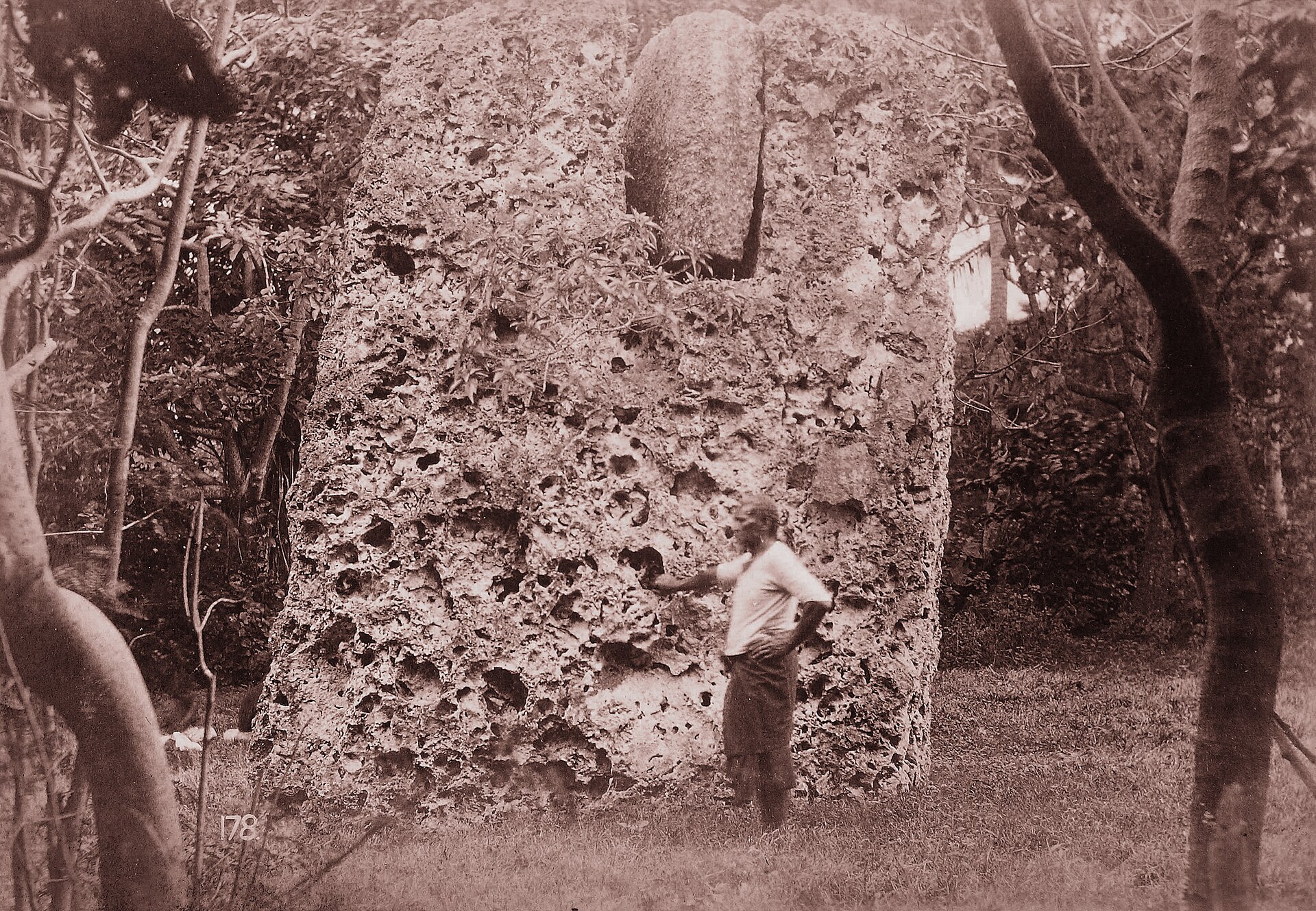 Side view of Remarkable Stone; [Mua, Tonga, c1880 to 1889]. The Haʻamonga trilithon was... Unknown authorUnknown author, Public domain
Relics and treasures
- The trilithontwo uprights and a top beam of coral stone, at the site
- Solstice carvinga carved V-shaped mark on the top beam, at the site
- Langi royal tombsstepped tombs of the Tu'i Tonga, at Lapaha on Tongatapu
- Ancient roads and stone seatsnearby features linked to the kings
How we know
Tongan oral history names the king who built it. Visitors described it from the 1700s on. Modern studies measured the stones and checked how the carvings line up with the sun.
What you would see today
Visitors walk up to the trilithon in a small park on Tongatapu. Each year on the solstices, people gather to watch the sunrise. It is a national symbol of Tonga.
For teachers and classrooms
Suggested level: grades 3-5. Print this page as a lesson sheet with the story, vocabulary, discussion questions and a quiz with an answer key.
Key words
- trilithon
- a structure of two upright stones with a third laid across the top
- demigod
- a being in myths who is part god and part human
- solstice
- the longest or shortest day of the year
Talk about it
- How could a stone gateway help people keep track of the seasons?
- Why do you think legends grow up around very big monuments?
Try this activity
- Draw a map of Ha'amonga 'a Maui as it looked at its busiest, and label three things people did there.
- Find Ha'amonga 'a Maui on the Ruinscape timeline, then pick another place from the same century and compare them.
- Use one link in Sources below to find a real object from this place. Describe what it is made of and what it tells us.
Quick quiz
In which country is Ha'amonga 'a Maui?
- Tonga
- Mexico
- Ireland
- Egypt
Show the answer
A. It is on Tongatapu, Tonga's main island.
What does the legend say?
- Maui carried the stones on his shoulder
- A dragon built it
- It fell from the sky
- It grew from the ground
Show the answer
A. The name means the Burden of Maui.
What might the gateway mark?
- Sunrise on the solstices
- The best fishing spots
- Where gold is hidden
- Volcano eruptions
Show the answer
A. A carving may point toward solstice sunrise.
Sources and further reading
Ruinscape lessons are written for students and checked against encyclopedia and museum records. Go to the sources: these links search real museum collections, the UNESCO list and research by archaeologists.
- Wikipedia articleEncyclopedia overview with its own references
- UNESCO World HeritageOfficial listing, if the site is protected
- Google Arts & CultureMuseum exhibits, virtual tours and close-up photos
- British Museum collectionReal objects, photos and catalog notes
- The Met collectionObjects and essays from the Metropolitan Museum of Art
- Smithsonian collectionsU.S. national museum records
- 3D models on SketchfabScans of sites and artifacts (check each license)
- Scholarly articlesResearch papers by archaeologists and historians
Read the full background
Haʻamonga ʻa Maui ("The Burden of Maui") is a stone trilithon located in Tonga, on the eastern part of the island of Tongatapu, in the village of Niutōua, in Heketā. It was built in the 13th century by King Tuʻitātui in honor of his two sons. The monument is sometimes called the "Stonehenge of the Pacific".
Background text from Wikipedia, available under CC BY-SA 4.0.
Last updated: October 2026. How we make Ruinscape.