The story
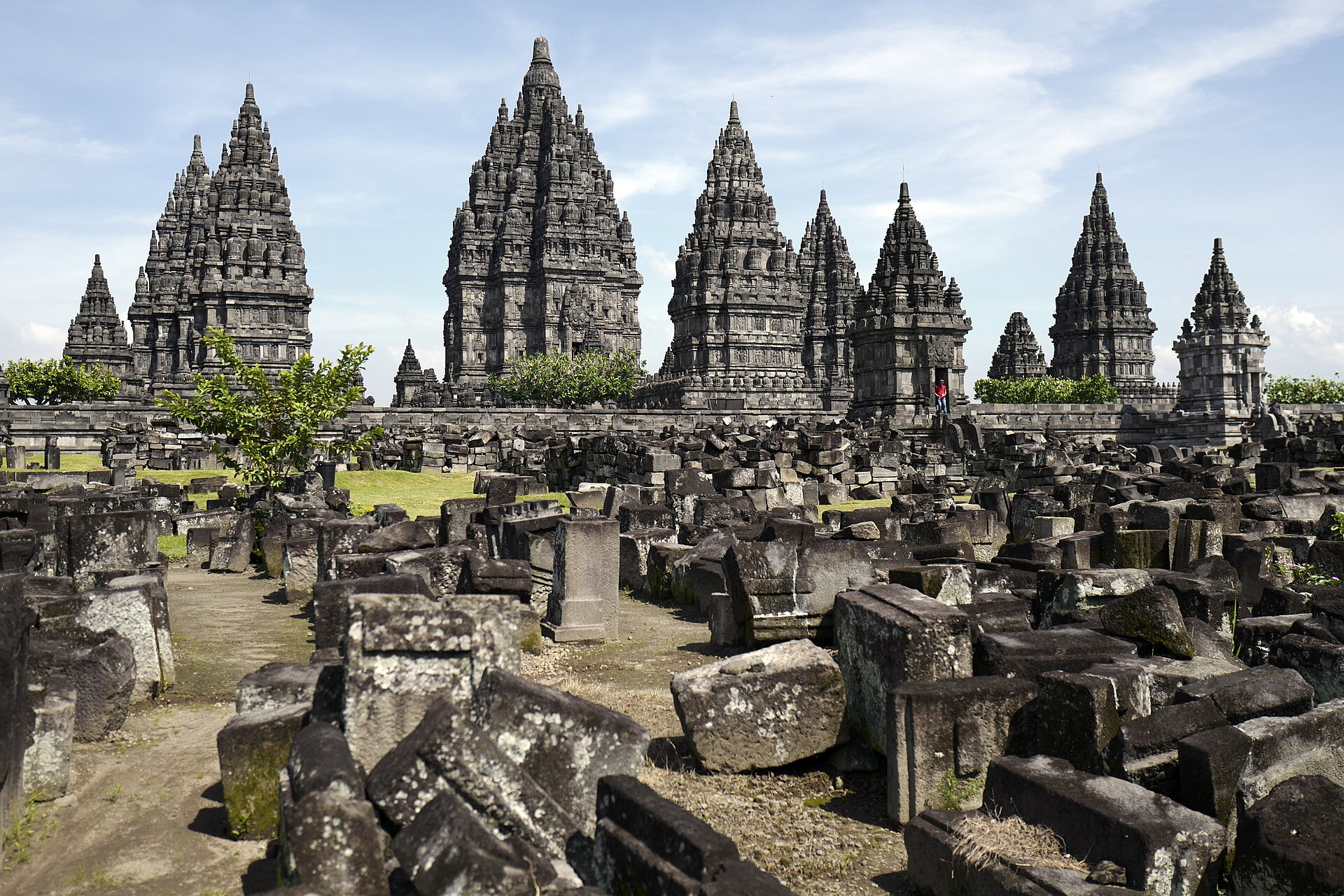
Around 850 CE, kings of the Mataram Kingdom built Prambanan, the largest Hindu temple compound in Indonesia. It honors the Trimurti, the three great gods: Brahma the creator, Vishnu the protector and Shiva the destroyer. The tallest tower is for Shiva.
Around the main temples were once 240 smaller shrines in neat rows. The walls are carved with scenes from the Ramayana, telling how Prince Rama rescued his wife Sita from a demon king, with help from the monkey hero Hanuman.
A local legend says Prambanan was built in one night by a prince trying to win the hand of Princess Roro Jonggrang. She tricked him, and he turned her into a statue, which people say is the statue of Durga inside.
How it ended
Around the 900s, the kingdom's center moved to East Java, possibly after a volcanic eruption, and Prambanan was left behind. Earthquakes toppled its towers. A 2006 earthquake damaged it again, and repairs continued afterward.
What life was like
Prambanan was built by a farming kingdom that grew rice in the rich volcanic soil of Java. Priests held ceremonies, and craftsmen carved the stone with incredible detail. Nearby, the great Buddhist temple of Borobudur was built around the same time, showing that Hindus and Buddhists lived side by side.
Wow facts
- The tallest tower is about 47 meters high.
- There were once 240 smaller temples around the main ones.
- The Ramayana ballet is still performed in front of the temple at night.
Photos
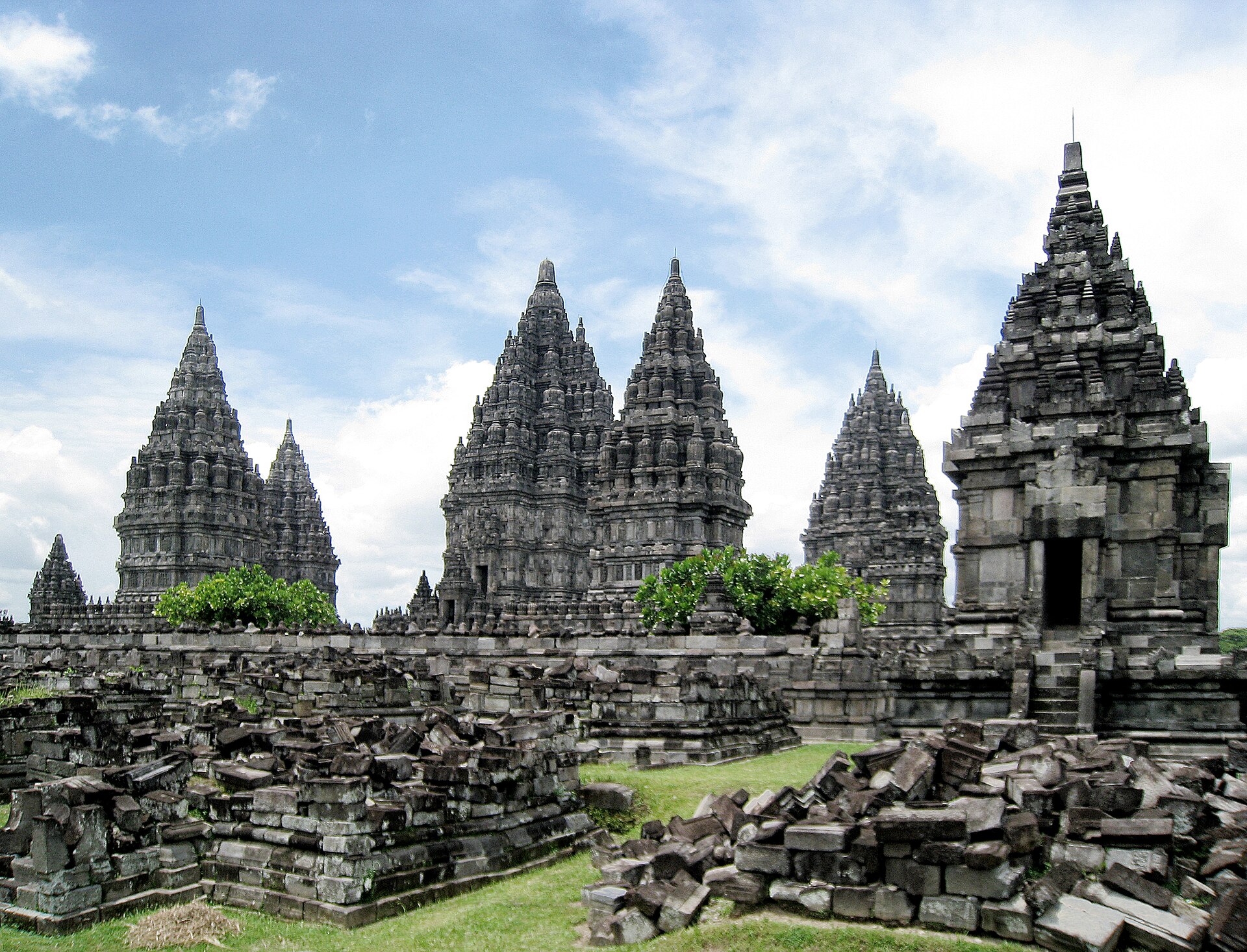 The 9th century Hindu Trimurti Prambanan temple, located on the border between... Gunawan Kartapranata, CC BY-SA 3.0
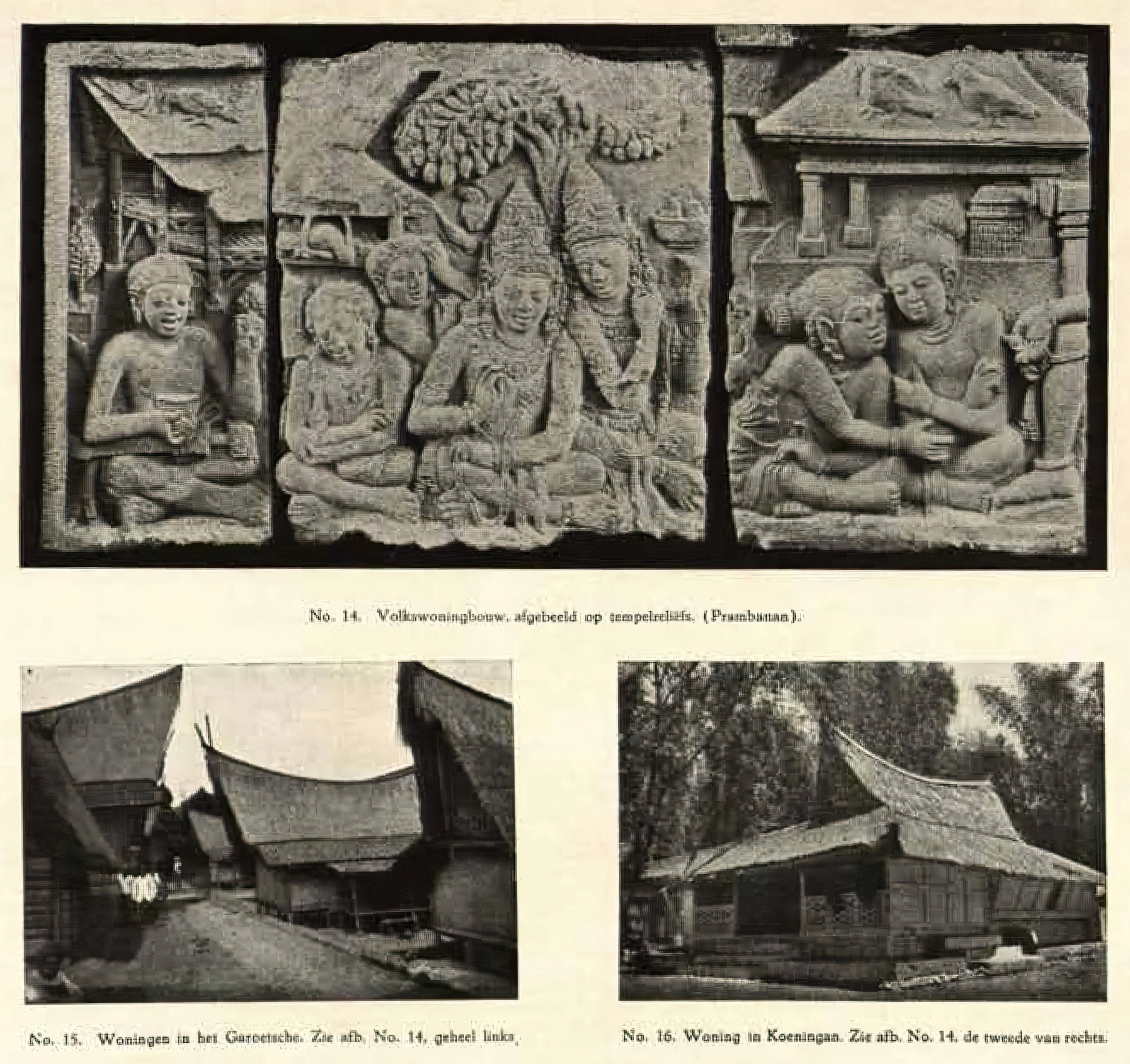 No. 14: People's housing, depicted on temple reliefs (Prambanan). No. 15: Dwellings in... Ir. H. Maclaine PontR. Ario Hoesein Djajadiningrat, CC0
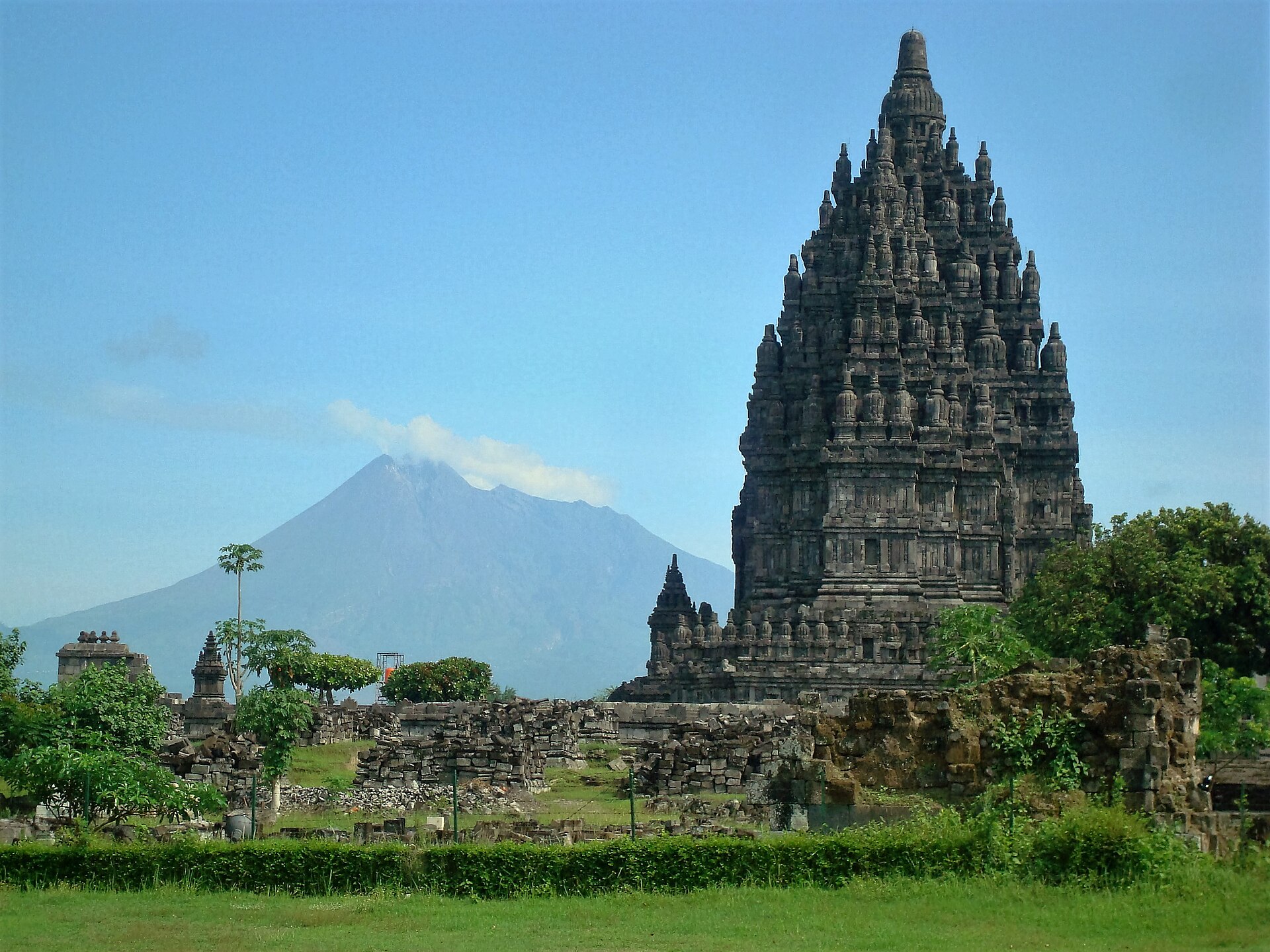 Prambanan mit Merapi im Hintergrund Arabsalam, CC BY-SA 4.0
Relics and treasures
- Shiva Templethe tallest tower in the center, at the site
- Ramayana reliefscarved story panels on the temple walls, at the site
- Statue of Durgathe goddess statue linked to the Roro Jonggrang legend, inside the Shiva temple
- Sewu Templea large Buddhist temple nearby, part of the same park
How we know
An inscription from 856 CE, the Shivagrha inscription, describes a Shiva temple that matches Prambanan. The Dutch began restoring it in 1918. Archaeologists put fallen stones back like a giant jigsaw puzzle.
What you would see today
Visitors walk around the towers reading the Ramayana carvings and watch the Ramayana ballet on an open-air stage with Prambanan lit up behind it. The temples have been rebuilt piece by piece after earthquakes. It is a UNESCO World Heritage Site.
For teachers and classrooms
Suggested level: grades 3-5. Print this page as a lesson sheet with the story, vocabulary, discussion questions and a quiz with an answer key.
Key words
- Ramayana
- an ancient Hindu epic about Prince Rama
- Trimurti
- the three main Hindu gods Brahma, Vishnu and Shiva
- restoration
- repairing something to look like it once did
Talk about it
- Why do you think artists carved a whole story on the walls?
- How could people of different religions build great temples side by side?
Try this activity
- Draw a map of Prambanan as it looked at its busiest, and label three things people did there.
- Find Prambanan on the Ruinscape timeline, then pick another place from the same century and compare them.
- Use one link in Sources below to find a real object from this place. Describe what it is made of and what it tells us.
Quick quiz
Which god is honored by the tallest tower?
- Shiva
- Zeus
- Ra
- Thor
Show the answer
A. The main tower is dedicated to Shiva.
What story is carved on the walls?
- The Ramayana
- The Odyssey
- Cinderella
- Beowulf
Show the answer
A. The reliefs tell the Ramayana.
What nearby temple was built around the same time?
- Borobudur
- Angkor Wat
- Taj Mahal
- Parthenon
Show the answer
A. Borobudur is a Buddhist temple nearby from the same era.
Sources and further reading
Ruinscape lessons are written for students and checked against encyclopedia and museum records. Go to the sources: these links search real museum collections, the UNESCO list and research by archaeologists.
- Wikipedia articleEncyclopedia overview with its own references
- UNESCO World HeritageOfficial listing, if the site is protected
- Google Arts & CultureMuseum exhibits, virtual tours and close-up photos
- British Museum collectionReal objects, photos and catalog notes
- The Met collectionObjects and essays from the Metropolitan Museum of Art
- Smithsonian collectionsU.S. national museum records
- 3D models on SketchfabScans of sites and artifacts (check each license)
- Scholarly articlesResearch papers by archaeologists and historians
Read the full background
Prambanan (Indonesian: Candi Prambanan, Javanese: Rara Jonggrang, Hanacaraka: ꦫꦫꦗꦺꦴꦁꦒꦿꦁ) is a 9th-century Hindu temple compound in the Special Region of Yogyakarta, in southern Java, Indonesia, dedicated to the Trimūrti, the expression of God as the Creator (Brahma), the Preserver (Vishnu), and the Destroyer (Shiva). The temple compound is located approximately 17 kilometres (11 mi) northeast of Yogyakarta on the boundary between Central Java and Yogyakarta provinces.
The temple compound, a UNESCO World Heritage Site, is the largest Hindu temple site in Indonesia and the second-largest in Southeast Asia after Angkor Wat. It is characterized by its tall pointed architecture, typical of Hindu architecture, and by the towering 47-metre-high (154 ft) central building inside a large complex of individual temples. The compounds originally consisted of 240 temple structures, which represented the grandeur of ancient Java's Hindu art and architecture, and it is also considered a masterpiece of the classical period in Indonesia.
Background text from Wikipedia, available under CC BY-SA 4.0.
Last updated: October 2026. How we make Ruinscape.